The text
Tap Recite along to follow verse by verse — use Next, or the arrow keys.
- Stanza 1 (refrain)
जय पार्वती माता, जय पार्वती माता।ब्रह्म सनातन देवी, शुभ फल की दाता॥
jaya pārvatī mātā, jaya pārvatī mātā।brahma sanātana devī, śubha phala kī dātā॥
Victory to Mother Parvati, victory to Mother Parvati — eternal goddess, giver of auspicious fruit.
- Stanza 2
अरिकुल पद्म विनाशिनि, जय सेवक त्राता।जग जीवन जगदम्बा, हरिहर गुण गाता॥
arikula padma vināśini, jaya sevaka trātā।jaga jīvana jagadambā, harihara guṇa gātā॥
Destroyer of the enemy hosts' pride, ever the protector of your servants; world-mother Jagadamba, whose virtues Hari and Hara (Vishnu and Shiva) sing.
- Stanza 3
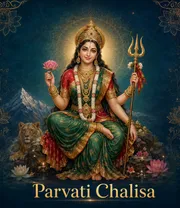
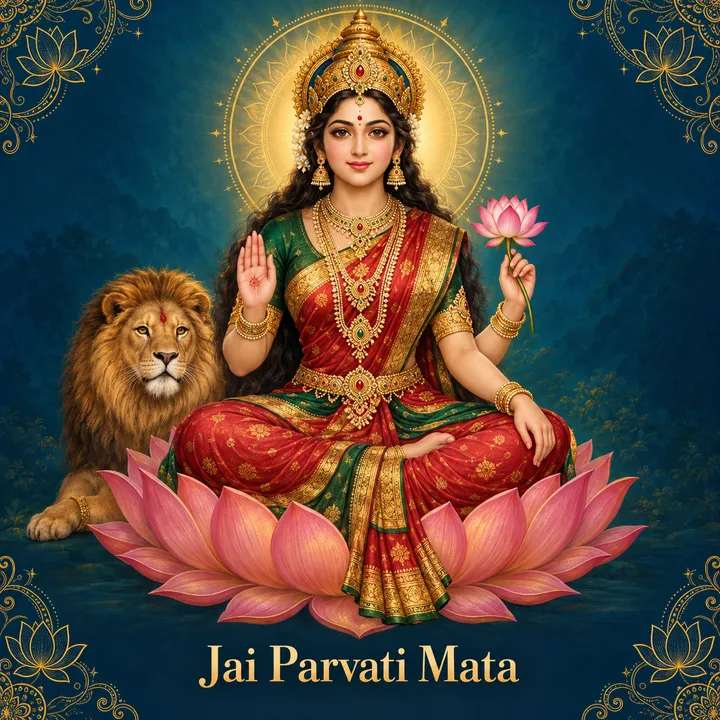
सिंह को वाहन साजे, कुण्डल हैं साथा।देव वधू जस गावत, नृत्य करत ताथा॥
siṃha ko vāhana sāje, kuṇḍala haiṁ sāthā।deva vadhū jasa gāvata, nṛtya karata tāthā॥
The lion is your mount, earrings adorn you; the wives of the gods sing your praise and dance before you.
- Stanza 4
सतयुग रूपशील अतिसुन्दर, नाम सती कहलाता।हेमांचल घर जन्मी, सखियन संग राता॥
satayuga rūpaśīla atisundara, nāma satī kahalātā।hemāṃcala ghara janmī, sakhiyana saṅga rātā॥
In the Satya Yuga your form and virtue were most beautiful, and you were known by the name Sati; born in the house of Hemachal, the Himalaya, you delighted among your companions.
- Stanza 5
शुम्भ निशुम्भ विदारे, हेमांचल स्थाता।सहस्त्र भुजा तनु धरि के, चक्र लियो हाथा॥
śumbha niśumbha vidāre, hemāṃcala sthātā।sahastra bhujā tanu dhari ke, cakra liyo hāthā॥
You who dwell on Hemachal tore apart the demons Shumbha and Nishumbha; taking a form of a thousand arms, you held the discus in your hand.
- Stanza 6
सृष्टि रूप तुही है जननी, शिवसंग रंगराता।नन्दी भृंगी बीन लही, सारा जग मदमाता॥
sṛṣṭi rūpa tuhī hai jananī, śivasaṅga raṅgarātā।nandī bhṛṅgī bīna lahī, sārā jaga madamātā॥
You alone are the mother, the very form of creation, ever delighting at Shiva's side; Nandi and Bhringi take up the vina, and the whole world is intoxicated with joy.
- Stanza 7
देवन अरज करत हम, चित को लाता।गावत दे दे ताली, मन में रंगराता॥
devana araja karata hama, cita ko lātā।gāvata de de tālī, mana meṁ raṅgarātā॥
We bring our plea before you, fixing our mind on you; we sing and clap in joy, our hearts delighting in you.
- Stanza 8
श्री प्रताप आरती मैया की, जो कोई गाता।सदा सुखी नित रहता, सुख सम्पत्ति पाता॥
śrī pratāpa āratī maiyā kī, jo koī gātā।sadā sukhī nita rahatā, sukha sampatti pātā॥
Whoever sings this glorious aarti of the Mother remains ever happy, and obtains happiness and prosperity.
Overview
Jai Parvati Mata is a Hindi aarti of eight stanzas addressed to Parvati as the eternal goddess (Sanatana Devi) and consort of Shiva. Its opening stanza doubles as the refrain repeated after every following stanza, the same call-and-response pattern used in Jai Ambe Gauri and most other North Indian aartis. The verses describe her lion mount, her being served and sung to by the wives of the gods, her earlier life as Sati, her birth as the daughter of Hemachal (the Himalaya), and her tearing apart the demons Shumbha and Nishumbha while bearing a thousand arms and a discus — the Devi Mahatmyam’s account of the Goddess’s warrior form, elsewhere identified as Durga.
Origin and source
No specific composer is reliably attested for Jai Parvati Mata. It circulates anonymously across Hindi aarti-sangraha (prayer-book) collections, alongside other well-known “Jai … Mata” aartis sung to the Goddess, such as Jai Ambe Gauri. Its narrative content draws on the wider Puranic and Devi Mahatmyam tradition: Parvati’s earlier life as Sati, her later birth on Hemachal as the mountain king’s daughter, and her manifestation as the many-armed slayer of Shumbha and Nishumbha, the episode most associated with the warrior goddess Durga.
How it is recited
Jai Parvati Mata is sung during Hartalika Teej, the Bhadrapada-month vrat on which women worship Parvati and Shiva together for marital well-being, and during other Gauri vrats such as Gauri Habba (Swarna Gauri Vrata), observed mainly in South India. It is also part of everyday Gauri-Shankar puja in many homes, including on Mondays, the day of the week on which Shiva is widely worshipped alongside Parvati. As with most aartis, the refrain “Jai Parvati Mata” is repeated by everyone present after each stanza, typically while a lit diya or camphor flame is circled before the deity’s image.
Frequently asked questions
How many verses does Jai Parvati Mata have?
Who is Jai Parvati Mata dedicated to?
When is Jai Parvati Mata typically recited?
What language is Jai Parvati Mata composed in?
What tradition is Jai Parvati Mata associated with?
Is an English translation of Jai Parvati Mata available?
Is there a Roman transliteration of Jai Parvati Mata?
Sourcing
Checked against independent sources before publishing — see our sourcing and editorial policy. Spotted an error? Report an issue .