The text
Tap Recite along to follow verse by verse — use Next, or the arrow keys.
- Opening doha
- Doha (opening)
नमो नमो विन्ध्येश्वरी, नमो नमो जगदंब।संत जनों के काज में, करती नहीं बिलंब॥
namo namo vindhyeśvarī, namo namo jagadaṃba।santa janoṃ ke kāja meṃ, karatī nahīṃ bilaṃba॥
Salutations, salutations to Vindhyeshwari, salutations, salutations to the Mother of the universe — in the tasks of her devotees, she brings about no delay.
- The 38 chaupais
- Chaupai 1
जय जय जय विन्ध्याचल रानी।आदि शक्ति जगबिदित भवानी॥
jaya jaya jaya vindhyācala rānī।ādi śakti jagabidita bhavānī॥
Victory, victory, victory to the Queen of Vindhyachal — the primordial Shakti, known throughout the world as Bhavani.
- Chaupai 2
सिंह वाहिनी जय जगमाता।जय जय जय त्रिभुवन सुखदाता॥
siṃha vāhinī jaya jagamātā।jaya jaya jaya tribhuvana sukhadātā॥
Victory to you, mounted on the lion, mother of the universe — victory, victory, victory, giver of happiness to the three worlds.
- Chaupai 3
कष्ट निवारिनि जय जग देवी।जय जय संत असुर सुरसेवी॥
kaṣṭa nivārini jaya jaga devī।jaya jaya santa asura surasevī॥
Victory to you, remover of suffering, goddess of the world — victory, victory, served alike by saints, demons, and gods.
- Chaupai 4
महिमा अमित अपार तुम्हारी।सेष सहस मुख बरनत हारी॥
mahimā amita apāra tumhārī।seṣa sahasa mukha baranata hārī॥
Your glory is boundless and immeasurable — even Shesha, with his thousand mouths, tires of describing it.
- Chaupai 5
दीनन के दुःख हरत भवानी।नहिं देख्यो तुम सम कोउ दानी॥
dīnana ke duḥkha harata bhavānī।nahiṃ dekhyo tuma sama kou dānī॥
O Bhavani, you take away the sorrows of the humble — none has ever seen a giver as generous as you.
- Chaupai 6
सब कर मनसा पुरवत माता।महिमा अमित जगत विख्याता॥
saba kara manasā puravata mātā।mahimā amita jagata vikhyātā॥
Mother, you fulfill the heart's desire of all — your boundless glory is renowned throughout the world.
- Chaupai 7
जो जन ध्यान तुम्हारो लावे।सो तुरतहिं वांछित फल पावे॥
jo jana dhyāna tumhāro lāve।so turatahiṃ vāñchita phala pāve॥
Whoever fixes their meditation upon you at once obtains the fruit they desire.
- Chaupai 8
तू ही वैस्नवी तू ही रुद्रानी।तू ही शारदा अरु ब्रह्मानी॥
tū hī vaisnavī tū hī rudrānī।tū hī śāradā aru brahmānī॥
You alone are Vaishnavi, you alone are Rudrani; you alone are Sharada, and Brahmani too.
- Chaupai 9
रमा राधिका स्यामा काली।तू ही मात संतन प्रतिपाली॥
ramā rādhikā syāmā kālī।tū hī māta santana pratipālī॥
You are Rama (Lakshmi), Radhika, Shyama, and Kali — you alone, O Mother, sustain your devotees.
- Chaupai 10
उमा माधवी चंडी ज्वाला।बेगि मोहि पर होहु दयाला॥
umā mādhavī caṇḍī jvālā।begi mohi para hohu dayālā॥
You are Uma, Madhavi, Chandi, and Jwala — be swiftly gracious upon me.
- Chaupai 11
तुम ही हिंगलाज महरानी।तुम ही शीतला अरु बिज्ञानी॥
tuma hī hiṃgalāja maharānī।tuma hī śītalā aru bijñānī॥
You alone are the great queen of Hinglaj; you alone are Shitala, and all-knowing Vijnani.
- Chaupai 12
तुम्हीं लक्ष्मी जग सुख दाता।दुर्गा दुर्ग बिनासिनि माता॥
tumhīṃ lakṣmī jaga sukha dātā।durgā durga bināsini mātā॥
You alone are Lakshmi, giver of happiness to the world; you are Mother Durga, destroyer of the strongholds of evil.
- Chaupai 13
तुम ही जाह्नवी अरु उन्नानी।हेमावती अंबे निरबानी॥
tuma hī jāhnavī aru unnānī।hemāvatī aṃbe nirabānī॥
You alone are Jahnavi, the Ganga, and Unnani; O Mother Hemavati, Amba, giver of liberation.
- Chaupai 14
अष्टभुजी बाराहिनि देवा।करत विष्णु शिव जाकर सेवा॥
aṣṭabhujī bārāhini devā।karata viṣṇu śiva jākara sevā॥
Eight-armed, in the form of Varahi — even Vishnu and Shiva go to serve you.
- Chaupai 15
चौसट्टी देवी कल्याणी।गौरि मंगला सब गुन खानी॥
causaṭṭī devī kalyāṇī।gauri maṃgalā saba guna khānī॥
You are the goddess of the sixty-four Yoginis, bringer of good fortune — Gauri, Mangala, a treasury of every virtue.
- Chaupai 16
पाटन मुंबा दंत कुमारी।भद्रकाली सुन विनय हमारी॥
pāṭana muṃbā daṃta kumārī।bhadrakālī suna vinaya hamārī॥
You are worshipped at Patan as Mumba, and as Dantakumari; O Bhadrakali, hear our humble prayer.
- Chaupai 17
बज्रधारिनी सोक नासिनी।आयु रच्छिनी विन्ध्यवासिनी॥
bajradhārinī soka nāsinī।āyu racchinī vindhyavāsinī॥
Bearer of the thunderbolt, destroyer of grief; protector of life, O Vindhyavasini.
- Chaupai 18
जया और विजया बैताली।मातु संकटी अरु बिकराली॥
jayā aura vijayā baitālī।mātu saṃkaṭī aru bikarālī॥
You are Jaya and Vijaya, and Vaitali; Mother Sankati, and the fearsome Vikarali.
- Chaupai 19
नाम अनंत तुम्हार भवानी।बरनै किमि मानुष अज्ञानी॥
nāma anaṃta tumhāra bhavānī।baranai kimi mānuṣa ajñānī॥
O Bhavani, your names are endless — how could an ignorant human ever describe them all?
- Chaupai 20
जापर कृपा मातु तव होई।तो वह करै चहै मन जोई॥
jāpara kṛpā mātu tava hoī।to vaha karai cahai mana joī॥
The one on whom your grace, O Mother, falls, accomplishes whatever their heart desires.
- Chaupai 21
कृपा करहु मोपर महारानी।सिध करिये अब यह मम बानी॥
kṛpā karahu mopara mahārānī।sidha kariye aba yaha mama bānī॥
Show your grace upon me, O great queen — now grant fulfillment to this prayer of mine.
- Chaupai 22
जो नर धरै मातु कर ध्याना।ताकर सदा होय कल्याणा॥
jo nara dharai mātu kara dhyānā।tākara sadā hoya kalyāṇā॥
The one who holds meditation upon the Mother in their heart always attains well-being.
- Chaupai 23
बिपत्ति ताहि सपनेहु नहि आवै।जो देवी का जाप करावै॥
bipatti tāhi sapanehu nahi āvai।jo devī kā jāpa karāvai॥
Misfortune does not come near, even in a dream, to one who has the Goddess's japa performed.
- Chaupai 24
जो नर कहे रिन होय अपारा।सो नर पाठ करे सतबारा॥
jo nara kahe rina hoya apārā।so nara pāṭha kare satabārā॥
The one for whom debt becomes immense — let them recite this text a hundred times.
- Chaupai 25
निःचय रिनमोचन होई जाई।जो नर पाठ करे मन लाई॥
niḥcaya rinamocana hoī jāī।jo nara pāṭha kare mana lāī॥
They are certainly freed from their debt, the one who recites it with focused attention.
- Chaupai 26
अस्तुति जो नर पढै पढावै।या जग में सो बहु सुख पावै॥
astuti jo nara paḍhai paḍhāvai।yā jaga meṃ so bahu sukha pāvai॥
Whoever reads this hymn of praise, or has it read, obtains abundant happiness in this world.
- Chaupai 27
जाको ब्याधि सतावै भाई।जाप करत सब दूर पराई॥
jāko byādhi satāvai bhāī।jāpa karata saba dūra parāī॥
Whoever is afflicted by illness, brother — through japa, all of it is driven far away.
- Chaupai 28
जो नर अति बंदी महँ होई।बार हजार पाठ कर सोई॥
jo nara ati baṃdī mahã hoī।bāra hajāra pāṭha kara soī॥
The one held fast in captivity — let them recite this a thousand times.
- Chaupai 29
निश्चय बंदी ते छुटि जाई।सत्य वचन मम मानहु भाई॥
niścaya baṃdī te chuṭi jāī।satya vacana mama mānahu bhāī॥
They will certainly be released from captivity — believe these true words of mine, brother.
- Chaupai 30
जापर जो कुछ संकट होई।निःचय देबिहि सुमिरै सोई॥
jāpara jo kucha saṃkaṭa hoī।niḥcaya debihi sumirai soī॥
Whatever trouble may befall someone, let them surely call the Goddess to mind.
- Chaupai 31
जा कहँ पुत्र होय नहि भाई।सो नर या विधि करै उपाई॥
jā kahã putra hoya nahi bhāī।so nara yā vidhi karai upāī॥
The one to whom no son is born, brother — let them make this effort, in this manner.
- Chaupai 32
पाँच बरस सो पाठ करावै।नौरातर महँ बिप्र जिमावै॥
pāṃca barasa so pāṭha karāvai।naurātara mahã bipra jimāvai॥
Let them have this recited for five years, and feed Brahmins during Navratri.
- Chaupai 33
निःचय होहि प्रसन्न भवानी।पुत्र देहि ताकहँ गुन खानी॥
niḥcaya hohi prasanna bhavānī।putra dehi tākahã guna khānī॥
Bhavani will surely become pleased, and grant a son, a treasury of virtues.
- Chaupai 34
ध्वजा नारियल आन चढावै।विधि समेत पूजन करवावै॥
dhvajā nāriyala āna caḍhāvai।vidhi sameta pūjana karavāvai॥
Let them bring and offer a flag and a coconut, and have worship performed according to the proper rites.
- Chaupai 35
नित प्रति पाठ करै मन लाई।प्रेम सहित नहि आन उपाई॥
nita prati pāṭha karai mana lāī।prema sahita nahi āna upāī॥
Recite this daily with a focused mind — with devotion, no other means is needed.
- Chaupai 36
यह श्री विन्ध्याचल चालीसा।रंक पढत होवै अवनीसा॥
yaha śrī vindhyācala cālīsā।raṃka paḍhata hovai avanīsā॥
This is the Shri Vindhyachal Chalisa — reciting it, even a pauper becomes a lord of the earth.
- Chaupai 37
यह जनि अचरज मानहु भाई।कृपा दृष्टि जापर ह्वै जाई॥
yaha jani acaraja mānahu bhāī।kṛpā dṛṣṭi jāpara hvai jāī॥
Do not think this strange, brother — her gracious gaze may come to rest on anyone.
- Chaupai 38
जय जय जय जग मातु भवानी।कृपा करहु मोहि पर जन जानी॥
jaya jaya jaya jaga mātu bhavānī।kṛpā karahu mohi para jana jānī॥
Victory, victory, victory to Bhavani, mother of the universe — show your grace upon me, knowing me as your own.
Overview
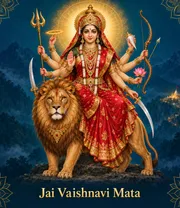
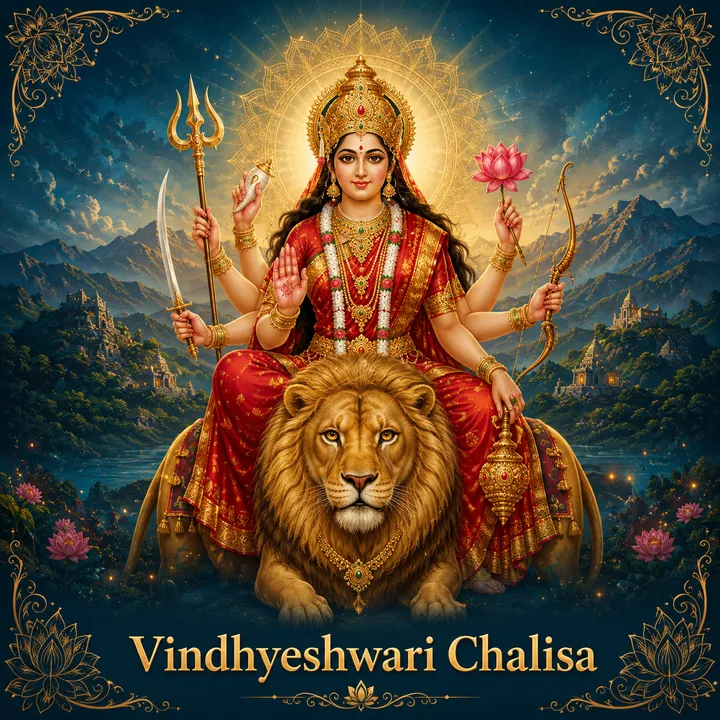
The Vindhyeshwari Chalisa is a Hindi devotional composition of thirty-eight chaupai couplets, framed by a single opening doha, in praise of Vindhyavasini, the Devi enshrined at Vindhyachal on the banks of the Ganga in Mirzapur district, Uttar Pradesh. Rather than telling a single continuous story, its body moves the way many Shakta hymns do — invoking the goddess under a long sequence of her names and regional forms, from Vaishnavi and Rudrani to Hinglaj and Bhadrakali, before turning in its closing couplets to the benefits said to follow from reciting it with devotion.
Origin and source
As with the Ganesh Chalisa and the Vaishno Devi Chalisa, this text’s authorship is not established in the secondary literature, and unlike the Ganesh Chalisa’s closing self-naming by its composer, no chaupai here names an author at all. This page treats it as a traditional composition recited across Vindhyavasini devotion, with no biographical attribution to record.
The chalisa names the goddess under many forms across its couplets — Vaishnavi, Kali, Uma, Chandi, Sharada (Saraswati), Lakshmi, and Durga among them — but a shared litany of names is not, on its own, a strong identification with any single one of them. The firmer basis for linking this page to Durga is external to the chalisa: the Vindhyachal temple’s presiding deity is popularly held to be a form of Durga, and the wider Puranic tradition around Vindhyavasini — in the Devi Bhagavata Purana and related tellings connected to Krishna’s birth — describes Yogamaya, the girl substituted for the infant Krishna and later revealed in her divine form, declaring that she will dwell and be worshipped in the Vindhya mountains, a narrative that identifies the Vindhya-dwelling goddess with the same Devi elsewhere described as Durga and Mahamaya. The chalisa’s own naming of Durga in one of its couplets corroborates this identification rather than establishing it outright. On this basis, this page links Vindhyavasini to Durga, following the same standard already applied to Vaishno Devi’s page in this collection.
How it is recited
The Vindhyeshwari Chalisa is recited daily by many of the goddess’s devotees, and especially during the nine nights of Navratri. It is also recited by pilgrims visiting her shrine at Vindhyachal, where the Vindhyavasini temple sits alongside two others — Kali Khoh, a cave shrine dedicated to Mahakali, and Ashtabhuja, dedicated to Mahasaraswati — linked by the Trikona Parikrama, a triangular pilgrimage circuit that many devotees walk between the three temples, most heavily during Navratri.
Frequently asked questions
How many verses does Vindhyeshwari Chalisa have?
Who is Vindhyeshwari Chalisa dedicated to?
When is Vindhyeshwari Chalisa typically recited?
What language is Vindhyeshwari Chalisa composed in?
What tradition is Vindhyeshwari Chalisa associated with?
Is an English translation of Vindhyeshwari Chalisa available?
Is there a Roman transliteration of Vindhyeshwari Chalisa?
Sourcing
Checked against independent sources before publishing — see our sourcing and editorial policy. Spotted an error? Report an issue .