The text
Tap Recite along to follow verse by verse — use Next, or the arrow keys.
- Stanza 1 (refrain)
जय वैष्णवी माता, मैया जय वैष्णवी माता।हाथ जोड़ तेरे आगे, आरती मैं गाता॥
jaya vaiṣṇavī mātā, maiyā jaya vaiṣṇavī mātā।hātha joḍa tere āge, āratī maiṃ gātā॥
Victory to Vaishnavi Mata, victory to you, Mother Vaishnavi — hands folded before you, I sing your aarti.
- Stanza 2
शीश पे छत्र विराजे, मूरतिया प्यारी।गंगा बहती चरनन, ज्योति जगे न्यारी॥
śīśa pe chatra virāje, mūratiyā pyārī।gaṅgā bahatī caranana, jyoti jage nyārī॥
A canopy shines above your head, your image so dear to see; the Ganga flows at your feet, and a wondrous light glows within.
- Stanza 3
ब्रह्मा वेद पढ़े नित द्वारे, शंकर ध्यान धरे।सेवक चंवर डुलावत, नारद नृत्य करे॥
brahmā veda paḍhe nita dvāre, śaṅkara dhyāna dhare।sevaka caṃvara ḍulāvata, nārada nṛtya kare॥
Brahma recites the Vedas daily at your door, and Shankar holds you in meditation; a servant waves the chowrie fan for you, while Narada dances in devotion.
- Stanza 4
सुन्दर गुफा तुम्हारी, मन को अति भावे।बार-बार देखन को, ऐ माँ मन चावे॥
sundara guphā tumhārī, mana ko ati bhāve।bāra-bāra dekhana ko, ai mā̃ mana cāve॥
Your beautiful cave delights the heart completely; the mind longs, O Mother, to behold it again and again.
- Stanza 5
भवन पे झण्डे झूलें, घंटा ध्वनि बाजे।ऊँचा पर्वत तेरा, माता प्रिय लागे॥
bhavana pe jhaṇḍe jhūleṃ, ghaṇṭā dhvani bāje।ū̃cā parvata terā, mātā priya lāge॥
Banners flutter over your shrine, and temple bells ring out; your lofty mountain, O Mother, is dear to every devotee.
- Stanza 6
पान सुपारी ध्वजा नारियल, भेंट पुष्प मेवा।दास खड़े चरणों में, दर्शन दो देवा॥
pāna supārī dhvajā nāriyala, bheṃṭa puṣpa mevā।dāsa khaḍe caraṇoṃ meṃ, darśana do devā॥
Betel leaf and areca nut, a flag, a coconut, flowers and dried fruit are brought as offerings; your servant stands at your feet — grant us your darshan, O Goddess.
- Stanza 7
जो जन निश्चय करके, द्वार तेरे आवे।उसकी इच्छा पूरण, माता हो जावे॥
jo jana niścaya karake, dvāra tere āve।usakī icchā pūraṇa, mātā ho jāve॥
Whoever comes to your door with firm resolve, Mother, has their wish fulfilled by you.
- Stanza 8
इतनी स्तुति निश-दिन, जो नर भी गावे।कहते सेवक ध्यानू, सुख सम्पत्ति पावे॥
itanī stuti niśa-dina, jo nara bhī gāve।kahate sevaka dhyānū, sukha sampatti pāve॥
Whoever sings this praise day and night — says your servant Dhyanu — obtains happiness and prosperity.
Overview
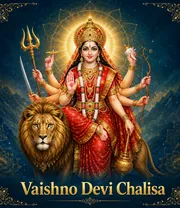
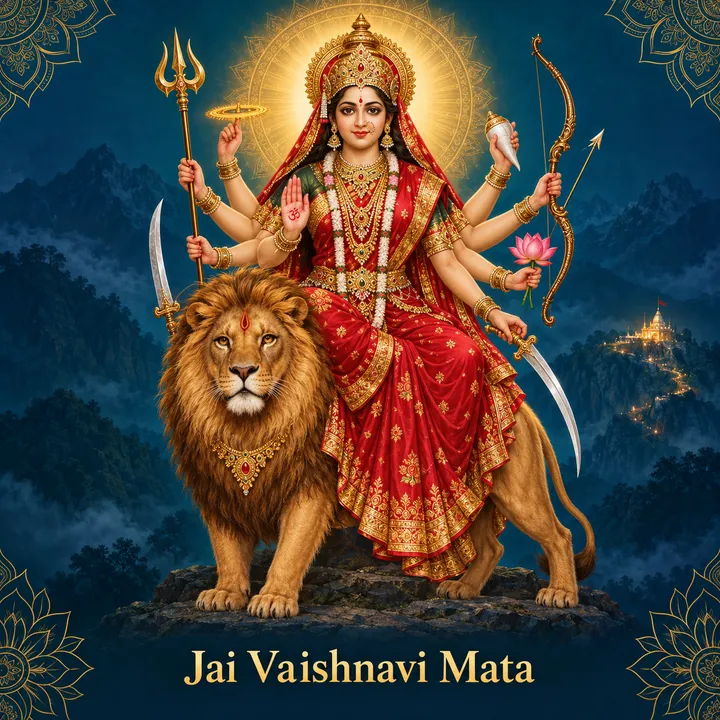
Jai Vaishnavi Mata is a Hindi aarti of eight stanzas addressed to Vaishno Devi. Unlike aartis built around a demon-slaying narrative, its verses stay close to the shrine itself: the canopy and adorned image, the stream at her feet, the cave in the Trikuta hills, the banners and bells of her mountain temple, and the betel leaf, coconut, and fruit that pilgrims carry to her door. It closes with a bhanita, a signature verse, in which the poet names himself as her servant Dhyanu.
Origin and source
The aarti does not itself narrate a myth of origin — it describes the Vaishno Devi shrine and the devotion offered there, rather than retelling the Devi Mahatmyam. The identification of Vaishno Devi with Durga rests on the wider Shakta tradition documented on this site’s Durga page, which lists the Vaishno Devi shrine among Durga’s temples, and on the Vaishno Devi Chalisa, a separate composition whose own opening verse explicitly describes the goddess as constituted from Kali, Lakshmi, and Saraswati — the same three goddesses whose combined power the Devi Mahatmyam holds to be the source of Durga.
The closing line names the composer as “Dhyanu,” traditionally associated with Dhyanu Bhagat, a devotee remembered in Devi legend from the era of the Mughal emperor Akbar. In that story, Akbar tested Dhyanu’s devotion by beheading his horse and demanding he have the Goddess restore it; when Dhyanu offered his own head at her shrine, She restored both heads and granted a boon that a coconut offered in devotion would thereafter be accepted as though it were a devotee’s own head — the same coconut offering this aarti itself names in its sixth stanza.
How it is recited
Jai Vaishnavi Mata is sung with its opening couplet taken up as a refrain between stanzas, in the manner of most Hindi aartis, typically to the light of a lamp or during the shrine’s own twice-daily aarti — performed each morning before sunrise and each evening after sunset at the cave shrine high in the Trikuta hills above Katra, in Jammu and Kashmir. Pilgrims undertaking the multi-day yatra to the shrine often sing it along the route and at darshan, and it is commonly paired with the Vaishno Devi Chalisa in home and temple worship of the goddess, particularly during Navratri.
Frequently asked questions
How many verses does Jai Vaishnavi Mata have?
Who is Jai Vaishnavi Mata dedicated to?
When is Jai Vaishnavi Mata typically recited?
What language is Jai Vaishnavi Mata composed in?
What tradition is Jai Vaishnavi Mata associated with?
Is an English translation of Jai Vaishnavi Mata available?
Is there a Roman transliteration of Jai Vaishnavi Mata?
Sourcing
Checked against independent sources before publishing — see our sourcing and editorial policy. Spotted an error? Report an issue .