The text
Tap Recite along to follow verse by verse — use Next, or the arrow keys.
- Stanza 1 (opening)
जय सन्तोषी माता, मैया जय सन्तोषी माता।अपने सेवक जन की, सुख सम्पति दाता॥
jaya santoṣī mātā, maiyā jaya santoṣī mātā।apane sevaka jana kī, sukha sampati dātā॥
Victory to Mother Santoshi — Mother, victory to Santoshi Mata. You are the giver of happiness and prosperity to your devoted servants.
- Stanza 2
सुन्दर चीर सुनहरी, माँ धारण कीन्हो।हीरा पन्ना दमके, तन श्रृंगार लीन्हो॥जय सन्तोषी माता, मैया जय सन्तोषी माता॥
sundara cīra sunaharī, mā̃ dhāraṇa kīnho।hīrā pannā damake, tana śṛṅgāra līnho॥jaya santoṣī mātā, maiyā jaya santoṣī mātā॥
Mother, you have put on beautiful golden garments; diamonds and emeralds shine, adorning your body. Victory to Mother Santoshi — Mother, victory to Santoshi Mata.
- Stanza 3
गेरू लाल छटा छवि, बदन कमल सोहे।मंद हंसत करुणामयी, त्रिभुवन मन मोहे॥जय सन्तोषी माता, मैया जय सन्तोषी माता॥
gerū lāla chaṭā chavi, badana kamala sohe।manda hansata karuṇāmayī, tribhuvana mana mohe॥jaya santoṣī mātā, maiyā jaya santoṣī mātā॥
The glow of red ochre lights your form, your lotus face delights; gently smiling, full of compassion, you enchant the three worlds. Victory to Mother Santoshi — Mother, victory to Santoshi Mata.
- Stanza 4
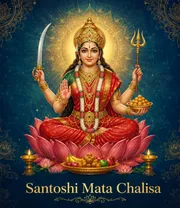
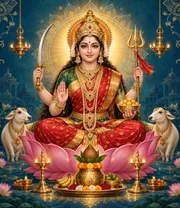
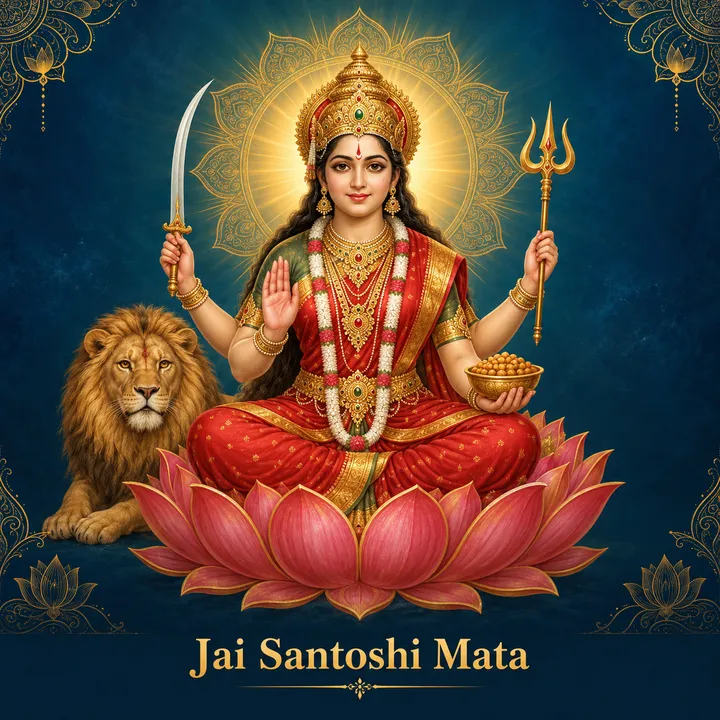
स्वर्ण सिंहासन बैठी, चंवर ढुरे प्यारे।धूप दीप मधुमेवा, भोग धरे न्यारे॥जय सन्तोषी माता, मैया जय सन्तोषी माता॥
svarṇa sinhāsana baiṭhī, cãvara ḍhure pyāre।dhūpa dīpa madhumevā, bhoga dhare nyāre॥jaya santoṣī mātā, maiyā jaya santoṣī mātā॥
You are seated on a golden throne, a beloved fly-whisk waving beside you; incense, lamps, honey, and sweets are set before you as offerings, each apart. Victory to Mother Santoshi — Mother, victory to Santoshi Mata.
- Stanza 5
गुड़ अरु चना परम प्रिय, तामे संतोष कियो।संतोषी कहलाई, भक्तन वैभव दियो॥जय सन्तोषी माता, मैया जय सन्तोषी माता॥
guṛa aru canā parama priya, tāme santoṣa kiyo।santoṣī kahalāī, bhaktana vaibhava diyo॥jaya santoṣī mātā, maiyā jaya santoṣī mātā॥
Jaggery and gram are your most cherished offering; in this you found contentment. So you came to be called Santoshi, the Contented One, and you have given your devotees prosperity. Victory to Mother Santoshi — Mother, victory to Santoshi Mata.
- Stanza 6
शुक्रवार प्रिय मानत, आज दिवस सोही।भक्त मंडली छाई, कथा सुनत मोही॥जय सन्तोषी माता, मैया जय सन्तोषी माता॥
śukravāra priya mānata, āja divasa sohī।bhakta maṇḍalī chāī, kathā sunata mohī॥jaya santoṣī mātā, maiyā jaya santoṣī mātā॥
Friday is your cherished day, and today is that very day; the assembly of devotees has gathered, and I too am delighted hearing your story. Victory to Mother Santoshi — Mother, victory to Santoshi Mata.
- Stanza 7
मंदिर जगमग ज्योति, मंगल ध्वनि छाई।विनय करे हम बालक, चरनन सिर नाई॥जय सन्तोषी माता, मैया जय सन्तोषी माता॥
mandira jagamaga jyoti, maṅgala dhvani chāī।vinaya kare hama bālaka, caranana sira nāī॥jaya santoṣī mātā, maiyā jaya santoṣī mātā॥
The temple glows with light, filled with the sound of auspicious bells; we, your children, humbly bow our heads at your feet. Victory to Mother Santoshi — Mother, victory to Santoshi Mata.
- Stanza 8
भक्ति भावमय पूजा, अंगीकृत कीजै।जो मन बसे हमारे, इच्छा फल दीजै॥जय सन्तोषी माता, मैया जय सन्तोषी माता॥
bhakti bhāvamaya pūjā, aṅgīkṛta kījai।jo mana base hamāre, icchā phala dījai॥jaya santoṣī mātā, maiyā jaya santoṣī mātā॥
Accept this worship, offered with devotion; whatever wish dwells in our hearts, grant us its fruit. Victory to Mother Santoshi — Mother, victory to Santoshi Mata.
- Stanza 9
दुखी, दरिद्री, रोगी, संकट मुक्त किये।बहु धन धान्य भरे घर, सुख सौभाग्य दिये॥जय सन्तोषी माता, मैया जय सन्तोषी माता॥
dukhī, daridrī, rogī, saṅkaṭa mukta kiye।bahu dhana dhānya bhare ghara, sukha saubhāgya diye॥jaya santoṣī mātā, maiyā jaya santoṣī mātā॥
You free the sorrowful, the poor, and the sick from their troubles; you fill their homes with wealth and grain, and grant them happiness and good fortune. Victory to Mother Santoshi — Mother, victory to Santoshi Mata.
- Stanza 10
ध्यान धर्यो जिस जन ने, मनवांछित फल पायो।पूजा कथा श्रवण कर, घर आनन्द आयो॥जय सन्तोषी माता, मैया जय सन्तोषी माता॥
dhyāna dharyo jisa jana ne, manavāñchita phala pāyo।pūjā kathā śravaṇa kara, ghara ānanda āyo॥jaya santoṣī mātā, maiyā jaya santoṣī mātā॥
Whoever has meditated on you has obtained the fruit their heart desired; through worship and hearing your story, joy has come to their home. Victory to Mother Santoshi — Mother, victory to Santoshi Mata.
- Stanza 11
शरण गहे की लज्जा, राखियो जगदम्बे।संकट तू ही निवारे, दयामयी अम्बे॥जय सन्तोषी माता, मैया जय सन्तोषी माता॥
śaraṇa gahe kī lajjā, rākhiyo jagadambe।saṅkaṭa tū hī nivāre, dayāmayī ambe॥jaya santoṣī mātā, maiyā jaya santoṣī mātā॥
Preserve the honor of those who have taken refuge in you, O Mother of the world; you alone remove all troubles, O compassionate Mother. Victory to Mother Santoshi — Mother, victory to Santoshi Mata.
- Stanza 12 (closing)
सन्तोषी माता की आरती, जो कोई जन गावे।रिद्धि सिद्धि सुख सम्पति, जी भर के पावे॥जय सन्तोषी माता, मैया जय सन्तोषी माता॥
santoṣī mātā kī āratī, jo koī jana gāve।riddhi siddhi sukha sampati, jī bhara ke pāve॥jaya santoṣī mātā, maiyā jaya santoṣī mātā॥
Whoever sings this aarti of Mother Santoshi obtains prosperity and success to their heart's content. Victory to Mother Santoshi — Mother, victory to Santoshi Mata.
Overview
Jai Santoshi Mata is a Hindi aarti of twelve stanzas in praise of Santoshi Mata, the “giver of contentment,” sung as her devotees light a lamp before her image. Each stanza is followed by the refrain “Jai Santoshi Mata, maiya jai Santoshi Mata,” and the aarti closes by returning to its own opening line as a bookend. The verses describe her golden throne, her ornaments, and her favorite offering of jaggery and gram, and ask her to free her devotees from sorrow, poverty, and sickness.
Origin and source
Santoshi Mata is a comparatively recent figure in Hindu devotion, distinct from the older goddesses of the Puranas. Her worship is generally traced to North India in the early 1960s, spreading at first through word of mouth, pamphlet literature, and poster art rather than through any classical scripture. The 1975 Hindi film Jai Santoshi Maa then carried her worship to a nationwide audience, drawing such devotion in theatres that some viewers reportedly removed their shoes before entering, as they would at a temple. This aarti — beginning “Jai Santoshi Mata, maiya jai Santoshi Mata” — is the aarti recited in her worship today, distinct from the film’s own soundtrack songs; like most printed aartis, it circulates through vrat-katha booklets and temple sheets without a named author attached to it.
Santoshi Mata’s own iconography and story are hers alone: she is worshipped as the goddess of contentment (santosh) and fulfilled wishes, and this aarti’s stanzas — her fondness for jaggery and gram, her golden throne, Friday as her day — belong to her specifically. She is not traditionally identified as a form of Durga or any other established goddess, and this page does not assert such a link.
How it is recited
Jai Santoshi Mata is sung on Fridays, the day of the week kept for her worship, most visibly through the Solah Shukravar vrat — a fast observed for sixteen consecutive Fridays to see a particular wish fulfilled. On each of those Fridays, observers avoid anything sour, offer jaggery and gram (gur-chana) along with water to Santoshi Mata, listen to her vrat katha, and take only a single simple meal after the puja — a practice this aarti itself points to directly in its line about gur-chana being her most cherished offering. The vrat traditionally concludes with an udyapan on the sixteenth or seventeenth Friday, when puri, kheer, chana, and jaggery are prepared and offered, and children are invited to receive the prasad before the fast is broken.
Frequently asked questions
How many verses does Jai Santoshi Mata have?
Who is Jai Santoshi Mata dedicated to?
When is Jai Santoshi Mata typically recited?
What language is Jai Santoshi Mata composed in?
What tradition is Jai Santoshi Mata associated with?
Is an English translation of Jai Santoshi Mata available?
Is there a Roman transliteration of Jai Santoshi Mata?
Sourcing
Checked against independent sources before publishing — see our sourcing and editorial policy. Spotted an error? Report an issue .