The text
Tap Recite along to follow verse by verse — use Next, or the arrow keys.
- Verse 1
नमो नमो दुर्गे सुख करनी।नमो नमो अम्बे दुःख हरनी॥
namo namo durge sukha karanī।namo namo ambe duḥkha haranī॥
I bow again and again to Durga, giver of happiness; I bow again and again to Amba, remover of sorrow.
- Verse 2
निराकार है ज्योति तुम्हारी।तिहूं लोक फैली उजियारी॥
nirākāra hai jyoti tumhārī।tihū̃ loka phailī ujiyārī॥
Formless is your light; it spreads its radiance through all three worlds.
- Verse 3
शशि ललाट मुख महाविशाला।नेत्र लाल भृकुटि विकराला॥
śaśi lalāṭa mukha mahāviśālā।netra lāla bhṛkuṭi vikarālā॥
Your forehead shines like the moon, your face is vast; your eyes are red, your frown fearsome.
- Verse 4
रूप मातु को अधिक सुहावे।दरश करत जन अति सुख पावे॥
rūpa mātu ko adhika suhāve।daraśa karata jana ati sukha pāve॥
The Mother's form is deeply enchanting; those who behold it find great joy.
- Verse 5
तुम संसार शक्ति लै कीना।पालन हेतु अन्न धन दीना॥
tuma saṃsāra śakti lai kīnā।pālana hetu anna dhana dīnā॥
You took up the power of the world, and gave grain and wealth to sustain it.
- Verse 6
अन्नपूर्णा हुई जग पाला।तुम ही आदि सुन्दरी बाला॥
annapūrṇā huī jaga pālā।tuma hī ādi sundarī bālā॥
As Annapurna you nourished the world; you are the primordial maiden of beauty.
- Verse 7
प्रलयकाल सब नाशन हारी।तुम गौरी शिव शंकर प्यारी॥
pralayakāla saba nāśana hārī।tuma gaurī śiva śaṅkara pyārī॥
At the time of dissolution you destroy all things; you are Gauri, beloved of Shiva Shankar.
- Verse 8
शिव योगी तुम्हरे गुण गावें।ब्रह्मा विष्णु तुम्हें नित ध्यावें॥
śiva yogī tumhare guṇa gāvẽ।brahmā viṣṇu tumhẽ nita dhyāvẽ॥
Shiva and the yogis sing your qualities; Brahma and Vishnu meditate on you always.
- Verse 9
रूप सरस्वती को तुम धारा।दे सुबुद्धि ऋषि मुनिन उबारा॥
rūpa sarasvatī ko tuma dhārā।de subuddhi ṛṣi munina ubārā॥
You took the form of Saraswati, and by granting good wisdom delivered the sages and seers.
- Verse 10
धरा रूप नरसिंह को अम्बा।प्रकट भई फाड़कर खम्बा॥
dharā rūpa narasiṃha ko ambā।prakaṭa bhaī phāṛakara khambā॥
Mother, you took the form of Narasimha, and appeared by splitting open the pillar.
- Verse 11
रक्षा करि प्रह्लाद बचायो।हिरण्याक्ष को स्वर्ग पठायो॥
rakṣā kari prahlāda bacāyo।hiraṇyākṣa ko svarga paṭhāyo॥
You protected and saved Prahlad, and sent Hiranyaksha to the heavens.
- Verse 12
लक्ष्मी रूप धरो जग माहीं।श्री नारायण अंग समाहीं॥
lakṣmī rūpa dharo jaga māhī̃।śrī nārāyaṇa aṅga samāhī̃॥
In this world you took the form of Lakshmi, and dwell close by Shri Narayana.
- Verse 13
क्षीरसिन्धु में करत विलासा।दयासिन्धु दीजै मन आसा॥
kṣīrasindhu mẽ karata vilāsā।dayāsindhu dījai mana āsā॥
You dwell in play upon the ocean of milk; ocean of compassion, fulfill the wish of my heart.
- Verse 14
हिंगलाज में तुम्हीं भवानी।महिमा अमित न जात बखानी॥
hiṅgalāja mẽ tumhī̃ bhavānī।mahimā amita na jāta bakhānī॥
At Hinglaj you alone are Bhavani; your glory is boundless, beyond all telling.
- Verse 15
मातंगी अरु धूमावति माता।भुवनेश्वरी बगला सुखदाता॥
mātaṅgī aru dhūmāvati mātā।bhuvaneśvarī bagalā sukhadātā॥
You are Mother Matangi and Dhumavati; as Bhuvaneshwari and Bagala you give happiness.
- Verse 16
श्री भैरव तारा जग तारिणी।छिन्न भाल भव दुःख निवारिणी॥
śrī bhairava tārā jaga tāriṇī।chinna bhāla bhava duḥkha nivāriṇī॥
You are Bhairava and Tara, who ferry the world across; as Chhinnamasta you remove the sorrows of worldly existence.
- Verse 17
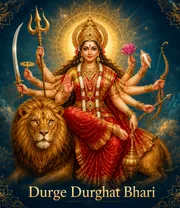
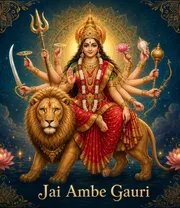
केहरि वाहन सोह भवानी।लांगुर वीर चलत अगवानी॥
kehari vāhana soha bhavānī।lāṅgura vīra calata agavānī॥
Mounted on the lion, Bhavani appears in splendor; the brave, tailed hero walks before you, leading the way.
- Verse 18
कर में खप्पर खड्ग विराजे।जाको देख काल डर भागे॥
kara mẽ khappara khaḍga virāje।jāko dekha kāla ḍara bhāge॥
In your hands shine the skull-bowl and sword, at the sight of which even death flees in fear.
- Verse 19
सोहे अस्त्र और त्रिशूला।जाते उठत शत्रु हिय शूला॥
sohe astra aura triśūlā।jāte uṭhata śatru hiya śūlā॥
Your weapons and trident shine forth, at whose rising a piercing pain rises in the enemy's heart.
- Verse 20
नगरकोट में तुम्हीं विराजत।तिहूं लोक में डंका बाजत॥
nagarakoṭa mẽ tumhī̃ virājata।tihū̃ loka mẽ ḍaṅkā bājata॥
At Nagarkot you reside in glory; the drum of your fame resounds through all three worlds.
- Verse 21
शुम्भ निशुम्भ दानव तुम मारे।रक्तबीज शंखन संहारे॥
śumbha niśumbha dānava tuma māre।raktabīja śaṅkhana saṃhāre॥
You slew the demons Shumbha and Nishumbha, and destroyed the many Raktabija demons.
- Verse 22
महिषासुर नृप अति अभिमानी।जेहि अघ भार मही अकुलानी॥
mahiṣāsura nṛpa ati abhimānī।jehi agha bhāra mahī akulānī॥
The demon-king Mahishasura was extremely arrogant; under the weight of his sins the earth was in torment.
- Verse 23
रूप कराल कालिका धारा।सैन्य सहित तुम तिहि संहारा॥
rūpa karāla kālikā dhārā।sainya sahita tuma tihi saṃhārā॥
You assumed the terrible form of Kalika, and destroyed him together with his army.
- Verse 24
परी गाढ़ संतन पर जब जब।भई सहाय मातु तुम तब तब॥
parī gāṛha santana para jaba jaba।bhaī sahāya mātu tuma taba taba॥
Whenever grave trouble befell the saints, you, Mother, came to their aid.
- Verse 25
अमरपुरी अरु बासव लोका।तब महिमा सब रहें अशोका॥
amarapurī aru bāsava lokā।taba mahimā saba rahẽ aśokā॥
Amarpuri and the realm of Indra remain free of sorrow, by your glory alone.
- Verse 26
ज्वाला में है ज्योति तुम्हारी।तुम्हें सदा पूजें नरनारी॥
jvālā mẽ hai jyoti tumhārī।tumhẽ sadā pūjẽ naranārī॥
At Jwala your flame burns bright; men and women worship you always.
- Verse 27
प्रेम भक्ति से जो यश गावे।दुःख दारिद्र निकट नहिं आवे॥
prema bhakti se jo yaśa gāve।duḥkha dāridra nikaṭa nahĩ āve॥
Whoever sings your glory with love and devotion, sorrow and poverty do not come near.
- Verse 28
ध्यावे तुम्हें जो नर मन लाई।जन्म मरण ताको छुटि जाई॥
dhyāve tumhẽ jo nara mana lāī।janma maraṇa tāko chuṭi jāī॥
Whoever meditates upon you with a focused mind is freed from the cycle of birth and death.
- Verse 29
जोगी सुर मुनि कहत पुकारी।योग न हो बिन शक्ति तुम्हारी॥
jogī sura muni kahata pukārī।yoga na ho bina śakti tumhārī॥
Yogis, gods, and sages proclaim aloud that without your power, no yoga can be attained.
- Verse 30
शंकर आचारज तप कीनो।काम अरु क्रोध जीति सब लीनो॥
śaṅkara ācāraja tapa kīno।kāma aru krodha jīti saba līno॥
The teacher Shankara performed austerities, and conquered desire and anger completely.
- Verse 31
निशिदिन ध्यान धरो शंकर को।काहु काल नहिं सुमिरो तुमको॥
niśidina dhyāna dharo śaṅkara ko।kāhu kāla nahĩ sumiro tumako॥
Day and night he fixed his meditation on Shankara, and at no time did he remember you.
- Verse 32
शक्ति रूप को मरम न पायो।शक्ति गई तब मन पछतायो॥
śakti rūpa ko marama na pāyo।śakti gaī taba mana pachatāyo॥
He did not grasp the secret of the form of Shakti; when his power departed, his heart was filled with regret.
- Verse 33
शरणागत हुई कीर्ति बखानी।जय जय जय जगदंब भवानी॥
śaraṇāgata huī kīrti bakhānī।jaya jaya jaya jagadamba bhavānī॥
He took refuge in you and proclaimed your glory: victory, victory, victory to Jagadamba Bhavani.
- Verse 34
भई प्रसन्न आदि जगदम्बा।दई शक्ति नहिं कीन विलंबा॥
bhaī prasanna ādi jagadambā।daī śakti nahĩ kīna vilambā॥
The primordial Jagadamba was pleased, and restored his power without delay.
- Verse 35
मोको मातु कष्ट अति घेरो।तुम बिन कौन हरै दुःख मेरो॥
moko mātu kaṣṭa ati ghero।tuma bina kauna harai duḥkha mero॥
Mother, great distress surrounds me; besides you, who can take away my sorrow?
- Verse 36
आशा तृष्णा निपट सतावें।मोह मदादिक सब बिनशावें॥
āśā tṛṣṇā nipaṭa satāvẽ।moha madādika saba binaśāvẽ॥
Desire and craving torment me completely; destroy all my delusion, pride, and the rest.
- Verse 37
शत्रु नाश कीजै महारानी।सुमिरौं इकचित तुम्हें भवानी॥
śatru nāśa kījai mahārānī।sumiraũ ikacita tumhẽ bhavānī॥
Great Queen, destroy my enemies; Bhavani, I remember you with a single-pointed mind.
- Verse 38
करो कृपा हे मातु दयाला।ऋद्धि सिद्धि दे करहु निहाला॥
karo kṛpā he mātu dayālā।ṛddhi siddhi de karahu nihālā॥
Show your grace, O compassionate Mother; grant me prosperity and spiritual power, and make me joyful.
- Verse 39
जब लगि जिऊं दया फल पाऊं।तुम्हरो यश मैं सदा सुनाऊं॥
jaba lagi jiū̃ dayā phala pāū̃।tumharo yaśa maĩ sadā sunāū̃॥
As long as I live, may I receive the fruit of your compassion; may I always proclaim your glory.
- Verse 40
दुर्गा चालीसा जो कोई गावै।सब सुख भोग परम पद पावै॥
durgā cālīsā jo koī gāvai।saba sukha bhoga parama pada pāvai॥
Whoever sings this Durga Chalisa attains every worldly joy and reaches the supreme abode.
Overview
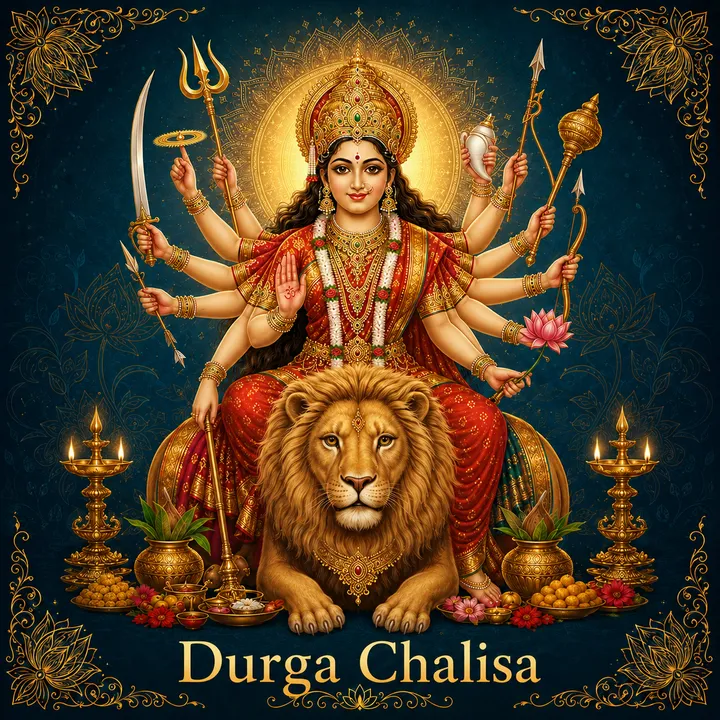
The Durga Chalisa is a devotional composition of forty verses (chalis, “forty,” in Hindi) in praise of the goddess Durga. Unlike the Hanuman Chalisa, it is not framed by separate opening or closing dohas — it runs as forty sequential couplets from its first line to its last. It moves through Durga’s radiance and iconography, her identification with other goddesses and forms of the divine feminine, a retelling of her victories over the demons Mahishasura, Shumbha, Nishumbha, and Raktabija, and a closing appeal for protection and grace. It is widely recited during Navratri and on the days of the week traditionally associated with the Goddess.
Origin and source
The closing verses name a devotee, Devidas, as having taken the Goddess’s refuge — the traditional signature by which the Chalisa identifies its author, in the same way Tulsidas names himself in the Hanuman Chalisa. Little else is established about Devidas’s life or period; the composition is generally treated as a later Hindi devotional work rather than one with the documented biography behind the Hanuman Chalisa.
Its content draws on Shakta scripture and pilgrimage tradition rather than inventing new material. The battles it recounts — Durga’s slaying of Mahishasura, and of Shumbha, Nishumbha, and the self-multiplying Raktabija — are drawn from the Devi Mahatmyam (Durga Saptashati). Its list of the Goddess’s forms — Matangi, Dhumavati, Bhuvaneshwari, Bagala, Bhairavi, Tara, Chhinnamasta (named here as Chhinna Bhala) — invokes the ten Mahavidyas, and its references to Hinglaj, Nagarkot, and Jwala point to Shakti Peethas and Devi shrines across the subcontinent. One passage (verses 30–34) tells of a great ascetic — some retellings identify him as Adi Shankaracharya — whose long austerities were directed at Shiva alone, until his powers failed him and he turned to the Goddess in surrender; the text offers this as a reminder that Shakti is inseparable from Shiva, not secondary to him.
How it is recited
The Durga Chalisa is recited daily by many devotees, and especially during Navratri, on Tuesdays and Fridays, and on Durga Ashtami. It is commonly read as part of a longer sequence of Durga devotion — alongside the Durga Saptashloki or the fuller Devi Mahatmyam, and followed by an aarti such as Jai Ambe Gauri or Ambe Tu Hai Jagdambe Kali.
Frequently asked questions
Who wrote Durga Chalisa?
How many verses does Durga Chalisa have?
Who is Durga Chalisa dedicated to?
When is Durga Chalisa typically recited?
What language is Durga Chalisa composed in?
What tradition is Durga Chalisa associated with?
Is an English translation of Durga Chalisa available?
Is there a Roman transliteration of Durga Chalisa?
Sourcing
Checked against independent sources before publishing — see our sourcing and editorial policy. Spotted an error? Report an issue .