The text
Tap Recite along to follow verse by verse — use Next, or the arrow keys.
- The 6 stanzas
- Stanza 1 (refrain)
जय जय श्री बगलामुखी माता, आरति करहुँ तुम्हारी॥
jaya jaya śrī bagalāmukhī mātā, ārati karahũ tumhārī॥
Victory, victory to Shri Bagalamukhi Mata — I perform your aarti.
- Stanza 2
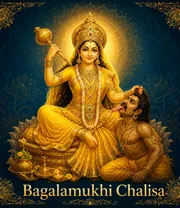
पीत वसन तन पर तव सोहै, कुण्डल की छबि न्यारी॥कर-कमलों में मुद्गर धारै, अस्तुति करहिं सकल नर-नारी॥जय जय श्री बगलामुखी माता, आरति करहुँ तुम्हारी॥
pīta vasana tana para tava sohai, kuṇḍala kī chabi nyārī॥kara-kamaloṃ meṃ mudgara dhārai, astuti karahĩ sakala nara-nārī॥jaya jaya śrī bagalāmukhī mātā, ārati karahũ tumhārī॥
Yellow garments grace your body, the beauty of your earrings is unlike any other; your lotus hands hold a mace, and all men and women worship you with praise. Victory, victory to Shri Bagalamukhi Mata — I perform your aarti.
- Stanza 3
चम्पक माल गले लहरावे, सुर नर मुनि जय जयति उचारी॥त्रिविध ताप मिटि जात सकल सब, भक्ति सदा तव है सुखकारी॥जय जय श्री बगलामुखी माता, आरति करहुँ तुम्हारी॥
campaka māla gale laharāve, sura nara muni jaya jayati ucārī॥trividha tāpa miṭi jāta sakala saba, bhakti sadā tava hai sukhakārī॥jaya jaya śrī bagalāmukhī mātā, ārati karahũ tumhārī॥
A garland of champak flowers sways at your neck; gods, men, and sages proclaim your victory. Every threefold affliction is destroyed, for devotion to you always brings happiness. Victory, victory to Shri Bagalamukhi Mata — I perform your aarti.
- Stanza 4
पालत हरत सृजत तुम जग को, सब जीवन की हो रखवारी॥मोह निशा में भ्रमत सकल जन, करहु हृदय महँ, तुम उजियारी॥जय जय श्री बगलामुखी माता, आरति करहुँ तुम्हारी॥
pālata harata sṛjata tuma jaga ko, saba jīvana kī ho rakhavārī॥moha niśā meṃ bhramata sakala jana, karahu hṛdaya mahã, tuma ujiyārī॥jaya jaya śrī bagalāmukhī mātā, ārati karahũ tumhārī॥
You sustain, you destroy, you create this world — you are the protector of all life. Amid all beings wandering lost in the night of delusion, fill their hearts, O Mother, with your light. Victory, victory to Shri Bagalamukhi Mata — I perform your aarti.
- Stanza 5
तिमिर नशावहु ज्ञान बढ़ावहु, अम्बे तुमही हो असुरारी॥सन्तन को सुख देत सदा ही, सब जन की तुम प्राण पियारी॥जय जय श्री बगलामुखी माता, आरति करहुँ तुम्हारी॥
timira naśāvahu jñāna baḍhāvahu, ambe tumahī ho asurārī॥santana ko sukha deta sadā hī, saba jana kī tuma prāṇa piyārī॥jaya jaya śrī bagalāmukhī mātā, ārati karahũ tumhārī॥
Dispel our darkness, increase our wisdom — O Mother, you alone are the foe of demons. You give your devotees happiness always; you are the beloved life-breath of all beings. Victory, victory to Shri Bagalamukhi Mata — I perform your aarti.
- Stanza 6
तव चरणन जो ध्यान लगावै, ताको हो सब भव-भयहारी॥प्रेम सहित जो करहिं आरती, ते नर मोक्षधाम अधिकारी॥जय जय श्री बगलामुखी माता, आरति करहुँ तुम्हारी॥
tava caraṇana jo dhyāna lagāvai, tāko ho saba bhava-bhayahārī॥prema sahita jo karahĩ āratī, te nara mokṣadhāma adhikārī॥jaya jaya śrī bagalāmukhī mātā, ārati karahũ tumhārī॥
Whoever fixes their meditation on your feet, for them you dispel every fear of worldly existence. Those who perform your aarti with love become worthy of the abode of liberation. Victory, victory to Shri Bagalamukhi Mata — I perform your aarti.
- Closing doha
- Doha (closing)
बगलामुखी की आरती, पढ़ै सुनै जो कोय।विनती कुलपति मिश्र की, सुख-सम्पति सब होय॥
bagalāmukhī kī āratī, paḍhai sunai jo koya।vinatī kulapati miśra kī, sukha-sampati saba hoya॥
Whoever reads or hears this aarti to Bagalamukhi — this is the prayer of Kulapati Mishra — obtains all happiness and prosperity.
Overview
Jai Jai Shri Bagalamukhi Mata is a short Hindi aarti — a lamp-offering hymn — addressed to Bagalamukhi, the eighth of the ten Mahavidyas, the group of fierce, cosmic forms of the Goddess central to Shakta Tantra. Unlike the Bagalamukhi Chalisa, a separate forty-verse composition that sets out her iconography and traditional worship at length, this aarti is a compact devotional song of five couplets framed by a refrain, in the same everyday genre as the aartis sung nightly for Ganesha or Durga. It touches only briefly on her form — her yellow garments, her earrings, the mace in her lotus hands — and spends most of its verses on praise: as protector, creator, and destroyer of the world; as the one who dispels delusion and darkness; and as the giver of freedom from fear to those who meditate on her.
Origin and source
The aarti closes with a doha naming its composer as Kulapati Mishra — the same name that signs the closing dohas of the Bagalamukhi Chalisa already on this site, where he identifies himself further as the son of Santsharan, of Haripur village in the Haridwar region. This aarti’s own text does not repeat that fuller colophon or give a date, so this page attributes it to the same named composer without assuming further biographical detail beyond what the aarti itself states. Beyond the colophon, no independent scholarly source for the aarti’s date or first publication was found; it circulates today primarily through devotional lyric collections rather than older printed anthologies.
How it is recited
Jai Jai Shri Bagalamukhi Mata is sung as part of Bagalamukhi worship, most often while a lit lamp or camphor flame is circled before her image, in the same manner as any other aarti. Devotional sources associate it particularly with Amavasya (the new-moon day), Gupt Navratri, and Bagalamukhi Jayanti, and describe devotees turning to her — as with the wider Mahavidya tradition she belongs to — when facing conflict, legal disputes, or obstacles they hope to see stilled. These associations are presented here as the tradition’s own devotional framing rather than claims this page is asserting as fact.
Frequently asked questions
How many verses does Jai Jai Shri Bagalamukhi Mata have?
Who is Jai Jai Shri Bagalamukhi Mata dedicated to?
When is Jai Jai Shri Bagalamukhi Mata typically recited?
What language is Jai Jai Shri Bagalamukhi Mata composed in?
What tradition is Jai Jai Shri Bagalamukhi Mata associated with?
Is an English translation of Jai Jai Shri Bagalamukhi Mata available?
Is there a Roman transliteration of Jai Jai Shri Bagalamukhi Mata?
Sourcing
Checked against independent sources before publishing — see our sourcing and editorial policy. Spotted an error? Report an issue .