The text
Tap Recite along to follow verse by verse — use Next, or the arrow keys.
- Stanza
- Stanza 1
दुर्गे दुर्घट भारी तुजविण संसारी।अनाथनाथे अंबे करुणा विस्तारी।वारी वारी जन्ममरणाते वारी।हारी पडलो आता संकट नीवारी॥
durge durghaṭa bhārī tujaviṇa saṃsārī।anāthanāthe ambe karuṇā vistārī।vārī vārī janmamaraṇāte vārī।hārī paḍalo ātā saṅkaṭa nīvārī॥
O Durga, formidable amid every calamity — without you this worldly life cannot be crossed. Refuge of the helpless, Amba, spread wide your compassion. Ward off, ward off this round of birth and death — I have been overcome; now turn back my danger.
- Refrain
- Refrain (Dhrupad)
जय देवी जय देवी जय महिषासुरमथनी।सुरवरईश्वरवरदे तारक संजीवनी॥
jaya devī jaya devī jaya mahiṣāsuramathanī।suravaraīśvaravarade tāraka sañjīvanī॥
Glory, glory, glory to the Goddess, crusher of the demon Mahishasura — granter of boons to the gods and their lord, the life-restoring deliverer.
- The 2 stanzas
- Stanza 2
त्रिभुवनी भुवनी पाहता तुज ऐसे नाही।चारी श्रमले परंतु न बोलवे काही।साही विवाद करिता पडिले प्रवाही।ते तूं भक्तालागी पावसि लवलाही॥
tribhuvanī bhuvanī pāhatā tuja aise nāhī।cārī śramale parantu na bolave kāhī।sāhī vivāda karitā paḍile pravāhī।te tūṃ bhaktālāgī pāvasi lavalāhī॥
Searching through all three worlds, none is found equal to you. The four Vedas themselves grew weary and could say nothing of you; the six schools of debate were only swept along by that flow. Yet for your devotees' sake, you come to their aid at once.
- Stanza 3
प्रसन्न वदने प्रसन्न होसी निजदासा।क्लेशापासूनि सोडी तोडी भवपाशा।अंबे तुजवाचून कोण पुरविल आशा।नरहरी तल्लीन झाला पदपंकजलेशा॥
prasanna vadane prasanna hosī nijadāsā।kleśāpāsūni soḍī toḍī bhavapāśā।ambe tujavācūna koṇa puravila āśā।naraharī tallīna jhālā padapaṅkajaleśā॥
O gracious-faced one, be gracious now to your own servant; free me from affliction, cut through the snare of worldly bondage. Amba, without you, who could fulfill this hope? Narahari lies utterly absorbed, lost in but a trace of your lotus feet.
Overview
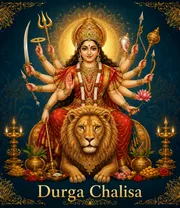
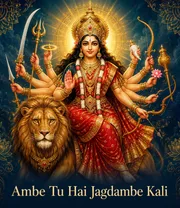
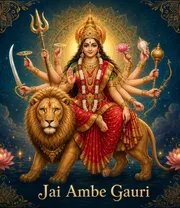
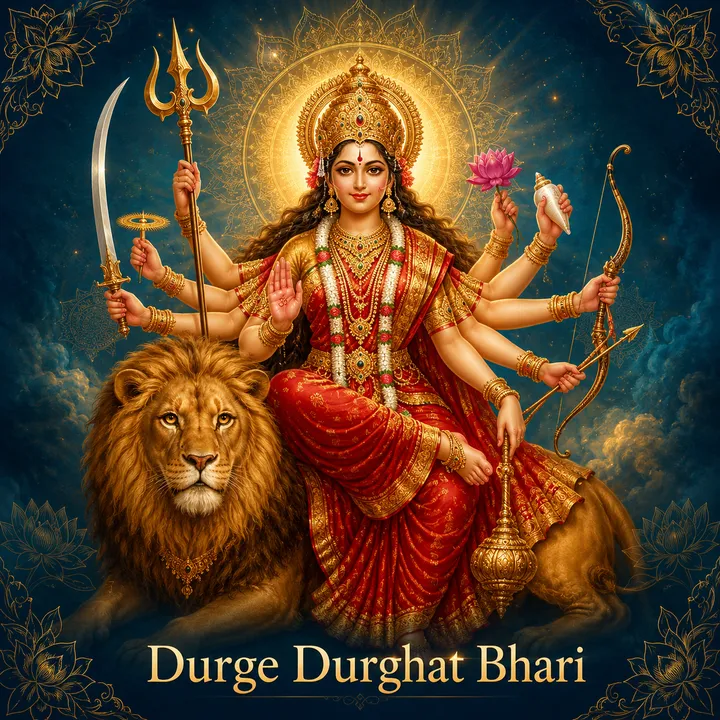
Durge Durghat Bhari (“O Durga, formidable amid great calamity”) is a Marathi aarti to Durga in her form as Mahishasuramardini, slayer of the buffalo-demon Mahishasura. Its opening stanza pleads for the Goddess’s compassion and deliverance from the cycle of birth and death; a refrain naming her as Mahishasura’s destroyer follows it and is repeated after each of the two remaining stanzas, so a full recitation runs to six sung parts even though the composition itself is built from three verses plus the refrain. It is one of the aartis most closely associated with Durga and Devi worship in Maharashtra, sung especially through Navratri.
Origin and source
The aarti carries its author’s own signature in its closing line — “Narahari tallina jhala padapankajalesha,” “Narahari lies utterly absorbed at your lotus feet” — a first-person convention common to Marathi bhakti poetry, seen also in Samarth Ramdas’s “dasa ramacha” in Sukhkarta Dukhharta and Namdev’s “mhane Nama” in Ghalin Lotangan. Devotional collections and literary sources consistently credit the aarti to a poet named Narhari (Narahari) on the strength of that signature; beyond it, his identity is not otherwise well documented in the sources consulted for this page, and this page does not identify him with any specific historical figure of the same name. Like the other Marathi aartis in the standard household sequence, it is composed in the vernacular rather than Sanskrit, addressing the Goddess directly as Devi and Amba (Mother) rather than reciting her Puranic epithets at length.
How it is recited
Durge Durghat Bhari is sung with its refrain repeated after each of the two later stanzas, typically to a harmonium or simple clapped rhythm, with an aarti thali (a plate bearing a lit lamp) circled before the Goddess’s image as the song is sung. In Maharashtrian households it is a fixture of the standard aarti sequence: it commonly follows Sukhkarta Dukhharta, the Ganesh aarti that opens the sequence in most homes, and is itself followed by Ghalin Lotangan, the short prayer that closes it. It is sung nightly through Navratri in front of the Goddess’s image or ghatasthapana, and remains one of the aartis sung regularly at Devi temples and in home worship through the rest of the year.
Frequently asked questions
Who wrote Durge Durghat Bhari?
How many verses does Durge Durghat Bhari have?
Who is Durge Durghat Bhari dedicated to?
When is Durge Durghat Bhari typically recited?
What language is Durge Durghat Bhari composed in?
What tradition is Durge Durghat Bhari associated with?
Is an English translation of Durge Durghat Bhari available?
Is there a Roman transliteration of Durge Durghat Bhari?
Sourcing
Checked against independent sources before publishing — see our sourcing and editorial policy. Spotted an error? Report an issue .