The text
Tap Recite along to follow verse by verse — use Next, or the arrow keys.
- Stanza 1 (refrain)
अम्बे तू है जगदम्बे काली, जय दुर्गे खप्पर वाली।तेरे ही गुण गावें भारती, ओ मैया हम सब उतारे तेरी आरती॥
ambe tū hai jagadambe kālī, jaya durge khappara vālī।tere hī guṇa gāve̐ bhāratī, o maiyā hama saba utāre terī āratī॥
You are Ambe, the Mother of the universe, the dark goddess Kali; victory to Durga, who bears the skull-bowl. All the land sings only your praises — O Mother, we all perform your aarti.
- Stanza 2
तेरे भक्त जनो पर माता, भीर पड़ी है भारी।दानव दल पर टूट पड़ो माँ, करके सिंह सवारी॥सौ-सौ सिहों से बलशाली, है अष्ट भुजाओं वाली, दुष्टों को तू ही ललकारती।ओ मैया हम सब उतारे तेरी आरती॥अम्बे तू है जगदम्बे काली, जय दुर्गे खप्पर वाली।तेरे ही गुण गावें भारती, ओ मैया हम सब उतारे तेरी आरती॥
tere bhakta jano para mātā, bhīra paṛī hai bhārī।dānava dala para ṭūṭa paṛo mā̃, karake sinha savārī॥sau-sau sihõ se balaśālī, hai aṣṭa bhujāo̐ vālī, duṣṭo̐ ko tū hī lalakāratī।o maiyā hama saba utāre terī āratī॥ambe tū hai jagadambe kālī, jaya durge khappara vālī।tere hī guṇa gāve̐ bhāratī, o maiyā hama saba utāre terī āratī॥
Your devotees, Mother, face a heavy crowd of troubles; tear through the demon hordes, Mother, riding upon your lion. Stronger than a hundred lions, you are the eight-armed one, who challenges the wicked — O Mother, we all perform your aarti. You are Ambe, the Mother of the universe, the dark goddess Kali; victory to Durga, who bears the skull-bowl. All the land sings only your praises — O Mother, we all perform your aarti.
- Stanza 3
माँ-बेटे का है इस जग में बड़ा ही निर्मल नाता।पूत-कपूत सुने है पर ना माता सुनी कुमाता॥सब पे करूणा दर्शाने वाली, अमृत बरसाने वाली, दुखियों के दुखड़े निवारती।ओ मैया हम सब उतारे तेरी आरती॥अम्बे तू है जगदम्बे काली, जय दुर्गे खप्पर वाली।तेरे ही गुण गावें भारती, ओ मैया हम सब उतारे तेरी आरती॥
mā̃-beṭe kā hai isa jaga me̐ baṛā hī nirmala nātā।pūta-kapūta sune hai para nā mātā sunī kumātā॥saba pe karuṇā darśāne vālī, amṛta barasāne vālī, dukhiyo̐ ke dukhaṛe nivāratī।o maiyā hama saba utāre terī āratī॥ambe tū hai jagadambe kālī, jaya durge khappara vālī।tere hī guṇa gāve̐ bhāratī, o maiyā hama saba utāre terī āratī॥
The bond between a mother and her child in this world is the purest of all; a son may turn out wicked, it is said, but a mother is never called a bad mother. You who show compassion to all and rain down nectar, who remove the sorrows of the sorrowful — O Mother, we all perform your aarti. You are Ambe, the Mother of the universe, the dark goddess Kali; victory to Durga, who bears the skull-bowl. All the land sings only your praises — O Mother, we all perform your aarti.
- Stanza 4
नहीं मांगते धन और दौलत, न चांदी न सोना।हम तो मांगें तेरे चरणों में छोटा सा कोना॥सबकी बिगड़ी बनाने वाली, लाज बचाने वाली, सतियों के सत को संवारती।ओ मैया हम सब उतारे तेरी आरती॥अम्बे तू है जगदम्बे काली, जय दुर्गे खप्पर वाली।तेरे ही गुण गावें भारती, ओ मैया हम सब उतारे तेरी आरती॥
nahī̐ mā̃gate dhana aura daulata, na cā̃dī na sonā।hama to mā̃ge̐ tere caraṇo̐ me̐ choṭā sā konā॥sabakī bigaṛī banāne vālī, lāja bacāne vālī, satiyo̐ ke sata ko sa̐vāratī।o maiyā hama saba utāre terī āratī॥ambe tū hai jagadambe kālī, jaya durge khappara vālī।tere hī guṇa gāve̐ bhāratī, o maiyā hama saba utāre terī āratī॥
We do not ask for wealth or riches, nor for silver or gold; we ask only for a small corner at your feet. You who mend what is broken and guard our honor, who preserve the virtue of devoted women — O Mother, we all perform your aarti. You are Ambe, the Mother of the universe, the dark goddess Kali; victory to Durga, who bears the skull-bowl. All the land sings only your praises — O Mother, we all perform your aarti.
- Stanza 5
चरण शरण में खड़े तुम्हारी, ले पूजा की थाली।वरद हस्त सर पर रख दो माँ, संकट हरने वाली॥माँ भर दो भक्ति रस प्याली, अष्ट भुजाओं वाली, भक्तों के कारज तू ही सारती।ओ मैया हम सब उतारे तेरी आरती॥अम्बे तू है जगदम्बे काली, जय दुर्गे खप्पर वाली।तेरे ही गुण गावें भारती, ओ मैया हम सब उतारे तेरी आरती॥
caraṇa śaraṇa me̐ khaṛe tumhārī, le pūjā kī thālī।varada hasta sara para rakha do mā̃, sa̐kaṭa harane vālī॥mā̃ bhara do bhakti rasa pyālī, aṣṭa bhujāo̐ vālī, bhakto̐ ke kāraja tū hī sāratī।o maiyā hama saba utāre terī āratī॥ambe tū hai jagadambe kālī, jaya durge khappara vālī।tere hī guṇa gāve̐ bhāratī, o maiyā hama saba utāre terī āratī॥
We stand in your shelter and refuge, bearing the plate of worship; place your boon-giving hand upon our heads, Mother, remover of troubles. Fill our cup with the nectar of devotion, eight-armed one — you alone accomplish the work of your devotees — O Mother, we all perform your aarti. You are Ambe, the Mother of the universe, the dark goddess Kali; victory to Durga, who bears the skull-bowl. All the land sings only your praises — O Mother, we all perform your aarti.
Overview
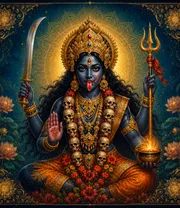
Ambe Tu Hai Jagdambe Kali is a Hindi aarti of four stanzas in praise of Durga, addressed to her both as Ambe (Mother) and as Jagdambe Kali — the dark Mother of the universe. Each stanza closes with the same refrain, “Ambe tu hai Jagdambe Kali, jai Durge khappar wali,” so the invocation recurs throughout the song exactly as it is sung and printed in devotional collections. It is one of the most familiar aartis in North Indian Shakta jagran singing, closely associated with the popular recorded rendition by playback singer Anuradha Paudwal, and heard alongside Jai Ambe Gauri at Navratri gatherings across the year.
Origin and source
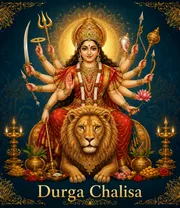
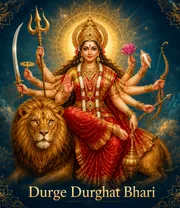
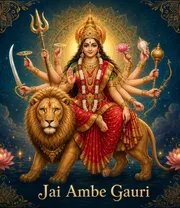
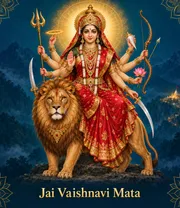
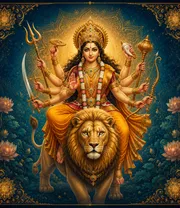
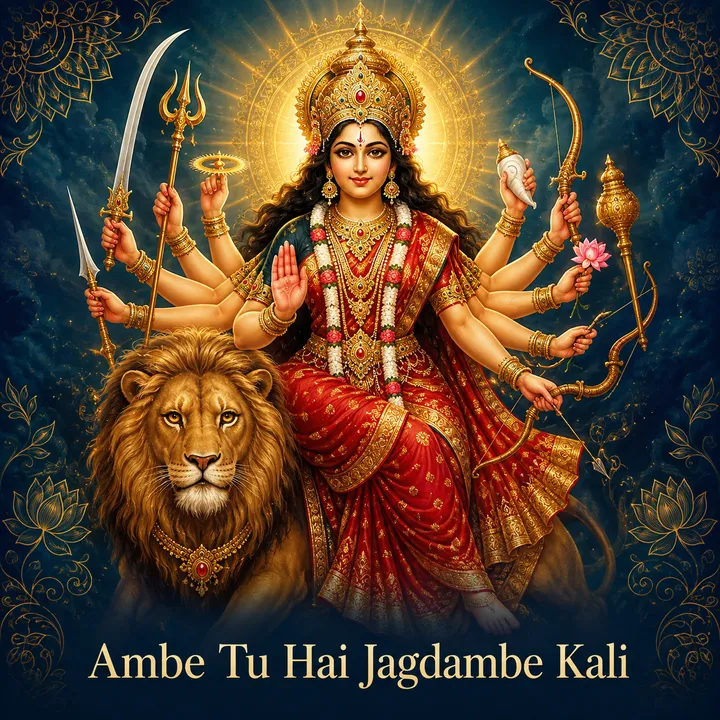
Unlike Jai Ambe Gauri, which is traditionally credited to the 19th-century poet Pandit Shraddha Ram Phillauri, no single composer for Ambe Tu Hai Jagdambe Kali is consistently documented across devotional sources, and this aarti is best understood as part of the broader modern North Indian jagran-bhajan repertoire rather than as an older, individually authored text. The stanzas describe Durga’s iconography — her eight arms, her lion mount, and her power to overwhelm demon hordes — and ask for nothing beyond a small place in her care. One line, “Poot-kapoot sune hai par na mata suni kumata” (“a son may turn out wicked, it is said, but a mother is never called a bad mother”), echoes the well-known verse from the Devi Mahatmyam’s kshama-prarthana (forgiveness prayer), “kuputro jayeta kvachidapi kumata na bhavati,” reflecting the Shakta view of the Goddess as an unfailingly compassionate mother even when addressed in her fierce, Kali-like form.
How it is recited
Ambe Tu Hai Jagdambe Kali is a staple of Navratri jagrans — the all-night devotional singing gatherings held in the Goddess’s honor — and of Mata ki chowki, the home or community worship gatherings centered on Durga and Kali. It is also associated with Friday, the day of the week traditionally linked to the Goddess in North Indian practice. As with most aartis, it is sung in a call-and-response style: a lead singer or reciter carries each stanza, and everyone present joins in on the refrain, typically while a lit diya or camphor flame is circled before the deity’s image.
Frequently asked questions
How many verses does Ambe Tu Hai Jagdambe Kali have?
Who is Ambe Tu Hai Jagdambe Kali dedicated to?
When is Ambe Tu Hai Jagdambe Kali typically recited?
What language is Ambe Tu Hai Jagdambe Kali composed in?
What tradition is Ambe Tu Hai Jagdambe Kali associated with?
Is an English translation of Ambe Tu Hai Jagdambe Kali available?
Is there a Roman transliteration of Ambe Tu Hai Jagdambe Kali?
Sourcing
Checked against independent sources before publishing — see our sourcing and editorial policy. Spotted an error? Report an issue .