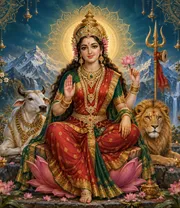
The text
Tap Recite along to follow verse by verse — use Next, or the arrow keys.
- Opening doha
- Doha (opening)
जय गिरी तनये दक्षजे, शम्भू प्रिये गुणखानि।गणपति जननी पार्वती, अम्बे! शक्ति! भवानि॥
jaya girī tanaye dakṣaje, śambhū priye guṇakhāni।gaṇapati jananī pārvatī, ambe! śakti! bhavāni॥
Victory to you, daughter of the mountain, born of Daksha, beloved of Shambhu, treasury of virtue. Mother of Ganapati, Parvati — O Ambe! O Shakti! O Bhavani!
- The 40 chaupais
- Chaupai 1
ब्रह्मा भेद न तुम्हरो पावे।पंच बदन नित तुमको ध्यावे॥
brahmā bheda na tumharo pāve।pañca badana nita tumako dhyāve॥
Brahma cannot fathom your mystery; the five-faced one (Shiva) ever meditates upon you.
- Chaupai 2
षड्मुख कहि न सकत यश तेरो।सहसबदन श्रम करत घनेरो॥
ṣaḍmukha kahi na sakata yaśa tero।sahasabadana śrama karata ghanero॥
The six-faced one (Kartikeya) cannot recount your glory; the thousand-faced one (Shesha) labors greatly at it.
- Chaupai 3
तेऊ पार न पावत माता।स्थित रक्षा लय हित सजाता॥
teū pāra na pāvata mātā।sthita rakṣā laya hita sajātā॥
Even he cannot find your limit, O Mother; you array yourself for the sake of sustaining, protecting, and dissolving the world.
- Chaupai 4
अधर प्रवाल सदृश अरुणारे।अति कमनीय नयन कजरारे॥
adhara pravāla sadṛśa aruṇāre।ati kamanīya nayana kajarāre॥
Your lips are red like coral; your kohl-lined eyes are exceedingly lovely.
- Chaupai 5
ललित ललाट विलेपित केशर।कुंकुम अक्षत शोभा मनहर॥
lalita lalāṭa vilepita keśara।kuṅkuma akṣata śobhā manahara॥
Your graceful forehead is anointed with saffron; vermilion and unbroken rice grains adorn it with mind-captivating beauty.
- Chaupai 6
कनक बसन कंचुकी सजाए।कटी मेखला दिव्य लहराए॥
kanaka basana kañcukī sajāe।kaṭī mekhalā divya laharāe॥
You wear golden garments and a bodice; a divine girdle sways at your waist.
- Chaupai 7
कंठ मदार हार की शोभा।जाहि देखि सहजहि मन लोभा॥
kaṇṭha madāra hāra kī śobhā।jāhi dekhi sahajahi mana lobhā॥
A garland of madar flowers graces your neck — seeing it, the mind is naturally captivated.
- Chaupai 8
बालारुण अनंत छबि धारी।आभूषण की शोभा प्यारी॥
bālāruṇa ananta chabi dhārī।ābhūṣaṇa kī śobhā pyārī॥
You bear the boundless beauty of the rising sun's glow; the splendor of your ornaments is dear to behold.
- Chaupai 9
नाना रत्न जड़ित सिंहासन।तापर राजति हरि चतुरानन॥
nānā ratna jaḍita siṃhāsana।tāpara rājati hari caturānana॥
A throne set with many gems is yours; upon it Hari (Vishnu) and four-faced Brahma also take their place.
- Chaupai 10
इन्द्रादिक परिवार पूजित।जग मृग नाग यक्ष रव कूजित॥
indrādika parivāra pūjita।jaga mṛga nāga yakṣa rava kūjita॥
Indra and the gods, with their families, worship you; the world's creatures, serpents, and yakshas resound in your praise.
- Chaupai 11
गिर कैलास निवासिनी जय जय।कोटिक प्रभा विकासिनी जय जय॥
gira kailāsa nivāsinī jaya jaya।koṭika prabhā vikāsinī jaya jaya॥
Victory, victory to you, dweller of Mount Kailash; victory, victory to you, whose radiance blazes like millions of suns.
- Chaupai 12
त्रिभुवन सकल कुटुंब तिहारी।अणु अणु महं तुम्हारी उजियारी॥
tribhuvana sakala kuṭumba tihārī।aṇu aṇu mahaṃ tumhārī ujiyārī॥
All three worlds are your family; your light pervades every single atom.
- Chaupai 13
हैं महेश प्राणेश, तुम्हारे।त्रिभुवन के जो नित रखवारे॥
haiṃ maheśa prāṇeśa, tumhāre।tribhuvana ke jo nita rakhavāre॥
Mahesh (Shiva), lord of your very breath, is yours — he who ever guards the three worlds.
- Chaupai 14
उनसो पति तुम प्राप्त कीन्ह जब।सुकृत पुरातन उदित भए तब॥
unaso pati tuma prāpta kīnha jaba।sukṛta purātana udita bhae taba॥
When you obtained him as your husband, the merit of your ancient good deeds came to fruition.
- Chaupai 15
बूढ़ा बैल सवारी जिनकी।महिमा का गावे कोउ तिनकी॥
būṛhā baila savārī jinakī।mahimā kā gāve kou tinakī॥
He whose mount is an aged bull — who indeed could sing the full measure of his glory?
- Chaupai 16
सदा श्मशान बिहारी शंकर।आभूषण हैं भुजंग भयंकर॥
sadā śmaśāna bihārī śaṅkara।ābhūṣaṇa haiṃ bhujaṅga bhayaṅkara॥
Shankar ever wanders in the cremation ground; fearsome serpents are his ornaments.
- Chaupai 17
कंठ हलाहल को छबि छायी।नीलकंठ की पदवी पायी॥
kaṇṭha halāhala ko chabi chāyī।nīlakaṇṭha kī padavī pāyī॥
The dark hue of the halahala poison settled on his throat, and so he attained the name Nilakantha, the blue-throated one.
- Chaupai 18
देव मगन के हित अस किन्हों।विष लै आपु तिनहि अमि दिन्हों॥
deva magana ke hita asa kinhoṃ।viṣa lai āpu tinahi ami dinhoṃ॥
He did this for the gods' relief — taking the poison upon himself, and giving them the nectar instead.
- Chaupai 19
ताकी, तुम पत्नी छवि धारिणी।दुरित विदारिणी मंगल कारिणी॥
tākī, tuma patnī chavi dhāriṇī।durita vidāriṇī maṅgala kāriṇī॥
You are his wife, bearer of such beauty — destroyer of sin, bestower of auspiciousness.
- Chaupai 20
देखि परम सौंदर्य तिहारो।त्रिभुवन चकित बनावन हारो॥
dekhi parama saundarya tihāro।tribhuvana cakita banāvana hāro॥
Seeing your supreme beauty, all three worlds are struck with wonder.
- Chaupai 21
भय भीता सो माता गंगा।लज्जा मय है सलिल तरंगा॥
bhaya bhītā so mātā gaṅgā।lajjā maya hai salila taraṅgā॥
Fearful, Mother Ganga is full of shame in the waves of her own waters.
- Chaupai 22
सौत समान शम्भू पहआयी।विष्णु पदाब्ज छोड़ि सो धायी॥
sauta samāna śambhū pahaāyī।viṣṇu padābja choṛi so dhāyī॥
Regarded as a rival wife, she came running to Shambhu, leaving behind Vishnu's lotus feet.
- Chaupai 23
तेहि कों कमल बदन मुरझायो।लखी सत्वर शिव शीश चढ़ायो॥
tehi koṃ kamala badana murajhāyo।lakhī satvara śiva śīśa caṛhāyo॥
Her lotus face withered with shame; seeing this, Shiva quickly took her upon his own head.
- Chaupai 24
नित्यानंद करी बरदायिनी।अभय भक्त कर नित अनपायिनी॥
nityānanda karī baradāyinī।abhaya bhakta kara nita anapāyinī॥
Giver of eternal bliss and boons, you make your devotees fearless, unfailing toward them always.
- Chaupai 25
अखिल पाप त्रयताप निकन्दिनी।माहेश्वरी, हिमालय नन्दिनी॥
akhila pāpa trayatāpa nikandinī।māheśvarī, himālaya nandinī॥
Destroyer of all sin and every threefold affliction — O Maheshwari, daughter of the Himalaya.
- Chaupai 26
काशी पुरी सदा मन भायी।सिद्ध पीठ तेहि आपु बनायी॥
kāśī purī sadā mana bhāyī।siddha pīṭha tehi āpu banāyī॥
The city of Kashi has ever delighted your heart; you made it your own siddha pitha, a seat of power.
- Chaupai 27
भगवती प्रतिदिन भिक्षा दात्री।कृपा प्रमोद सनेह विधात्री॥
bhagavatī pratidina bhikṣā dātrī।kṛpā pramoda saneha vidhātrī॥
O Bhagavati, giver of daily alms; ordainer of grace, joy, and affection.
- Chaupai 28
रिपुक्षय कारिणी जय जय अम्बे।वाचा सिद्ध करि अवलम्बे॥
ripukṣaya kāriṇī jaya jaya ambe।vācā siddha kari avalambe॥
Destroyer of enemies, victory, victory to you, O Mother; you make true the words of those who rely on you.
- Chaupai 29
गौरी उमा शंकरी काली।अन्नपूर्णा जग प्रतिपाली॥
gaurī umā śaṅkarī kālī।annapūrṇā jaga pratipālī॥
Gauri, Uma, Shankari, Kali — as Annapurna, you nourish and sustain the whole world.
- Chaupai 30
सब जन की ईश्वरी भगवती।पतिप्राणा परमेश्वरी सती॥
saba jana kī īśvarī bhagavatī।patiprāṇā parameśvarī satī॥
Goddess and sovereign of all people, holding your husband as your very life — O supreme, faithful Sati.
- Chaupai 31
तुमने कठिन तपस्या कीनी।नारद सों जब शिक्षा लीनी॥
tumane kaṭhina tapasyā kīnī।nārada soṃ jaba śikṣā līnī॥
You performed harsh austerity, after receiving instruction from Narada.
- Chaupai 32
अन्न न नीर न वायु अहारा।अस्थि मात्रतन भयउ तुम्हारा॥
anna na nīra na vāyu ahārā।asthi mātratana bhayau tumhārā॥
Without food, without water, without even air as sustenance, your body was reduced to bone alone.
- Chaupai 33
पत्र घास को खाद्य न भायउ।उमा नाम तब तुमने पायउ॥
patra ghāsa ko khādya na bhāyau।umā nāma taba tumane pāyau॥
You would not even take leaves or grass as food; it was then that you received the name Uma.
- Chaupai 34
तप बिलोकी ऋषि सात पधारे।लगे डिगावन डिगी न हारे॥
tapa bilokī ṛṣi sāta padhāre।lage ḍigāvana ḍigī na hāre॥
Seeing your austerity, the seven sages arrived; they tried to shake your resolve, but you did not waver, undefeated.
- Chaupai 35
तब तव जय जय जय उच्चारेउ।सप्तऋषि, निज गेह सिद्धारेउ॥
taba tava jaya jaya jaya uccāreu।saptaṛṣi, nija geha siddhāreu॥
Then they proclaimed 'victory, victory, victory' to you, and the seven sages returned to their own abodes.
- Chaupai 36
सुर विधि विष्णु पास तब आए।वर देने के वचन सुनाए॥
sura vidhi viṣṇu pāsa taba āe।vara dene ke vacana sunāe॥
Then Brahma and Vishnu, together with the gods, came to you and spoke the promise of a boon.
- Chaupai 37
मांगे उमा वर पति तुम तिनसों।चाहत जग त्रिभुवन निधि जिनसों॥
māṅge umā vara pati tuma tinasoṃ।cāhata jaga tribhuvana nidhi jinasoṃ॥
You, Uma, asked them for the husband whom the whole world and the three realms desire as their treasure.
- Chaupai 38
एवमस्तु कही ते दोऊ गए।सुफल मनोरथ तुमने लए॥
evamastu kahī te doū gae।suphala manoratha tumane lae॥
Saying 'so be it,' the two of them departed, and you obtained the fruit of your heart's desire.
- Chaupai 39
करि विवाह शिव सों हे भामा।पुनः कहाई हर की बामा॥
kari vivāha śiva soṃ he bhāmā।punaḥ kahāī hara kī bāmā॥
Having married Shiva, O gracious one, you came to be called, once again, the consort at Hara's side.
- Chaupai 40
जो पढ़िहै जन यह चालीसा।धन जन सुख देइहै तेहि ईसा॥
jo paṛhihai jana yaha cālīsā।dhana jana sukha deihai tehi īsā॥
Whoever recites this chalisa, to that person the Goddess shall grant wealth, offspring, and happiness.
- Closing doha
- Doha (closing)
कूट चन्द्रिका सुभग शिर, जयति जयति सुख खानि।पार्वती निज भक्त हित, रहहु सदा वरदानि॥
kūṭa candrikā subhaga śira, jayati jayati sukha khāni।pārvatī nija bhakta hita, rahahu sadā varadāni॥
With the crescent's brightness gracing your beautiful head — victory, victory, O treasury of joy. For the sake of your own devotees, Parvati, remain forever the giver of boons.
Overview
The Parvati Chalisa is a Hindi devotional composition of forty chaupai couplets framed by an opening and closing doha, addressed to Parvati as the daughter of the Himalaya and consort of Shiva. Its verses move through her beauty and ornaments, her enthronement above the worshipping gods, her marriage to Shiva and the mythic events surrounding it — Shiva swallowing the halahala poison, Ganga’s arrival on his head — and, in its closing third, the story of her own austerity: the harsh tapasya by which she won Shiva as her husband. It closes, like other chalisas, with a doha describing the benefit of reciting it with devotion.
Origin and source
Unlike the Hanuman Chalisa, confidently attributed to Tulsidas, or even the Ganesh Chalisa, whose text names a composer (“Ramsundar”) within its own verses, the Parvati Chalisa carries no such internal signature and no securely documented author. It is treated here as a traditional composition circulated across North Indian devotional practice.
The text’s own verses draw on well-known Puranic material. Its opening doha addresses Parvati as both “daughter of the mountain” (Himalaya) and “born of Daksha” — an echo of the Puranic account in which Sati, Daksha’s daughter and Shiva’s first wife, is reborn as Himalaya’s daughter to become his second consort. Later verses (Chaupai 31–34) recount her severe austerity, undertaken on Narada’s counsel, in which she refused even leaves and grass as food; this is the episode from which, in the wider Puranic tradition, she receives the name Uma. The chalisa also narrates Shiva swallowing the halahala poison churned from the ocean, and Ganga’s arrival in his matted hair — both recounted here from Parvati’s vantage point as his wife.
How it is recited
The Parvati Chalisa is recited by her devotees on Monday, the day widely associated with Shiva-Parvati worship in North Indian practice, and especially throughout Hartalika Teej — the fast kept mainly by women of North India and Nepal, who pray to Parvati for a devoted husband or for harmony in marriage, a practice that mirrors the chalisa’s own account of the austerity Parvati undertook to win Shiva. It is also commonly recited through Shravan, the monsoon month held sacred to Shiva, often alongside the Shiva Chalisa.
Frequently asked questions
How many verses does Parvati Chalisa have?
Who is Parvati Chalisa dedicated to?
When is Parvati Chalisa typically recited?
What language is Parvati Chalisa composed in?
What tradition is Parvati Chalisa associated with?
Is an English translation of Parvati Chalisa available?
Is there a Roman transliteration of Parvati Chalisa?
Sourcing
Checked against independent sources before publishing — see our sourcing and editorial policy. Spotted an error? Report an issue .