The text
Tap Recite along to follow verse by verse — use Next, or the arrow keys.
- Stanza 1 (refrain)
बारम्बार प्रणाम, मैया बारम्बार प्रणाम॥
bārambāra praṇāma, maiyā bārambāra praṇāma॥
Salutations again and again, salutations again and again, O Mother.
- Stanza 2
जो नहीं ध्यावे तुम्हें अम्बिके, कहाँ उसे विश्राम।अन्नपूर्णा देवी नाम तिहारो, लेत होत सब काम॥बारम्बार प्रणाम, मैया बारम्बार प्रणाम॥
jo nahī̃ dhyāve tumhẽ ambike, kahā̃ use viśrāma।annapūrṇā devī nāma tihāro, leta hota saba kāma॥bārambāra praṇāma, maiyā bārambāra praṇāma॥
Whoever does not meditate on you, O Ambike, finds no rest anywhere; through your name alone, Annapurna Devi, every task is accomplished. Salutations again and again, salutations again and again, O Mother.
- Stanza 3
प्रलय युगान्तर और जन्मान्तर, कालान्तर तक नाम।सुर सुरों की रचना करती, कहाँ कृष्ण कहाँ राम॥बारम्बार प्रणाम, मैया बारम्बार प्रणाम॥
pralaya yugāntara aura janmāntara, kālāntara taka nāma।sura surõ kī racanā karatī, kahā̃ kṛṣṇa kahā̃ rāma॥bārambāra praṇāma, maiyā bārambāra praṇāma॥
Through dissolution, ages, and rebirth, your name endures across time itself; you fashion even the gods — what then of Krishna, what then of Rama. Salutations again and again, salutations again and again, O Mother.
- Stanza 4
चूमहि चरण चतुर चतुरानन, चारु चक्रधर श्याम।चंद्रचूड़ चन्द्रानन चाकर, शोभा लखहि ललाम॥बारम्बार प्रणाम, मैया बारम्बार प्रणाम॥
cūmahi caraṇa catura caturānana, cāru cakradhara śyāma।candracūḍa candrānana cākara, śobhā lakhahi lalāma॥bārambāra praṇāma, maiyā bārambāra praṇāma॥
The wise four-faced one (Brahma) and the beautiful discus-bearing dark lord (Vishnu) kiss your feet; the moon-crested one (Shiva), moon-faced, waits on you as your attendant — behold this radiant splendor. Salutations again and again, salutations again and again, O Mother.
- Stanza 5
देवि देव ! दयनीय दशा में, दया-दया तब नाम।त्राहि-त्राहि शरणागत वत्सल, शरण रूप तब धाम॥बारम्बार प्रणाम, मैया बारम्बार प्रणाम॥
devi deva ! dayanīya daśā mẽ, dayā-dayā taba nāma।trāhi-trāhi śaraṇāgata vatsala, śaraṇa rūpa taba dhāma॥bārambāra praṇāma, maiyā bārambāra praṇāma॥
O Goddess, in this pitiable state we cry your name, mercy, mercy; save us, save us, O loving protector of those who take refuge — your very form is our shelter. Salutations again and again, salutations again and again, O Mother.
- Stanza 6
श्रीं, ह्रीं श्रद्धा श्री ऐ विद्या, श्री क्लीं कमला काम।कांति भ्रांतिमयी, कांति शांतिमयी, वर दे तू निष्काम॥बारम्बार प्रणाम, मैया बारम्बार प्रणाम॥
śrīṃ, hrīṃ śraddhā śrī ai vidyā, śrī klīṃ kamalā kāma।kānti bhrāntimayī, kānti śāntimayī, vara de tū niṣkāma॥bārambāra praṇāma, maiyā bārambāra praṇāma॥
This closing verse strings together Shakta seed-syllables and names — Shreem, Hreem, Shraddha, Shri Ai, Vidya, Shri Kleem, Kamala, Kama — left here as sacred sound rather than translated; its final line prays, 'radiant with wonder, radiant with peace, grant this boon, free of any desire of your own.' Salutations again and again, salutations again and again, O Mother.
Overview
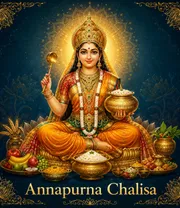
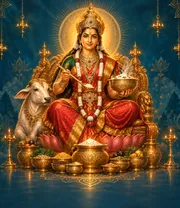
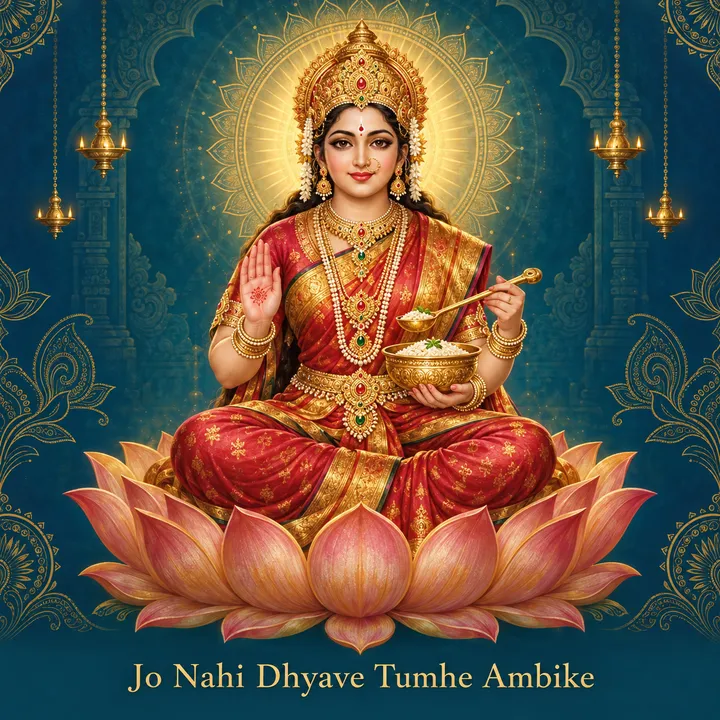
Jo Nahi Dhyave Tumhe Ambike is a short Hindi aarti addressed to Annapurna as Ambike (“Mother”), built around a repeating refrain of salutation — “Barambar pranam, maiya barambar pranam,” repeated salutations, O Mother — that opens the aarti and returns after each verse. The verses praise her name as the one thing that grants true rest, describe Brahma, Vishnu, and Shiva attending at her feet, and close with a string of Shakta seed-syllables (Shreem, Hreem, Kleem) and a cry for refuge.
Origin and source
This aarti’s own verses do not name a composer, and no reliable attribution for its authorship could be confirmed — this page does not credit it to any particular poet. It belongs to the same Shakta devotional world as the separate Annapurna Chalisa: both address Annapurna as the Devi who sustains Kashi, and both draw on the wider Shakta convention of describing the Goddess as the one before whom Brahma, Vishnu, and Shiva themselves bow. Unlike the chalisa, this aarti does not narrate Annapurna’s story as Sati and Girija — it stays with direct praise and a plea for refuge, closing with bija (seed-syllable) invocations rather than narrative.
How it is recited
Like most aartis, this one is sung with a lit diya or camphor flame circled before Annapurna’s image, with everyone present joining in on the refrain after each verse. It is recited especially on Annapurna Jayanti, and at her shrine beside Vishwanath temple in Kashi (Varanasi), where she is worshipped as the goddess who feeds the universe — traditionally said to provide alms even to Shiva himself when he arrives at her door as a wandering ascetic. Some households also recite it alongside the Annapurna Chalisa as part of a longer round of devotion to her, particularly around the offering of food to the deity.
Frequently asked questions
How many verses does Jo Nahi Dhyave Tumhe Ambike have?
Who is Jo Nahi Dhyave Tumhe Ambike dedicated to?
When is Jo Nahi Dhyave Tumhe Ambike typically recited?
What language is Jo Nahi Dhyave Tumhe Ambike composed in?
What tradition is Jo Nahi Dhyave Tumhe Ambike associated with?
Is an English translation of Jo Nahi Dhyave Tumhe Ambike available?
Is there a Roman transliteration of Jo Nahi Dhyave Tumhe Ambike?
Sourcing
Checked against independent sources before publishing — see our sourcing and editorial policy. Spotted an error? Report an issue .