The text
Tap Recite along to follow verse by verse — use Next, or the arrow keys.
- Opening dohas
- Doha (opening) 1
श्री गणपति गुरु गौरि पद प्रेम सहित धरि माथ।चालीसा वंदन करौं श्री शिव भैरवनाथ॥
śrī gaṇapati guru gauri pada prema sahita dhari mātha।cālīsā vandana karauṃ śrī śiva bhairavanātha॥
Placing my head with love upon the feet of Ganapati and the Guru and Gauri, I offer this Chalisa in homage to Shri Shiva Bhairavnath.
- Doha (opening) 2
श्री भैरव संकट हरण मंगल करण कृपाल।श्याम वरण विकराल वपु लोचन लाल विशाल॥
śrī bhairava saṅkaṭa haraṇa maṅgala karaṇa kṛpāla।śyāma varaṇa vikarāla vapu locana lāla viśāla॥
Shri Bhairav, remover of troubles, doer of auspiciousness, compassionate one — dark of hue, terrible of form, with wide, red eyes.
- The 36 chaupais
- Chaupai 1
जय जय श्री काली के लाला।जयति जयति काशी कुतवाला॥
jaya jaya śrī kālī ke lālā।jayati jayati kāśī kutavālā॥
Victory, victory to the beloved son of Shri Kali! Victory, victory to the guardian (kotwal) of Kashi!
- Chaupai 2
जयति बटुक भैरव भय हारी।जयति काल भैरव बलकारी॥
jayati baṭuka bhairava bhaya hārī।jayati kāla bhairava balakārī॥
Victory to Batuk Bhairav, remover of fear! Victory to Kaal Bhairav, giver of strength!
- Chaupai 3
जयति नाथ भैरव विख्याता।जयति सर्व भैरव सुखदाता॥
jayati nātha bhairava vikhyātā।jayati sarva bhairava sukhadātā॥
Victory to Nath Bhairav, renowned throughout the world! Victory to Sarva Bhairav, giver of happiness to all!
- Chaupai 4
भैरव रूप कियो शिव धारण।भव के भार उतारण कारण॥
bhairava rūpa kiyo śiva dhāraṇa।bhava ke bhāra utāraṇa kāraṇa॥
Shiva took on the form of Bhairav, in order to lift the burden of worldly existence.
- Chaupai 5
भैरव रव सुनि हवै भय दूरी।सब विधि होय कामना पूरी॥
bhairava rava suni havai bhaya dūrī।saba vidhi hoya kāmanā pūrī॥
Hearing the sound of Bhairav's roar, fear departs; in every way, one's wishes are fulfilled.
- Chaupai 6
शेष महेश आदि गुण गायो।काशी कोतवाल कहलायो॥
śeṣa maheśa ādi guṇa gāyo।kāśī kotavāla kahalāyo॥
Shesha, Mahesh, and others have sung of your virtues; you are called the guardian (kotwal) of Kashi.
- Chaupai 7
जटाजूट सिर चंद्र विराजत।बाला मुकुट बिजायठ साजत॥
jaṭājūṭa sira candra virājata।bālā mukuṭa bijāyaṭha sājata॥
The moon shines upon your matted locks; a crown and staff of authority adorn you.
- Chaupai 8
कटि करधनी घुंघरू बाजत।दर्शन करत सकल भय भाजत॥
kaṭi karadhanī ghuṅgharū bājata।darśana karata sakala bhaya bhājata॥
The bells of your waist-chain ring out; at the mere sight of you, every fear flees.
- Chaupai 9
जीवन दान दास को दीन्ह्यो।कीन्ह्यो कृपा नाथ तब चीन्ह्यो॥
jīvana dāna dāsa ko dīnhyo।kīnhyo kṛpā nātha taba cīnhyo॥
You granted the gift of life to your servant; showing mercy, O Lord, you made yourself known.
- Chaupai 10
वसि रसना बनि सारद काली।दीन्ह्यो वर राख्यो मम लाली॥
vasi rasanā bani sārada kālī।dīnhyo vara rākhyo mama lālī॥
Dwelling upon the tongue as Sharada and Kali, you granted the boon and preserved my honor.
- Chaupai 11
धन्य धन्य भैरव भय भंजन।जय मनरंजन खल दल भंजन॥
dhanya dhanya bhairava bhaya bhañjana।jaya manarañjana khala dala bhañjana॥
Blessed, blessed is Bhairav, destroyer of fear! Victory to the delighter of hearts, destroyer of hosts of the wicked!
- Chaupai 12
कर त्रिशूल डमरू शुचि कोड़ा।कृपा कटाक्ष सुयश नहिं थोड़ा॥
kara triśūla ḍamarū śuci koḍā।kṛpā kaṭākṣa suyaśa nahiṃ thoḍā॥
A trident, a damaru drum, and a pure whip in hand; the glance of your grace brings no small measure of good fame.
- Chaupai 13
जो भैरव निर्भय गुण गावत।अष्टसिद्धि नवनिधि फल पावत॥
jo bhairava nirbhaya guṇa gāvata।aṣṭasiddhi navanidhi phala pāvata॥
Whoever fearlessly sings of Bhairav's virtues obtains the fruit of the eight siddhis and nine treasures.
- Chaupai 14
रूप विशाल कठिन दुख मोचन।क्रोध कराल लाल दुहुं लोचन॥
rūpa viśāla kaṭhina dukha mocana।krodha karāla lāla duhuṃ locana॥
Vast is your form, releasing devotees from harsh suffering; terrible in wrath, with both eyes red.
- Chaupai 15
अगणित भूत प्रेत संग डोलत।बं बं बं शिव बं बं बोलत॥
agaṇita bhūta preta saṅga ḍolata।baṃ baṃ baṃ śiva baṃ baṃ bolata॥
Countless spirits and ghosts move about with you, chanting 'baṃ baṃ baṃ Shiva, baṃ baṃ.'
- Chaupai 16
रुद्रकाय काली के लाला।महा कालहू के हो काला॥
rudrakāya kālī ke lālā।mahā kālahū ke ho kālā॥
Rudra-bodied, beloved son of Kali — you are the dark lord even to great Mahakal.
- Chaupai 17
बटुक नाथ हो काल गंभीरा।श्वेत रक्त अरु श्याम शरीरा॥
baṭuka nātha ho kāla gambhīrā।śveta rakta aru śyāma śarīrā॥
As Batuk Nath, you are the profound lord of time, appearing in bodies of white, red, and dark hue.
- Chaupai 18
करत तीनहूं रूप प्रकाशा।भरत सुभक्तन कहं शुभ आशा॥
karata tīnahūṃ rūpa prakāśā।bharata subhaktana kahaṃ śubha āśā॥
You manifest in all three forms, fulfilling the auspicious hopes of your good devotees.
- Chaupai 19
रत्न जड़ित कंचन सिंहासन।व्याघ्र चर्म शुचि नर्म सुआनन॥
ratna jaḍita kañcana siṃhāsana।vyāghra carma śuci narma suānana॥
Upon a golden throne set with jewels, seated on pure tiger-skin, your gentle face shines.
- Chaupai 20
तुमहि जाइ काशिहिं जन ध्यावहिं।विश्वनाथ कहं दर्शन पावहिं॥
tumahi jāi kāśihiṃ jana dhyāvahiṃ।viśvanātha kahaṃ darśana pāvahiṃ॥
Devotees who go to Kashi and meditate upon you thereby attain the vision (darshan) of Vishwanath.
- Chaupai 21
जय प्रभु संहारक सुनन्द जय।जय उन्नत हर उमानन्द जय॥
jaya prabhu saṃhāraka sunanda jaya।jaya unnata hara umānanda jaya॥
Victory to the Lord, the destroyer, the giver of joy! Victory to the exalted Hara, the delight of Uma!
- Chaupai 22
भीम त्रिलोचन स्वान साथ जय।वैजनाथ श्री जगतनाथ जय॥
bhīma trilocana svāna sātha jaya।vaijanātha śrī jagatanātha jaya॥
Victory to the fearsome three-eyed one with his dog companion! Victory to Vaidyanath, lord of the world!
- Chaupai 23
महाभीम भीषण शरीर जय।रुद्र त्र्यम्बक धीर वीर जय॥
mahābhīma bhīṣaṇa śarīra jaya।rudra tryambaka dhīra vīra jaya॥
Victory to the one of great and terrifying form! Victory to Rudra Tryambaka, steadfast and brave!
- Chaupai 24
अश्वनाथ जय प्रेतनाथ जय।स्वानारुढ़ सयचंद्र नाथ जय॥
aśvanātha jaya pretanātha jaya।svānāruḍha sayacandra nātha jaya॥
Victory to the lord of horses, victory to the lord of departed spirits! Victory to the moon-crowned lord, mounted upon his dog!
- Chaupai 25
निमिष दिगंबर चक्रनाथ जय।गहत अनाथन नाथ हाथ जय॥
nimiṣa digambara cakranātha jaya।gahata anāthana nātha hātha jaya॥
Victory to the sky-clad one, swift as a blink, the lord of the discus! Victory to the one who holds the hand of the helpless!
- Chaupai 26
त्रेशलेश भूतेश चंद्र जय।क्रोध वत्स अमरेश नन्द जय॥
treśaleśa bhūteśa candra jaya।krodha vatsa amareśa nanda jaya॥
Victory to the moon-crowned lord of the trident, lord of spirits! Victory to the wrathful child, the joy of the immortals!
- Chaupai 27
श्री वामन नकुलेश चण्ड जय।कृत्याऊ कीरति प्रचण्ड जय॥
śrī vāmana nakuleśa caṇḍa jaya।kṛtyāū kīrati pracaṇḍa jaya॥
Victory to Shri Vamana, fierce lord of Nakulesh! Victory to the one of overwhelming, mighty fame!
- Chaupai 28
रुद्र बटुक क्रोधेश काल धर।चक्र तुण्ड दश पाणिव्याल धर॥
rudra baṭuka krodheśa kāla dhara।cakra tuṇḍa daśa pāṇivyāla dhara॥
Rudra as Batuk, lord of wrath, bearer of time; with a discus-mouth, ten hands, holding serpents.
- Chaupai 29
करि मद पान शम्भु गुणगावत।चौंसठ योगिन संग नचावत॥
kari mada pāna śambhu guṇagāvata।cauṃsaṭha yogina saṅga nacāvata॥
Drinking the wine of ecstasy, you sing Shambhu's praises, and set the sixty-four yoginis dancing alongside you.
- Chaupai 30
करत कृपा जन पर बहु ढंगा।काशी कोतवाल अड़बंगा॥
karata kṛpā jana para bahu ḍhaṅgā।kāśī kotavāla aḍabaṅgā॥
You show mercy upon your devotees in countless ways, O unconventional guardian (kotwal) of Kashi.
- Chaupai 31
देयं काल भैरव जब सोटा।नसै पाप मोटा से मोटा॥
deyaṃ kāla bhairava jaba soṭā।nasai pāpa moṭā se moṭā॥
When Kaal Bhairav strikes with his rod, even the gravest of sins is destroyed.
- Chaupai 32
जाकर निर्मल होय शरीरा।मिटै सकल संकट भव पीरा॥
jākara nirmala hoya śarīrā।miṭai sakala saṅkaṭa bhava pīrā॥
Going to him, the body becomes pure; every trouble and worldly suffering is erased.
- Chaupai 33
श्री भैरव भूतों के राजा।बाधा हरत करत शुभ काजा॥
śrī bhairava bhūtoṃ ke rājā।bādhā harata karata śubha kājā॥
Shri Bhairav is the king of spirits, remover of obstacles and doer of auspicious deeds.
- Chaupai 34
ऐलादी के दुःख निवारयो।सदा कृपा करि काज सम्हारयो॥
ailādī ke duḥkha nivāryo।sadā kṛpā kari kāja samhāryo॥
You removed the sorrows of Elaadi, always showing mercy and looking after his affairs.
- Chaupai 35
सुन्दर दास सहित अनुरागा।श्री दुर्वासा निकट प्रयागा॥
sundara dāsa sahita anurāgā।śrī durvāsā nikaṭa prayāgā॥
Sundar Das, filled with devotion, worships you near the shrine of Shri Durvasa close to Prayag.
- Chaupai 36
श्री भैरव जी की जय लेख्यो।सकल कामना पूरण देख्यो॥
śrī bhairava jī kī jaya lekhyo।sakala kāmanā pūraṇa dekhyo॥
I have set down this hymn of victory to Shri Bhairav ji, having seen all wishes fulfilled through it.
- Closing dohas
- Doha (closing) 1
जय जय जय भैरव बटुक स्वामी संकट टार।कृपा दास पर कीजिये शंकर के अवतार॥
jaya jaya jaya bhairava baṭuka svāmī saṅkaṭa ṭāra।kṛpā dāsa para kījiye śaṅkara ke avatāra॥
Victory, victory, victory to Bhairav, lord Batuk, remover of troubles — show mercy upon this servant, O incarnation of Shankar.
- Doha (closing) 2
जो यह चालीसा पढ़े प्रेम सहित सत बार।उस घर सर्वानंद हों वैभव बड़े अपार॥
jo yaha cālīsā paḍhe prema sahita sata bāra।usa ghara sarvānanda hoṃ vaibhava baḍe apāra॥
Whoever recites this Chalisa a hundred times with love — in that home may there be complete joy and boundless, great prosperity.
Overview
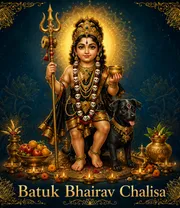
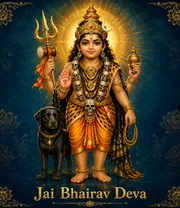
The Bhairav Chalisa is a devotional composition of forty verses in praise of Bhairava, the fierce guardian deity best known as the protector of Kashi (Varanasi). Framed by two opening dohas and two closing dohas around a body of thirty-six chaupai couplets, it follows the familiar structure of the wider chalisa genre: descriptive praise of the deity’s form and weapons, an account of his power, and a closing statement of the benefit of reciting it with devotion. The text addresses Bhairava under several of his traditional names — Batuk Bhairav (his youthful form), Kaal Bhairav (his fierce, time-governing form), and Nath Bhairav — and repeatedly calls him the kotwal, or guardian, of Kashi, the role by which he is best known to pilgrims in that city.
Origin and source
Like many chalisas outside the small number confidently attributed to named poets, the Bhairav Chalisa’s authorship is not firmly documented in scholarly sources. Devotional sites commonly point to a self-reference late in the text — “Sundar Das, filled with devotion, worships you near the shrine of Shri Durvasa close to Prayag” (chaupai 35) — as the composer naming himself, and this page follows that reading. As with the Ganesh Chalisa’s similarly internal signature, though, the identification rests on the verse itself rather than on independent literary-historical confirmation.
The text’s relationship to Shiva is direct: chaupai 4 states plainly that “Shiva took on the form of Bhairav… in order to lift the burden of worldly existence,” and later verses call him Rudra-bodied and an incarnation of Shankar. At the same time, the opening lines address him as “the beloved son of Shri Kali,” reflecting the fact that Shaiva tradition itself is not fully uniform on whether Bhairava is best understood as identical with Shiva, as a fierce emanation of him, or as a closely related but distinct deity who guards him. This page follows the chalisa’s own framing of Bhairava as a form Shiva assumed, while noting that traditions vary on how literally that identification is taken.
Multiple Bhairav Chalisa texts circulate under the same title with different opening lines; this page follows the widely repeated forty-verse version beginning “Jai Jai Shri Kali Ke Lala,” checked across several independently transcribed devotional sources.
How it is recited
The Bhairav Chalisa is recited by devotees seeking protection from fear, obstacles, and misfortune, and it is closely associated with Kaal Bhairav Ashtami — the eighth day of the waning moon in the month of Margashirsha (November–December), observed as Bhairava’s principal festival at his Kashi shrine and at Bhairava temples across North India. Many devotees also recite it on Sunday and Tuesday, the days of the week traditionally linked to Bhairava, with some reciting it regularly as an ongoing devotional discipline rather than only on the festival date.
Frequently asked questions
How many verses does Bhairav Chalisa have?
Who is Bhairav Chalisa dedicated to?
When is Bhairav Chalisa typically recited?
What language is Bhairav Chalisa composed in?
What tradition is Bhairav Chalisa associated with?
Is an English translation of Bhairav Chalisa available?
Is there a Roman transliteration of Bhairav Chalisa?
Sourcing
Checked against independent sources before publishing — see our sourcing and editorial policy. Spotted an error? Report an issue .