The text
Tap Recite along to follow verse by verse — use Next, or the arrow keys.
- Stanza
- Stanza 1
लवथवती विक्राळा ब्रह्मांडी माळा।वीषे कंठ काळा त्रिनेत्री ज्वाळा॥लावण्यसुंदर मस्तकी बाळा।तेथुनिया जल निर्मळ वाहे झुळझूळा॥
lavathavatī vikrāḷā brahmāṇḍī māḷā।vīṣe kaṇṭha kāḷā trinetrī jvāḷā॥lāvaṇyasundara mastakī bāḷā।tethuniyā jala nirmaḷa vāhe jhuḷajhūḷā॥
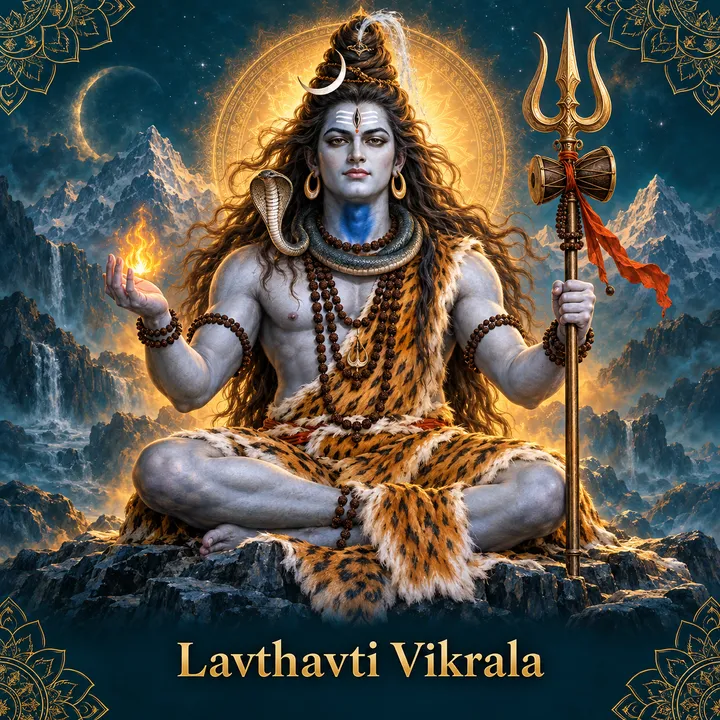
Your matted locks sway, awesome and fierce, wearing a garland that spans the whole universe; your throat is dark with poison, and flames blaze in your three eyes. A lovely young moon rests upon your head, and from there pure water flows down in a soft trickle.
- Refrain
- Refrain (Dhrupad)
जय देव जय देव जय श्रीशंकरा।आरती ओवाळू तुज कर्पूरगौरा॥
jaya deva jaya deva jaya śrīśaṅkarā।āratī ovāḷū tuja karpūragaurā॥
Glory, glory, glory to Shri Shankara — we wave the lamp of aarti before you, camphor-fair one.
- The 3 stanzas
- Stanza 2
कर्पूरगौरा भोळा नयनी विशाळा।अर्धांगी पार्वती सुमनांच्या माळा॥विभुतीचे उधळण शितिकंठ नीळा।ऐसा शंकर शोभे उमावेल्हाळा॥
karpūragaurā bhoḷā nayanī viśāḷā।ardhāṅgī pārvatī sumanāñcyā māḷā॥vibhutīce udhaḷaṇa śitikaṇṭha nīḷā।aisā śaṅkara śobhe umāvelhāḷā॥
Camphor-fair and gentle, wide-eyed one, with Parvati as the other half of your form, garlanded with flowers. Sacred ash is scattered over you, your throat cool and blue — such is Shankara, resplendent, ever fond of Uma.
- Stanza 3
देवी दैत्यी सागरमंथन पै केले।त्यामाजी जे अवचित हळाहळ उठिले॥ते त्वा असुरपणे प्राशन केले।नीळकंठ नाम प्रसिद्ध झाले॥
devī daityī sāgaramanthana pai kele।tyāmājī je avacita haḷāhaḷa uṭhile॥te tvā asurapaṇe prāśana kele।nīḷakaṇṭha nāma prasiddha jhāle॥
Gods and demons once churned the ocean, and in the midst of it the deadly poison halahala suddenly rose. Fearlessly you drank it down, and so the name Nilkantha, the blue-throated one, became famous.
- Stanza 4
व्याघ्रांबर फणिवरधर सुंदर मदनारी।पंचानन मनमोहन मुनिजनसुखकारी॥शतकोटीचे बीज वाचे उच्चारी।रघुकुलतिलक रामदासा अंतरी॥
vyāghrāmbara phaṇivaradhara sundara madanārī।pañcānana manamohana munijanasukhakārī॥śatakoṭīce bīja vāce uccārī।raghukulatilaka rāmadāsā antarī॥
Clad in tiger skin, bearing the great serpent, beautiful one and enemy of Kama, the god of desire; five-faced, mind-enchanting, giver of joy to sages and ascetics. Whoever intones your hundred-million-fold seed mantra is blessed — for Rama, jewel of the Raghu line, dwells within the heart of Ramdas.
Overview
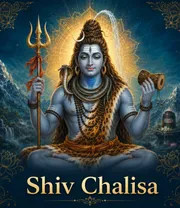
Lavthavti Vikrala — named for its opening words, “swaying and fierce” — is a Marathi aarti to Shiva, also widely known simply as Shankarachi Aarti, “Shankara’s aarti.” Its four stanzas are each followed by the same refrain, or dhrupad — “Jai Dev Jai Dev Jai Shri Shankara” — so a full recitation runs to five sung parts even though the composition itself is built from four verses. The stanzas move through Shiva’s iconography — his matted locks, poison-darkened throat, three eyes, the crescent moon and Ganga at his head, Parvati at his side, sacred ash, tiger skin, and serpent — before closing on the story of his drinking the halahala poison at the churning of the ocean, the episode that gives him the name Nilkantha.
Origin and source
The aarti is traditionally attributed to Samarth Ramdas, the seventeenth-century Marathi saint and guru of Chhatrapati Shivaji, the same poet credited with Sukhkarta Dukhharta, the widely sung Ganesh aarti. Like that composition, it is written in vernacular Marathi rather than Sanskrit, and its closing stanza carries a version of the same poet’s-signature convention found in Ramdas’s other aartis: the line “raghukulatilaka ramadasa antari” reads as Rama — Raghukultilak, “jewel of the Raghu line” — dwelling within Ramdas’s own heart, a quiet acknowledgment of the poet’s own ishta devata (chosen deity) even in a hymn addressed to Shiva.
The refrain’s address to Shiva as “karpuragaura,” camphor-fair, is echoed directly in the Sanskrit verse Karpuragauram Karunavataram, a separate and shorter composition also sung at the close of Shiva worship; the two share the epithet rather than one line being drawn from the other.
How it is recited
Lavthavti Vikrala is sung with the refrain repeated after every stanza, typically accompanied by a harmonium or clapped rhythm, with an aarti thali — a plate bearing a lit lamp — circled before the Shiva linga or image as the song is sung. It takes its place within the same standard Maharashtrian daily aarti sequence as Sukhkarta Dukhharta and Ghalin Lotangan: a set of aartis to different deities that many households and temples sing back to back, typically opening with Sukhkarta Dukhharta to Ganesha and closing with Ghalin Lotangan regardless of which deities’ aartis came in between. It is sung daily in many Shiva-devoted households, and takes on particular prominence during Maha Shivaratri, when it is recited alongside extended worship of the linga through the night.
Frequently asked questions
How many verses does Lavthavti Vikrala have?
Who is Lavthavti Vikrala dedicated to?
When is Lavthavti Vikrala typically recited?
What language is Lavthavti Vikrala composed in?
What tradition is Lavthavti Vikrala associated with?
Is an English translation of Lavthavti Vikrala available?
Is there a Roman transliteration of Lavthavti Vikrala?
Sourcing
Checked against independent sources before publishing — see our sourcing and editorial policy. Spotted an error? Report an issue .