The text
Tap Recite along to follow verse by verse — use Next, or the arrow keys.
- Stanza 1
ॐ जय गंगाधर जय हर जय गिरिजाधीशा।त्वं मां पालय नित्यं कृपया जगदीशा॥ॐ हर हर हर महादेव॥
oṃ jaya gaṅgādhara jaya hara jaya girijādhīśā।tvaṃ māṃ pālaya nityaṃ kṛpayā jagadīśā॥oṃ hara hara hara mahādeva॥
Om, victory to Gangadhar, victory to Hara, victory to the lord of Girija (Parvati) — protect me always, O lord of the universe, out of your grace. Om, Hara Hara Hara Mahadev!
- Stanza 2
कैलासे गिरिशिखरे कल्पद्रुमविपिने।गुंजति मधुकरपुंजे कुंजवने गहने॥कोकिलकूजित खेलत हंसावन ललिता।रचयति कलाकलापं नृत्यति मुदसहिता॥ॐ हर हर हर महादेव॥
kailāse giriśikhare kalpadrumavipine।guṃjati madhukarapuṃje kuṃjavane gahane॥kokilakūjita khelata haṃsāvana lalitā।racayati kalākalāpaṃ nṛtyati mudasahitā॥oṃ hara hara hara mahādeva॥
On Kailash's mountain peak, in a grove of wish-fulfilling trees, bees hum in the deep, thick forest bowers. Koels call, swans play about, and a lovely dancer arrays her arts, dancing with joy. Om, Hara Hara Hara Mahadev!
- Stanza 3
तस्मिंल्ललितसुदेशे शाला मणिरचिता।तन्मध्ये हरनिकटे गौरी मुदसहिता॥क्रीडा रचयति भूषारंचित निजमीशम्।इंद्रादिक सुर सेवत नामयते शीशम्॥ॐ हर हर हर महादेव॥
tasmiṃl-lalitasudeśe śālā maṇiracitā।tanmadhye haranikaṭe gaurī mudasahitā॥krīḍā racayati bhūṣāraṃcita nijamīśam।indrādika sura sevata nāmayate śīśam॥oṃ hara hara hara mahādeva॥
In that lovely, beautiful place stands a hall wrought with gems; within it, close by Hara, Gauri sits full of joy. She plays, adorning her own lord with ornaments, while Indra and the other gods serve him, bowing their heads. Om, Hara Hara Hara Mahadev!
- Stanza 4
बिबुधबधू बहु नृत्यत हृदये मुदसहिता।किन्नर गायन कुरुते सप्त स्वर सहिता॥धिनकत थै थै धिनकत मृदंग वादयते।क्वण क्वण ललिता वेणुं मधुरं नाटयते॥ॐ हर हर हर महादेव॥
bibudhabadhū bahu nṛtyata hṛdaye mudasahitā।kinnara gāyana kurute sapta svara sahitā॥dhinakata thai thai dhinakata mṛdaṃga vādayate।kvaṇa kvaṇa lalitā veṇuṃ madhuraṃ nāṭayate॥oṃ hara hara hara mahādeva॥
The wives of the gods dance joyfully at heart, and the Kinnaras sing with the seven notes. The mridanga drum sounds its rhythm, and the sweet flute plays its lovely tune. Om, Hara Hara Hara Mahadev!
- Stanza 5
रुण रुण चरणे रचयति नूपुरमुज्ज्वलिता।चक्रावर्ते भ्रमयति कुरुते तां धिक तां॥तां तां लुप चुप तां तां डमरू वादयते।अंगुष्ठांगुलिनादं लासकतां कुरुते॥ॐ हर हर हर महादेव॥
ruṇa ruṇa caraṇe racayati nūpuramujjvalitā।cakrāvarte bhramayati kurute tāṃ dhika tāṃ॥tāṃ tāṃ lupa cupa tāṃ tāṃ ḍamarū vādayate।aṃguṣṭhāṃgulinādaṃ lāsakatāṃ kurute॥oṃ hara hara hara mahādeva॥
Anklets ring at her feet as she dances, whirling round and round; the damaru sounds its rhythm as she performs the dance, her fingers and toes marking each beat. Om, Hara Hara Hara Mahadev!
- Stanza 6
कपूर्रद्युतिगौरं पञ्चाननसहितम्।त्रिनयनशशिधरमौलिं विषधरकण्ठयुतम्॥सुन्दरजटाकलापं पावकयुतभालम्।डमरुत्रिशूलपिनाकं करधृतनृकपालम्॥ॐ हर हर हर महादेव॥
kapūrradyutigauraṃ pañcānanasahitam।trinayanaśaśidharamauliṃ viṣadharakaṇṭhayutam॥sundarajaṭākalāpaṃ pāvakayutabhālam।ḍamarutriśūlapinākaṃ karadhṛtanṛkapālam॥oṃ hara hara hara mahādeva॥
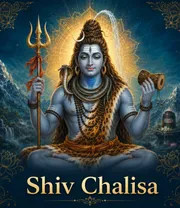
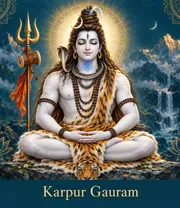
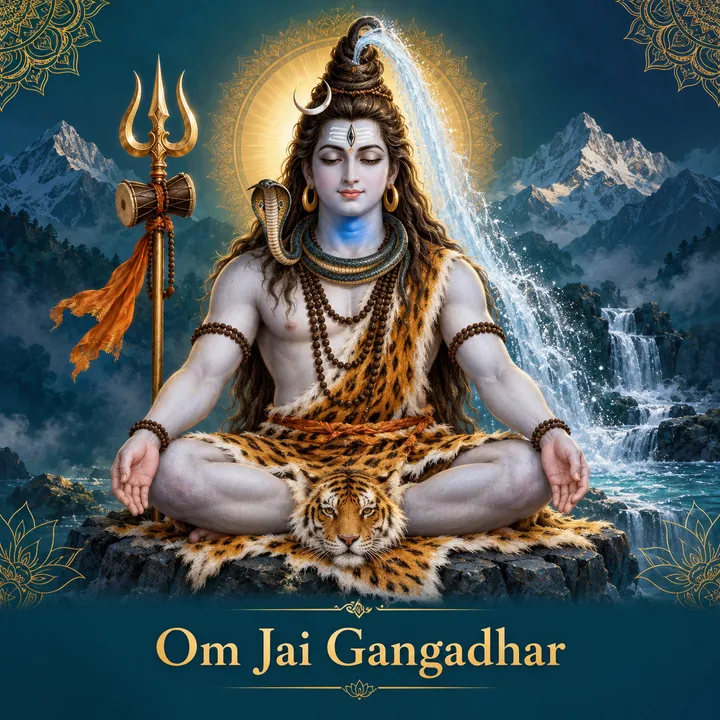
Fair as the glow of camphor, five-faced, three-eyed, crowned with the moon, a serpent about his throat — with a beautiful mass of matted hair, fire upon his brow, he holds the damaru, the trident, the bow Pinaka, and a skull in his hand. Om, Hara Hara Hara Mahadev!
- Stanza 7
मुण्डै रचयति माला पन्नगमुपवीतम्।वामविभागे गिरिजा रूपं अतिललितम्॥सुन्दरसकलशरीरे कृतभस्माभरणम्।इति वृषभध्वजरूपं तापत्रयहरणं॥ॐ हर हर हर महादेव॥
muṇḍai racayati mālā pannagamupavītam।vāmavibhāge girijā rūpaṃ atilalitam॥sundarasakalaśarīre kṛtabhasmābharaṇam।iti vṛṣabhadhvajarūpaṃ tāpatrayaharaṇaṃ॥oṃ hara hara hara mahādeva॥
He wears a garland of skulls, a serpent as his sacred thread; at his left, Girija in a form most lovely. His whole beautiful body is adorned with sacred ash — thus, bearing the bull on his banner, he removes the three-fold suffering. Om, Hara Hara Hara Mahadev!
- Stanza 8
शंखनिनादं कृत्वा झल्लरि नादयते।नीराजयते ब्रह्मा वेदऋचां पठते॥अतिमृदुचरणसरोजं हृत्कमले धृत्वा।अवलोकयति महेशं ईशं अभिनत्वा॥ॐ हर हर हर महादेव॥
śaṃkhaninādaṃ kṛtvā jhallari nādayate।nīrājayate brahmā vedaṛcāṃ paṭhate॥atimṛducaraṇasarojaṃ hṛtkamale dhṛtvā।avalokayati maheśaṃ īśaṃ abhinatvā॥oṃ hara hara hara mahādeva॥
The conch is sounded, the bell rung; Brahma waves the lamp of aarti, reciting verses of the Veda. Holding his soft lotus feet within the lotus of the heart, one beholds Mahesha, bowing to the Lord. Om, Hara Hara Hara Mahadev!
- Stanza 9
ध्यानं आरति समये हृदये अति कृत्वा।रामस्त्रिजटानाथं ईशं अभिनत्वा॥संगतिमेवं प्रतिदिन पठनं यः कुरुते।शिवसायुज्यं गच्छति भक्त्या यः श्रृणुते॥ॐ हर हर हर महादेव॥
dhyānaṃ ārati samaye hṛdaye ati kṛtvā।rāmastrijaṭānāthaṃ īśaṃ abhinatvā॥saṃgatimevaṃ pratidina paṭhanaṃ yaḥ kurute।śivasāyujyaṃ gacchati bhaktyā yaḥ śṛṇute॥oṃ hara hara hara mahādeva॥
Deep in meditation at the hour of aarti, one bows to Ishvara, the beautiful lord of the triple-braid. Whoever recites this composition each day, and whoever listens with devotion, attains union with Shiva. Om, Hara Hara Hara Mahadev!
Overview
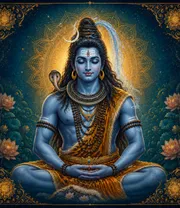
Om Jai Gangadhar is a Sanskrit aarti addressed to Shiva as Gangadhar — “bearer of the Ganga” — the epithet describing how his matted hair broke and slowed the river’s fall from the heavens, sparing the earth from the force of her descent. The aarti’s opening line invokes him by this name alongside two of his other common titles, Hara and Girijadhisha (lord of Girija, i.e. Parvati), but its nine stanzas do not go on to narrate the Ganga story itself. Instead the text describes a court scene on Kailash — celestial music and dance offered before Shiva and Gauri seated together — before moving into a close description of Shiva’s iconography (his three eyes, moon-crowned matted hair, serpent, trident, and ash-covered form) and closing with the fruit said to come from reciting or hearing the hymn. For the fuller telling of the Ganga-descent story itself, see the “Gangadhara” attribute on Shiva’s own page.
Origin and source
Unlike Om Jai Shiv Omkara, this aarti is composed in Sanskrit rather than colloquial Hindi — its grammar throughout (locatives like kailāse giriśikhare, the closing phalashruti promising shiva-sayujya, union with Shiva, to whoever recites or hears it) marks it as a Sanskrit stotra that circulates online and in print alongside Hindi aartis, rather than a Hindi composition itself. No source consulted for this page offers a settled attribution to a named author, so none is given here. The text also shows more variation across sources than a widely standardized hymn like Om Jai Shiv Omkara: sources differ on how many printed “stanzas” the couplets are grouped into, and a handful of individual words carry spelling variants between sources — consistent with a text transmitted through Sanskrit stotra collections rather than a single fixed hymnbook printing. This page’s grouping and wording follow the reading held in common across the sources consulted.
How it is recited
Om Jai Gangadhar is particularly associated with Ganga Dashami and Ganga Dashahara, the festival days marking the Ganga’s descent to earth, when its address to Shiva as Gangadhar is especially fitting. Like other Shiva aartis, it is also sung on Mondays and through the monsoon month of Sawan, both traditionally linked to Shiva worship, typically with a lit lamp or diya waved before his image or linga as the stanzas and refrain are sung.
Frequently asked questions
How many verses does Om Jai Gangadhar have?
Who is Om Jai Gangadhar dedicated to?
When is Om Jai Gangadhar typically recited?
What language is Om Jai Gangadhar composed in?
What tradition is Om Jai Gangadhar associated with?
Is an English translation of Om Jai Gangadhar available?
Is there a Roman transliteration of Om Jai Gangadhar?
Sourcing
Checked against independent sources before publishing — see our sourcing and editorial policy. Spotted an error? Report an issue .