The text
Tap Recite along to follow verse by verse — use Next, or the arrow keys.
- Opening dohas
- Doha (opening) 1
विश्वनाथ को सुमिर मन, धर गणेश का ध्यान।भैरव चालीसा रचूं, कृपा करहु भगवान॥
viśvanātha ko sumira mana, dhara gaṇeśa kā dhyāna।bhairava cālīsā racūṃ, kṛpā karahu bhagavāna॥
Remembering Vishwanath in my mind, and holding meditation upon Ganesha, I compose this Bhairav Chalisa — show your grace, O Lord.
- Doha (opening) 2
बटुकनाथ भैरव भजूं, श्री काली के लाल।मुझ दास पर कृपा करो, काशी के कुतवाल॥
baṭukanātha bhairava bhajūṃ, śrī kālī ke lāla।mujha dāsa para kṛpā karo, kāśī ke kutavāla॥
I worship Batuknath Bhairav, the beloved son of Shri Kali — show grace upon this servant, O guardian (kotwal) of Kashi.
- The 40 chaupais
- Chaupai 1
जय जय श्री काली के लाला।रहो दास पर सदा दयाला॥
jaya jaya śrī kālī ke lālā।raho dāsa para sadā dayālā॥
Victory, victory to the beloved son of Shri Kali! Remain ever compassionate toward this servant.
- Chaupai 2
भैरव भीषण भीम कपाली।क्रोधवन्त लोचन में लाली॥
bhairava bhīṣaṇa bhīma kapālī।krodhavanta locana meṃ lālī॥
Bhairav, terrifying and formidable, wearer of skulls — wrath burns red in your eyes.
- Chaupai 3
कर त्रिशूल है कठिन कराला।गल में प्रभु मुण्डन की माला॥
kara triśūla hai kaṭhina karālā।gala meṃ prabhu muṇḍana kī mālā॥
A fearsome trident is in your hand; a garland of skulls hangs about your neck, O Lord.
- Chaupai 4
कृष्ण रूप तन वर्ण विशाला।पीकर मद रहता मतवाला॥
kṛṣṇa rūpa tana varṇa viśālā।pīkara mada rahatā matavālā॥
Your great form is dark of hue; having drunk of the wine of ecstasy, you remain intoxicated.
- Chaupai 5
रुद्र बटुक भक्तन के संगी।प्रेतनाथ भूतेश भुजंगी॥
rudra baṭuka bhaktana ke saṅgī।pretanātha bhūteśa bhujaṅgī॥
Rudra as Batuk, companion of devotees — lord of departed spirits, lord of ghosts, wearer of serpents.
- Chaupai 6
त्रैलतेश है नाम तुम्हारा।चक्र तुण्ड अमरेश पियारा॥
trailateśa hai nāma tumhārā।cakra tuṇḍa amareśa piyārā॥
Trailatesh is your name; discus-mouthed one, beloved of the lord of the immortals.
- Chaupai 7
शेखरचंद्र कपाल बिराजे।स्वान सवारी पै प्रभु गाजे॥
śekharacandra kapāla birāje।svāna savārī pai prabhu gāje॥
The crescent moon shines upon your crown; mounted upon your dog, O Lord, you roar forth.
- Chaupai 8
शिव नकुलेश चण्ड हो स्वामी।बैजनाथ प्रभु नमो नमामी॥
śiva nakuleśa caṇḍa ho svāmī।baijanātha prabhu namo namāmī॥
O Shiva, fierce lord of Nakulesh, O Master; Vaidyanath, Lord, I bow to you again and again.
- Chaupai 9
अश्वनाथ क्रोधेश बखाने।भैरों काल जगत ने जाने॥
aśvanātha krodheśa bakhāne।bhairoṃ kāla jagata ne jāne॥
You are described as Ashvanath, lord of wrath; the world knows you as Bhairav, lord of time.
- Chaupai 10
गायत्री कहैं निमिष दिगम्बर।जगन्नाथ उन्नत आडम्बर॥
gāyatrī kahaiṃ nimiṣa digambara।jagannātha unnata āḍambara॥
They call you Nimish Digambar, swift as a blink and sky-clad; you are Jagannath, exalted in majesty.
- Chaupai 11
क्षेत्रपाल दसपाण कहाये।मंजुल उमानन्द कहलाये॥
kṣetrapāla dasapāṇa kahāye।mañjula umānanda kahalāye॥
You are called Kshetrapal, the ten-handed; you are named the beautiful joy of Uma.
- Chaupai 12
चक्रनाथ भक्तन हितकारी।कहैं त्र्यम्बक सब नर नारी॥
cakranātha bhaktana hitakārī।kahaiṃ tryambaka saba nara nārī॥
As Chakranath, you do good for your devotees; all men and women call you Tryambak, the three-eyed one.
- Chaupai 13
संहारक सुनन्द तव नामा।करहु भक्त के पूरण कामा॥
saṃhāraka sunanda tava nāmā।karahu bhakta ke pūraṇa kāmā॥
Destroyer, giver of good joy, is your name; fulfill the desires of your devotees.
- Chaupai 14
नाथ पिशाचन के हो प्यारे।संकट मेटहु सकल हमारे॥
nātha piśācana ke ho pyāre।saṅkaṭa meṭahu sakala hamāre॥
O Lord, you are beloved among the pishachas (wandering spirits); erase all our troubles.
- Chaupai 15
कृत्यायु सुन्दर आनन्दा।भक्त जनन के काटहु फन्दा॥
kṛtyāyu sundara ānandā।bhakta janana ke kāṭahu phandā॥
Lord of the kritya spirits, beautiful and full of joy — cut away the snares that bind your devotees.
- Chaupai 16
कारण लम्ब आप भय भंजन।नमो नाथ जय जनमन रंजन॥
kāraṇa lamba āpa bhaya bhañjana।namo nātha jaya janamana rañjana॥
You of the towering form, breaker of fear; salutations, Lord — victory to you, delighter of the hearts of your people.
- Chaupai 17
हो तुम देव त्रिलोचन नाथा।भक्त चरण में नावत माथा॥
ho tuma deva trilocana nāthā।bhakta caraṇa meṃ nāvata māthā॥
You are the three-eyed god and lord; devotees bow their heads at your feet.
- Chaupai 18
त्वं अशतांग रुद्र के लाला।महाकाल कालों के काला॥
tvaṃ aśitāṅga rudra ke lālā।mahākāla kālo ke kālā॥
You are Ashitanga, beloved son of Rudra; you are Mahakal, the dark lord even among the lords of time.
- Chaupai 19
ताप विमोचन अरिदल नासा।भाल चन्द्रमा करहिं प्रकाशा॥
tāpa vimocana aridala nāsā।bhāla candramā karahiṃ prakāśā॥
Reliever of suffering, destroyer of enemy hosts; the moon upon your forehead spreads its light.
- Chaupai 20
श्वेत काल अरु लाल शरीरा।मस्तक मुकुट शीश पर चीरा॥
śveta kāla aru lāla śarīrā।mastaka mukuṭa śīśa para cīrā॥
In bodies white, black, and red; a crown upon your head, and a cloth wound about your brow.
- Chaupai 21
काली के लाला बलधारी।कहाँ तक शोभा कहूँ तुम्हारी॥
kālī ke lālā baladhārī।kahā̃ taka śobhā kahūṃ tumhārī॥
Mighty son of Kali — how far can I recount your splendor?
- Chaupai 22
शंकर के अवतार कृपाला।रहो चकाचक पी मद प्याला॥
śaṅkara ke avatāra kṛpālā।raho cakācaka pī mada pyālā॥
O merciful incarnation of Shankar, remain resplendent, drinking your cup of wine.
- Chaupai 23
काशी के कुतवाल कहाओ।बटुकनाथ चेटक दिखलाओ॥
kāśī ke kutavāla kahāo।baṭukanātha ceṭaka dikhalāo॥
You are called the guardian (kotwal) of Kashi; O Batuknath, show forth your wonders.
- Chaupai 24
रवि के दिन जन भोग लगावें।धूप दीप नैवेद्य चढ़ावें॥
ravi ke dina jana bhoga lagāveṃ।dhūpa dīpa naivedya caḍhāveṃ॥
On Sunday, devotees offer you food; they present incense, lamps, and offerings.
- Chaupai 25
दर्शन करके भक्त सिहावें।दारुड़ा की धार पिलावें॥
darśana karake bhakta sihāveṃ।dāruḍā kī dhāra pilāveṃ॥
Beholding you, devotees rejoice; they offer you a stream of liquor.
- Chaupai 26
मठ में सुन्दर लटकत झावा।सिद्ध कार्य कर भैरों बाबा॥
maṭha meṃ sundara laṭakata jhāvā।siddha kārya kara bhairoṃ bābā॥
In the shrine a beautiful jhāvā hangs; accomplish the task, Bhairon Baba.
- Chaupai 27
नाथ आपका यश नहीं थोड़ा।करमें सुभग सुशोभित कोड़ा॥
nātha āpakā yaśa nahiṃ thoḍā।karameṃ subhaga suśobhita koḍā॥
O Lord, your fame is not small; in your hand shines a beautiful, radiant whip.
- Chaupai 28
कटि घूँघरा सुरीले बाजत।कंचनमय सिंहासन राजत॥
kaṭi ghūṅgharā surīle bājata।kañcanamaya siṃhāsana rājata॥
At your waist, melodious bells ring; a golden throne shines beneath you.
- Chaupai 29
नर नारी सब तुमको ध्यावहिं।मनवांछित इच्छाफल पावहिं॥
nara nārī saba tumako dhyāvahiṃ।manavāñchita icchāphala pāvahiṃ॥
All men and women meditate upon you, and obtain the fruit of their heart's desire.
- Chaupai 30
भोपा हैं आपके पुजारी।करें आरती सेवा भारी॥
bhopā haiṃ āpake pujārī।kareṃ āratī sevā bhārī॥
Bhopas — village oracle-priests — are your worshippers; they perform your aarti with great devotion.
- Chaupai 31
भैरव भात आपका गाऊँ।बार बार पद शीश नवाऊँ॥
bhairava bhāta āpakā gāūṃ।bāra bāra pada śīśa navāūṃ॥
O Bhairav, let me sing of your bhat (ceremonial gift-giving); again and again I bow my head at your feet.
- Chaupai 32
आपहि वारे छीजन धाये।ऐलादी ने रुदन मचाये॥
āpahi vāre chījana dhāye।ailādī ne rudana macāye॥
To you alone she ran, wasting away; Ailadi broke into weeping.
- Chaupai 33
बहन त्यागि भाई कहाँ जावे।तो बिन को मोहि भात पिन्हावे॥
bahana tyāgi bhāī kahā̃ jāve।to bina ko mohi bhāta pinhāve॥
Leaving his sister, where should a brother go? Without him, who would give me the wedding bhat?
- Chaupai 34
रोये बटुक नाथ करुणा कर।गये हिवारे मैं तुम जाकर॥
roye baṭuka nātha karuṇā kara।gaye hivāre maiṃ tuma jākara॥
Batuk Nath wept, moved to compassion; and you yourself went.
- Chaupai 35
दुखित भई ऐलादी बाला।तब हर का सिंहासन हाला॥
dukhita bhaī ailādī bālā।taba hara kā siṃhāsana hālā॥
The girl Ailadi grew sorrowful; then Hara's (Shiva's) throne itself shook.
- Chaupai 36
समय व्याह का जिस दिन आया।प्रभु ने तुमको तुरत पठाया॥
samaya vyāha kā jisa dina āyā।prabhu ne tumako turata paṭhāyā॥
When the day of her wedding arrived, the Lord sent you at once.
- Chaupai 37
विष्णु कही मत विलम्ब लगाओ।तीन दिवस को भैरव जाओ॥
viṣṇu kahī mata vilamba lagāo।tīna divasa ko bhairava jāo॥
Vishnu said, 'Do not delay — go, O Bhairav, within three days.'
- Chaupai 38
दल पठान संग लेकर धाया।ऐलादी को भात पिन्हाया॥
dala paṭhāna saṅga lekara dhāyā।ailādī ko bhāta pinhāyā॥
Taking a troop with him, he hastened forth, and bestowed the wedding bhat upon Ailadi.
- Chaupai 39
पूरन आस बहन की कीनी।सुर्ख चुन्दरी सिर धर दीनी॥
pūrana āsa bahana kī kīnī।surkha cundarī sira dhara dīnī॥
He fulfilled his sister's hope completely, and placed a red bridal veil upon her head.
- Chaupai 40
भात भरा लौटे गुणग्रामी।नमो नमामी अन्तर्यामी॥
bhāta bharā lauṭe guṇagrāmī।namo namāmī antaryāmī॥
Having fully given the bhat, the one of great virtue returned; I bow again and again to you, indweller of all hearts.
- Closing dohas
- Doha (closing) 1
जय जय जय भैरव बटुक, स्वामी संकट टार।कृपा दास पर कीजिए, शंकर के अवतार॥
jaya jaya jaya bhairava baṭuka, svāmī saṅkaṭa ṭāra।kṛpā dāsa para kījie, śaṅkara ke avatāra॥
Victory, victory, victory to Bhairav Batuk, lord who removes trouble — show mercy upon this servant, O incarnation of Shankar.
- Doha (closing) 2
जो यह चालीसा पढ़े, प्रेम सहित सत बार।उस घर सर्वानन्द हों, वैभव बढ़े अपार॥
jo yaha cālīsā paḍhe, prema sahita sata bāra।usa ghara sarvānanda hoṃ, vaibhava baḍhe apāra॥
Whoever recites this Chalisa a hundred times with love — in that home may there be complete joy, and boundless, ever-growing prosperity.
Overview
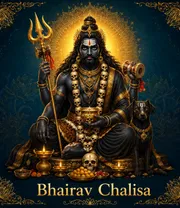
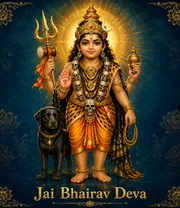
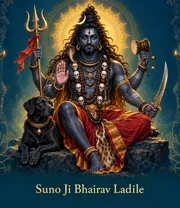
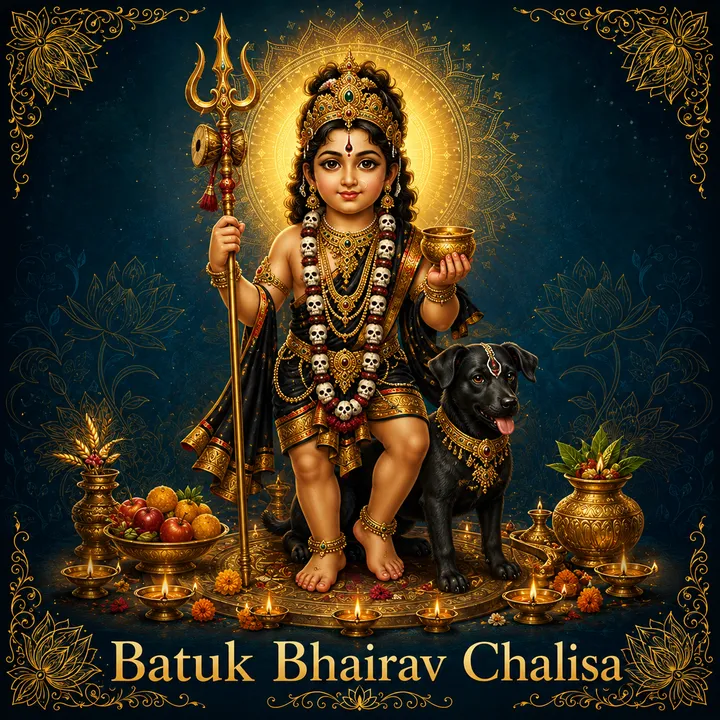
Batuk Bhairav is the youthful, boy form of Bhairava — the fierce deity of Shaiva tradition, commonly shown four-armed, mounted on a dog, and carrying a trident, a small drum, a skull-bowl, and a serpent. This forty-chaupai Hindi chalisa is addressed specifically to him under that youthful aspect, and it is a genuinely distinct composition from the general “Bhairav Chalisa” also carried on this site, which addresses Bhairava more broadly across his fierce, time-governing (Kaal Bhairav) and city-guardian (Nath Bhairav) forms. Apart from a handful of stock Bhairav epithets, the two texts share almost no wording — except for their closing two dohas, which are worded nearly identically in both. That kind of shared closing “benefit of recitation” doha, reused or lightly adapted across related hymns to the same family of deities, is a common feature of this devotional genre and does not make the two chalisas the same composition: every opening doha and all forty chaupais in between are otherwise distinct, including a sequence of chaupais unique to this text that recounts a devotional legend of Bhairav personally delivering “bhat” — the ceremonial gifts a brother brings to his sister’s wedding — to a devotee named Ailadi, standing in for a brother who could not.
Origin and source
Like most chalisas outside the small number of confidently attributed compositions, the Batuk Bhairav Chalisa’s authorship and date are not established in scholarly sources; today it circulates mainly through devotional publishers and websites rather than through any documented manuscript lineage this page can point to. The text identifies its subject as an incarnation of Shankar (Shiva) in its own words — chaupai 22 and the first closing doha both call him “शंकर के अवतार,” an incarnation of Shankar — and this page follows that self-identification in linking the text to Shiva’s page, while noting, as with the general Bhairav Chalisa, that Shaiva tradition is not fully uniform on how literally the identification of Bhairava with Shiva is meant.
The chalisa’s tantric associations are visible on its surface rather than read into it. Chaupai 18 names Bhairav as Ashitanga, one of the eight Bhairavas (Ashta Bhairava) recognized within tantric classification, and chaupai 25 describes an offering of liquor made to him — a practice belonging to Bhairava’s place in tantric sadhana rather than to mainstream temple worship. This page states these details as they appear in the verses, without further elaboration on tantric practice beyond what the text itself says.
This page follows the widely repeated forty-chaupai version beginning “Vishwanath ko sumir man,” cross-checked across multiple independently transcribed devotional sources. A small number of wording variants circulate between sources — most visibly in the second opening doha and in one chaupai describing Batuk Bhairav as the guardian of Kashi — and this page follows the reading shared by the majority of the sources consulted rather than the outlying variant.
Four words in the chaupais — “कारण लम्ब” (16), “झावा” (26), “वारे” (32) and “हिवारे” (34) — appear identically in all six sources checked and are explained in none of them; the one commentary among those six reads “कारण लम्ब” as a reference to Bhairav’s tall or extended form, and this page follows that reading. The English meanings given for those four verses render only what the rest of each line supports, and leave “झावा” transliterated and “हिवारे” unrendered rather than guess at either.
How it is recited
The Batuk Bhairav Chalisa is recited by devotees seeking protection from fear and obstacles, in the same spirit as the wider family of Bhairav chalisas, and it is closely associated with Bhairav Ashtami, Bhairava’s principal festival. Its tantric associations also give it a place in personal sadhana practice carried on outside the festival calendar, recited by some practitioners as an ongoing devotional discipline rather than only on a fixed date. As with other Bhairav chalisas, many devotees also recite it on Sunday and Tuesday, the days of the week traditionally linked to Bhairava.
Frequently asked questions
How many verses does Batuk Bhairav Chalisa have?
Who is Batuk Bhairav Chalisa dedicated to?
When is Batuk Bhairav Chalisa typically recited?
What language is Batuk Bhairav Chalisa composed in?
What tradition is Batuk Bhairav Chalisa associated with?
Is an English translation of Batuk Bhairav Chalisa available?
Is there a Roman transliteration of Batuk Bhairav Chalisa?
Sourcing
Checked against independent sources before publishing — see our sourcing and editorial policy. Spotted an error? Report an issue .