The text
Tap Recite along to follow verse by verse — use Next, or the arrow keys.
- Stanza 1
जय गोरख देवा जय गोरख देवा।कर कृपा मम ऊपर नित्य करूँ सेवा॥
jaya gorakha devā jaya gorakha devā।kara kṛpā mama ūpara nitya karū̃ sevā॥
Victory to Gorakh Deva, victory to Gorakh Deva; show your grace upon me, and I shall serve you forever.
- Stanza 2
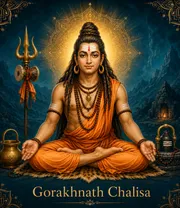
शीश जटा अति सुन्दर भाल चन्द्र सोहे।कानन कुण्डल झलकत निरखत मन मोहे॥
śīśa jaṭā ati sundara bhāla candra sohe।kānana kuṇḍala jhalakata nirakhata mana mohe॥
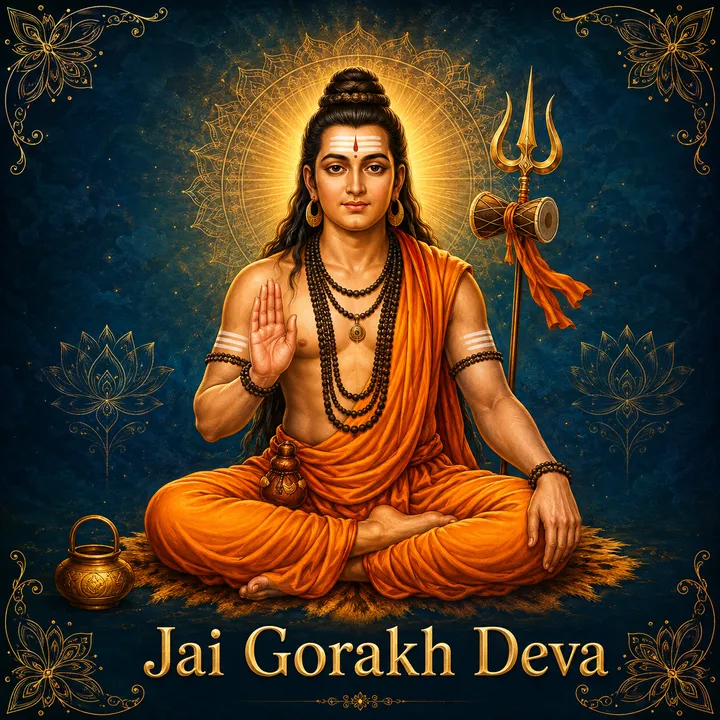
Your matted locks are most beautiful, a crescent moon graces your brow; your earrings gleam, captivating the mind that beholds them.
- Stanza 3
गल सेली विच नाग सुशोभित तन भस्मी धारी।आदि पुरुष योगीश्वर सन्तन हितकारी॥
gala selī vica nāga suśobhita tana bhasmī dhārī।ādi puruṣa yogīśvara santana hitakārī॥
A woolen cord adorned with a serpent graces your neck, your body smeared with sacred ash; primordial being, lord of yogis, well-wisher of saints.
- Stanza 4
नाथ निरंजन आप ही घट-घट के वासी।करत कृपा निज जन पर मेटत यम फांसी॥
nātha niraṃjana āpa hī ghaṭa-ghaṭa ke vāsī।karata kṛpā nija jana para meṭata yama phā̃sī॥
O Nath Niranjan, you dwell within every heart; you show grace upon your own and cut away the noose of death.
- Stanza 5
ऋद्धि सिद्धि चरणों में लोटत माया है दासी।आप अलख अवधूता उत्तराखण्ड वासी॥
ṛddhi siddhi caraṇoṃ meṃ loṭata māyā hai dāsī।āpa alakha avadhūtā uttarākhaṇḍa vāsī॥
Riddhi and Siddhi roll at your feet, and Maya herself is your servant; you are the unseen renunciate, dweller of Uttarakhand.
- Stanza 6
अगम अगोचर अकथ अरूपी सबसे हो न्यारे।योगीजन के आप ही सदा हो रखवारे॥
agama agocara akatha arūpī sabase ho nyāre।yogījana ke āpa hī sadā ho rakhavāre॥
Unreachable, imperceptible, indescribable and formless, you stand apart from all; you are ever the protector of yogis.
- Stanza 7
ब्रह्मा विष्णु तुम्हारा निशदिन गुण गावें।नारद शारद सुर मिल चरनन चित लावें॥
brahmā viṣṇu tumhārā niśadina guṇa gāvẽ।nārada śārada sura mila caranana cita lāvẽ॥
Brahma and Vishnu sing your praises day and night; Narada, Sharada, and the gods together fix their hearts at your feet.
- Stanza 8
चारों युग में आप विराजत योगी तन धारी।सतयुग द्वापर त्रेता कलयुग भय टारी॥
cārõ yuga meṃ āpa virājata yogī tana dhārī।satayuga dvāpara tretā kalayuga bhaya ṭārī॥
Through all four ages you remain present, bearing a yogi's form; in Satyug, Dvapar, Treta, and Kaliyug you drive away fear.
- Stanza 9
गुरु गोरख नाथ की आरती निशदिन जो गावे।विनवत बाल त्रिलोकी मुक्ति फल पावे॥
guru gorakha nātha kī āratī niśadina jo gāve।vinavata bāla trilokī mukti phala pāve॥
Whoever sings this aarti of Guru Gorakhnath day and night, this child prays, obtains the fruit of liberation for all three worlds.
Overview
Jai Gorakh Deva is a short Hindi aarti — nine couplets sung as a single continuous song — offered to Gorakhnath, the foremost guru of the Nath sampradaya. It is distinct from the Gorakhnath Chalisa, a much longer forty-verse composition traditionally recited for a specific wish. This aarti is the lamp-offering song: it sketches Gorakhnath’s ascetic form and yogic power in a few brief strokes rather than narrating his deeds at length, and it closes, as aartis typically do, with a promise of liberation for whoever sings it.
Origin and source
As with most aartis, Jai Gorakh Deva does not name a composer within its own verses, and no secure historical attribution has been established for it. It is treated here as a traditional composition sung across the Nath sampradaya.
The text describes Gorakhnath in language drawn from Shaivite ascetic iconography — matted locks (jata), a crescent moon over his brow, ash smeared on his body, and a serpent adorning the woolen cord (seli) at his neck. Unlike the Gorakhnath Chalisa, though, this aarti does not state outright that Gorakhnath is Shiva or an incarnation of Shankar; the chalisa’s own verses make that identification explicitly (“Shiva-Gorakh is your name”; “the form of Shankar is your incarnation”), while this aarti instead calls him “Nath Niranjan,” the “primordial being, lord of yogis,” and an avadhuta dwelling in Uttarakhand, praised even by Brahma and Vishnu. Because this aarti’s own wording stops short of naming him as Shiva, this page does not carry that cross-link the way the chalisa page does.
How it is recited
Jai Gorakh Deva is sung as the aarti — the lamp-offering song performed at the close of worship — by Nath sampradaya practitioners, including Gorakhnathi (Kanphata) yogis, at Nath temples and akhadas. It is closely associated with the Gorakhnath Temple in Gorakhpur, Uttar Pradesh, the lineage’s most prominent shrine. The final couplet states that whoever sings this aarti obtains the fruit of liberation for all three worlds, a closing promise typical of the aarti genre.
Frequently asked questions
How many verses does Jai Gorakh Deva have?
Who is Jai Gorakh Deva dedicated to?
When is Jai Gorakh Deva typically recited?
What language is Jai Gorakh Deva composed in?
What tradition is Jai Gorakh Deva associated with?
Is an English translation of Jai Gorakh Deva available?
Is there a Roman transliteration of Jai Gorakh Deva?
Sourcing
Checked against independent sources before publishing — see our sourcing and editorial policy. Spotted an error? Report an issue .