The text
Tap Recite along to follow verse by verse — use Next, or the arrow keys.
- Stanza 1
ॐ जय जगदीश हरे, स्वामी जय जगदीश हरे।भक्त जनों के संकट, क्षण में दूर करे॥
oṃ jaya jagadīśa hare, svāmī jaya jagadīśa hare।bhakta janõ ke saṅkaṭa, kṣaṇa mẽ dūra kare॥
Om, victory to the Lord of the universe, victory to the Lord of the universe — you remove your devotees' troubles in an instant.
- Stanza 2
जो ध्यावे फल पावे, दुःख बिनसे मन का।सुख-सम्पत्ति घर आवे, कष्ट मिटे तन का॥
jo dhyāve phala pāve, duḥkha binase mana kā।sukha-sampatti ghara āve, kaṣṭa miṭe tana kā॥
Whoever meditates on you obtains their reward, and the mind's sorrow is dispelled; happiness and prosperity enter the home, and bodily suffering is removed.
- Stanza 3
मात-पिता तुम मेरे, शरण गहूँ मैं किसकी।तुम बिन और न दूजा, आस करूँ जिसकी॥
māta-pitā tuma mere, śaraṇa gahū̃ mai̯ kisakī।tuma bina aura na dūjā, āsa karū̃ jisakī॥
You are my mother and father — whose shelter else could I take? Besides you there is no other in whom I could place my hope.
- Stanza 4
तुम पूरन परमात्मा, तुम अंतर्यामी।पारब्रह्म परमेश्वर, तुम सबके स्वामी॥
tuma pūrana paramātmā, tuma antaryāmī।pārabrahma parameśvara, tuma sabake svāmī॥
You are the complete Supreme Soul, the indweller within all; the Supreme Being beyond Brahman, the Lord of everyone.
- Stanza 5
तुम करुणा के सागर, तुम पालनकर्ता।मैं मूरख खल कामी, कृपा करो भर्ता॥
tuma karuṇā ke sāgara, tuma pālanakartā।mai̯ mūrakha khala kāmī, kṛpā karo bhartā॥
You are an ocean of compassion, the sustainer of all; I am foolish, wicked, and driven by desire — show your grace, O protector.
- Stanza 6
तुम हो एक अगोचर, सबके प्राणपति।किस विधि मिलूँ दयामय, तुमको मैं कुमति॥
tuma ho eka agocara, sabake prāṇapati।kisa vidhi milū̃ dayāmaya, tumako mai̯ kumati॥
You alone are beyond perception, the lord of the life-breath of all beings; by what means, O merciful one, can I, of clouded understanding, reach you?
- Stanza 7
दीनबंधु दुखहर्ता, तुम ठाकुर मेरे।अपने हाथ उठाओ, द्वार पड़ा तेरे॥
dīnabandhu dukhahartā, tuma ṭhākura mere।apane hātha uṭhāo, dvāra paḍā tere॥
Friend of the humble, remover of sorrow, you are my Lord; raise your own hand to help me, for I have fallen at your door.
- Stanza 8
विषय-विकार मिटाओ, पाप हरो देवा।श्रद्धा-भक्ति बढ़ाओ, संतन की सेवा॥
viṣaya-vikāra miṭāo, pāpa haro devā।śraddhā-bhakti baḍhāo, santana kī sevā॥
Erase the corruption of worldly desire and remove my sins, O Lord; increase my faith and devotion, and my service to your saints.
Overview
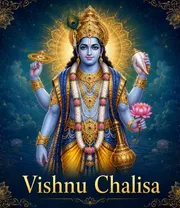
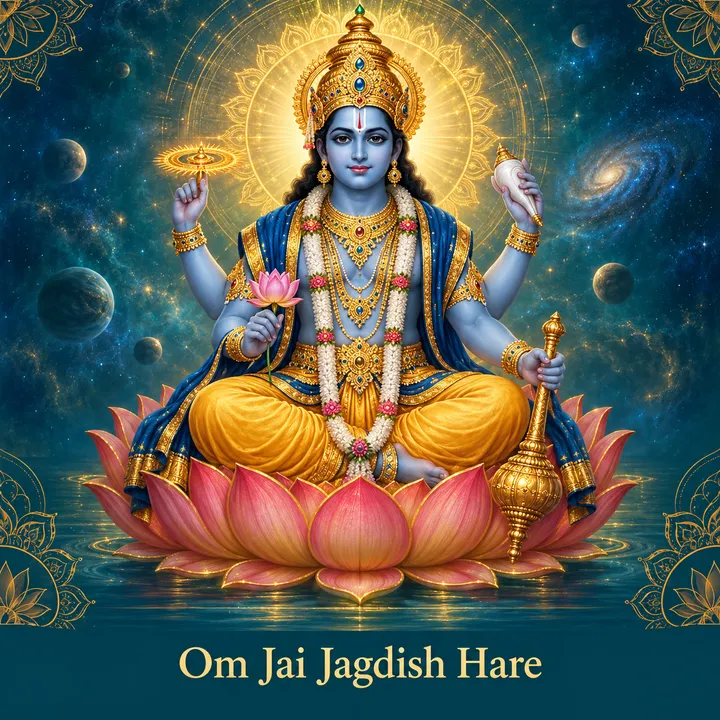
Om Jai Jagdish Hare is an eight-stanza Hindi aarti in praise of Vishnu addressed as Jagdish, “Lord of the universe.” It is a widely sung concluding aarti in Hindu worship — recited at the close of pujas across India regardless of which specific deity the puja itself honored, because its language addresses the divine in universal terms rather than one narrower iconographic form.
Origin and source
Om Jai Jagdish Hare is traditionally attributed to Pandit Shraddha Ram Phillauri, a 19th-century poet and reformer from Phillaur in Punjab, who is said to have composed it around 1870. Written in Hindi rather than Sanskrit, it follows the pattern of a Vaishnav prabhu-aarti: each stanza praises Vishnu as the universal protector and inner witness of all beings, and asks for his grace on behalf of a devotee who describes their own shortcomings plainly. Because Jagdish, “Lord of the universe,” is a name for the divine in general rather than a specific narrative form such as Rama or Krishna, the aarti travels easily across sectarian lines and has become the default closing aarti of Hindu worship itself.
How it is recited
Om Jai Jagdish Hare is sung standing, at the very end of a puja, while a lit diya or aarti lamp is circled in front of the deity’s image. In practice, the opening stanza is repeated as a refrain after each of the stanzas that follow it, with the congregation clapping and often ringing a bell in time with the melody. It is sung in homes and temples alike, and is familiar even to people who do not know the words of any other Hindu prayer, since it closes almost every act of communal worship.
Frequently asked questions
How many verses does Om Jai Jagdish Hare have?
Who is Om Jai Jagdish Hare dedicated to?
When is Om Jai Jagdish Hare typically recited?
What language is Om Jai Jagdish Hare composed in?
What tradition is Om Jai Jagdish Hare associated with?
Is an English translation of Om Jai Jagdish Hare available?
Is there a Roman transliteration of Om Jai Jagdish Hare?
Sourcing
Checked against independent sources before publishing — see our sourcing and editorial policy. Spotted an error? Report an issue .