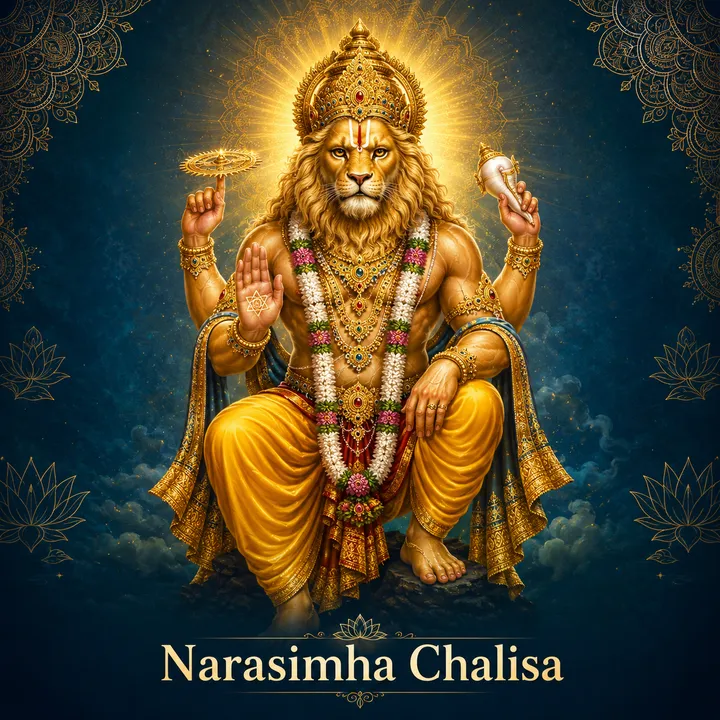
The text
Tap Recite along to follow verse by verse — use Next, or the arrow keys.
- Opening dohas
- Doha 1
मास वैशाख कृतिका युत, हरण मही को भार।शुक्ल चतुर्दशी सोम दिन, लियो नरसिंह अवतार॥
māsa vaiśākha kṛtikā yuta, haraṇa mahī ko bhāra।śukla caturdaśī soma dina, liyo narasiṃha avatāra॥
In the month of Vaishakh, under the Krittika nakshatra, when the earth was burdened past bearing — on the fourteenth day of the bright fortnight, a Monday, he took the Narasimha avatar.
- Doha 2
धन्य तुम्हारो सिंह तनु, धन्य तुम्हारो नाम।तुमरे सुमरन से प्रभु, पूरन हो सब काम॥
dhanya tumhāro siṃha tanu, dhanya tumhāro nāma।tumare sumarana se prabhu, pūrana ho saba kāma॥
Blessed is your lion form, blessed is your name; by remembering you, O Lord, every task is fulfilled.
- The 40 chaupais
- Chaupai 1
नरसिंह देव मैं सुमरों तोहि।धन बल विद्या दान दे मोहि॥
narasiṃha deva maiṃ sumarõ tohi।dhana bala vidyā dāna de mohi॥
Lord Narasimha, I call you to mind — grant me wealth, strength, knowledge, and generosity.
- Chaupai 2
जय जय नरसिंह कृपाला।करो सदा भक्तन प्रतिपाला॥
jaya jaya narasiṃha kṛpālā।karo sadā bhaktana pratipālā॥
Victory, victory to compassionate Narasimha — you who ever nurture and protect your devotees.
- Chaupai 3
विष्णु के अवतार दयाला।महाकाल कालन को काला॥
viṣṇu ke avatāra dayālā।mahākāla kālana ko kālā॥
Merciful avatar of Vishnu — death itself to great Death.
- Chaupai 4
नाम अनेक तुम्हारो बखानो।अल्प बुद्धि मैं ना कछु जानों॥
nāma aneka tumhāro bakhāno।alpa buddhi maiṃ nā kachu jānõ॥
Many are the names of yours that could be told, but with my meager understanding I know only a little of them.
- Chaupai 5
हिरणाकुश नृप अति अभिमानी।तेहि के भार मही अकुलानी॥
hiraṇākuśa nṛpa ati abhimānī।tehi ke bhāra mahī akulānī॥
King Hiranyakashipu was exceedingly proud; under his weight the earth grew distressed.
- Chaupai 6
हिरणाकुश कयाधू के जाये।नाम भक्त प्रहलाद कहाये॥
hiraṇākuśa kayādhū ke jāye।nāma bhakta prahalāda kahāye॥
To Hiranyakashipu and Kayadhu was born a son, called by the name of the devotee Prahlad.
- Chaupai 7
भक्त बना बिष्णु को दासा।पिता कियो मारन परसाया॥
bhakta banā biṣṇu ko dāsā।pitā kiyo mārana parasāyā॥
He became a devoted servant of Vishnu; for this, his own father resolved to kill him.
- Chaupai 8
अस्त्र-शस्त्र मारे भुज दण्डा।अग्निदाह कियो प्रचण्डा॥
astra-śastra māre bhuja daṇḍā।agnidāha kiyo pracaṇḍā॥
He struck him with weapons and with his own arms, and set him in a raging fire.
- Chaupai 9
भक्त हेतु तुम लियो अवतारा।दुष्ट-दलन हरण महिभारा॥
bhakta hetu tuma liyo avatārā।duṣṭa-dalana haraṇa mahibhārā॥
For the sake of your devotee you took this avatar, to crush the wicked and lift the burden of the earth.
- Chaupai 10
तुम भक्तन के भक्त तुम्हारे।प्रह्लाद के प्राण पियारे॥
tuma bhaktana ke bhakta tumhāre।prahlāda ke prāṇa piyāre॥
You belong to your devotees as they belong to you — Prahlad was as dear to you as life itself.
- Chaupai 11
प्रगट भये फाड़कर तुम खम्भा।देख दुष्ट-दल भये अचम्भा॥
pragaṭa bhaye phāṛakara tuma khambhā।dekha duṣṭa-dala bhaye acambhā॥
You appeared, bursting forth from the pillar; seeing this, the assembly of the wicked was struck with astonishment.
- Chaupai 12
खड्ग जिह्व तनु सुन्दर साजा।ऊर्ध्व केश महादष्ट्र विराजा॥
khaḍga jihva tanu sundara sājā।ūrdhva keśa mahādaṣṭra virājā॥
Your tongue was like a blade, your form beautifully arrayed; your mane stood upright, and great fangs shone forth.
- Chaupai 13
तप्त स्वर्ण सम बदन तुम्हारा।को वरने तुम्हरों विस्तारा॥
tapta svarṇa sama badana tumhārā।ko varane tumharõ vistārā॥
Your face shone like molten gold — who could describe the full extent of your form?
- Chaupai 14
रूप चतुर्भुज बदन विशाला।नख जिह्वा है अति विकराला॥
rūpa caturbhuja badana viśālā।nakha jihvā hai ati vikarālā॥
Four-armed is your form, vast your face; your claws and tongue are utterly fearsome.
- Chaupai 15
स्वर्ण मुकुट बदन अति भारी।कानन कुण्डल की छवि न्यारी॥
svarṇa mukuṭa badana ati bhārī।kānana kuṇḍala kī chavi nyārī॥
A golden crown weighs magnificently upon your head; the earrings in your ears shine with a beauty all their own.
- Chaupai 16
भक्त प्रहलाद को तुमने उबारा।हिरणा कुश खल क्षण मह मारा॥
bhakta prahalāda ko tumane ubārā।hiraṇā kuśa khala kṣaṇa maha mārā॥
You delivered your devotee Prahlad, and slew the wicked Hiranyakashipu in an instant.
- Chaupai 17
ब्रह्मा, बिष्णु तुम्हे नित ध्यावे।इन्द्र महेश सदा मन लावे॥
brahmā, biṣṇu tumhe nita dhyāve।indra maheśa sadā mana lāve॥
Brahma and Vishnu meditate on you always; Indra and Shiva ever fix their minds upon you.
- Chaupai 18
वेद पुराण तुम्हरो यश गावे।शेष शारदा पारन पावे॥
veda purāṇa tumharo yaśa gāve।śeṣa śāradā pārana pāve॥
The Vedas and Puranas sing your glory; even Shesha and Sharada reach only its far edge.
- Chaupai 19
जो नर धरो तुम्हरो ध्याना।ताको होय सदा कल्याना॥
jo nara dharo tumharo dhyānā।tāko hoya sadā kalyānā॥
Whoever holds you in meditation attains lasting well-being.
- Chaupai 20
त्राहि-त्राहि प्रभु दुःख निवारो।भव बन्धन प्रभु आप ही टारो॥
trāhi-trāhi prabhu duḥkha nivāro।bhava bandhana prabhu āpa hī ṭāro॥
Save me, save me, O Lord — remove my sorrows; you alone can free me from the bonds of worldly existence.
- Chaupai 21
नित्य जपे जो नाम तिहारा।दुःख व्याधि हो निस्तारा॥
nitya jape jo nāma tihārā।duḥkha vyādhi ho nistārā॥
Whoever daily chants your name is delivered from sorrow and disease.
- Chaupai 22
सन्तान-हीन जो जाप कराये।मन इच्छित सो नर सुत पावे॥
santāna-hīna jo jāpa karāye।mana icchita so nara suta pāve॥
The one without children who performs this japa obtains the son their heart desires.
- Chaupai 23
बन्ध्या नारी सुसन्तान को पावे।नर दरिद्र धनी होई जावे॥
bandhyā nārī susantāna ko pāve।nara daridra dhanī hoī jāve॥
A barren woman obtains a worthy child; a poor man becomes wealthy.
- Chaupai 24
जो नरसिंह का जाप करावे।ताहि विपत्ति सपनें नही आवे॥
jo narasiṃha kā jāpa karāve।tāhi vipatti sapanẽ nahī āve॥
Whoever has this japa of Narasimha performed, misfortune does not come near him, even in dreams.
- Chaupai 25
जो कामना करे मन माही।सब निश्चय सो सिद्ध हुयी जाही॥
jo kāmanā kare mana māhī।saba niścaya so siddha huyī jāhī॥
Whatever desire is held in the mind is surely fulfilled.
- Chaupai 26
जीवन मैं जो कछु सङ्कट होयी।निश्चय नरसिंह सुमरे सोयी॥
jīvana maiṃ jo kachu saṅkaṭa hoyī।niścaya narasiṃha sumare soyī॥
Whatever trouble arises in life is resolved for certain by remembering Narasimha.
- Chaupai 27
रोग ग्रसित जो ध्यावे कोई।ताकि काया कञ्चन होई॥
roga grasita jo dhyāve koī।tāki kāyā kañcana hoī॥
One afflicted by illness who meditates on you finds their body made whole, as if of gold.
- Chaupai 28
डाकिनी-शाकिनी प्रेत बेताला।ग्रह-व्याधि अरु यम विकराला॥
ḍākinī-śākinī preta betālā।graha-vyādhi aru yama vikarālā॥
Malevolent spirits, ghosts, and vampire-spirits; afflictions of the planets, and fearsome Yama —
- Chaupai 29
प्रेत पिशाच सबे भय खाये।यम के दूत निकट नहीं आवे॥
preta piśāca sabe bhaya khāye।yama ke dūta nikaṭa nahīṃ āve॥
All ghosts and demons flee in fear before it, and Yama's own messengers dare not come near.
- Chaupai 30
सुमर नाम व्याधि सब भागे।रोग-शोक कबहूँ नही लागे॥
sumara nāma vyādhi saba bhāge।roga-śoka kabahū̃ nahī lāge॥
At the remembrance of your name, every affliction flees; disease and sorrow never take hold.
- Chaupai 31
जाको नजर दोष हो भाई।सो नरसिंह चालीसा गाई॥
jāko najara doṣa ho bhāī।so narasiṃha cālīsā gāī॥
Whoever suffers from the evil eye, brother, let them sing this Narasimha Chalisa.
- Chaupai 32
हटे नजर होवे कल्याना।बचन सत्य साखी भगवाना॥
haṭe najara hove kalyānā।bacana satya sākhī bhagavānā॥
The evil eye is lifted and well-being follows — this word is true, with the Lord himself as witness.
- Chaupai 33
जो नर ध्यान तुम्हारो लावे।सो नर मन वाञ्छित फल पावे॥
jo nara dhyāna tumhāro lāve।so nara mana vāñchita phala pāve॥
Whoever fixes their attention upon you obtains the fruit their heart desires.
- Chaupai 34
बनवाये जो मन्दिर ज्ञानी।हो जावे वह नर जग मानी॥
banavāye jo mandira jñānī।ho jāve vaha nara jaga mānī॥
The wise one who has a temple built for you comes to be honored throughout the world.
- Chaupai 35
नित-प्रति पाठ करे इक बारा।सो नर रहे तुम्हारा प्यारा॥
nita-prati pāṭha kare ika bārā।so nara rahe tumhārā pyārā॥
Whoever recites this even once daily remains dear to you.
- Chaupai 36
नरसिंह चालीसा जो जन गावे।दुःख दरिद्र ताके निकट न आवे॥
narasiṃha cālīsā jo jana gāve।duḥkha daridra tāke nikaṭa na āve॥
Whoever sings this Narasimha Chalisa is never approached by sorrow or poverty.
- Chaupai 37
चालीसा जो नर पढ़े-पढ़ावे।सो नर जग में सब कुछ पावे॥
cālīsā jo nara paḍhe-paḍhāve।so nara jaga mẽ saba kucha pāve॥
Whoever reads this Chalisa, or has it read, obtains everything in this world.
- Chaupai 38
यह श्री नरसिंह चालीसा।पढ़े रङ्क होवे अवनीसा॥
yaha śrī narasiṃha cālīsā।paḍhe raṅka hove avanīsā॥
This is the Shri Narasimha Chalisa — reciting it, even a pauper becomes a lord of the earth.
- Chaupai 39
जो ध्यावे सो नर सुख पावे।तोही विमुख बहु दुःख उठावे॥
jo dhyāve so nara sukha pāve।tohī vimukha bahu duḥkha uṭhāve॥
Whoever meditates on you attains happiness; whoever turns away from you bears great suffering.
- Chaupai 40
शिव स्वरूप है शरण तुम्हारी।हरो नाथ सब विपत्ति हमारी॥
śiva svarūpa hai śaraṇa tumhārī।haro nātha saba vipatti hamārī॥
Your shelter itself is auspicious — remove, O Lord, all our misfortunes.
- Closing dohas
- Doha (closing) 1
चारों युग गायें तेरी, महिमा अपरम्पार।निज भक्तनु के प्राण हित, लियो जगत अवतार॥
cārõ yuga gāyẽ terī, mahimā aparampāra।nija bhaktanu ke prāṇa hita, liyo jagata avatāra॥
All four ages sing of your glory, boundless beyond measure; for the sake of your own devotee's life, you took birth into this world.
- Doha (closing) 2
नरसिंह चालीसा जो पढ़े, प्रेम मगन शत बार।उस घर आनन्द रहे, वैभव बढ़े अपार॥
narasiṃha cālīsā jo paḍhe, prema magana śata bāra।usa ghara ānanda rahe, vaibhava baḍhe apāra॥
Whoever reads this Narasimha Chalisa a hundred times, absorbed in love, that household abides in joy, and its prosperity grows without measure.
Overview
The Narasimha Chalisa is a Hindi devotional composition of forty chaupai verses, framed by two opening dohas and two closing dohas, in praise of Narasimha — the man-lion form in which Vishnu is held to have appeared as the fourth of his ten principal avatars. Tradition holds that the demon-king Hiranyakashipu had won a boon making him nearly impossible to kill, and grew tyrannical in his pride; his own son Prahlad remained devoted to Vishnu despite his father’s persecution, including attempts to kill the boy with weapons and fire. When Hiranyakashipu demanded to know whether Vishnu was present in a palace pillar, Narasimha burst out of it and killed him, satisfying the terms of his boon. The chaupai verses describe Narasimha’s fearsome, four-armed lion-man form, retell this story in brief, and list the benefits devotees traditionally attribute to reciting the Chalisa: relief from illness, the evil eye, planetary affliction, and encounters with malevolent spirits.
Origin and source
The sources consulted for this Chalisa’s text do not attribute it to a named composer; unlike the Hanuman Chalisa, which is confidently credited to Tulsidas, the Narasimha Chalisa circulates as a standard printed and recited text without a settled authorship claim in the devotional literature checked for this page. Its opening doha dates Narasimha’s appearance to the month of Vaishakh, under the Krittika nakshatra, on the fourteenth day (chaturdashi) of the bright lunar fortnight — the same tithi observed as Narasimha Jayanti — and further specifies a Monday, though the weekday is a detail of this particular verse rather than a fixed feature of the festival, since the same lunar tithi falls on a different weekday most years.
How it is recited
The Narasimha Chalisa is recited by devotees seeking Narasimha’s protection from illness, misfortune, and the evil eye, and is especially associated with Narasimha Jayanti, the festival marking his appearance to save Prahlad. Some devotional sources recommend reciting it eleven times in a single sitting for this purpose. It is typically read at home before an image of Narasimha, sometimes alongside the shorter aarti “Om Jai Narsingh Hare,” which is more commonly sung with a lit lamp during the daily or festival aarti itself, while the Chalisa is read as a fuller recitation of his praise and story.
Frequently asked questions
How many verses does Narasimha Chalisa have?
Who is Narasimha Chalisa dedicated to?
When is Narasimha Chalisa typically recited?
What language is Narasimha Chalisa composed in?
What tradition is Narasimha Chalisa associated with?
Is an English translation of Narasimha Chalisa available?
Is there a Roman transliteration of Narasimha Chalisa?
Sourcing
Checked against independent sources before publishing — see our sourcing and editorial policy. Spotted an error? Report an issue .