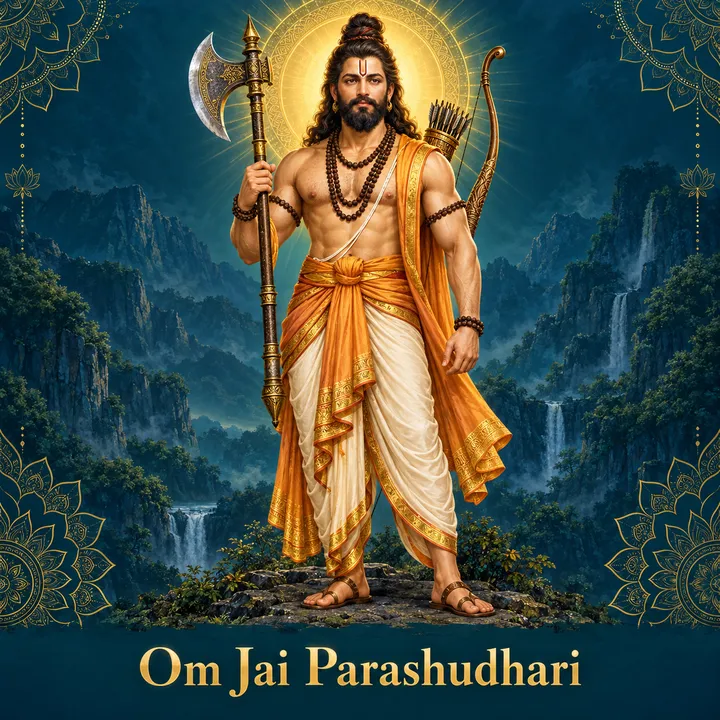
The text
Tap Recite along to follow verse by verse — use Next, or the arrow keys.
- Stanza 1 (refrain)
ॐ जय परशुधारी, स्वामी जय परशुधारी।सुर नर मुनिजन सेवत, श्रीपति अवतारी॥
oṃ jaya paraśudhārī, svāmī jaya paraśudhārī।sura nara munijana sevata, śrīpati avatārī॥
Victory to the wielder of the axe, O Lord, victory to the wielder of the axe. Gods, men, and sages serve you, the avatar of Shripati (Vishnu).
- Stanza 2
जमदग्नी सुत नर-सिंह, मां रेणुका जाया।मार्तण्ड भृगु वंशज, त्रिभुवन यश छाया॥ॐ जय परशुधारी, स्वामी जय परशुधारी।सुर नर मुनिजन सेवत, श्रीपति अवतारी॥
jamadagnī suta nara-siṃha, māṃ reṇukā jāyā।mārtaṇḍa bhṛgu vaṃśaja, tribhuvana yaśa chāyā॥oṃ jaya paraśudhārī, svāmī jaya paraśudhārī।sura nara munijana sevata, śrīpati avatārī॥
Son of Jamadagni, a lion among men, born of mother Renuka; descendant of the Bhrigu lineage, your fame's glow spreads like sunlight across the three worlds. Victory to the wielder of the axe, O Lord, victory to the wielder of the axe. Gods, men, and sages serve you, the avatar of Shripati.
- Stanza 3
कांधे सूत्र जनेऊ, गल रुद्राक्ष माला।चरण खड़ाऊँ शोभे, तिलक त्रिपुण्ड भाला॥ॐ जय परशुधारी, स्वामी जय परशुधारी।सुर नर मुनिजन सेवत, श्रीपति अवतारी॥
kāndhe sūtra janeū, gala rudrākṣa mālā।caraṇa khaḍāūṃ śobhe, tilaka tripuṇḍa bhālā॥oṃ jaya paraśudhārī, svāmī jaya paraśudhārī।sura nara munijana sevata, śrīpati avatārī॥
The sacred thread rests on your shoulder, a rudraksha garland at your neck; wooden sandals grace your feet, the tripundra mark adorns your brow. Victory to the wielder of the axe, O Lord, victory to the wielder of the axe. Gods, men, and sages serve you, the avatar of Shripati.
- Stanza 4
ताम्र श्याम घन केशा, शीश जटा बांधी।सुजन हेतु ऋतु मधुमय, दुष्ट दलन आंधी॥ॐ जय परशुधारी, स्वामी जय परशुधारी।सुर नर मुनिजन सेवत, श्रीपति अवतारी॥
tāmra śyāma ghana keśā, śīśa jaṭā bāṃdhī।sujana hetu ṛtu madhumaya, duṣṭa dalana āṃdhī॥oṃ jaya paraśudhārī, svāmī jaya paraśudhārī।sura nara munijana sevata, śrīpati avatārī॥
Your thick hair gleams copper-dark, your matted locks bound upon your head; to the righteous you are a gentle, flowering season, to the wicked a crushing storm. Victory to the wielder of the axe, O Lord, victory to the wielder of the axe. Gods, men, and sages serve you, the avatar of Shripati.
- Stanza 5
मुख रवि तेज विराजत, रक्त वर्ण नैना।दीन-हीन गो विप्रन, रक्षक दिन रैना॥ॐ जय परशुधारी, स्वामी जय परशुधारी।सुर नर मुनिजन सेवत, श्रीपति अवतारी॥
mukha ravi teja virājata, rakta varṇa nainā।dīna-hīna go vipran, rakṣaka dina rainā॥oṃ jaya paraśudhārī, svāmī jaya paraśudhārī।sura nara munijana sevata, śrīpati avatārī॥
Your face shines with the radiance of the sun, your eyes are touched with red; you are the protector, day and night, of the poor and helpless, the cow, and the Brahmin. Victory to the wielder of the axe, O Lord, victory to the wielder of the axe. Gods, men, and sages serve you, the avatar of Shripati.
- Stanza 6
कर शोभित बर परशु, निगमागम ज्ञाता।कंध चाप-शर वैष्णव, ब्राह्मण कुल त्राता॥ॐ जय परशुधारी, स्वामी जय परशुधारी।सुर नर मुनिजन सेवत, श्रीपति अवतारी॥
kara śobhita bara paraśu, nigamāgama jñātā।kaṃdha cāpa-śara vaiṣṇava, brāhmaṇa kula trātā॥oṃ jaya paraśudhārī, svāmī jaya paraśudhārī।sura nara munijana sevata, śrīpati avatārī॥
Your hand is graced by the excellent axe, knower of the Nigama and Agama scriptures; the bow and quiver rest on your shoulder, Vaishnav in nature, savior of the Brahmin clan. Victory to the wielder of the axe, O Lord, victory to the wielder of the axe. Gods, men, and sages serve you, the avatar of Shripati.
- Stanza 7
माता पिता तुम स्वामी, मीत सखा मेरे।मेरी बिरद संभारो, द्वार पड़ा मैं तेरे॥ॐ जय परशुधारी, स्वामी जय परशुधारी।सुर नर मुनिजन सेवत, श्रीपति अवतारी॥
mātā pitā tuma svāmī, mīta sakhā mere।merī birada sambhāro, dvāra paḍā maiṃ tere॥oṃ jaya paraśudhārī, svāmī jaya paraśudhārī।sura nara munijana sevata, śrīpati avatārī॥
You are my mother, father, and lord, my friend and companion; uphold your name for protecting those who seek you — I have fallen at your door. Victory to the wielder of the axe, O Lord, victory to the wielder of the axe. Gods, men, and sages serve you, the avatar of Shripati.
- Stanza 8 (closing)
अजर-अमर श्री परशुराम की, आरती जो गावे।'पूर्णेन्दु' शिव साखि, सुख सम्पति पावे॥ॐ जय परशुधारी, स्वामी जय परशुधारी।सुर नर मुनिजन सेवत, श्रीपति अवतारी॥
ajara-amara śrī paraśurāma kī, āratī jo gāve।'pūrṇendu' śiva sākhi, sukha sampati pāve॥oṃ jaya paraśudhārī, svāmī jaya paraśudhārī।sura nara munijana sevata, śrīpati avatārī॥
Whoever sings this aarti of the ageless, immortal Shri Parashuram — says Purnendu, with Shiva as witness, obtains happiness and prosperity. Victory to the wielder of the axe, O Lord, victory to the wielder of the axe. Gods, men, and sages serve you, the avatar of Shripati.
Overview
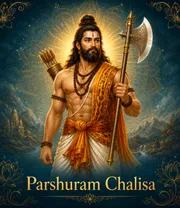
“Parashudhari” means “the one who bears the parashu,” the axe — the same weapon that gives Parashurama, “Rama of the axe,” his name. Om Jai Parashudhari is a short Hindi aarti addressed to him under this epithet, sung in the same call-and-response style and meter as Om Jai Jagdish Hare, with a refrain repeated after each stanza. It is a distinct composition from this site’s Parshuram Chalisa: the chalisa narrates his birth, his conflict with Kartavirya Arjuna, and his role across the four Yugas over forty chaupais, while this aarti is a much shorter praise-song that dwells on his iconography — his hair, sandals, tilak, axe, and bow — and closes with a devotee’s appeal for his protection, without retelling the narrative episodes at all.
The aarti’s own text identifies Parashurama as an avatar directly, describing him as “śrīpati avatārī” — the avatar of Shripati, an epithet of Vishnu (Shri’s, i.e. Lakshmi’s, husband) — in the refrain repeated after every stanza. A later stanza also calls him “vaiṣṇava” in nature. Both lines independently support placing this aarti in the Vaishnav tradition and linking it to Vishnu, consistent with how the Parshuram Chalisa treats the same figure.
Origin and source
As with many Hindi aartis, no confident external attribution could be verified for this composition’s author. Its closing stanza carries the signature line “‘पूर्णेन्दु’ शिव साखि” (“says Purnendu, with Shiva as witness”) — a bhanita, the closing self-naming convention common to Hindi devotional verse. The Parshuram Chalisa’s own closing doha uses the same name, “पूर्णेन्दु” (“Purnendu”), in an unrelated line. Whether both texts are the work of a single poet by that name cannot be confirmed from the texts alone, and no independent biographical record for a poet named Purnendu could be verified for this page, so no authorship claim is made here beyond noting the shared signature.
The stanzas describe Parashurama’s appearance and bearing — the sacred thread and rudraksha garland he wears, his wooden sandals and tripundra mark, his copper-dark matted locks — and his character as gentle toward the righteous and destructive toward the wicked. Other stanzas describe him as a protector of the poor, cattle, and Brahmins, a knower of the Nigama and Agama scriptures, and one who carries both the axe and the bow. The closing stanza asks for his protection directly, in the voice of a devotee who has “fallen at your door.”
How it is recited
Om Jai Parashudhari is sung especially on Parshuram Jayanti, the festival marking Parashurama’s birth, alongside other devotions to him and to Vishnu. As with aartis in this call-and-response style, it is typically sung with a lit lamp or diya circled before his image, the refrain repeated by everyone present after each stanza.
Frequently asked questions
How many verses does Om Jai Parashudhari have?
Who is Om Jai Parashudhari dedicated to?
When is Om Jai Parashudhari typically recited?
What language is Om Jai Parashudhari composed in?
What tradition is Om Jai Parashudhari associated with?
Is an English translation of Om Jai Parashudhari available?
Is there a Roman transliteration of Om Jai Parashudhari?
Sourcing
Checked against independent sources before publishing — see our sourcing and editorial policy. Spotted an error? Report an issue .