The text
Tap Recite along to follow verse by verse — use Next, or the arrow keys.
- Stanza 1 (refrain)
ॐ जय जय जय गिरिराज, स्वामी जय जय जय गिरिराज।संकट में तुम राखौ, निज भक्तन की लाज॥
oṃ jaya jaya jaya girirāja, svāmī jaya jaya jaya girirāja।saṅkaṭa meṃ tuma rākhau, nija bhaktana kī lāja॥
Victory, victory, victory to Giriraj — Lord, victory, victory, victory to Giriraj. Keep us safe in times of trouble, and protect the honor of your devotees.
- Stanza 2
इन्द्रादिक सब सुर मिल, तुम्हरौं ध्यान धरैं।ऋषि मुनिजन यश गावें, ते भवसिन्धु तरैं॥ॐ जय जय जय गिरिराज, स्वामी जय जय जय गिरिराज।संकट में तुम राखौ, निज भक्तन की लाज॥
indrādika saba sura mila, tumharauṃ dhyāna dharaiṃ।ṛṣi munijana yaśa gāveṃ, te bhavasindhu taraiṃ॥oṃ jaya jaya jaya girirāja, svāmī jaya jaya jaya girirāja।saṅkaṭa meṃ tuma rākhau, nija bhaktana kī lāja॥
Indra and all the gods together fix their meditation upon you; sages and hermits sing your praise and thereby cross the ocean of worldly existence. Victory, victory, victory to Giriraj — Lord, victory, victory, victory to Giriraj. Keep us safe in times of trouble, and protect the honor of your devotees.
- Stanza 3
सुन्दर रूप तुम्हारौ, श्याम सिला सोहें।वन उपवन लखि-लखि के, भक्तन मन मोहें॥ॐ जय जय जय गिरिराज, स्वामी जय जय जय गिरिराज।संकट में तुम राखौ, निज भक्तन की लाज॥
sundara rūpa tumhārau, śyāma silā soheṃ।vana upavana lakhi-lakhi ke, bhaktana mana moheṃ॥oṃ jaya jaya jaya girirāja, svāmī jaya jaya jaya girirāja।saṅkaṭa meṃ tuma rākhau, nija bhaktana kī lāja॥
Your form is beautiful, your dark stone shines; devotees' hearts are enchanted, gazing again and again upon your groves and gardens. Victory, victory, victory to Giriraj — Lord, victory, victory, victory to Giriraj. Keep us safe in times of trouble, and protect the honor of your devotees.
- Stanza 4
मध्य मानसी गंगा, कलि के मल हरनी।तापै दीप जलावें, उतरें वैतरनी॥ॐ जय जय जय गिरिराज, स्वामी जय जय जय गिरिराज।संकट में तुम राखौ, निज भक्तन की लाज॥
madhya mānasī gaṅgā, kali ke mala haranī।tāpai dīpa jalāveṃ, utareṃ vaitaranī॥oṃ jaya jaya jaya girirāja, svāmī jaya jaya jaya girirāja।saṅkaṭa meṃ tuma rākhau, nija bhaktana kī lāja॥
In your midst is the Manasi Ganga, remover of the impurities of this age of Kali; those who light a lamp there cross over the river Vaitarani. Victory, victory, victory to Giriraj — Lord, victory, victory, victory to Giriraj. Keep us safe in times of trouble, and protect the honor of your devotees.
- Stanza 5
नवल अप्सरा कुण्ड, सुहावन-पावन सुखकारी।बायें राधा-कुण्ड, नहावें महा पापहारी॥ॐ जय जय जय गिरिराज, स्वामी जय जय जय गिरिराज।संकट में तुम राखौ, निज भक्तन की लाज॥
navala apsarā kuṇḍa, suhāvana-pāvana sukhakārī।bāyeṃ rādhā-kuṇḍa, nahāveṃ mahā pāpahārī॥oṃ jaya jaya jaya girirāja, svāmī jaya jaya jaya girirāja।saṅkaṭa meṃ tuma rākhau, nija bhaktana kī lāja॥
The lovely Apsara Kund is pleasing, purifying, and brings joy; on your left is Radha Kund — bathing there removes even great sin. Victory, victory, victory to Giriraj — Lord, victory, victory, victory to Giriraj. Keep us safe in times of trouble, and protect the honor of your devotees.
- Stanza 6
तुम्ही मुक्ति के दाता, कलियुग के स्वामी।दीनन के हो रक्षक, प्रभु अन्तर्यामी॥ॐ जय जय जय गिरिराज, स्वामी जय जय जय गिरिराज।संकट में तुम राखौ, निज भक्तन की लाज॥
tumhī mukti ke dātā, kaliyuga ke svāmī।dīnana ke ho rakṣaka, prabhu antaryāmī॥oṃ jaya jaya jaya girirāja, svāmī jaya jaya jaya girirāja।saṅkaṭa meṃ tuma rākhau, nija bhaktana kī lāja॥
You alone are the giver of liberation, the lord of this age of Kali; you are the protector of the humble, O Lord who dwells within all. Victory, victory, victory to Giriraj — Lord, victory, victory, victory to Giriraj. Keep us safe in times of trouble, and protect the honor of your devotees.
- Stanza 7
हम हैं शरण तुम्हारी, गिरिवर गिरधारी।देवकीनंदन कृपा करो, हे भक्तन हितकारी॥ॐ जय जय जय गिरिराज, स्वामी जय जय जय गिरिराज।संकट में तुम राखौ, निज भक्तन की लाज॥
hama haiṃ śaraṇa tumhārī, girivara giradhārī।devakīnandana kṛpā karo, he bhaktana hitakārī॥oṃ jaya jaya jaya girirāja, svāmī jaya jaya jaya girirāja।saṅkaṭa meṃ tuma rākhau, nija bhaktana kī lāja॥
We take refuge in you, O best of mountains, O Giridhari, bearer of the mountain; O son of Devaki, show your grace, O well-wisher of your devotees. Victory, victory, victory to Giriraj — Lord, victory, victory, victory to Giriraj. Keep us safe in times of trouble, and protect the honor of your devotees.
- Stanza 8
जो नर दे परिकम्मा, पूजन पाठ करें।गावें नित्य आरती, पुनि नहिं जनम धरें॥ॐ जय जय जय गिरिराज, स्वामी जय जय जय गिरिराज।संकट में तुम राखौ, निज भक्तन की लाज॥
jo nara de parikammā, pūjana pāṭha kareṃ।gāveṃ nitya āratī, puni nahiṃ janama dhareṃ॥oṃ jaya jaya jaya girirāja, svāmī jaya jaya jaya girirāja।saṅkaṭa meṃ tuma rākhau, nija bhaktana kī lāja॥
One who performs your circumambulation, worship, and recitation, and sings this aarti daily, is not born again. Victory, victory, victory to Giriraj — Lord, victory, victory, victory to Giriraj. Keep us safe in times of trouble, and protect the honor of your devotees.
Overview
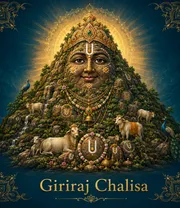
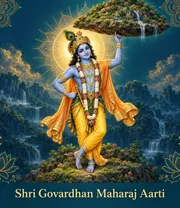
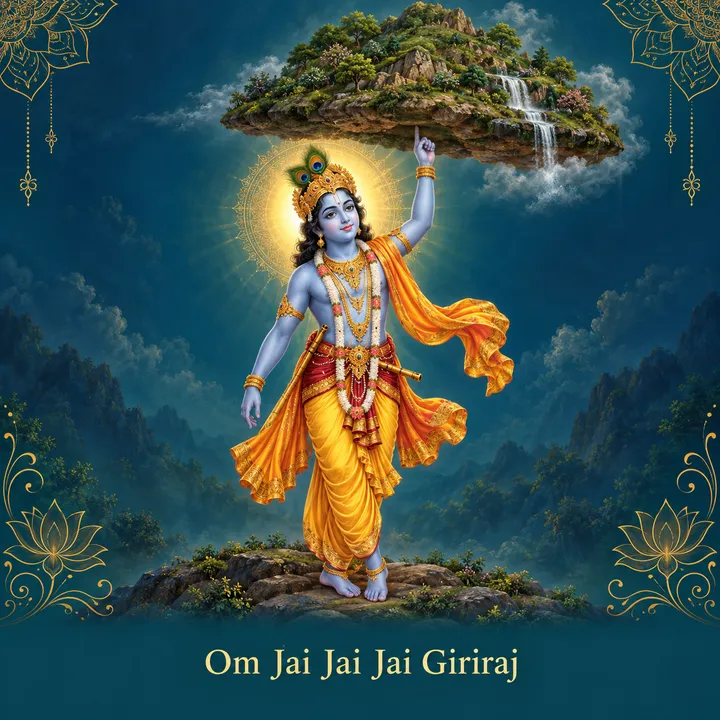
Om Jai Jai Jai Giriraj is a Hindi aarti of seven stanzas to Govardhan Hill (Giriraj), sharing its refrain-and-verse meter with the many other well-known Hindi aartis built on the “Om Jai” pattern. Unlike Shri Govardhan Maharaj Aarti, the other aarti to this same hill on this site, which pictures Govardhan adorned like an image — a crown, earrings, a jeweled necklace — this aarti instead moves through the hill’s sacred geography: the Manasi Ganga, Radha Kund, and Apsara Kund that lie along it, and the merit promised to those who walk its parikrama and sing this aarti daily. Only in its closing stanza does it turn to address Giriraj directly by a Krishna epithet, asking “Devakinandan” — Krishna as the son of Devaki — for grace.
Origin and source
As with most aartis in everyday Hindi devotional use, this text’s composer is not reliably established; it circulates as part of the same broad Braj Vaishnav devotional repertoire as Shri Govardhan Maharaj Aarti, sung by pilgrims and worshippers of Govardhan Hill rather than attributed to one named author. Its penultimate stanza addresses the hill directly as “girivara giradhārī” (best of mountains, mountain-bearer) and then as “devakīnandana” (son of Devaki) — an epithet that, unlike “Giridhari” alone, names Krishna specifically and unambiguously by his mother. This makes the identification of Giriraj with Krishna in this particular aarti’s own text more direct than in its sibling, which reaches for the same idea only through the compound epithet “Girirajdharan” in its final line. As in the Pushtimarg tradition founded by Vallabhacharya, where Govardhan is worshipped through a Govardhan Shila as a direct form of Krishna rather than merely a place associated with him, this aarti’s language treats the hill and the god as one and the same in its closing appeal.
How it is recited
This aarti is sung by devotees walking the parikrama, the circumambulation path around Govardhan Hill, and by those who worship at the hill’s sacred sites named in its own verses — lighting a lamp at the Manasi Ganga and bathing at Radha Kund and Apsara Kund. Its final stanza states the aarti’s own claim for reciting it: that one who completes the parikrama, performs worship, and sings this aarti daily is freed from rebirth. As with other aartis, it is sung while a lit diya or camphor flame is circled before the hill or its representation, with the refrain repeated by everyone present after each stanza.
Frequently asked questions
How many verses does Om Jai Jai Jai Giriraj have?
Who is Om Jai Jai Jai Giriraj dedicated to?
When is Om Jai Jai Jai Giriraj typically recited?
What language is Om Jai Jai Jai Giriraj composed in?
What tradition is Om Jai Jai Jai Giriraj associated with?
Is an English translation of Om Jai Jai Jai Giriraj available?
Is there a Roman transliteration of Om Jai Jai Jai Giriraj?
Sourcing
Checked against independent sources before publishing — see our sourcing and editorial policy. Spotted an error? Report an issue .