The text
Tap Recite along to follow verse by verse — use Next, or the arrow keys.
- Stanza 1 (refrain)
ॐ जय एकादशी, जय एकादशी, जय एकादशी माता।विष्णु पूजा व्रत को धारण कर, शक्ति मुक्ति पाता॥
oṃ jaya ekādaśī, jaya ekādaśī, jaya ekādaśī mātā।viṣṇu pūjā vrata ko dhāraṇa kara, śakti mukti pātā॥
Victory to Ekadashi, victory to Ekadashi, victory to Mother Ekadashi. Keeping the vow of Vishnu's worship, one attains strength and liberation.
- Stanza 2
तेरे नाम गिनाऊं देवी, भक्ति प्रदान करनी।गण गौरव की देनी माता, शास्त्रों में वरनी॥
tere nāma gināūṃ devī, bhakti pradāna karanī।gaṇa gaurava kī denī mātā, śāstroṃ meṃ varanī॥
Let me recount your names, O Goddess — grant me devotion. Mother, you who bestow glory upon your devotees are described so in the scriptures.
- Stanza 3
मार्गशीर्ष के कृष्णपक्ष की उत्पन्ना, विश्वतारनी जन्मी।शुक्ल पक्ष में हुई मोक्षदा, मुक्तिदाता बन आई॥
mārgaśīrṣa ke kṛṣṇapakṣa kī utpannā, viśvatāraṇī janmī।śukla pakṣa meṃ huī mokṣadā, muktidātā bana āī॥
In the dark fortnight of Margashirsha you were born as Utpanna, deliverer of the world. In its bright fortnight you became Mokshada, coming as the giver of liberation.
- Stanza 4
पौष के कृष्णपक्ष की, सफला नामक है।शुक्लपक्ष में होय पुत्रदा, आनन्द अधिक रहै॥
pauṣa ke kṛṣṇapakṣa kī, saphalā nāmaka hai।śuklapakṣa meṃ hoya putradā, ānanda adhika rahai॥
In the dark fortnight of Paush you are named Saphala. In its bright fortnight you are Putrada, bringing still greater joy.
- Stanza 5
नाम षटतिला माघ मास में, कृष्णपक्ष आवै।शुक्लपक्ष में जया, कहावै, विजय सदा पावै॥
nāma ṣaṭatilā māgha māsa meṃ, kṛṣṇapakṣa āvai।śuklapakṣa meṃ jayā, kahāvai, vijaya sadā pāvai॥
In the dark fortnight of Magh you come by the name Shattila. In its bright fortnight you are called Jaya, who ever grants victory.
- Stanza 6
विजया फागुन कृष्णपक्ष में शुक्ला आमलकी।पापमोचनी कृष्ण पक्ष में, चैत्र महाबलि की॥
vijayā phāguna kṛṣṇapakṣa meṃ śuklā āmalakī।pāpamocanī kṛṣṇa pakṣa meṃ, caitra mahābali kī॥
In the dark fortnight of Phalgun you are Vijaya, and in its bright fortnight, Amalaki. In the dark fortnight of Chaitra you are Papamochani, great remover of sin.
- Stanza 7
चैत्र शुक्ल में नाम कामदा, धन देने वाली।नाम वरूथिनी कृष्णपक्ष में, वैसाख माह वाली॥
caitra śukla meṃ nāma kāmadā, dhana dene vālī।nāma varūthinī kṛṣṇapakṣa meṃ, vaisākha māha vālī॥
In the bright fortnight of Chaitra you are named Kamada, giver of wealth. In the dark fortnight of Vaishakh you carry the name Varuthini.
- Stanza 8
शुक्ल पक्ष में होय मोहिनी अपरा ज्येष्ठ कृष्णपक्षी।नाम निर्जला सब सुख करनी, शुक्लपक्ष रखी॥
śukla pakṣa meṃ hoya mohinī aparā jyeṣṭha kṛṣṇapakṣī।nāma nirjalā saba sukha karanī, śuklapakṣa rakhī॥
In the bright fortnight of Vaishakh you become Mohini; in the dark fortnight of Jyeshtha, Apara. In its bright fortnight you are kept as Nirjala, giver of every happiness.
- Stanza 9
योगिनी नाम आषाढ में जानों, कृष्णपक्ष करनी।देवशयनी नाम कहायो, शुक्लपक्ष धरनी॥
yoginī nāma āṣāḍha meṃ jānoṃ, kṛṣṇapakṣa karanī।devaśayanī nāma kahāyo, śuklapakṣa dharanī॥
Know that in the dark fortnight of Ashadh you bear the name Yogini. In its bright fortnight you are called Devashayani.
- Stanza 10
कामिका श्रावण मास में आवै, कृष्णपक्ष कहिए।श्रावण शुक्ला होय पवित्रा आनन्द से रहिए॥
kāmikā śrāvaṇa māsa meṃ āvai, kṛṣṇapakṣa kahie।śrāvaṇa śuklā hoya pavitrā ānanda se rahie॥
In the dark fortnight of Shravan comes Kamika. In the bright fortnight of Shravan you dwell as Pavitra, abiding in joy.
- Stanza 11
अजा भाद्रपद कृष्णपक्ष की, परिवर्तिनी शुक्ला।इन्द्रा आश्चिन कृष्णपक्ष में, व्रत से भवसागर निकला॥
ajā bhādrapada kṛṣṇapakṣa kī, parivartinī śuklā।indrā āścina kṛṣṇapakṣa meṃ, vrata se bhavasāgara nikalā॥
In the dark fortnight of Bhadrapad you are Aja; in its bright fortnight, Parivartini. In the dark fortnight of Ashwin you are Indra, by whose vow the ocean of worldly existence is crossed.
- Stanza 12
पापांकुशा है शुक्ल पक्ष में, आप हरनहारी।रमा मास कार्तिक में आवै, सुखदायक भारी॥
pāpāṅkuśā hai śukla pakṣa meṃ, āpa haranahārī।ramā māsa kārtika meṃ āvai, sukhadāyaka bhārī॥
In the bright fortnight you are Papankusha, remover of sins yourself. In the month of Kartik comes Rama, great giver of happiness.
- Stanza 13
देवोत्थानी शुक्लपक्ष की, दुखनाशक मैया।पावन मास में करूं विनती पार करो नैया॥
devotthānī śuklapakṣa kī, dukhanāśaka maiyā।pāvana māsa meṃ karūṃ vinatī pāra karo naiyā॥
In the bright fortnight you are Devotthani, destroyer of sorrow, O Mother. In this sacred month I pray to you: carry my boat across.
- Stanza 14
परमा कृष्णपक्ष में होती, जन मंगल करनी।शुक्ल मास में होय पद्मिनी दुख दारिद्र हरनी॥
paramā kṛṣṇapakṣa meṃ hotī, jana maṅgala karanī।śukla māsa meṃ hoya padminī dukha dāridra haranī॥
In her dark fortnight she is Parama, bringer of good to all. In the bright fortnight she becomes Padmini, remover of sorrow and poverty.
- Stanza 15
जो कोई आरती एकादशी की, भक्ति सहित गावै।जन गुरदिता स्वर्ग का वासा, निश्चय वह पावै॥
jo koī āratī ekādaśī kī, bhakti sahita gāvai।jana guraditā svarga kā vāsā, niścaya vaha pāvai॥
Whoever sings this aarti of Ekadashi with devotion — that devotee will surely attain a place in heaven.
Overview
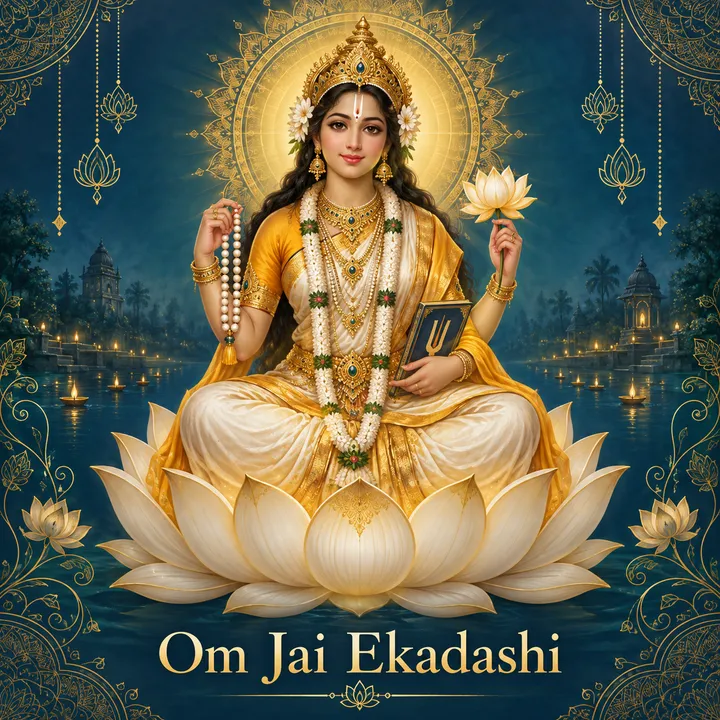
Om Jai Ekadashi is a Hindi aarti addressed not to a mythological deity in the usual sense, but to Ekadashi itself — the eleventh day of each lunar fortnight, kept as a fast (vrat) in honor of Vishnu — personified and sung to as “Ekadashi Mata” in the way Vaishnav devotional practice often addresses a sacred observance as a maternal figure worthy of praise. After its opening stanza, the aarti moves fortnight by fortnight through the lunar calendar, naming all twenty-four Ekadashis of a standard year — two for every month, one in the dark (Krishna Paksha) half and one in the bright (Shukla Paksha) half — and closes with two further names, Parama and Padmini, traditionally kept in a leap lunar month (Adhik Maas). It is best understood as a devotional catalog and celebration of the Ekadashi vrat tradition itself, not as an aarti to an independent goddess with her own iconography or mythology in the way Durga or Lakshmi have one.
Origin and source
The custom of naming and distinguishing each of the year’s Ekadashis, and of attributing a particular merit or story to each, comes from Puranic literature on vrata (vow-keeping), where different Puranas describe the observance and reward of individual Ekadashis. This aarti itself is a later Hindi devotional composition built on that naming tradition, sung as part of Ekadashi worship rather than forming part of the Sanskrit Puranic texts. No verifiable individual author or composition date could be confirmed, so none is claimed here.
How it is recited
Ekadashi falls twice in every lunar month, and observant households — especially in Vaishnav tradition — keep a fast on this day in Vishnu’s honor. Om Jai Ekadashi is sung at the close of that day’s puja, typically before a lit diya, often alongside or in place of a more general Vishnu aarti such as Om Jai Jagdish Hare. Reciting it is understood as a way of honoring the vrat itself and, by naming every Ekadashi across the year, affirming the devotee’s intention to keep the observance faithfully.
Frequently asked questions
How many verses does Om Jai Ekadashi have?
Who is Om Jai Ekadashi dedicated to?
When is Om Jai Ekadashi typically recited?
What language is Om Jai Ekadashi composed in?
What tradition is Om Jai Ekadashi associated with?
Is an English translation of Om Jai Ekadashi available?
Is there a Roman transliteration of Om Jai Ekadashi?
Sourcing
Checked against independent sources before publishing — see our sourcing and editorial policy. Spotted an error? Report an issue .