The text
Tap Recite along to follow verse by verse — use Next, or the arrow keys.
- Opening dohas
- Doha 1 (opening)
श्री गुरु चरण सरोज छवि, निज मन मन्दिर धारि।सुमरि गजानन शारदा, गहि आशिष त्रिपुरारि॥
śrī guru caraṇa saroja chavi, nija mana mandira dhāri।sumari gajānana śāradā, gahi āśiṣa tripurāri॥
With the beautiful image of my guru's lotus feet enshrined in the temple of my mind, remembering Gajanana (Ganesha) and Sharada (Saraswati), and taking the blessing of Tripurari (Shiva) —
- Doha 2 (opening)
बुद्धिहीन जन जानिये, अवगुणों का भण्डार।बरणौं परशुराम सुयश, निज मति के अनुसार॥
buddhihīna jana jāniye, avaguṇoṃ kā bhaṇḍāra।baraṇauṃ paraśurāma suyaśa, nija mati ke anusāra॥
Know me to be a foolish person, a storehouse of faults; yet I describe Parashurama's fair renown as best my own limited understanding allows.
- The 40 chaupais
- Chaupai 1
जय प्रभु परशुराम सुख सागर।जय मुनीश गुण ज्ञान दिवाकर॥
jaya prabhu paraśurāma sukha sāgara।jaya munīśa guṇa jñāna divākara॥
Victory to Lord Parashurama, ocean of happiness; victory to the lord of sages, sun of virtue and wisdom.
- Chaupai 2
भृगुकुल मुकुट विकट रणधीरा।क्षत्रिय तेज मुख संत शरीरा॥
bhṛgukula mukuṭa vikaṭa raṇadhīrā।kṣatriya teja mukha santa śarīrā॥
Crown of the Bhrigu clan, fearsome and unshaken in battle; radiant with Kshatriya-like splendor, yet saintly in form.
- Chaupai 3
जमदग्नी सुत रेणुका जाया।तेज प्रताप सकल जग छाया॥
jamadagnī suta reṇukā jāyā।teja pratāpa sakala jaga chāyā॥
Son of Jamadagni, born of Renuka; his radiance and glory spread across the whole world.
- Chaupai 4
मास बैसाख सित पच्छ उदारा।तृतीया पुनर्वसु मनुहारा॥
māsa baisākha sita paccha udārā।tṛtīyā punarvasu manuhārā॥
In the month of Baisakh, in the bright and generous fortnight, on the third day (tritiya), under the gracious Punarvasu nakshatra —
- Chaupai 5
प्रहर प्रथम निशा शीत न घामा।तिथि प्रदोष व्यापि सुखधामा॥
prahara prathama niśā śīta na ghāmā।tithi pradoṣa vyāpi sukhadhāmā॥
In the first watch of the night, neither cold nor hot, as the tithi pervaded the twilight hour, the abode of joy was born.
- Chaupai 6
तब ऋषि कुटीर रुदन शिशु कीन्हा।रेणुका कोखि जनम हरि लीन्हा॥
taba ṛṣi kuṭīra rudana śiśu kīnhā।reṇukā kokhi janama hari līnhā॥
Then, in the sage's hermitage, the infant's first cry rang out — Hari (Vishnu) had taken birth from Renuka's womb.
- Chaupai 7
निज घर उच्च ग्रह छः ठाढ़े।मिथुन राशि राहु सुख गाढ़े॥
nija ghara ucca graha chaḥ ṭhāḍhe।mithuna rāśi rāhu sukha gāḍhe॥
Six planets stood exalted in their own houses; Rahu in Mithuna (Gemini) deepened the auspiciousness of the hour.
- Chaupai 8
तेज-ज्ञान मिल नर तनु धारा।जमदग्नी घर ब्रह्म अवतारा॥
teja-jñāna mila nara tanu dhārā।jamadagnī ghara brahma avatārā॥
Splendor and wisdom joined and took on human form; the Supreme took avatar in Jamadagni's household.
- Chaupai 9
धरा राम शिशु पावन नामा।नाम जपत जग लह विश्रामा॥
dharā rāma śiśu pāvana nāmā।nāma japata jaga laha viśrāmā॥
The child was given the holy name Ram; chanting this name, the world finds rest.
- Chaupai 10
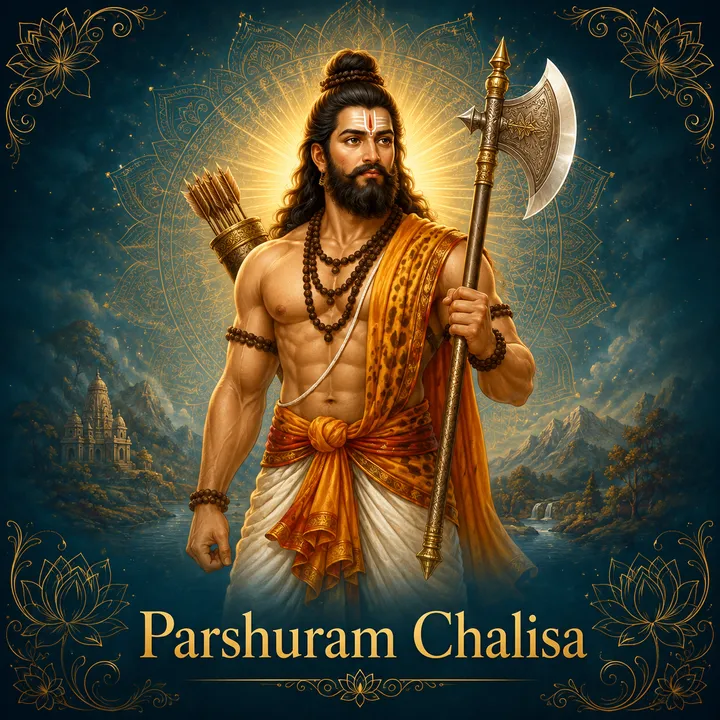
भाल त्रिपुण्ड जटा सिर सुन्दर।कांधे मुंज जनेऊ मनहर॥
bhāla tripuṇḍa jaṭā sira sundara।kāndhe muṃja janeū manahara॥
The tripundra mark upon his brow, beautiful matted locks on his head; a charming sacred thread of munja-grass upon his shoulder.
- Chaupai 11
मंजु मेखला कटि मृगछाला।रुद्र माला बर वक्ष विशाला॥
mañju mekhalā kaṭi mṛgachālā।rudra mālā bara vakṣa viśālā॥
A lovely girdle at his waist, and a deerskin; a rudraksha garland upon his broad, splendid chest.
- Chaupai 12
पीत बसन सुन्दर तनु सोहें।कंध तुणीर धनुष मन मोहें॥
pīta basana sundara tanu sohe।kaṃdha tuṇīra dhanuṣa mana mohe॥
Beautiful yellow garments grace his form; the quiver on his shoulder and his bow captivate the mind.
- Chaupai 13
वेद-पुराण-श्रुति-स्मृति ज्ञाता।क्रोध रूप तुम जग विख्याता॥
veda-purāṇa-śruti-smṛti jñātā।krodha rūpa tuma jaga vikhyātā॥
Knower of the Vedas, Puranas, Shrutis, and Smritis; renowned throughout the world as the very form of righteous wrath.
- Chaupai 14
दायें हाथ श्रीपरशु उठावा।वेद-संहिता बायें सुहावा॥
dāyeṃ hātha śrīparaśu uṭhāvā।veda-saṃhitā bāyeṃ suhāvā॥
In his right hand he raises the sacred axe; in his left, the Veda-samhita rests beautifully.
- Chaupai 15
विद्यावान गुण ज्ञान अपारा।शास्त्र-शस्त्र दोउ पर अधिकारा॥
vidyāvāna guṇa jñāna apārā।śāstra-śastra dou para adhikārā॥
Learned, of boundless virtue and wisdom; master alike over scripture and weaponry.
- Chaupai 16
भुवन चारिदस अरु नवखंडा।चहुं दिशि सुयश प्रताप प्रचंडा॥
bhuvana cāridasa aru navakhaṇḍā।cahuṃ diśi suyaśa pratāpa pracaṃḍā॥
Across the fourteen worlds and the nine regions of the earth, his fierce glory and fair fame spread in every direction.
- Chaupai 17
एक बार गणपति के संगा।जूझे भृगुकुल कमल पतंगा॥
eka bāra gaṇapati ke saṃgā।jūjhe bhṛgukula kamala pataṃgā॥
Once, the sun to the lotus of the Bhrigu clan clashed with Ganapati.
- Chaupai 18
दांत तोड़ रण कीन्ह विरामा।एक दंत गणपति भयो नामा॥
dāṃta toḍa raṇa kīnha virāmā।eka daṃta gaṇapati bhayo nāmā॥
Breaking his tusk, he brought the battle to an end — and so Ganapati came to be called Ekadanta, the one-tusked.
- Chaupai 19
कार्तवीर्य अर्जुन भूपाला।सहस्रबाहु दुर्जन विकराला॥
kārtavīrya arjuna bhūpālā।sahasrabāhu durjana vikarālā॥
King Kartavirya Arjuna, the terrible and wicked Sahasrabahu, the thousand-armed one —
- Chaupai 20
सुरगऊ लखि जमदग्नी पांहीं।रखिहहुं निज घर ठानि मन मांहीं॥
suragaū lakhi jamadagnī pāṃhīṃ।rakhihahuṃ nija ghara ṭhāni mana māṃhīṃ॥
Seeing the divine cow at Jamadagni's hermitage, resolved in his heart to carry it off to his own home.
- Chaupai 21
मिली न मांगि तब कीन्ह लड़ाई।भयो पराजित जगत हंसाई॥
milī na māṃgi taba kīnha laḍāī।bhayo parājita jagata haṃsāī॥
When it was not given for the asking, he waged war for it — and was defeated, becoming the laughingstock of the world.
- Chaupai 22
तन खल हृदय भई रिस गाढ़ी।रिपुता मुनि सौं अतिसय बाढ़ी॥
tana khala hṛdaya bhaī risa gāḍhī।riputā muni sauṃ atisaya bāḍhī॥
In the wicked king's heart, resentment deepened; his enmity toward the sage grew greater still.
- Chaupai 23
ऋषिवर रहे ध्यान लवलीना।तिन्ह पर शक्तिघात नृप कीन्हा॥
ṛṣivara rahe dhyāna lavalīnā।tinha para śaktighāta nṛpa kīnhā॥
The great sage remained absorbed in meditation, when the king struck him down with a spear.
- Chaupai 24
लगत शक्ति जमदग्नी निपाता।मनहुं क्षत्रिकुल बाम विधाता॥
lagata śakti jamadagnī nipātā।manahuṃ kṣatrikula bāma vidhātā॥
As the spear struck, Jamadagni fell — as if fate itself had turned against the whole Kshatriya race.
- Chaupai 25
पितु-बध मातु-रुदन सुनि भारा।भा अति क्रोध मन शोक अपारा॥
pitu-badha mātu-rudana suni bhārā।bhā ati krodha mana śoka apārā॥
Hearing of his father's murder and his mother's grievous weeping, immense anger and boundless sorrow filled his heart.
- Chaupai 26
कर गहि तीक्षण परशु कराला।दुष्ट हनन कीन्हेउ तत्काला॥
kara gahi tīkṣaṇa paraśu karālā।duṣṭa hanana kīnheu tatkālā॥
Taking up his terrible, sharp axe, he slew the wicked king at once.
- Chaupai 27
क्षत्रिय रुधिर पितु तर्पण कीन्हा।पितु-बध प्रतिशोध सुत लीन्हा॥
kṣatriya rudhira pitu tarpaṇa kīnhā।pitu-badha pratiśodha suta līnhā॥
With Kshatriya blood, he offered tarpan to his father; the son thus took his revenge for his father's murder.
- Chaupai 28
इक्कीस बार भू क्षत्रिय बिहीनी।छीन धरा बिप्रन्ह कहँ दीनी॥
ikkīsa bāra bhū kṣatriya bihīnī।chīna dharā bipranha kahaṃ dīnī॥
Twenty-one times he rid the earth of Kshatriyas, and, having taken the land, gave it away to Brahmins.
- Chaupai 29
जुग त्रेता कर चरित सुहाई।शिव-धनु भंग कीन्ह रघुराई॥
juga tretā kara carita suhāī।śiva-dhanu bhaṃga kīnha raghurāī॥
In the Treta Yuga came this fair episode: Raghurai (Ram) broke Shiva's bow.
- Chaupai 30
गुरु धनु भंजक रिपु करि जाना।तब समूल नाश ताहि ठाना॥
guru dhanu bhaṃjaka ripu kari jānā।taba samūla nāśa tāhi ṭhānā॥
Taking the breaker of his guru's (Shiva's) bow to be an enemy, he resolved to destroy him utterly.
- Chaupai 31
कर जोरि तब राम रघुराई।बिनय कीन्ही पुनि शक्ति दिखाई॥
kara jori taba rāma raghurāī।binaya kīnhī puni śakti dikhāī॥
Then Ram Raghurai, with folded hands, offered humble entreaty, and then revealed his own divine power.
- Chaupai 32
भीष्म द्रोण कर्ण बलवन्ता।भये शिष्य द्वापर महँ अनन्ता॥
bhīṣma droṇa karṇa balavantā।bhaye śiṣya dvāpara mahaṃ anantā॥
Bhishma, Drona, and the mighty Karna became his disciples in the vast expanse of the Dvapara Yuga.
- Chaupai 33
शास्त्र विद्या देह सुयश कमावा।गुरु प्रताप दिगन्त फिरावा॥
śāstra vidyā deha suyaśa kamāvā।guru pratāpa diganta phirāvā॥
Given the knowledge of scripture and arms, they earned great renown; their guru's glory spread to the far horizons.
- Chaupai 34
चारों युग तव महिमा गाई।सुर मुनि मनुज दनुज समुदाई॥
cārõ yuga tava mahimā gāī।sura muni manuja danuja samudāī॥
Through all four Yugas your glory is sung — by gods, sages, men, and the multitudes of demons alike.
- Chaupai 35
दे कश्यप सों संपदा भाई।तप कीन्हा महेन्द्र गिरि जाई॥
de kaśyapa soṃ saṃpadā bhāī।tapa kīnhā mahendra giri jāī॥
Having given his wealth away to Kashyapa, O brother, he went to perform austerities on Mount Mahendra.
- Chaupai 36
अब लौं लीन समाधि नाथा।सकल लोक नावइ नित माथा॥
aba lauṃ līna samādhi nāthā।sakala loka nāvai nita māthā॥
Even now, Lord, he remains absorbed there in deep meditation; all the worlds ever bow their heads to him.
- Chaupai 37
चारों वर्ण एक सम जाना।समदर्शी प्रभु तुम भगवाना॥
cārõ varṇa eka sama jānā।samadarśī prabhu tuma bhagavānā॥
You regard all four varnas as one and the same; you are the impartial, all-seeing Lord.
- Chaupai 38
लहहिं चारि फल शरण तुम्हारी।देव दनुज नर भूप भिखारी॥
lahahiṃ cāri phala śaraṇa tumhārī।deva danuja nara bhūpa bhikhārī॥
In your refuge, all attain the four fruits of life — gods, demons, men, kings, and beggars alike.
- Chaupai 39
जो यह पढ़ै श्री परशु चालीसा।तिन्ह अनुकूल सदा गौरीसा॥
jo yaha paḍhai śrī paraśu cālīsā।tinha anukūla sadā gaurīsā॥
Whoever recites this Shri Parashu Chalisa, to them Gaurisha (Shiva) is ever gracious.
- Chaupai 40
पूर्णेन्दु निसि बासर स्वामी।बसहु हृदय प्रभु अन्तरयामी॥
pūrṇendu nisi bāsara svāmī।basahu hṛdaya prabhu antarayāmī॥
Like the full moon, day and night, O Lord — dwell in my heart, O indweller of all hearts.
- Closing doha
- Doha (closing)
परशुराम को चारु चरित, मेटत सकल अज्ञान।शरण पड़े को देत प्रभु, सदा सुयश सम्मान॥
paraśurāma ko cāru carita, meṭata sakala ajñāna।śaraṇa paḍe ko deta prabhu, sadā suyaśa sammāna॥
Parashurama's beautiful deeds erase all ignorance; to those who take refuge in him, the Lord ever grants renown and honor.
Overview
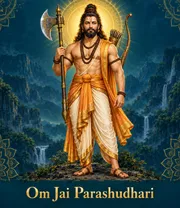
Parashurama — “Rama with the axe” — is venerated as the sixth of Vishnu’s ten principal avatars, the Dashavatara. Unlike most of the other avatars, tradition holds that Parashurama is a chiranjivi, one of a small number of figures said to remain alive across the ages rather than departing at the end of his own story. He is depicted as a Brahmin by birth and a warrior by disposition: raised on tapasya and Vedic learning in his father’s hermitage, but wielding an axe (parashu) given to him by Shiva, whom this chalisa itself names as his guru. The composition presents him this way from its opening lines — “radiant with Kshatriya-like splendor, yet saintly in form” (chaupai 2) — a Brahmin-warrior whose stated purpose, according to Puranic tradition, was to check the abuse of power by unjust rulers of his time.
Origin and source
As with many Hindi chalisas, this text carries no internal signature naming its author, and no confident external attribution could be verified for this page — it is treated here as a traditional composition recited across Hindu devotional practice rather than the work of a documented poet.
The chalisa opens with an invocation to the composer’s guru, Ganesha, and Saraswati (a conventional opening shared with many chalisas), then narrates Parashurama’s story in sequence: his birth to the sage Jamadagni and Renuka, given with specific astrological detail (the month of Baisakh, the bright fortnight, the third lunar day, the Punarvasu nakshatra) that ties directly to how he is still honored today; his form and iconography, axe in one hand and the Veda-samhita in the other; an episode in which he breaks one of Ganesha’s tusks in a clash between the two, said to be the origin of Ganesha’s epithet Ekadanta (“one-tusked”); his conflict with the thousand-armed king Kartavirya Arjuna, whose forces first take the sacred cow from Jamadagni’s hermitage and are repelled, and who later kills Jamadagni himself in vengeance while the sage sat in meditation; and Parashurama’s response, in the chalisa’s own telling, of avenging his father and, per the verses, ridding the earth of Kshatriya rulers twenty-one times before giving the land to Brahmins. This is the chalisa’s own account of a well-known and, in later Puranic and epic sources, more elaborated episode; this page follows the text as it presents it, without further elaborating on or editorializing about the varna politics the story touches on. The chalisa goes on to place him in the Treta Yuga, confronting Rama over the breaking of Shiva’s bow at Sita’s swayamvara, and later in the Dvapara Yuga as the teacher of Bhishma, Drona, and Karna — before closing with his retreat to Mount Mahendra, where, true to his chiranjivi status, the text says he remains in meditation “even now” (chaupai 36).
How it is recited
The Parshuram Chalisa is recited especially on Parshuram Jayanti, the festival marking his birth, which falls on Akshaya Tritiya — the third day of the bright fortnight of Vaishakh. This is not an approximation: the chalisa’s own fourth chaupai gives that same date, “the month of Baisakh, in the bright and generous fortnight, on the third day,” as his birth tithi. Devotees who observe the day read or recite the chalisa alongside other devotions to Vishnu, in keeping with Parashurama’s place among the Dashavatara.
Frequently asked questions
How many verses does Parshuram Chalisa have?
Who is Parshuram Chalisa dedicated to?
When is Parshuram Chalisa typically recited?
What language is Parshuram Chalisa composed in?
What tradition is Parshuram Chalisa associated with?
Is an English translation of Parshuram Chalisa available?
Is there a Roman transliteration of Parshuram Chalisa?
Sourcing
Checked against independent sources before publishing — see our sourcing and editorial policy. Spotted an error? Report an issue .