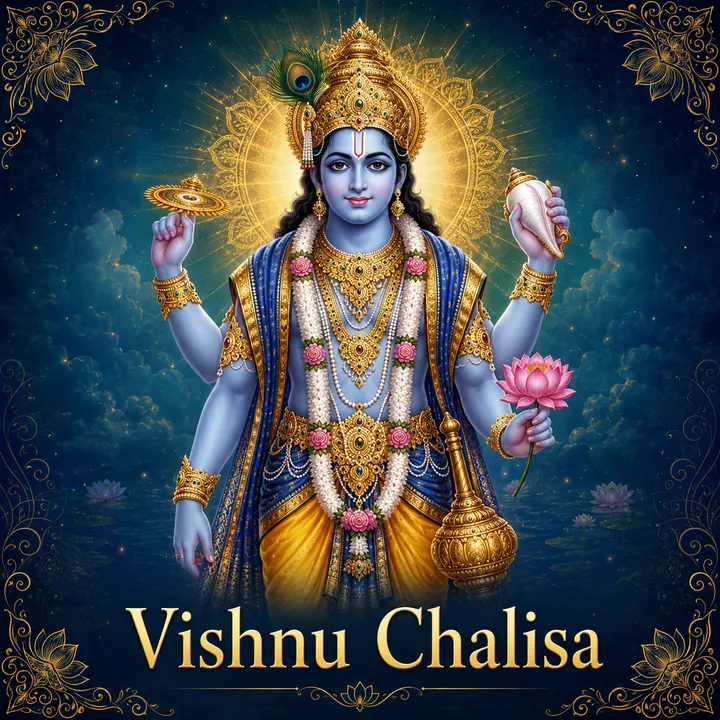
The text
Tap Recite along to follow verse by verse — use Next, or the arrow keys.
- Opening doha
- Doha (opening)
विष्णु सुनिए विनय सेवक की चितलाय।कीरत कुछ वर्णन करूं दीजै ज्ञान बताय॥
viṣṇu sunie vinaya sevaka kī citalāya।kīrata kucha varṇana karūṃ dījai jñāna batāya॥
O Vishnu, hear the humble prayer of your servant, and turn your attention to it. Let me tell something of your glory — grant me the wisdom to tell it well.
- The 40 chaupais
- Chaupai 1
नमो विष्णु भगवान खरारी।कष्ट नशावन अखिल बिहारी॥
namo viṣṇu bhagavāna kharārī।kaṣṭa naśāvana akhila bihārī॥
Salutations to Lord Vishnu, foe of the demon Khara — destroyer of suffering, who moves and dwells through the whole universe.
- Chaupai 2
प्रबल जगत में शक्ति तुम्हारी।त्रिभुवन फैल रही उजियारी॥
prabala jagata mẽ śakti tumhārī।tribhuvana phaila rahī ujiyārī॥
Your power is supreme throughout the world; your radiance spreads across the three worlds.
- Chaupai 3
सुन्दर रूप मनोहर सूरत।सरल स्वभाव मोहनी मूरत॥
sundara rūpa manohara sūrata।sarala svabhāva mohanī mūrata॥
Your form is beautiful, your countenance enchanting; your nature is gentle, your image entrancing.
- Chaupai 4
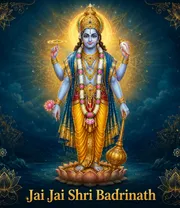
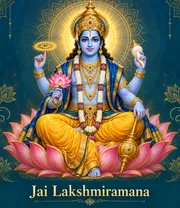
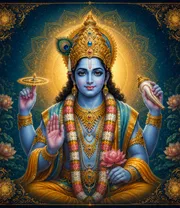
तन पर पीताम्बर अति सोहत।बैजन्ती माला मन मोहत॥
tana para pītāmbara ati sohata।baijantī mālā mana mohata॥
Yellow garments adorn your body most beautifully; the Vaijayanti garland captivates the mind.
- Chaupai 5
शंख चक्र कर गदा बिराजे।देखत दैत्य असुर दल भाजे॥
śaṅkha cakra kara gadā birāje।dekhata daitya asura dala bhāje॥
The conch, discus, and mace shine in your hands; seeing them, the hosts of demons and asuras flee.
- Chaupai 6
सत्य धर्म मद लोभ न गाजे।काम क्रोध मद लोभ न छाजे॥
satya dharma mada lobha na gāje।kāma krodha mada lobha na chāje॥
Truth and righteousness are yours; pride and greed hold no sway in you — desire, anger, pride, and greed find no covering upon you.
- Chaupai 7
सन्तभक्त सज्जन मनरंजन।दनुज असुर दुष्टन दल गंजन॥
santabhakta sajjana manarañjana।danuja asura duṣṭana dala gañjana॥
You delight the saints, devotees, and the virtuous; you crush the ranks of demons, asuras, and the wicked.
- Chaupai 8
सुख उपजाय कष्ट सब भंजन।दोष मिटाय करत जन सज्जन॥
sukha upajāya kaṣṭa saba bhañjana।doṣa miṭāya karata jana sajjana॥
You produce happiness and break all suffering; erasing faults, you make people virtuous.
- Chaupai 9
पाप काट भव सिन्धु उतारण।कष्ट नाशकर भक्त उबारण॥
pāpa kāṭa bhava sindhu utāraṇa।kaṣṭa nāśakara bhakta ubāraṇa॥
You cut away sin and carry souls across the ocean of worldly existence; destroying suffering, you deliver your devotees.
- Chaupai 10
करत अनेक रूप प्रभु धारण।केवल आप भक्ति के कारण॥
karata aneka rūpa prabhu dhāraṇa।kevala āpa bhakti ke kāraṇa॥
O Lord, you take on many forms, solely for the sake of devotion.
- Chaupai 11
धरणि धेनु बन तुमहिं पुकारा।तब तुम रूप राम का धारा॥
dharaṇi dhenu bana tumahiṃ pukārā।taba tuma rūpa rāma kā dhārā॥
When the Earth, in the form of a cow, called out to you, you then took on the form of Rama.
- Chaupai 12
भार उतार असुर दल मारा।रावण आदिक को संहारा॥
bhāra utāra asura dala mārā।rāvaṇa ādika ko sanhārā॥
You lifted the earth's burden and struck down the hosts of demons; you destroyed Ravana and others like him.
- Chaupai 13
आप वाराह रूप बनाया।हिरण्याक्ष को मार गिराया॥
āpa vārāha rūpa banāyā।hiraṇyākṣa ko māra girāyā॥
You took the form of Varaha, the boar, and struck down Hiranyaksha.
- Chaupai 14
धर मत्स्य तन सिन्धु बनाया।चौदह रतनन को निकलाया॥
dhara matsya tana sindhu banāyā।caudaha ratanana ko nikalāyā॥
Taking the body of Matsya, the fish, in the ocean, you brought forth the fourteen treasures.
- Chaupai 15
अमिलख असुरन द्वन्द मचाया।रूप मोहनी आप दिखाया॥
amilakha asurana dvanda macāyā।rūpa mohanī āpa dikhāyā॥
You stirred conflict among the greedy asuras, and showed them your enchanting Mohini form.
- Chaupai 16
देवन को अमृत पान कराया।असुरन को छबि से बहलाया॥
devana ko amṛta pāna karāyā।asurana ko chabi se bahalāyā॥
You had the gods drink the nectar of immortality, beguiling the asuras with your beauty.
- Chaupai 17
कूर्म रूप धर सिन्धु मझाया।मन्द्राचल गिरि तुरत उठाया॥
kūrma rūpa dhara sindhu majhāyā।mandrācala giri turata uṭhāyā॥
Taking the form of Kurma, the tortoise, in the ocean's depths, you swiftly held up Mount Mandara.
- Chaupai 18
शंकर का तुम फन्द छुड़ाया।भस्मासुर को रूप दिखाया॥
śaṅkara kā tuma phanda chuṛāyā।bhasmāsura ko rūpa dikhāyā॥
You freed Shankar (Shiva) from his predicament, showing your enchanting form to Bhasmasura.
- Chaupai 19
वेदन को जब असुर डुबाया।कर प्रबन्ध उन्हें ढुँढवाया॥
vedana ko jaba asura ḍubāyā।kara prabandha unhẽ ḍhũḍhavāyā॥
When a demon had hidden the Vedas away, you made arrangements to have them recovered.
- Chaupai 20
मोहित बनकर खलहि नचाया।उसही कर से भस्म कराया॥
mohita banakara khalahi nacāyā।usahī kara se bhasma karāyā॥
Becoming an enchantress, you made the wicked one dance, and by his own hand had him burned to ash.
- Chaupai 21
असुर जलंधर अति बलदाई।शंकर से उन कीन्ह लड़ाई॥
asura jalandhara ati baladāī।śaṅkara se una kīnha laṛāī॥
The demon Jalandhara, immensely powerful, fought a battle against Shankar (Shiva).
- Chaupai 22
हार पार शिव सकल बनाई।कीन सती से छल खल जाई॥
hāra pāra śiva sakala banāī।kīna satī se chala khala jāī॥
Shiva's defeat was all but assured; deceit was practiced upon the chaste woman, Vrinda.
- Chaupai 23
सुमिरन कीन तुम्हें शिवरानी।बतलाई सब विपत कहानी॥
sumirana kīna tumhẽ śivarānī।batalāī saba vipata kahānī॥
Shivarani (Parvati) remembered you and called upon you, telling you the whole tale of calamity.
- Chaupai 24
तब तुम बने मुनीश्वर ज्ञानी।वृन्दा की सब सुरति भुलानी॥
taba tuma bane munīśvara jñānī।vṛndā kī saba surati bhulānī॥
Then you became a wise sage-lord, and made Vrinda forget herself entirely.
- Chaupai 25
देखत तीन दनुज शैतानी।वृन्दा आय तुम्हें लपटानी॥
dekhata tīna danuja śaitānī।vṛndā āya tumhẽ lapaṭānī॥
Seeing the demon's guise, Vrinda came and embraced you.
- Chaupai 26
हो स्पर्श धर्म क्षति मानी।हना असुर उर शिव शैतानी॥
ho sparśa dharma kṣati mānī।hanā asura ura śiva śaitānī॥
That touch was taken as a breach of her virtue; and so the demon, the wicked foe of Shiva, was slain.
- Chaupai 27
तुमने ध्रुव प्रहलाद उबारे।हिरणाकुश आदिक खल मारे॥
tumane dhruva prahalāda ubāre।hiraṇākuśa ādika khala māre॥
You delivered Dhruva and Prahlad; you slew Hiranyakashipu and other such wicked ones.
- Chaupai 28
गणिका और अजामिल तारे।बहुत भक्त भव सिन्धु उतारे॥
gaṇikā aura ajāmila tāre।bahuta bhakta bhava sindhu utāre॥
You liberated the courtesan Ganika and Ajamil; you have carried many devotees across the ocean of worldly existence.
- Chaupai 29
हरहु सकल संताप हमारे।कृपा करहु हरि सिरजन हारे॥
harahu sakala santāpa hamāre।kṛpā karahu hari sirajana hāre॥
Take away all our afflictions; show your grace, O Hari, creator and sustainer of all.
- Chaupai 30
देखहुं मैं निज दरश तुम्हारे।दीन बन्धु भक्तन हितकारे॥
dekhahũ mãi nija daraśa tumhāre।dīna bandhu bhaktana hitakāre॥
Let me behold your own vision — O friend of the humble, well-wisher of your devotees.
- Chaupai 31
चहत आपका सेवक दर्शन।करहु दया अपनी मधुसूदन॥
cahata āpakā sevaka darśana।karahu dayā apanī madhusūdana॥
Your servant longs for your darshan; show your own mercy, O Madhusudan, slayer of the demon Madhu.
- Chaupai 32
जानूं नहीं योग्य जप पूजन।होय यज्ञ स्तुति अनुमोदन॥
jānūṃ nahĩ yogya japa pūjana।hoya yajña stuti anumodana॥
I do not know the proper way to chant and worship you, or how a rite of praise should be conducted and approved.
- Chaupai 33
शीलदया सन्तोष सुलक्षण।विदित नहीं व्रतबोध विलक्षण॥
śīladayā santoṣa sulakṣaṇa।vidita nahĩ vratabodha vilakṣaṇa॥
Good character, mercy, contentment, auspicious qualities — the extraordinary understanding of vows is unknown to me.
- Chaupai 34
करहुं आपका किस विधि पूजन।कुमति विलोक होत दुख भीषण॥
karahũ āpakā kisa vidhi pūjana।kumati viloka hota dukha bhīṣaṇa॥
In what manner shall I worship you? Seeing my own poor understanding, I feel a terrible sorrow.
- Chaupai 35
करहुं प्रणाम कौन विधि सुमिरन।कौन भांति मैं करहु समर्पण॥
karahũ praṇāma kauna vidhi sumirana।kauna bhẵti mãi karahu samarpaṇa॥
In what manner shall I offer my salutation and remembrance? In what way shall I make my surrender?
- Chaupai 36
सुर मुनि करत सदा सेवकाई।हर्षित रहत परम गति पाई॥
sura muni karata sadā sevakāī।harṣita rahata parama gati pāī॥
The gods and sages forever render you service, and remain joyful, having attained the highest state.
- Chaupai 37
दीन दुखिन पर सदा सहाई।निज जन जान लेव अपनाई॥
dīna dukhina para sadā sahāī।nija jana jāna leva apanāī॥
You are ever the helper of the humble and the sorrowful; know me as your own, and take me in.
- Chaupai 38
पाप दोष संताप नशाओ।भव बन्धन से मुक्त कराओ॥
pāpa doṣa santāpa naśāo।bhava bandhana se mukta karāo॥
Destroy my sins, faults, and afflictions; free me from the bonds of worldly existence.
- Chaupai 39
सुत सम्पति दे सुख उपजाओ।निज चरनन का दास बनाओ॥
suta sampati de sukha upajāo।nija caranana kā dāsa banāo॥
Grant children and prosperity, and bring forth happiness; make me a servant of your own feet.
- Chaupai 40
निगम सदा ये विनय सुनावै।पढ़ै सुनै सो जन सुख पावै॥
nigama sadā ye vinaya sunāvai।paḍhai sunai so jana sukha pāvai॥
The scriptures forever proclaim this prayer; whoever reads or hears it attains happiness.
- Closing doha
- Doha (closing)
भक्त हृदय में वास करें पूर्ण कीजिये काज।शंख चक्र और गदा पद्म हे विष्णु महाराज॥
bhakta hṛdaya mẽ vāsa karẽ pūrṇa kījiye kāja।śaṅkha cakra aura gadā padma he viṣṇu mahārāja॥
Dwell within your devotee's heart, and bring this task to completion — O Vishnu Maharaj, bearer of conch, discus, mace, and lotus.
Overview
The Vishnu Chalisa is a Hindi devotional composition in praise of Vishnu, framed by an opening and closing doha around forty chaupai verses — the same doha-chaupai-doha structure as the Hanuman Chalisa and Ganesh Chalisa, and the origin of the genre name “chalisa,” from chalis, forty. The forty chaupai move through Vishnu’s names and iconography — his conch, discus, mace, and lotus, his yellow garments and Vaijayanti garland — before recounting a run of his incarnations and interventions: Rama lifting the earth’s burden, Varaha raising it from the ocean, Matsya and Kurma amid the churning of the sea, the Mohini form that both distributed the nectar of immortality among the gods and undid the demon Bhasmasura, the rescue of Dhruva and Prahlad, and the deliverance of devotees such as Ajamil. It closes, like other chalisas, with a doha asking Vishnu to dwell in the devotee’s heart.
Origin and source
Unlike the Hanuman Chalisa, whose authorship is confidently placed with Tulsidas, the Vishnu Chalisa carries no author’s name within its verses and no settled attribution in the devotional publishing that circulates it — it is treated here, as it is across the Hindi devotional sources that print it, as a traditional composition of anonymous authorship. Independent transcriptions of the text — differently formatted and hosted by unrelated Hindi devotional and news publishers — agree on the same narrative sequence and near-identical wording across all forty chaupai and the opening doha; word-level spelling naturally varies slightly from source to source, as it does across printed copies of any long-transmitted Hindi chalisa (for instance, sindhu is sometimes printed as sindhu and sometimes as an alternate nasalized spelling, and the demon Hiranyaksha’s name is sometimes misprinted as “Haranyaksh” in place of the correct “Hiranyaksha”). This page follows the reading attested by the clear majority of the independently transcribed copies wherever such small variants appear.
One point of genuine difference among sources is the closing doha: it is present, with identical wording, in several independent transcriptions, but absent from several others that end directly after the fortieth chaupai. Both are legitimate readings this Chalisa circulates under; this page includes the closing doha since it is well attested and consistent with the doha-chaupai-doha convention shared by other chalisas of the same genre.
The episodes named in the text are drawn loosely from Puranic accounts of Vishnu’s avatars and interventions rather than presented in strict chronological or Dashavatara order, in keeping with how devotional chalisas typically compress mythology into verse for recitation rather than systematic exposition.
How it is recited
The Vishnu Chalisa is recited by many devotees on Thursday (Guruvar), the day of the week traditionally associated with Vishnu in North Indian practice, and it is commonly read during Ekadashi, the fast observed on the eleventh day of both the waxing and waning moon each lunar month and kept by many Vishnu devotees as their most regular point of observance. As with other chalisas, it is typically recited at home before an image of the deity, often paired with the Lakshmi Chalisa given the devotional pairing of Vishnu and his consort Lakshmi.
Frequently asked questions
How many verses does Vishnu Chalisa have?
Who is Vishnu Chalisa dedicated to?
When is Vishnu Chalisa typically recited?
What language is Vishnu Chalisa composed in?
What tradition is Vishnu Chalisa associated with?
Is an English translation of Vishnu Chalisa available?
Is there a Roman transliteration of Vishnu Chalisa?
Sourcing
Checked against independent sources before publishing — see our sourcing and editorial policy. Spotted an error? Report an issue .