The text
Tap Recite along to follow verse by verse — use Next, or the arrow keys.
- Opening dohas
- Doha 1
श्री राधे वृषभानुजा, भक्तनि प्राणाधार।वृन्दाविपिन विहारिणि, प्रणवौं बारंबार॥
śrī rādhe vṛṣabhānujā, bhaktani prāṇādhāra।vṛndāvipina vihāriṇi, praṇavaũ bāraṃbāra॥
Shri Radha, daughter of Vrishabhanu, the very life-breath of your devotees; ever at play in the Vrindavan groves — I bow to you again and again.
- Doha 2
जैसौ तैसौ रावरौ, कृष्ण प्रिया सुखधाम।चरण शरण निज दीजिये, सुन्दर सुखद ललाम॥
jaisau taisau rāvarau, kṛṣṇa priyā sukhadhāma।caraṇa śaraṇa nija dījiye, sundara sukhada lalāma॥
Whatever I am, I am yours — O beloved of Krishna, abode of happiness; grant me refuge at your feet, beautiful giver of joy.
- The 40 chaupais
- Chaupai 1
जय वृषभानु कुंवरि श्री श्यामा।कीरति नंदिनी शोभा धामा॥
jaya vṛṣabhānu kũvari śrī śyāmā।kīrati nandinī śobhā dhāmā॥
Victory to you, O daughter of Vrishabhanu, Shri Shyama — daughter of Kirati, an abode of splendor.
- Chaupai 2
नित्य विहारिनि श्याम अधारा।अमित मोद मंगल दातारा॥
nitya vihārini śyāma adhārā।amita moda maṅgala dātārā॥
Eternal companion of Shyam's play, his very support — giver of boundless joy and auspiciousness.
- Chaupai 3
रास विलासिनि रस विस्तारिनि।सहचरि सुभग यूथ मन भावनि॥
rāsa vilāsini rasa vistārini।sahacari subhaga yūtha mana bhāvani॥
Delighting in the rasa dance, spreading forth its sweetness — beloved of your gracious company of companions, delighting their hearts.
- Chaupai 4
नित्य किशोरी राधा गोरी।श्याम प्राणधन अति जिय भोरी॥
nitya kiśorī rādhā gorī।śyāma prāṇadhana ati jiya bhorī॥
Ever-youthful Radha, fair of form — the very wealth of Shyam's life, innocent at heart.
- Chaupai 5
करुणा सागर हिय उमंगिनी।ललितादिक सखियन की संगिनी॥
karuṇā sāgara hiya umaṅginī।lalitādika sakhiyana kī saṅginī॥
An ocean of compassion, joyful of heart — companion to Lalita and the other gopi friends.
- Chaupai 6
दिन कर कन्या कूल विहारिनि।कृष्ण प्राण प्रिय हिय हुलसावनि॥
dina kara kanyā kūla vihārini।kṛṣṇa prāṇa priya hiya hulasāvani॥
Wanderer along the bank of the sun's daughter, the Yamuna — gladdening the heart of Krishna, dear as his own life.
- Chaupai 7
नित्य श्याम तुमरौ गुण गावैं।राधा राधा कहि हरषावैं॥
nitya śyāma tumarau guṇa gāvaĩ।rādhā rādhā kahi haraṣāvaĩ॥
Shyam forever sings your praises, rejoicing as he calls out, "Radha, Radha."
- Chaupai 8
मुरली में नित नाम उचारें।तुव कारण लीला वपु धारें॥
muralī mẽ nita nāma ucārẽ।tuva kāraṇa līlā vapu dhārẽ॥
On his flute he ever utters your name; for your sake alone he takes on his form of play.
- Chaupai 9
प्रेम स्वरूपिणि अति सुकुमारी।श्याम प्रिया वृषभानु दुलारी॥
prema svarūpiṇi ati sukumārī।śyāma priyā vṛṣabhānu dulārī॥
The very embodiment of love, most delicate and tender — beloved of Shyam, cherished daughter of Vrishabhanu.
- Chaupai 10
नवल किशोरी अति छवि धामा।द्युति लघु लगै कोटि रति कामा॥
navala kiśorī ati chavi dhāmā।dyuti laghu lagai koṭi rati kāmā॥
Ever-fresh in youth, an abode of beauty, beside whose radiance millions of Ratis and Kamas seem faint.
- Chaupai 11
गौरांगी शशि निंदक बदना।सुभग चपल अनियारे नयना॥
gaurāṅgī śaśi nindaka badanā।subhaga capala aniyāre nayanā॥
Fair of limb, her face shaming even the moon; her lovely eyes are quick, long, and sharp.
- Chaupai 12
जावक युत युग पंकज चरना।नूपुर धुनि प्रीतम मन हरना॥
jāvaka yuta yuga paṅkaja caranā।nūpura dhuni prītama mana haranā॥
Her twin lotus feet are tinted with red lac dye; the ring of her anklets steals away her beloved's heart.
- Chaupai 13
संतत सहचरि सेवा करहीं।महा मोद मंगल मन भरहीं॥
santata sahacari sevā karahī̃।mahā moda maṅgala mana bharahī̃॥
Her companions serve her constantly, their hearts filled with great joy and auspiciousness.
- Chaupai 14
रसिकन जीवन प्राण अधारा।राधा नाम सकल सुख सारा॥
rasikana jīvana prāṇa adhārā।rādhā nāma sakala sukha sārā॥
She is the very life-breath and support of every rasika devotee; the name Radha is the essence of all happiness.
- Chaupai 15
अगम अगोचर नित्य स्वरूपा।ध्यान धरत निशिदिन ब्रज भूपा॥
agama agocara nitya svarūpā।dhyāna dharata niśidina braja bhūpā॥
Unfathomable, beyond the senses, eternal in her true form — the King of Braj holds her in meditation day and night.
- Chaupai 16
उपजेउ जासु अंश गुण खानी।कोटिन उमा रमा ब्रह्मानी॥
upajeu jāsu aṃśa guṇa khānī।koṭina umā ramā brahmānī॥
From a fragment of her own treasury of virtue arose millions of Umas, Ramas, and Brahmanis.
- Chaupai 17
नित्य धाम गोलोक विहारिनि।जन रक्षक दुख दोष नसावनि॥
nitya dhāma goloka vihārini।jana rakṣaka dukha doṣa nasāvani॥
She wanders eternally in the abode of Goloka — protector of her people, destroyer of their sorrow and fault.
- Chaupai 18
शिव अज मुनि सनकादिक नारद।पार न पांइ शेष अरु शारद॥
śiva aja muni sanakādika nārada।pāra na pā̃i śeṣa aru śārada॥
Shiva, Brahma, the sage Sanaka and his brothers, Narada, Shesha, and Sharada — none can find the limit of her glory.
- Chaupai 19
राधा शुभ गुण रूप उजारी।निरखि प्रसन्न होत बनबारी॥
rādhā śubha guṇa rūpa ujārī।nirakhi prasanna hota banabārī॥
Beholding Radha's radiant virtue and beauty, the Lord of the forest becomes glad.
- Chaupai 20
ब्रज जीवन धन राधा रानी।महिमा अमित न जाय बखानी॥
braja jīvana dhana rādhā rānī।mahimā amita na jāya bakhānī॥
Queen Radha is the very life and wealth of Braj; her limitless glory cannot be described in words.
- Chaupai 21
प्रीतम संग देइ गलबांही।बिहरत नित वृन्दावन मांही॥
prītama saṅga dei galabā̃hī।biharata nita vṛndāvana mā̃hī॥
Arm in arm with her beloved, she wanders forever within Vrindavan.
- Chaupai 22
राधा कृष्ण कृष्ण कहैं राधा।एक रूप दोउ प्रीति अगाधा॥
rādhā kṛṣṇa kṛṣṇa kahaĩ rādhā।eka rūpa dou prīti agādhā॥
Radha calls out "Krishna," and Krishna calls out "Radha" — one form, two beings, in unfathomable love.
- Chaupai 23
श्री राधा मोहन मन हरनी।जन सुख दायक प्रफुलित बदनी॥
śrī rādhā mohana mana haranī।jana sukha dāyaka praphulita badanī॥
Shri Radha steals away Mohan's mind; her joyful face grants happiness to her devotees.
- Chaupai 24
कोटिक रूप धरें नंद नंदा।दर्श करन हित गोकुल चन्दा॥
koṭika rūpa dharẽ nanda nandā।darśa karana hita gokula candā॥
The son of Nanda, moon of Gokul, assumes millions of forms just to behold her.
- Chaupai 25
रास केलि करि तुम्हें रिझावें।मान करौ जब अति दुःख पावें॥
rāsa keli kari tumhẽ rijhāvẽ।māna karau jaba ati duḥkha pāvẽ॥
Through the play of the rasa dance he seeks to please you; and when you turn away in jealous pride, he suffers greatly.
- Chaupai 26
प्रफुलित होत दर्श जब पावें।विविध भांति नित विनय सुनावें॥
praphulita hota darśa jaba pāvẽ।vividha bhā̃ti nita vinaya sunāvẽ॥
He blossoms with joy the moment he glimpses you, and offers his humble pleas to you in every manner.
- Chaupai 27
वृन्दारण्य विहारिनि श्यामा।नाम लेत पूरण सब कामा॥
vṛndāraṇya vihārini śyāmā।nāma leta pūraṇa saba kāmā॥
O Shyama who wanders the Vrindavan forest — to utter your name is to fulfill every desire.
- Chaupai 28
कोटिन यज्ञ तपस्या करहू।विविध नेम व्रत हिय में धरहू॥
koṭina yajña tapasyā karahū।vividha nema vrata hiya mẽ dharahū॥
One may perform millions of sacrifices and austerities, and hold countless vows and disciplines in the heart —
- Chaupai 29
तऊ न श्याम भक्तहिं अपनावें।जब लगि राधा नाम न गावें॥
taū na śyāma bhaktahiṃ apanāvẽ।jaba lagi rādhā nāma na gāvẽ॥
yet Shyam will not claim that devotee as his own until they have sung the name of Radha.
- Chaupai 30
वृन्दाविपिन स्वामिनी राधा।लीला वपु तब अमित अगाधा॥
vṛndāvipina svāminī rādhā।līlā vapu taba amita agādhā॥
Radha, mistress of the Vrindavan groves — her form of divine play is boundless and unfathomable.
- Chaupai 31
स्वयं कृष्ण पावैं नहिं पारा।और तुम्हें को जानन हारा॥
svayaṃ kṛṣṇa pāvaĩ nahiṃ pārā।aura tumhẽ ko jānana hārā॥
Even Krishna himself cannot find her limit — who else, then, could claim to know you?
- Chaupai 32
श्री राधा रस प्रीति अभेदा।सादर गान करत नित वेदा॥
śrī rādhā rasa prīti abhedā।sādara gāna karata nita vedā॥
Shri Radha's loving rasa knows no division; even the Vedas sing of it with reverence, forever.
- Chaupai 33
राधा त्यागि कृष्ण को भजिहैं।ते सपनेहु जग जलधि न तरि हैं॥
rādhā tyāgi kṛṣṇa ko bhajihaĩ।te sapanehu jaga jaladhi na tari haĩ॥
Those who worship Krishna while forsaking Radha shall never cross the ocean of this world, even in their dreams.
- Chaupai 34
कीरति कुंवरि लाड़िली राधा।सुमिरत सकल मिटहिं भवबाधा॥
kīrati kũvari lāḍilī rādhā।sumirata sakala miṭahĩ bhavabādhā॥
Radha, the cherished daughter of Kirati — remembering her removes every obstacle of worldly existence.
- Chaupai 35
नाम अमंगल मूल नसावन।त्रिविध ताप हर हरि मनभावन॥
nāma amaṅgala mūla nasāvana।trividha tāpa hara hari manabhāvana॥
Her name destroys the very root of misfortune, and removes the three kinds of affliction — dear to the heart of Hari.
- Chaupai 36
राधा नाम लेइ जो कोई।सहजहि दामोदर बस होई॥
rādhā nāma lei jo koī।sahajahi dāmodara basa hoī॥
Whoever simply utters the name Radha effortlessly brings Damodar under their sway.
- Chaupai 37
राधा नाम परम सुखदाई।भजतहिं कृपा करहिं यदुराई॥
rādhā nāma parama sukhadāī।bhajatahiṃ kṛpā karahiṃ yadurāī॥
The name Radha grants the highest happiness; the Lord of the Yadus bestows his grace on whoever worships it.
- Chaupai 38
यशुमति नन्दन पीछे फिरिहैं।जो कोऊ राधा नाम सुमिरिहैं॥
yaśumati nandana pīche phirihaĩ।jo koū rādhā nāma sumirihaĩ॥
The son of Yashoda will follow after anyone who calls to mind the name of Radha.
- Chaupai 39
रास विहारिनि श्यामा प्यारी।करहु कृपा बरसाने वारी॥
rāsa vihārini śyāmā pyārī।karahu kṛpā barasāne vārī॥
O beloved Shyama who plays the rasa dance, O lady of Barsana — bestow your grace.
- Chaupai 40
वृन्दावन है शरण तिहारी।जय जय जय वृषभानु दुलारी॥
vṛndāvana hai śaraṇa tihārī।jaya jaya jaya vṛṣabhānu dulārī॥
Vrindavan itself takes refuge in you — victory, victory, victory to the beloved daughter of Vrishabhanu.
- Closing doha
- Doha (closing)
श्री राधा सर्वेश्वरी, रसिकेश्वर घनश्याम।करहुँ निरंतर बास मैं, श्री वृन्दावन धाम॥
śrī rādhā sarveśvarī, rasikeśvara ghanaśyāma।karahũ nirantara bāsa maĩ, śrī vṛndāvana dhāma॥
Shri Radha, sovereign over all, together with Ghanashyam, lord of the rasikas — may I dwell forever in the sacred abode of Shri Vrindavan.
Overview
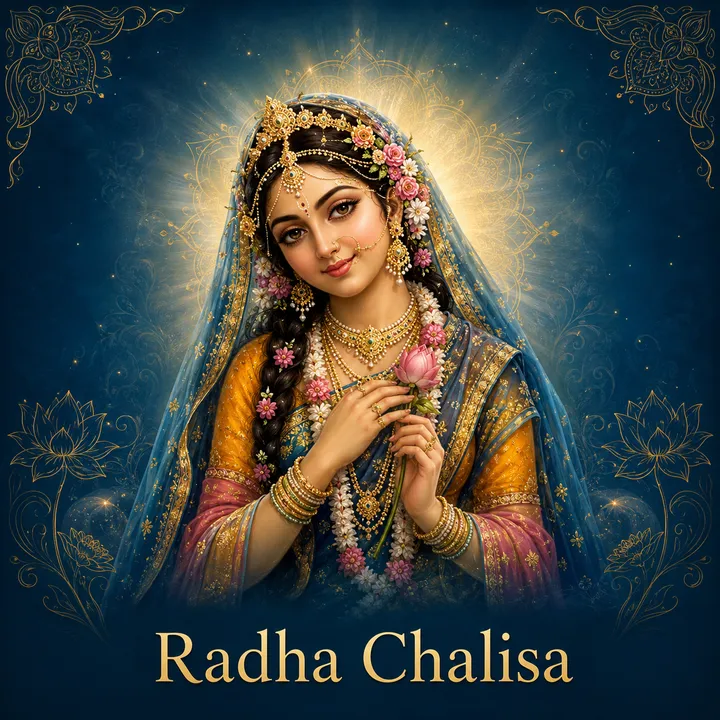
The Radha Chalisa is a Hindi devotional composition of forty chaupai verses framed by two opening dohas and a closing doha, offered in praise of Radha, the beloved of Krishna at the heart of the Braj devotional tradition. It describes her beauty and virtues, her companionship with the gopis of Vrindavan, and above all the inseparable, “one form, two beings” bond between her and Krishna — several verses go so far as to say that devotion to Krishna alone, without also honoring Radha’s name, cannot carry a devotee across the ocean of worldly existence. Like other chalisas, it closes with a doha expressing the devotee’s wish to dwell always in Vrindavan, her home ground.
Origin and source
The Radha Chalisa’s authorship is not documented with confidence in the sources consulted for this page; unlike the Hanuman Chalisa, it carries no internal signature naming a composer, and it is treated here as a traditional composition of the Braj Vaishnava devotional current rather than attributed to a specific named poet. Its content sits squarely within the wider body of Radha-Krishna devotional literature that grew out of works like Jayadeva’s Gita Govinda and the vernacular Bhakti poetry of Vidyapati, Chandidas, and Surdas — verses on Radha’s beauty, her intimacy with Krishna in the rasa dance, and her role as the one whose name completes devotion to him.
This page’s text was cross-checked against several independently keyed transcriptions circulating online. Two of these — from Aaj Tak and Webdunia — are worded identically to each other across the full forty chaupai, indicating they share a common upstream source rather than standing as separate witnesses. A second, distinct cluster (BhaktiBharat.com, which numbers its chaupai in tens up to the fortieth, and Times Now Navbharat, more heavily marked by transcription and OCR-style errors) independently confirms the same content, structure, and count — two opening dohas, forty chaupai, and one closing doha — even where individual words differ in spelling. A third source, Dharmsaar, matches the first cluster closely but drops one chaupai’s second line in transcription. Where the clusters disagreed on individual words, this page follows the reading attested by the larger number of independently keyed sources — for example, the closing doha’s “Ghanashyam” (rather than “Dhanashyam”), confirmed by Dharmsaar and Webdunia against BhaktiBharat and Times Now Navbharat, and consistent with “Ghanashyam” as the standard Hindi epithet for Krishna’s monsoon-cloud complexion.
How it is recited
The Radha Chalisa is recited by devotees of Radha and Krishna much as other chalisas are — as a daily or occasional act of devotion, often alongside aartis and other Krishna-bhakti texts. It carries particular weight on Radhashtami, the festival marking Radha’s appearance, and within the devotional life of the Braj region around Vrindavan and Barsana, the village tradition holds as her childhood home, where “Radhe Radhe” serves as an everyday greeting and her name is considered inseparable from Krishna’s own.
Frequently asked questions
How many verses does Radha Chalisa have?
Who is Radha Chalisa dedicated to?
When is Radha Chalisa typically recited?
What language is Radha Chalisa composed in?
What tradition is Radha Chalisa associated with?
Is an English translation of Radha Chalisa available?
Is there a Roman transliteration of Radha Chalisa?
Sourcing
Checked against independent sources before publishing — see our sourcing and editorial policy. Spotted an error? Report an issue .