The text
Tap Recite along to follow verse by verse — use Next, or the arrow keys.
- Opening dohas
- Doha 1
श्री गुरु चरण चितलाय, के धरें ध्यान हनुमान।बालाजी चालीसा लिखे, दास स्नेही कल्याण॥
śrī guru caraṇa citalāya, ke dharẽ dhyāna hanumāna।bālājī cālīsā likhe, dāsa snehī kalyāṇa॥
Fixing my mind on the feet of the guru, and holding Hanuman in meditation, the devoted servant Kalyan writes this Chalisa of Balaji.
- Doha 2
विश्व विदित वर दानी, संकट हरण हनुमान।मैंहदीपुर में प्रगट भये, बालाजी भगवान॥
viśva vidita vara dānī, saṅkaṭa haraṇa hanumāna।maĩhadīpura mẽ pragaṭa bhaye, bālājī bhagavāna॥
Hanuman, giver of boons known throughout the world, remover of troubles — that same Lord manifested at Mehandipur as Balaji.
- The 40 chaupais
- Chaupai 1
जय हनुमान बालाजी देवा।प्रगट भये यहां तीनों देवा॥
jaya hanumāna bālājī devā।pragaṭa bhaye yahā̃ tīnõ devā॥
Victory to Hanuman, Lord Balaji — here the three deities have manifested.
- Chaupai 2
प्रेतराज भैरव बलवाना।कोतवाल कप्तानी हनुमाना॥
pretarāja bhairava balavānā।kotavāla kaptānī hanumānā॥
Pretraj and the mighty Bhairav are here, with Hanuman as their constable and captain.
- Chaupai 3
मैंहदीपुर अवतार लिया है।भक्तों का उध्दार किया है॥
maĩhadīpura avatāra liyā hai।bhaktõ kā uddhāra kiyā hai॥
You took avatar at Mehandipur, and delivered your devotees.
- Chaupai 4
बालरूप प्रगटे हैं यहां पर।संकट वाले आते जहाँ पर॥
bālarūpa pragaṭe haĩ yahā̃ para।saṅkaṭa vāle āte jahā̃ para॥
You have appeared here in child form, the place where the troubled come.
- Chaupai 5
डाकनि शाकनि अरु जिन्दनीं।मशान चुड़ैल भूत भूतनीं॥
ḍākani śākani aru jindanī̃।maśāna cuḍaila bhūta bhūtanī̃॥
Witches, sorceresses, and jinn; graveyard spirits, ghosts, both male and female —
- Chaupai 6
जाके भय ते सब भाग जाते।स्याने भोपे यहाँ घबराते॥
jāke bhaya te saba bhāga jāte।syāne bhope yahā̃ ghabarāte॥
at the fear of you, all of them flee; even the sorcerers and exorcists tremble here.
- Chaupai 7
चौकी बन्धन सब कट जाते।दूत मिले आनन्द मनाते॥
caukī bandhana saba kaṭa jāte।dūta mile ānanda manāte॥
Every binding spell is severed; your messengers rejoice at meeting the devotee.
- Chaupai 8
सच्चा है दरबार तिहारा।शरण पड़े सुख पावे भारा॥
saccā hai darabāra tihārā।śaraṇa paḍe sukha pāve bhārā॥
True is your court — whoever takes refuge in it finds abundant happiness.
- Chaupai 9
रूप तेज बल अतुलित धामा।सन्मुख जिनके सिय रामा॥
rūpa teja bala atulita dhāmā।sanmukha jinake siya rāmā॥
Your form, radiance, and strength are without compare — before you stand Sita and Ram themselves.
- Chaupai 10
कनक मुकुट मणि तेज प्रकाशा।सबकी होवत पूर्ण आशा॥
kanaka mukuṭa maṇi teja prakāśā।sabakī hovata pūrṇa āśā॥
Your golden crown shines with the light of jewels; through it, everyone's hopes are fulfilled.
- Chaupai 11
महन्त गणेशपुरी गुणीले।भये सुसेवक राम रंगीले॥
mahanta gaṇeśapurī guṇīle।bhaye susevaka rāma raṅgīle॥
The virtuous Mahant Ganeshpuri became your devoted servant, colored through and through with love for Ram.
- Chaupai 12
अद्भुत कला दिखाई कैसी।कलयुग ज्योति जलाई जैसी॥
adbhuta kalā dikhāī kaisī।kalayuga jyoti jalāī jaisī॥
What wondrous skill you have shown — as though you lit a lamp of light in this age of Kali.
- Chaupai 13
ऊँची ध्वजा पताका नभ में।स्वर्ण कलश हैं उन्नत जग में॥
ū̃cī dhvajā patākā nabha mẽ।svarṇa kalaśa haĩ unnata jaga mẽ॥
A tall flag flies high in the sky; a golden pinnacle stands exalted over the world.
- Chaupai 14
धर्म सत्य का डंका बाजे।सियाराम जय शंकर राजे॥
dharma satya kā ḍaṅkā bāje।siyārāma jaya śaṅkara rāje॥
The drum of righteousness and truth resounds; the glory of Siya-Ram and Shankar shines forth.
- Chaupai 15
आन फिराया मुगदर घोटा।भूत जिन्द पर पड़ते सोटा॥
āna phirāyā mugadara ghoṭā।bhūta jinda para paḍate soṭā॥
You wield and swing your mace — blows fall upon ghosts and evil spirits.
- Chaupai 16
राम लक्ष्मन सिय हृदय कल्याणा।बाल रूप प्रगटे हनुमाना॥
rāma lakṣmana siya hṛdaya kalyāṇā।bāla rūpa pragaṭe hanumānā॥
With Ram, Lakshman, and Sita ever in your heart, Hanuman, you appeared here in child form.
- Chaupai 17
जय हनुमन्त हठीले देवा।पुरी परिवार करत हैं सेवा॥
jaya hanumanta haṭhīle devā।purī parivāra karata haĩ sevā॥
Victory to you, resolute Lord Hanuman — the Puri family devotes itself to your service.
- Chaupai 18
लड्डू चूरमा मिश्री मेवा।अर्जी दरखास्त लगाऊ देवा॥
laḍḍū cūramā miśrī mevā।arjī darakhāsta lagāū devā॥
With laddoo, churma, sugar-candy, and dried fruit offered before you, I bring my petition to you, my Lord.
- Chaupai 19
दया करे सब विधि बालाजी।संकट हरण प्रगटे बालाजी॥
dayā kare saba vidhi bālājī।saṅkaṭa haraṇa pragaṭe bālājī॥
May Balaji show mercy in every way — Balaji, who appeared here as remover of troubles.
- Chaupai 20
जय बाबा की जन जन ऊचारे।कोटिक जन तेरे आये द्वारे॥
jaya bābā kī jana jana ūcāre।koṭika jana tere āye dvāre॥
Every person cries, "Victory to Baba!" — millions have come to your door.
- Chaupai 21
बाल समय रवि भक्षहि लीन्हा।तिमिर मय जग कीन्हो तीन्हा॥
bāla samaya ravi bhakṣahi līnhā।timira maya jaga kīnho tīnhā॥
In childhood you swallowed the sun, and plunged the world into darkness.
- Chaupai 22
देवन विनती की अति भारी।छाँड़ दियो रवि कष्ट निहारी॥
devana vinatī kī ati bhārī।chā̃ḍa diyo ravi kaṣṭa nihārī॥
The gods pleaded with you most earnestly; seeing their distress, you released the sun.
- Chaupai 23
लांघि उदधि सिया सुधि लाये।लक्ष्मन हित संजीवन लाये॥
lā̃ghi udadhi siyā sudhi lāye।lakṣmana hita sañjīvana lāye॥
You leapt across the ocean and brought back news of Sita; for Lakshman's sake, you brought the life-restoring herb.
- Chaupai 24
रामानुज प्राण दिवाकर।शंकर सुवन माँ अंजनी चाकर॥
rāmānuja prāṇa divākara।śaṅkara suvana mā̃ añjanī cākara॥
You were the sun that revived the life of Ram's younger brother — son of Shankar, and servant of mother Anjani.
- Chaupai 25
केशरी नन्दन दुख भव भंजन।रामानन्द सदा सुख सन्दन॥
keśarī nandana dukha bhava bhañjana।rāmānanda sadā sukha sandana॥
Son of Kesari, breaker of worldly sorrow — ever the vehicle of joy through devotion to Ram.
- Chaupai 26
सिया राम के प्राण पियारे।जब बाबा की भक्त ऊचारे॥
siyā rāma ke prāṇa piyāre।jaba bābā kī bhakta ūcāre॥
Dear as life itself to Sita and Ram — whenever a devotee cries out, "Baba!"
- Chaupai 27
संकट दुख भंजन भगवाना।दया करहु हे कृपा निधाना॥
saṅkaṭa dukha bhañjana bhagavānā।dayā karahu he kṛpā nidhānā॥
O Lord who breaks trouble and sorrow, show mercy, O treasure of compassion.
- Chaupai 28
सुमर बाल रूप कल्याणा।करे मनोरथ पूर्ण कामा॥
sumara bāla rūpa kalyāṇā।kare manoratha pūrṇa kāmā॥
Remembering your gracious child form, one's heartfelt wishes are fulfilled.
- Chaupai 29
अष्ट सिद्धि नव निधि दातारी।भक्त जन आवे बहु भारी॥
aṣṭa siddhi nava nidhi dātārī।bhakta jana āve bahu bhārī॥
Giver of the eight siddhis and nine treasures — devotees come to you in great multitudes.
- Chaupai 30
मेवा अरु मिष्ठान प्रवीना।भैंट चढ़ावें धनि अरु दीना॥
mevā aru miṣṭhāna pravīnā।bhaĩṭa caḍhāvẽ dhani aru dīnā॥
Dried fruits and fine sweets are offered, brought by rich and poor alike.
- Chaupai 31
नृत्य करे नित न्यारे न्यारे।रिद्धि सिद्धियां जाके द्वारे॥
nṛtya kare nita nyāre nyāre।riddhi siddhiyā̃ jāke dvāre॥
They dance daily, each in their own way — Riddhi and Siddhi stand at your door.
- Chaupai 32
अर्जी का आदेश मिलते ही।भैरव भूत पकड़ते तबही॥
arjī kā ādeśa milate hī।bhairava bhūta pakaḍate tabahī॥
The moment an answer to a petition is given, Bhairav seizes the evil spirit at once.
- Chaupai 33
कोतवाल कप्तान कृपाणी।प्रेतराज संकट कल्याणी॥
kotavāla kaptāna kṛpāṇī।pretarāja saṅkaṭa kalyāṇī॥
The sword-bearing constable and captain, and Pretraj — bringers of good fortune out of trouble.
- Chaupai 34
चौकी बन्धन कटते भाई।जो जन करते हैं सेवकाई॥
caukī bandhana kaṭate bhāī।jo jana karate haĩ sevakāī॥
Every binding spell is cut, brother, for those who serve you.
- Chaupai 35
रामदास बाल भगवन्ता।मैंहदीपुर प्रगटे हनुमन्ता॥
rāmadāsa bāla bhagavantā।maĩhadīpura pragaṭe hanumantā॥
Servant of Ram, the child Lord — Hanuman who manifested at Mehandipur.
- Chaupai 36
जो जन बालाजी में आते।जन्म जन्म के पाप नशाते॥
jo jana bālājī mẽ āte।janma janma ke pāpa naśāte॥
Whoever comes to Balaji has the sins of many lifetimes destroyed.
- Chaupai 37
जल पावन लेकर घर जाते।निर्मल हो आनन्द मनाते॥
jala pāvana lekara ghara jāte।nirmala ho ānanda manāte॥
Taking the sanctified water home, they become pure and rejoice.
- Chaupai 38
क्रूर कठिन संकट भग जावे।सत्य धर्म पथ राह दिखावे॥
krūra kaṭhina saṅkaṭa bhaga jāve।satya dharma patha rāha dikhāve॥
The cruelest, hardest troubles flee away; you show the path of truth and righteousness.
- Chaupai 39
जो सत पाठ करे चालीसा।तापर प्रसन्न होय बागीसा॥
jo sata pāṭha kare cālīsā।tāpara prasanna hoya bāgīsā॥
Whoever recites this Chalisa with sincerity — the lord of speech himself is well pleased with them.
- Chaupai 40
कल्याण स्नेही, स्नेह से गावे।सुख समृद्धि रिद्धि सिद्धि पावे॥
kalyāṇa snehī, sneha se gāve।sukha samṛddhi riddhi siddhi pāve॥
Whoever sings this with the same love as Kalyan Snehi obtains happiness, prosperity, and the fruits of Riddhi-Siddhi.
- Closing doha
- Doha (closing)
मन्द बुद्धि मम जानके, क्षमा करो गुणखान।संकट मोचन क्षमहु मम, दास स्नेही कल्याण॥
manda buddhi mama jānake, kṣamā karo guṇakhāna।saṅkaṭa mocana kṣamahu mama, dāsa snehī kalyāṇa॥
Knowing me to be of dull intellect, forgive me, O treasury of virtues — O remover of troubles, pardon this devoted servant Kalyan.
Overview
The Mehandipur Balaji Chalisa is a forty-verse Hindi devotional composition addressed to Hanuman in his form as Balaji, the presiding deity of the Mehandipur temple in Dausa district, Rajasthan. Framed by two opening dohas and a closing doha, like the Hanuman Chalisa it is modeled after, its forty chaupai open with an invocation of Balaji before recounting familiar episodes from Hanuman’s story — swallowing the sun as a child, crossing the ocean to find Sita, and bringing the sanjivani herb to save Lakshman — alongside verses specific to Mehandipur itself: its two companion deities, Bhairav and Pretraj, and the temple’s reputation as a refuge for those in distress.
Origin and source
The Chalisa’s composer names himself within its own verses, both in the opening and the closing doha, as “Das Snehi Kalyan” (“the devoted servant Kalyan”) — a self-attestation rather than an attribution made by outside sources, and one repeated consistently across the printed and online copies of the text. Nothing further about this composer’s identity or period is well established in the secondary literature, so this page treats the Chalisa as a traditional composition tied to the Mehandipur temple, with its authorship named within the verses but not otherwise documented.
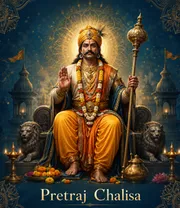
The text itself preserves a piece of the temple’s own history: chaupai 11 names Mahant Ganeshpuri as a devoted servant of Balaji, reflecting the line of temple priests (mahants) associated with Mehandipur’s establishment and growth as a pilgrimage site. The Chalisa also names the temple’s two companion deities alongside Balaji — Bhairav, described as the temple’s “kotwal” (constable), and Pretraj, its presiding judge — reflecting the three-deity arrangement that distinguishes Mehandipur from most other Hanuman temples.
How it is recited
The Mehandipur Balaji Chalisa is recited by devotees of Balaji, particularly on Tuesday and Saturday, the days traditionally associated with Hanuman worship across North India. Mehandipur is popularly regarded as a place where people troubled by fear, distress, or what they believe to be negative influences seek relief, and the Chalisa’s own verses reflect that reputation directly — several chaupai name specific categories of affliction and describe Balaji, Bhairav, and Pretraj acting together to remove them. Devotees commonly bring an “arzi,” a written petition, along with an offering of sweets such as laddoo or churma, both practices the text itself describes. Visitors also traditionally carry home a portion of water blessed at the temple, a custom chaupai 37 refers to directly.
Frequently asked questions
How many verses does Mehandipur Balaji Chalisa have?
Who is Mehandipur Balaji Chalisa dedicated to?
When is Mehandipur Balaji Chalisa typically recited?
What language is Mehandipur Balaji Chalisa composed in?
What tradition is Mehandipur Balaji Chalisa associated with?
Is an English translation of Mehandipur Balaji Chalisa available?
Is there a Roman transliteration of Mehandipur Balaji Chalisa?
Sourcing
Checked against independent sources before publishing — see our sourcing and editorial policy. Spotted an error? Report an issue .