The text
Tap Recite along to follow verse by verse — use Next, or the arrow keys.
- Opening dohas
- Doha (opening) 1
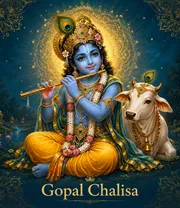
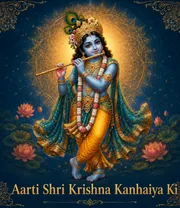
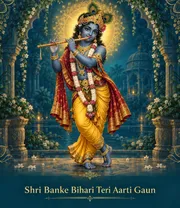
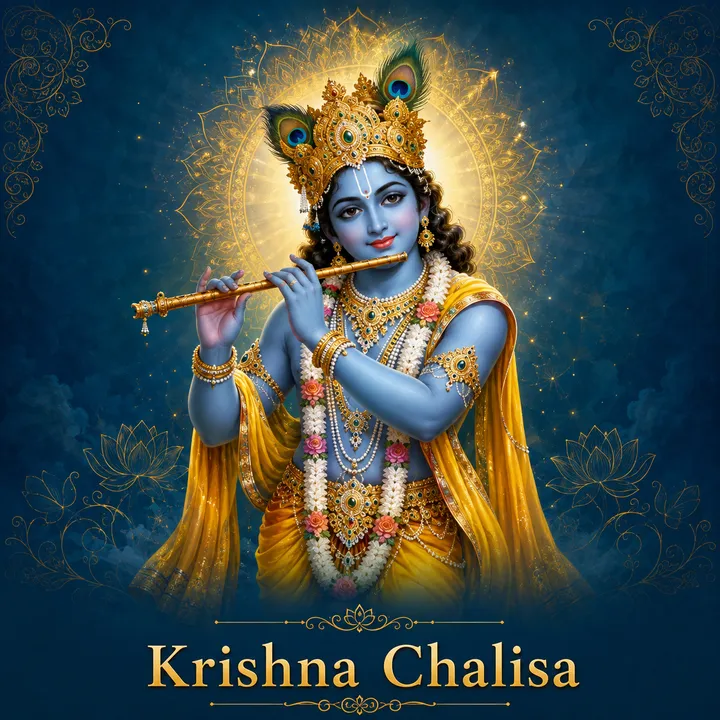
बंशी शोभित कर मधुर, नील जलद तन श्याम।अरुण अधर जनु बिम्बफल, नयन कमल अभिराम॥
baṃśī śobhita kara madhura, nīla jalada tana śyāma।aruṇa adhara janu bimbaphala, nayana kamala abhirāma॥
The sweet flute graces your hand, your dark form like a rain-laden cloud; your ruddy lips are like the bimba fruit, your eyes as lovely as lotuses.
- Doha (opening) 2
पूर्ण इन्द्र, अरविन्द मुख, पीताम्बर शुभ साज।जय मनमोहन मदन छवि, कृष्णचन्द्र महाराज॥
pūrṇa indra, aravinda mukha, pītāmbara śubha sāja।jaya manamohana madana chavi, kṛṣṇacandra mahārāja॥
Your face is full and radiant as the moon, set above a lotus, dressed in fine yellow silk; victory to you, Krishnachandra, the heart-enchanting king whose beauty rivals Kamadeva's.
- The 40 chaupais
- Chaupai 1
जय यदुनन्दन जय जगवन्दन।जय वसुदेव देवकी नन्दन॥
jaya yadunandana jaya jagavandana।jaya vasudeva devakī nandana॥
Victory to the joy of the Yadu clan, victory to you whom the whole world reveres; victory to the son of Vasudeva and Devaki.
- Chaupai 2
जय यशुदा सुत नन्द दुलारे।जय प्रभु भक्तन के दृग तारे॥
jaya yaśudā suta nanda dulāre।jaya prabhu bhaktana ke dṛga tāre॥
Victory to the darling son of Yashoda and Nanda; victory to you, Lord, the very light of your devotees' eyes.
- Chaupai 3
जय नटनागर, नाग नथइया।कृष्ण कन्हइया धेनु चरइया॥
jaya naṭanāgara, nāga nathaiyā।kṛṣṇa kanhaiyā dhenu charaiyā॥
Victory to the master performer who tamed the serpent; Krishna Kanhaiya, herder who tends the cows.
- Chaupai 4
पुनि नख पर प्रभु गिरिवर धारो।आओ दीनन कष्ट निवारो॥
puni nakha para prabhu girivara dhāro।āo dīnana kaṣṭa nivāro॥
You held up the great mountain upon your fingertip; come now, Lord, and remove the sufferings of the humble.
- Chaupai 5
वंशी मधुर अधर धरि टेरौ।होवे पूर्ण विनय यह मेरौ॥
vaṃśī madhura adhara dhari ṭerau।hove pūrṇa vinaya yaha merau॥
With the sweet flute resting on your lips, you call out to us; may this humble prayer of mine be fulfilled.
- Chaupai 6
आओ हरि पुनि माखन चाखो।आज लाज भारत की राखो॥
āo hari puni mākhana chākho।āja lāja bhārata kī rākho॥
Come, Hari, and taste the butter once again; today, uphold the honor of this land of Bharat.
- Chaupai 7
गोल कपोल, चिबुक अरुणारे।मृदु मुस्कान मोहिनी डारे॥
gola kapola, chibuka aruṇāre।mṛdu muskāna mohinī ḍāre॥
Your round cheeks and reddened chin, your gentle smile casts an enchanting spell.
- Chaupai 8
राजित राजिव नयन विशाला।मोर मुकुट वैजन्तीमाला॥
rājita rājiva nayana viśālā।mora mukuṭa vaijantīmālā॥
Your large lotus-eyes shine forth; you wear a peacock-feather crown and the Vaijayanti garland of victory.
- Chaupai 9
कुंडल श्रवण, पीत पट आछे।कटि किंकिणी काछनी काछे॥
kuṇḍala śravaṇa, pīta paṭa āchhe।kaṭi kiṅkiṇī kāchhanī kāchhe॥
Earrings adorn your ears, and your yellow garment is beautiful; small bells ring at your waist, where your garment is tucked.
- Chaupai 10
नील जलज सुन्दर तनु सोहे।छबि लखि, सुर नर मुनिमन मोहे॥
nīla jalaja sundara tanu sohe।chhabi lakhi, sura nara munimana mohe॥
Your form shines like a beautiful dark-blue lotus; seeing your radiance, gods, men, and sages alike are enchanted.
- Chaupai 11
मस्तक तिलक, अलक घुँघराले।आओ कृष्ण बांसुरी वाले॥
mastaka tilaka, alaka ghũgharāle।āo kṛṣṇa bāṃsurī vāle॥
The tilak on your forehead, your curling locks of hair — come, Krishna, bearer of the flute.
- Chaupai 12
करि पय पान, पूतनहि तार्यो।अका बका कागासुर मार्यो॥
kari paya pāna, pūtanahi tāryo।akā bakā kāgāsura māryo॥
By drinking her poisoned milk, you freed the demoness Putana from her curse; you slew the demons Aghasura, Bakasura, and Kagasura.
- Chaupai 13
मधुवन जलत अगिन जब ज्वाला।भै शीतल लखतहिं नंदलाला॥
madhuvana jalata agina jaba jvālā।bhai śītala lakhatahiṃ nandalālā॥
When the forest of Madhuvan was engulfed in flames, it turned cool the moment Nandalala looked upon it.
- Chaupai 14
सुरपति जब ब्रज चढ़्यो रिसाई।मूसर धार वारि वर्षाई॥
surapati jaba braja chaḍhyo risāī।mūsara dhāra vāri varṣāī॥
When Indra, king of the gods, attacked Braj in his fury, he poured down rain in torrents as thick as pestles.
- Chaupai 15
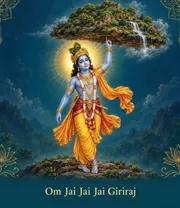
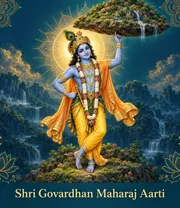
लगत लगत व्रज चहन बहायो।गोवर्धन नख धारि बचायो॥
lagata lagata vraja chahana bahāyo।govardhana nakha dhāri bachāyo॥
As the flood threatened to sweep away all of Braj, you lifted Govardhan hill upon your fingertip and saved everyone.
- Chaupai 16
लखि यसुदा मन भ्रम अधिकाई।मुख मंह चौदह भुवन दिखाई॥
lakhi yasudā mana bhrama adhikāī।mukha maṃha chaudaha bhuvana dikhāī॥
Seeing Yashoda's mind troubled with doubt, you showed her the fourteen worlds within your mouth.
- Chaupai 17
दुष्ट कंस अति उधम मचायो।कोटि कमल जब फूल मंगायो॥
duṣṭa kaṃsa ati udhama machāyo।koṭi kamala jaba phūla maṅgāyo॥
The wicked Kamsa caused great turmoil, once demanding that ten million lotus flowers be brought to him.
- Chaupai 18
नाथि कालियहिं तब तुम लीन्हें।चरण चिह्न दै निर्भय कीन्हें॥
nāthi kāliyahiṃ taba tuma līnheṃ।charaṇa chihna dai nirbhaya kīnheṃ॥
You then subdued the serpent Kaliya, and by marking him with the sign of your feet, made the river free of fear.
- Chaupai 19
करि गोपिन संग रास विलासा।सब की पूरण करी अभिलाषा॥
kari gopina saṅga rāsa vilāsā।saba kī pūraṇa karī abhilāṣā॥
You performed the Raas dance together with the gopis, fulfilling the heartfelt longing of each one.
- Chaupai 20
केतिक महा असुर संहार्यो।कंसहि केस पकड़ि दै मार्यो॥
ketika mahā asura saṃhāryo।kaṃsahi kesa pakaḍi dai māryo॥
You destroyed many great demons, and finally seized Kamsa by the hair and struck him down.
- Chaupai 21
मात पिता की बन्दि छुड़ाई।उग्रसेन कहँ राज दिलाई॥
māta pitā kī bandi chhuḍāī।ugrasena kahã rāja dilāī॥
You freed your mother and father from their imprisonment, and restored the kingdom to Ugrasena.
- Chaupai 22
महि से मृतक छहों सुत लायो।मातु देवकी शोक मिटायो॥
mahi se mṛtaka chhahoṃ suta lāyo।mātu devakī śoka miṭāyo॥
You brought back all six of Devaki's dead sons from the netherworld, and erased her sorrow.
- Chaupai 23
भौमासुर मुर दैत्य संहारी।लाये षट दश सहस कुमारी॥
bhaumāsura mura daitya saṃhārī।lāye ṣaṭa daśa sahasa kumārī॥
You destroyed the demons Bhaumasura and Mura, and freed the sixteen thousand captive maidens.
- Chaupai 24
दै भीमहिं तृण चीर सहारा।जरासिंधु राक्षस कहँ मारा॥
dai bhīmahiṃ tṛṇa chīra sahārā।jarāsindhu rākṣasa kahã mārā॥
By showing Bhima how to tear a blade of grass in two, you helped him bring down the demon Jarasandha.
- Chaupai 25
असुर बकासुर आदिक मार्यो।भक्तन के तब कष्ट निवार्यो॥
asura bakāsura ādika māryo।bhaktana ke taba kaṣṭa nivāryo॥
By slaying demons like Bakasura and others, you removed the sufferings of your devotees.
- Chaupai 26
दीन सुदामा के दुःख टार्यो।तंदुल तीन मूंठ मुख डार्यो॥
dīna sudāmā ke duḥkha ṭāryo।tandula tīna mūṇṭha mukha ḍāryo॥
You lifted away the poverty of humble Sudama, delighted simply by the three fistfuls of rice he offered.
- Chaupai 27
प्रेम के साग विदुर घर मांगे।दुर्योधन के मेवा त्यागे॥
prema ke sāga vidura ghara māṅge।duryodhana ke mevā tyāge॥
You asked for the simple greens offered with love in Vidura's home, and turned away the rich delicacies of Duryodhana.
- Chaupai 28
लखी प्रेम की महिमा भारी।ऐसे श्याम दीन हितकारी॥
lakhī prema kī mahimā bhārī।aise śyāma dīna hitakārī॥
See the great glory of love — such is Shyam, the well-wisher of the humble.
- Chaupai 29
भारत के पारथ रथ हाँके।लिये चक्र कर नहिं बल थाके॥
bhārata ke pāratha ratha hā̃ke।liye chakra kara nahiṃ bala thāke॥
In the Mahabharata, you drove Partha's (Arjuna's) chariot; taking up the discus in hand, your strength never faltered.
- Chaupai 30
निज गीता के ज्ञान सुनाए।भक्तन हृदय सुधा वर्षाए॥
nija gītā ke jñāna sunāe।bhaktana hṛdaya sudhā varṣāe॥
You imparted the wisdom of your own Gita, showering nectar upon the hearts of your devotees.
- Chaupai 31
मीरा थी ऐसी मतवाली।विष पी गई बजाकर ताली॥
mīrā thī aisī matavālī।viṣa pī gaī bajākara tālī॥
Meera was so intoxicated with devotion to you that she drank poison while clapping and singing your praise.
- Chaupai 32
राना भेजा साँप पिटारी।शालीग्राम बने बनवारी॥
rānā bhejā sā̃pa piṭārī।śālīgrāma bane banavārī॥
When the king sent her a basket holding a snake, you turned it into a Shaligram stone, O Banwari.
- Chaupai 33
निज माया तुम विधिहिं दिखायो।उर ते संशय सकल मिटायो॥
nija māyā tuma vidhihiṃ dikhāyo।ura te saṃśaya sakala miṭāyo॥
You revealed your divine illusion to Brahma himself, and cleared every doubt from his heart.
- Chaupai 34
तब शत निन्दा करि तत्काला।जीवन मुक्त भयो शिशुपाला॥
taba śata nindā kari tatkālā।jīvana mukta bhayo śiśupālā॥
When Shishupala had hurled a hundred insults at you, you granted him liberation that very instant.
- Chaupai 35
जबहिं द्रौपदी टेर लगाई।दीनानाथ लाज अब जाई॥
jabahiṃ draupadī ṭera lagāī।dīnānātha lāja aba jāī॥
The moment Draupadi cried out, "O Lord of the helpless, my honor is now at stake" —
- Chaupai 36
तुरतहि वसन बने नंदलाला।बढ़े चीर भै अरि मुँह काला॥
turatahi vasana bane nandalālā।baḍhe chīra bhai ari mũha kālā॥
— Nandalala at once became her endless sari; as the cloth kept growing, her enemy was left shamefaced.
- Chaupai 37
अस अनाथ के नाथ कन्हइया।डूबत भंवर बचावइ नइया॥
asa anātha ke nātha kanhaiyā।ḍūbata bhaṃvara bachāvai naiyā॥
Such are you, Kanhaiya, Lord of the helpless — you rescue the sinking boat from the whirlpool.
- Chaupai 38
सुन्दरदास आस उर धारी।दयादृष्टि कीजै बनवारी॥
sundaradāsa āsa ura dhārī।dayādṛṣṭi kīje banavārī॥
Sundardas holds this hope in his heart: cast your compassionate glance upon him, O Banwari.
- Chaupai 39
नाथ सकल मम कुमति निवारो।क्षमहु बेगि अपराध हमारो॥
nātha sakala mama kumati nivāro।kṣamahu begi aparādha hamāro॥
O Lord, remove all my wrong thinking, and please forgive my faults swiftly.
- Chaupai 40
खोलो पट अब दर्शन दीजै।बोलो कृष्ण कन्हैया की जै॥
kholo paṭa aba darśana dīje।bolo kṛṣṇa kanhaiyā kī jai॥
Open the curtain now and grant your sight; proclaim victory to Krishna Kanhaiya!
- Closing doha
- Doha (closing)
यह चालीसा कृष्ण का, पाठ करै उर धारि।अष्ट सिद्धि नवनिधि फल, लहै पदारथ चारि॥
yaha chālīsā kṛṣṇa kā, pāṭha kare ura dhāri।aṣṭa siddhi navanidhi phala, lahai padāratha chāri॥
Whoever recites this Chalisa of Krishna with heartfelt attention shall attain the eight siddhis and nine treasures, and the four fruits of life.
Overview
The Krishna Chalisa is a devotional composition of forty chaupai couplets, framed by two opening dohas and a single closing doha, in praise of Krishna across the many stages of his life — the cowherd child of Vrindavan and Gokul, the friend and charioteer of the Mahabharata, and the refuge of devotees from Draupadi to Sudama to Meera. Like other chalisas, it moves quickly through a sequence of episodes rather than dwelling on any one, so that reciting it becomes a rapid survey of Krishna’s most loved stories in a single sitting. It is recited daily by many Krishna devotees and takes on particular significance during Janmashtami, his birthday.
Origin and source
As with several other chalisas, the Krishna Chalisa’s authorship is not documented with certainty from any source outside the text itself. Near its end, the composer names himself directly — chaupai 38 reads “Sundardas holds this hope in his heart” — a bhanita (a poet’s self-naming signature) consistent with the convention used across this genre of Hindi devotional poetry, much as the Ganesh Chalisa’s own composer names himself within its verses. This page follows that internal attribution to a poet named Sundardas, without asserting a specific date of composition, since no independent documentary source was found to confirm one.
The composition is in Hindi — more precisely Braj Bhasha, the literary dialect of the Mathura–Vrindavan region long used for Krishna devotional poetry — rather than Sanskrit. The verses move through Krishna’s iconography and ornaments (chaupai 1 to 11), his childhood exploits in Vrindavan, including the slaying of Putana, Bakasura, and Kagasura, the taming of the serpent Kaliya, the lifting of Govardhan hill against Indra’s flood, and showing Yashoda the universe within his own mouth (chaupai 12 to 20), his freeing of his parents and the restoration of Devaki’s dead sons, and his defeat of the demons Bhaumasura and Jarasandha (chaupai 21 to 25). It then turns to stories of his devotees and companions — his tenderness toward the poor Sudama, his preference for Vidura’s humble hospitality over Duryodhana’s wealth, his role as Arjuna’s charioteer and teacher of the Bhagavad Gita, Meera’s unwavering devotion, his protection of Draupadi’s honor, and Shishupala’s liberation even through hostility toward him (chaupai 26 to 37) — before closing with the poet’s own prayer for grace and the traditional verse on the benefit of reciting the Chalisa.
How it is recited
The Krishna Chalisa is recited daily by many Krishna devotees, often alongside other prayers to him, and its recitation is especially common during Janmashtami, when many households and temples read it as part of the day’s fasting and midnight worship marking his birth. As with other chalisas, devotees understand steady daily repetition — not any single occasion — to be the practice’s real center.
Frequently asked questions
How many verses does Krishna Chalisa have?
Who is Krishna Chalisa dedicated to?
When is Krishna Chalisa typically recited?
What language is Krishna Chalisa composed in?
What tradition is Krishna Chalisa associated with?
Is an English translation of Krishna Chalisa available?
Is there a Roman transliteration of Krishna Chalisa?
Sourcing
Checked against independent sources before publishing — see our sourcing and editorial policy. Spotted an error? Report an issue .