The text
Tap Recite along to follow verse by verse — use Next, or the arrow keys.
- Opening doha
- Doha (opening)
मातु लक्ष्मी करि कृपा, करो हृदय में वास।मनोकामना सिद्ध करि, परुवहु मेरी आस॥
mātu lakṣmī kari kṛpā, karo hṛdaya meṃ vāsa।manokāmanā siddha kari, paravahu merī āsa॥
Mother Lakshmi, show your grace, and dwell within my heart. Fulfill my heart's desire, and satisfy my hope.
- Sortha
- Sortha
यही मोर अरदास, हाथ जोड़ विनती करुं।सब विधि करौ सुवास, जय जननि जगदम्बिका॥
yahī mora aradāsa, hātha joḍa vinatī karuṃ।saba vidhi karau suvāsa, jaya janani jagadambikā॥
This alone is my prayer, as I fold my hands and ask: dwell within me in every way, O Mother of the Universe, Jagadambika.
- The 39 chaupais
- Chaupai 1
सिन्धु सुता मैं सुमिरौ तोही।ज्ञान, बुद्धि, विद्या दो मोही॥
sindhu sutā maiṃ sumirau tohī।jñāna, buddhi, vidyā do mohī॥
O daughter of the ocean, I remember you — grant me knowledge, intellect, and learning.
- Chaupai 2
तुम समान नहिं कोई उपकारी।सब विधि पुरवहु आस हमारी॥
tuma samāna nahiṃ koī upakārī।saba vidhi puravahu āsa hamārī॥
None is as gracious a benefactor as you — fulfill my hopes in every way.
- Chaupai 3
जय जय जगत जननि जगदम्बा।सबकी तुम ही हो अवलम्बा॥
jaya jaya jagata janani jagadambā।sabakī tuma hī ho avalambā॥
Victory, victory to the mother of the world, Jagadamba — you alone are the support of all.
- Chaupai 4
तुम ही हो सब घट घट वासी।विनती यही हमारी खासी॥
tuma hī ho saba ghaṭa ghaṭa vāsī।vinatī yahī hamārī khāsī॥
You alone dwell within every heart — this alone is my particular prayer.
- Chaupai 5
जगजननी जय सिन्धु कुमारी।दीनन की तुम हो हितकारी॥
jagajananī jaya sindhu kumārī।dīnana kī tuma ho hitakārī॥
Victory, mother of the world, daughter of the ocean — you are the well-wisher of the humble.
- Chaupai 6
विनवौं नित्य तुमहिं महारानी।कृपा करौ जग जननि भवानी॥
vinavauṃ nitya tumahiṃ mahārānī।kṛpā karau jaga janani bhavānī॥
I entreat you daily, great queen — show grace, O mother of the world, Bhavani.
- Chaupai 7
केहि विधि स्तुति करौं तिहारी।सुधि लीजै अपराध बिसारी॥
kehi vidhi stuti karauṃ tihārī।sudhi lījai aparādha bisārī॥
In what manner shall I sing your praise? Take notice of me, and forgive my faults.
- Chaupai 8
कृपा दृष्टि चितववो मम ओरी।जगजननी विनती सुन मोरी॥
kṛpā dṛṣṭi citavavo mama orī।jagajananī vinatī suna morī॥
Cast your gracious gaze toward me — mother of the world, hear my prayer.
- Chaupai 9
ज्ञान बुद्धि जय सुख की दाता।संकट हरो हमारी माता॥
jñāna buddhi jaya sukha kī dātā।saṅkaṭa haro hamārī mātā॥
Giver of knowledge, wisdom, and happiness — remove my troubles, O mother.
- Chaupai 10
क्षीरसिन्धु जब विष्णु मथायो।चौदह रत्न सिन्धु में पायो॥
kṣīrasindhu jaba viṣṇu mathāyo।caudaha ratna sindhu meṃ pāyo॥
When Vishnu churned the ocean of milk, fourteen treasures were found within it.
- Chaupai 11
चौदह रत्न में तुम सुखरासी।सेवा कियो प्रभु बनि दासी॥
caudaha ratna meṃ tuma sukharāsī।sevā kiyo prabhu bani dāsī॥
Among those fourteen treasures, you are the abode of joy — you became the Lord's handmaiden in service.
- Chaupai 12
जब जब जन्म जहां प्रभु लीन्हा।रुप बदल तहं सेवा कीन्हा॥
jaba jaba janma jahāṃ prabhu līnhā।rupa badala tahaṃ sevā kīnhā॥
Whenever and wherever the Lord took birth, you too changed your form there, to serve him.
- Chaupai 13
स्वयं विष्णु जब नर तनु धारा।लीन्हेउ अवधपुरी अवतारा॥
svayaṃ viṣṇu jaba nara tanu dhārā।līnheu avadhapurī avatārā॥
When Vishnu himself assumed a human body, and took incarnation in Avadhpuri —
- Chaupai 14
तब तुम प्रगट जनकपुर माहीं।सेवा कियो हृदय पुलकाहीं॥
taba tuma pragaṭa janakapura māhīṃ।sevā kiyo hṛdaya pulakāhīṃ॥
then you appeared in Janakpur, and served him with a heart thrilling with joy.
- Chaupai 15
अपनाया तोहि अन्तर्यामी।विश्व विदित त्रिभुवन की स्वामी॥
apanāyā tohi antaryāmī।viśva vidita tribhuvana kī svāmī॥
The indweller of all hearts made you his own — known throughout the world as mistress of the three worlds.
- Chaupai 16
तुम सम प्रबल शक्ति नहीं आनी।कहं लौ महिमा कहौं बखानी॥
tuma sama prabala śakti nahīṃ ānī।kahaṃ lau mahimā kahauṃ bakhānī॥
There is no other power as mighty as you — how far shall I go in describing your glory?
- Chaupai 17
मन क्रम वचन करै सेवकाई।मन इच्छित वाञ्छित फल पाई॥
mana krama vacana karai sevakāī।mana ichchhita vāñchhita phala pāī॥
Whoever serves you in thought, deed, and word obtains the fruit their heart desires.
- Chaupai 18
तजि छल कपट और चतुराई।पूजहिं विविध भाँति मनलाई॥
taji chala kapaṭa aura chaturāī।pūjahiṃ vividha bhāṃti manalāī॥
Giving up deceit, guile, and cunning, they worship you in many ways, with a devoted mind.
- Chaupai 19
और हाल मैं कहौं बुझाई।जो यह पाठ करै मन लाई॥
aura hāla maiṃ kahauṃ bujhāī।jo yaha pāṭha karai mana lāī॥
Let me explain further: whoever recites this text with a focused mind —
- Chaupai 20
ताको कोई कष्ट नोई।मन इच्छित पावै फल सोई॥
tāko koī kaṣṭa noī।mana ichchhita pāvai phala soī॥
no trouble shall touch them, and they shall obtain the fruit their heart desires.
- Chaupai 21
त्राहि त्राहि जय दुःख निवारिणि।त्रिविध ताप भव बन्धन हारिणी॥
trāhi trāhi jaya duḥkha nivāriṇi।trividha tāpa bhava bandhana hāriṇī॥
Save me, save me, O remover of sorrow — you who take away the threefold suffering and the bondage of worldly existence.
- Chaupai 22
जो चालीसा पढ़ै पढ़ावै।ध्यान लगाकर सुनै सुनावै॥
jo cālīsā paḍhai paḍhāvai।dhyāna lagākara sunai sunāvai॥
Whoever reads or has this Chalisa read, listens or has it heard with focused attention —
- Chaupai 23
ताकौ कोई न रोग सतावै।पुत्र आदि धन सम्पत्ति पावै॥
tākau koī na roga satāvai।putra ādi dhana sampatti pāvai॥
no illness shall trouble them, and they shall obtain children, wealth, and prosperity.
- Chaupai 24
पुत्रहीन अरु सम्पति हीना।अन्ध बधिर कोढ़ी अति दीना॥
putrahīna aru sampati hīnā।andha badhira koḍhī ati dīnā॥
One without children, one without wealth, the blind, the deaf, the leprous, the utterly wretched —
- Chaupai 25
विप्र बोलाय कै पाठ करावै।शंका दिल में कभी न लावै॥
vipra bolāya kai pāṭha karāvai।śaṅkā dila meṃ kabhī na lāvai॥
let them call a learned Brahmin and have this recited, never harboring doubt in their heart.
- Chaupai 26
पाठ करावै दिन चालीसा।ता पर कृपा करैं गौरीसा॥
pāṭha karāvai dina cālīsā।tā para kṛpā karaiṃ gaurīsā॥
Whoever has this Chalisa recited for forty days — upon them, Shiva too shows grace.
- Chaupai 27
सुख सम्पत्ति बहुत सी पावै।कमी नहीं काहू की आवै॥
sukha sampatti bahuta sī pāvai।kamī nahīṃ kāhū kī āvai॥
They obtain abundant happiness and prosperity, and lack nothing at all.
- Chaupai 28
बारह मास करै जो पूजा।तेहि सम धन्य और नहिं दूजा॥
bāraha māsa karai jo pūjā।tehi sama dhanya aura nahiṃ dūjā॥
Whoever worships you for twelve months — none other is as blessed as they.
- Chaupai 29
प्रतिदिन पाठ करै मन माही।उन सम कोइ जग में कहुं नाहीं॥
pratidina pāṭha karai mana māhī।una sama koi jaga meṃ kahuṃ nāhīṃ॥
Whoever recites this daily with a sincere mind — there is no one like them anywhere in this world.
- Chaupai 30
बहुविधि क्या मैं करौं बड़ाई।लेय परीक्षा ध्यान लगाई॥
bahuvidhi kyā maiṃ karauṃ baḍāī।leya parīkṣā dhyāna lagāī॥
In how many ways shall I sing your praise? Test this for yourself with focused devotion.
- Chaupai 31
करि विश्वास करै व्रत नेमा।होय सिद्ध उपजै उर प्रेमा॥
kari viśvāsa karai vrata nemā।hoya siddha upajai ura premā॥
Whoever keeps this vow and discipline with faith — it bears fruit, and love wells up in their heart.
- Chaupai 32
जय जय जय लक्ष्मी भवानी।सब में व्यापित हो गुण खानी॥
jaya jaya jaya lakṣmī bhavānī।saba meṃ vyāpita ho guṇa khānī॥
Victory, victory, victory to Lakshmi Bhavani — treasury of virtue, pervading all things.
- Chaupai 33
तुम्हरो तेज प्रबल जग माहीं।तुम सम कोउ दयालु कहुं नाहिं॥
tumharo teja prabala jaga māhīṃ।tuma sama kou dayālu kahuṃ nāhiṃ॥
Your radiance is mighty throughout the world — no one as compassionate as you exists anywhere.
- Chaupai 34
मोहि अनाथ की सुधि अब लीजै।संकट काटि भक्ति मोहि दीजै॥
mohi anātha kī sudhi aba lījai।saṅkaṭa kāṭi bhakti mohi dījai॥
Take notice of me now, the orphaned one; cut away my troubles and grant me devotion.
- Chaupai 35
भूल चूक करि क्षमा हमारी।दर्शन दजै दशा निहारी॥
bhūla cūka kari kṣamā hamārī।darśana dajai daśā nihārī॥
Forgive my errors and mistakes; behold my condition and grant me your sight.
- Chaupai 36
बिन दर्शन व्याकुल अधिकारी।तुमहि अछत दुःख सहते भारी॥
bina darśana vyākula adhikārī।tumahi achata duḥkha sahate bhārī॥
Without your sight, I am restless and troubled — even with you present, I bear heavy sorrow.
- Chaupai 37
नहिं मोहिं ज्ञान बुद्धि है तन में।सब जानत हो अपने मन में॥
nahiṃ mohiṃ jñāna buddhi hai tana meṃ।saba jānata ho apane mana meṃ॥
I have no knowledge or wisdom within me — you know everything of me in your own mind.
- Chaupai 38
रुप चतुर्भुज करके धारण।कष्ट मोर अब करहु निवारण॥
rupa caturbhuja karake dhāraṇa।kaṣṭa mora aba karahu nivāraṇa॥
Assuming your four-armed form, now remove my suffering.
- Chaupai 39
केहि प्रकार मैं करौं बड़ाई।ज्ञान बुद्धि मोहि नहिं अधिकाई॥
kehi prakāra maiṃ karauṃ baḍāī।jñāna buddhi mohi nahiṃ adhikāī॥
In what manner shall I glorify you? I have no abundance of knowledge or wisdom.
- Closing doha
- Doha (closing)
त्राहि त्राहि दुःख हारिणी, हरो वेगि सब त्रास।जयति जयति जय लक्ष्मी, करो शत्रु को नाश॥रामदास धरि ध्यान नित, विनय करत कर जोर।मातु लक्ष्मी दास पर, करहु दया की कोर॥
trāhi trāhi duḥkha hāriṇī, haro vegi saba trāsa।jayati jayati jaya lakṣmī, karo śatru ko nāśa॥rāmadāsa dhari dhyāna nita, vinaya karata kara jora।mātu lakṣmī dāsa para, karahu dayā kī kora॥
Save me, save me, remover of sorrow — swiftly take away every fear. Victory, victory, victory to Lakshmi — destroy every enemy. Ramdas, ever holding you in meditation, prays with folded hands: Mother Lakshmi, show your servant a measure of mercy.
Overview
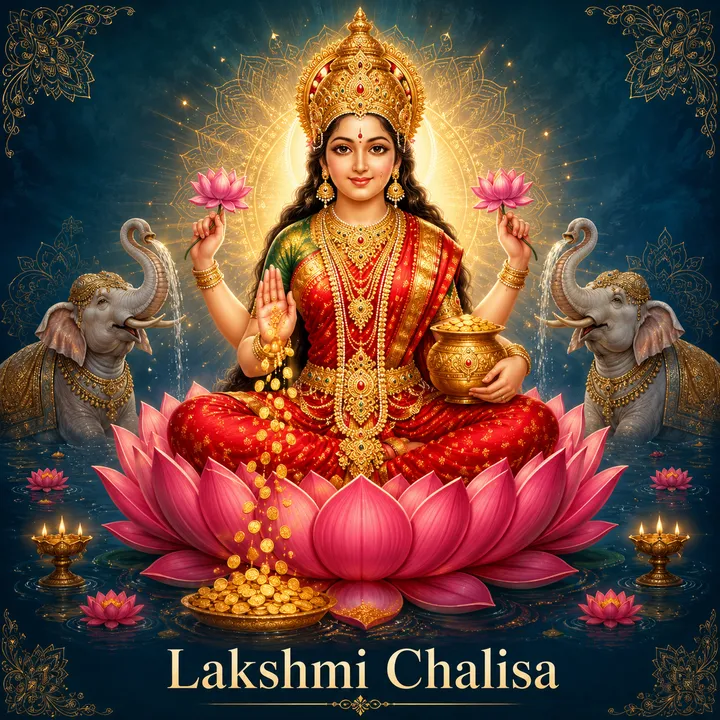
The Lakshmi Chalisa is a Hindi devotional composition in praise of Lakshmi, goddess of wealth, prosperity, and well-being. It opens with a doha and a sortha (a related couplet form) invoking her grace, moves through thirty-nine chaupai verses recounting her origin and her constant service alongside Vishnu across his incarnations, and closes with two doha couplets describing the benefit of reciting it. Devotees recite it seeking freedom from want and hardship, and it is especially widespread around Diwali, when Lakshmi puja is performed in homes and businesses across North India.
Origin and source
This page follows the text as it appears, word for word, on Drikpanchang.com and BhaktiBharat.com — two independently maintained Hindi devotional-lyrics sites whose versions match exactly (a third source, Dharmsaar.com, carries the same verses in the same order but with more transcription inconsistencies, and was used only to confirm structure, not wording). Authorship is not securely established: some popular sources attribute the Chalisa to Tulsidas, but this attribution is not well supported by the text itself. The composition’s own closing doha names its author as “Ramdas” (“रामदास धरि ध्यान नित” — “Ramdas, ever holding you in meditation”), which is the only authorship clue the verses themselves provide.
The body of the text recounts Lakshmi’s emergence from the churning of the ocean of milk as one of its fourteen treasures, and her devotion in following Vishnu through his incarnations — appearing as Sita in Janakpur when he took birth as Rama in Ayodhya, and in other forms alongside his other avatars. The remaining verses are a prayer for her grace and a description, in the genre’s conventional style, of the benefits said to come from reciting the Chalisa with sincerity.
How it is recited
The Lakshmi Chalisa is recited by many devotees on Friday, the day traditionally associated with Lakshmi in North Indian practice, often before a lit diya in front of her image. It is especially prominent during Diwali and at Lakshmi puja, when it is commonly read alongside or after the Lakshmi aarti as part of the household worship that marks the festival.
Frequently asked questions
How many verses does Lakshmi Chalisa have?
Who is Lakshmi Chalisa dedicated to?
When is Lakshmi Chalisa typically recited?
What language is Lakshmi Chalisa composed in?
What tradition is Lakshmi Chalisa associated with?
Is an English translation of Lakshmi Chalisa available?
Is there a Roman transliteration of Lakshmi Chalisa?
Sourcing
Checked against independent sources before publishing — see our sourcing and editorial policy. Spotted an error? Report an issue .