The text
Tap Recite along to follow verse by verse — use Next, or the arrow keys.
- Opening dohas
- Doha (opening) 1
बन्दहुँ वीणा वादिनी, धरि गणपति को ध्यान।महाशक्ति राधा सहित, कृष्ण करौ कल्याण॥
bandahũ vīṇā vādinī, dhari gaṇapati ko dhyāna।mahāśakti rādhā sahita, kṛṣṇa karau kalyāṇa॥
I bow to the veena-player (Saraswati), holding Ganapati in meditation; together with the great power Radha, may Krishna grant us welfare.
- Doha (opening) 2
सुमिरन करि सब देवगण, गुरु पितु बारम्बार।बरनौ श्रीगिरिराज यश, निज मति के अनुसार॥
sumirana kari saba devagaṇa, guru pitu bārambāra।baranau śrīgirirāja yaśa, nija mati ke anusāra॥
Remembering all the gods, and my guru and father, again and again — I describe the glory of Shri Giriraj according to my own understanding.
- The 40 chaupais
- Chaupai 1
जय हो जय बंदित गिरिराजा।ब्रज मण्डल के श्री महाराजा॥
jaya ho jaya bandita girirājā।braja maṇḍala ke śrī mahārājā॥
Victory, victory to the venerated Giriraj — the glorious king of the Braj region.
- Chaupai 2
विष्णु रूप तुम हो अवतारी।सुन्दरता पै जग बलिहारी॥
viṣṇu rūpa tuma ho avatārī।sundaratā pai jaga balihārī॥
You are an incarnation in the form of Vishnu; the whole world is enraptured by your beauty.
- Chaupai 3
स्वर्ण शिखर अति शोभा पामें।सुर मुनि गण दरशन कूं आमें॥
svarṇa śikhara ati śobhā pāmeṃ।sura muni gaṇa daraśana kūṃ āmeṃ॥
Your golden peak shines with great splendor; gods and sages come for your darshan.
- Chaupai 4
शांत कन्दरा स्वर्ग समाना।जहाँ तपस्वी धरते ध्याना॥
śānta kandarā svarga samānā।jahā̃ tapasvī dharate dhyānā॥
Your peaceful caves are like heaven itself, where ascetics sit in meditation.
- Chaupai 5
द्रोणगिरि के तुम युवराजा।भक्तन के साधौ हौ काजा॥
droṇagiri ke tuma yuvarājā।bhaktana ke sādhau hau kājā॥
You are the young prince of Dronagiri; you accomplish the tasks of your devotees.
- Chaupai 6
मुनि पुलस्त्य जी के मन भाये।जोर विनय कर तुम कूँ लाये॥
muni pulastya jī ke mana bhāye।jora vinaya kara tuma kū̃ lāye॥
You pleased the heart of sage Pulastya, who brought you away through both insistence and humble entreaty.
- Chaupai 7
मुनिवर संघ जब ब्रज में आये।लखि ब्रजभूमि यहाँ ठहराये॥
munivara saṅgha jaba braja meṃ āye।lakhi brajabhūmi yahā̃ ṭhaharāye॥
When the company of great sages arrived in Braj, seeing this land, they settled you here.
- Chaupai 8
विष्णु धाम गौलोक सुहावन।यमुना गोवर्धन वृन्दावन॥
viṣṇu dhāma gauloka suhāvana।yamunā govardhana vṛndāvana॥
The beautiful Goloka, Vishnu's own abode, holds within it the Yamuna, Govardhan, and Vrindavan.
- Chaupai 9
देख देव मन में ललचाये।बास करन बहु रूप बनाये॥
dekha deva mana meṃ lalacāye।bāsa karana bahu rūpa banāye॥
Seeing this, the gods grew longing in their hearts, and took on many forms to dwell there.
- Chaupai 10
कोउ बानर कोउ मृग के रूपा।कोउ वृक्ष कोउ लता स्वरूपा॥
kou bānara kou mṛga ke rūpā।kou vṛkṣa kou latā svarūpā॥
Some as monkeys, some in the form of deer; some as trees, some in the shape of creepers.
- Chaupai 11
आनन्द लें गोलोक धाम के।परम उपासक रूप नाम के॥
ānanda leṃ goloka dhāma ke।parama upāsaka rūpa nāma ke॥
They take the bliss of the abode of Goloka, as its supreme devotees in form and in name.
- Chaupai 12
द्वापर अंत भये अवतारी।कृष्णचन्द्र आनन्द मुरारी॥
dvāpara anta bhaye avatārī।kṛṣṇacandra ānanda murārī॥
At the end of the Dvapara age, the incarnation appeared — joyful Krishnachandra, slayer of the demon Mura.
- Chaupai 13
महिमा तुम्हरी कृष्ण बखानी।पूजा करिबे की मन ठानी॥
mahimā tumharī kṛṣṇa bakhānī।pūjā karibe kī mana ṭhānī॥
Krishna himself extolled your glory, and resolved in his heart to worship you.
- Chaupai 14
ब्रजवासी सब के लिये बुलाई।गोवर्द्धन पूजा करवाई॥
brajavāsī saba ke liye bulāī।govarddhana pūjā karavāī॥
He called together all the people of Braj, and had them perform worship of Govardhan.
- Chaupai 15
पूजन कूँ व्यञ्जन बनवाये।ब्रजवासी घर घर ते लाये॥
pūjana kū̃ vyañjana banavāye।brajavāsī ghara ghara te lāye॥
Dishes were prepared for the worship; the people of Braj brought them from house after house.
- Chaupai 16
ग्वाल बाल मिलि पूजा कीनी।सहस भुजा तुमने कर लीनी॥
gvāla bāla mili pūjā kīnī।sahasa bhujā tumane kara līnī॥
The cowherd boys gathered together and performed the worship; you accepted it with a thousand arms.
- Chaupai 17
स्वयं प्रकट हो कृष्ण पूजा में।माँग माँग के भोजन पामें॥
svayaṃ prakaṭa ho kṛṣṇa pūjā meṃ।māṅga māṅga ke bhojana pāmeṃ॥
You yourself appeared in the midst of Krishna's worship, and received the food offered to you again and again.
- Chaupai 18
लखि नर नारि मन हरषामें।जै जै जै गिरिवर गुण गामें॥
lakhi nara nāri mana haraṣāmeṃ।jai jai jai girivara guṇa gāmeṃ॥
Seeing this, men and women rejoiced in their hearts, singing again and again in praise of the great mountain-king.
- Chaupai 19
देवराज मन में रिसियाए।नष्ट करन ब्रज मेघ बुलाए॥
devarāja mana meṃ risiyāe।naṣṭa karana braja megha bulāe॥
The king of the gods grew angry at heart, and summoned storm clouds to destroy Braj.
- Chaupai 20
छाँया कर ब्रज लियौ बचाई।एकउ बूँद न नीचे आई॥
chā̃yā kara braja liyau bacāī।ekau būṃda na nīce āī॥
By its shade, Braj was saved; not a single drop of rain fell to the ground.
- Chaupai 21
सात दिवस भई बरसा भारी।थके मेघ भारी जल धारी॥
sāta divasa bhaī barasā bhārī।thake megha bhārī jala dhārī॥
For seven days the rain fell in torrents; the clouds grew weary bearing such a heavy weight of water.
- Chaupai 22
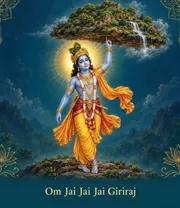
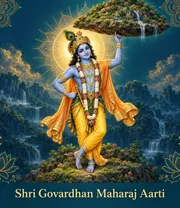
कृष्णचन्द्र ने नख पै धारे।नमो नमो ब्रज के रखवारे॥
kṛṣṇacandra ne nakha pai dhāre।namo namo braja ke rakhavāre॥
Krishnachandra held it upon the tip of his finger — salutations, salutations to the guardian of Braj.
- Chaupai 23
करि अभिमान थके सुरसाई।क्षमा माँग पुनि अस्तुति गाई॥
kari abhimāna thake surasāī।kṣamā māṅga puni astuti gāī॥
His pride broken and his strength spent, the lord of the gods begged forgiveness and sang your praises.
- Chaupai 24
त्राहि माम् मैं शरण तिहारी।क्षमा करो प्रभु चूक हमारी॥
trāhi mām maiṃ śaraṇa tihārī।kṣamā karo prabhu cūka hamārī॥
'Save me, I have come to your refuge; forgive, O Lord, the fault that is ours.'
- Chaupai 25
बार बार बिनती अति कीनी।सात कोस परिकम्मा दीनी॥
bāra bāra binatī ati kīnī।sāta kosa parikammā dīnī॥
Again and again he made his humble plea, and offered the seven-kos circumambulation.
- Chaupai 26
संग सुरभि ऐरावत लाये।हाथ जोड़ कर भेंट गहाये॥
saṅga surabhi airāvata lāye।hātha joḍa kara bheṃṭa gahāye॥
He brought the wish-granting cow Surabhi and the elephant Airavata, and offered them with folded hands.
- Chaupai 27
अभय दान पा इन्द्र सिहाये।करि प्रणाम निज लोक सिधाये॥
abhaya dāna pā indra sihāye।kari praṇāma nija loka sidhāye॥
Having received the gift of fearlessness, Indra rejoiced; he bowed in reverence and returned to his own realm.
- Chaupai 28
जो यह कथा सुनैं चित लावें।अन्त समय सुरपति पद पावें॥
jo yaha kathā sunaiṃ cita lāveṃ।anta samaya surapati pada pāveṃ॥
Whoever hears this story with an attentive mind attains, at the last hour, the rank of the lord of the gods.
- Chaupai 29
गोवर्द्धन है नाम तिहारौ।करते भक्तन कौ निस्तारौ॥
govarddhana hai nāma tihārau।karate bhaktana kau nistārau॥
Govardhan is your name; you carry your devotees across every difficulty.
- Chaupai 30
जो नर तुम्हरे दर्शन पावें।तिनके दुःख दूर ह्वै जावें॥
jo nara tumhare darśana pāveṃ।tinake duḥkha dūra hvai jāveṃ॥
Whoever attains your darshan — all their sorrow is driven far away.
- Chaupai 31
कुण्डन में जो करें आचमन।धन्य धन्य वह मानव जीवन॥
kuṇḍana meṃ jo kareṃ ācamana।dhanya dhanya vaha mānava jīvana॥
Whoever sips the sacred water at your kunds in ritual purification — blessed, blessed indeed is that human life.
- Chaupai 32
मानसी गंगा में जो न्हावें।सीधे स्वर्ग लोक कूँ जावें॥
mānasī gaṅgā meṃ jo nhāveṃ।sīdhe svarga loka kū̃ jāveṃ॥
Whoever bathes in the Mansi Ganga (the sacred pool at Govardhan) goes straight to the heavenly realm.
- Chaupai 33
दूध चढ़ा जो भोग लगावें।आधि व्याधि तेहि पास न आवें॥
dūdha caḍhā jo bhoga lagāveṃ।ādhi vyādhi tehi pāsa na āveṃ॥
Whoever offers milk to you as bhog — mental and physical afflictions never come near them.
- Chaupai 34
जल फल तुलसी पत्र चढ़ावें।मन वांछित फल निश्चय पावें॥
jala phala tulasī patra caḍhāveṃ।mana vāṃchita phala niścaya pāveṃ॥
Whoever offers water, fruit, and tulsi leaves surely obtains the fruit their heart desires.
- Chaupai 35
जो नर देत दूध की धारा।भरौ रहे ताकौ भण्डारा॥
jo nara deta dūdha kī dhārā।bharau rahe tākau bhaṇḍārā॥
Whoever pours a stream of milk in offering — their storehouse remains ever full.
- Chaupai 36
करें जागरण जो नर कोई।दुख दरिद्र भय ताहि न होई॥
kareṃ jāgaraṇa jo nara koī।dukha daridra bhaya tāhi na hoī॥
Whoever keeps a night vigil in your honor is never touched by sorrow, poverty, or fear.
- Chaupai 37
'श्याम' शिलामय निज जन त्राता।भक्ति मुक्ति सरबस के दाता॥
'śyāma' śilāmaya nija jana trātā।bhakti mukti sarabasa ke dātā॥
'Shyam,' in the form of stone, is the protector of his own people — the giver of devotion, liberation, and everything besides.
- Chaupai 38
पुत्र हीन जो तुम कूँ ध्यावें।ताकूँ पुत्र प्राप्ति ह्वै जावें॥
putra hīna jo tuma kū̃ dhyāveṃ।tākū̃ putra prāpti hvai jāveṃ॥
Whoever, being without a son, meditates upon you, comes to have a son.
- Chaupai 39
दंडौती परिकम्मा करहीं।ते सहजहि भवसागर तरहीं॥
daṇḍautī parikammā karahī̃।te sahajahi bhavasāgara tarahī̃॥
Those who circle you in full-body prostration (dandavat parikrama) cross the ocean of worldly existence with ease.
- Chaupai 40
कलि में तुम सम देव न दूजा।सुर नर मुनि सब करते पूजा॥
kali meṃ tuma sama deva na dūjā।sura nara muni saba karate pūjā॥
In this age of Kali, there is no other god equal to you; gods, men, and sages alike all worship you.
- Closing dohas
- Doha (closing) 1
जो यह चालीसा पढ़ै, सुनै शुद्ध चित्त लाय।सत्य सत्य यह सत्य है, गिरिवर करै सहाय॥
jo yaha cālīsā paḍhai, sunai śuddha citta lāya।satya satya yaha satya hai, girivara karai sahāya॥
Whoever reads or hears this Chalisa with a pure heart — truly, truly, this is true — the great mountain-king comes to their aid.
- Doha (closing) 2
क्षमा करहुँ अपराध मम, त्राहि माम् गिरिराज।श्याम बिहारी शरण में, गोवर्द्धन महाराज॥
kṣamā karahũ aparādha mama, trāhi mām girirāja।śyāma bihārī śaraṇa meṃ, govarddhana mahārāja॥
Forgive my offenses and save me, O Giriraj; in the refuge of Shyam Bihari, O Govardhan Maharaj.
Overview
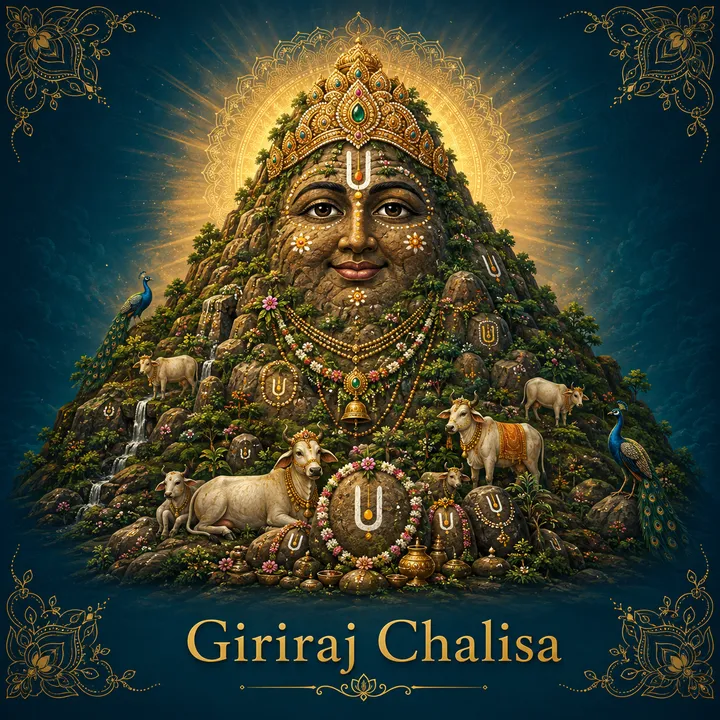
The Giriraj Chalisa is a forty-chaupai devotional composition, framed by two opening and two closing dohas, in praise of Govardhan Hill — addressed throughout by the honorific Giriraj, “king of mountains.” Unlike the shorter aarti sung before Govardhan’s image, which describes its ornaments through a repeated refrain, this chalisa is narrative: it recounts Govardhan’s arrival in Braj at the hands of the sage Pulastya, names the hill as an incarnation in Vishnu’s own form, describes the gods taking the shape of monkeys, deer, trees, and creepers out of longing to dwell there, and tells of Krishna organizing the cowherds of Braj to worship the hill before lifting it to shelter them from Indra’s storm. It closes with a catalogue of the blessings said to come from bathing in Govardhan’s sacred waters, offering it milk and tulsi leaves, keeping vigil in its honor, or circling it in full prostration.
Origin and source
As with many chalisas, the composer of the Giriraj Chalisa is not named within the text and is not reliably established in devotional sources; it is treated here as a traditional composition recited across Vaishnav practice rather than the work of a documented author. Its narrative draws on Puranic legend, retold widely in devotional literature: that the sage Pulastya once carried Govardhan away from its original home on the condition that it be set down and left wherever he chose to rest, and that once it came to rest in Braj it never moved again — the origin, in this telling, of the hill’s permanent place in the region where Krishna would later perform his childhood deeds. In chaupai 37, the chalisa names the hill directly as “Shyam” — an epithet of Krishna — “in the form of stone,” echoing the broader Pushtimarg practice of treating a Govardhan Shila as a worshippable embodiment of Krishna in its own right, distinct from an image or a place merely associated with him.
How it is recited
The Giriraj Chalisa is recited especially around Govardhan Puja, the day after Diwali, when Govardhan Hill itself — not only an image of Krishna — receives direct worship. It is also recited by pilgrims undertaking the parikrama around Govardhan Hill, some of whom perform the dandavat parikrama named in the chalisa’s own verses, prostrating themselves the full length of the path. Its closing verses of promised blessings are likewise called to mind by devotees bathing in Govardhan’s sacred kunds and in the Mansi Ganga, and by those keeping a night vigil in the hill’s honor.
Frequently asked questions
How many verses does Giriraj Chalisa have?
Who is Giriraj Chalisa dedicated to?
When is Giriraj Chalisa typically recited?
What language is Giriraj Chalisa composed in?
What tradition is Giriraj Chalisa associated with?
Is an English translation of Giriraj Chalisa available?
Is there a Roman transliteration of Giriraj Chalisa?
Sourcing
Checked against independent sources before publishing — see our sourcing and editorial policy. Spotted an error? Report an issue .