The text
Tap Recite along to follow verse by verse — use Next, or the arrow keys.
- Stanza 1 (refrain)
आरती कुंजबिहारी की, श्री गिरिधर कृष्ण मुरारी की॥
āratī kuñjabihārī kī, śrī giridhara kṛṣṇa murārī kī॥
Aarti to Kunj Bihari, the one who wanders the groves of Vrindavan — to Sri Giridhar, Krishna, Murari.
- Stanza 2
गले में बैजंती माला, बजावै मुरली मधुर बाला।श्रवण में कुण्डल झलकाला, नंद के आनंद नंदलाला।गगन सम अंग कांति काली, राधिका चमक रही आली।लतन में ठाढ़े बनमाली, भ्रमर सी अलक, कस्तूरी तिलक, चन्द्र सी झलक, ललित छवि श्यामा प्यारी की॥श्री गिरिधर कृष्ण मुरारी की॥आरती कुंजबिहारी की, श्री गिरिधर कृष्ण मुरारी की॥
gale meṃ baijantī mālā, bajāvai muralī madhura bālā।śravaṇa meṃ kuṇḍala jhalakālā, nanda ke ānanda nandalālā।gagana sama aṅga kānti kālī, rādhikā camaka rahī ālī।latana meṃ ṭhāḍhe banamālī, bhramara sī alaka, kastūrī tilaka, candra sī jhalaka, lalita chavi śyāmā pyārī kī॥śrī giridhara kṛṣṇa murārī kī॥āratī kuñjabihārī kī, śrī giridhara kṛṣṇa murārī kī॥
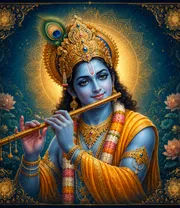
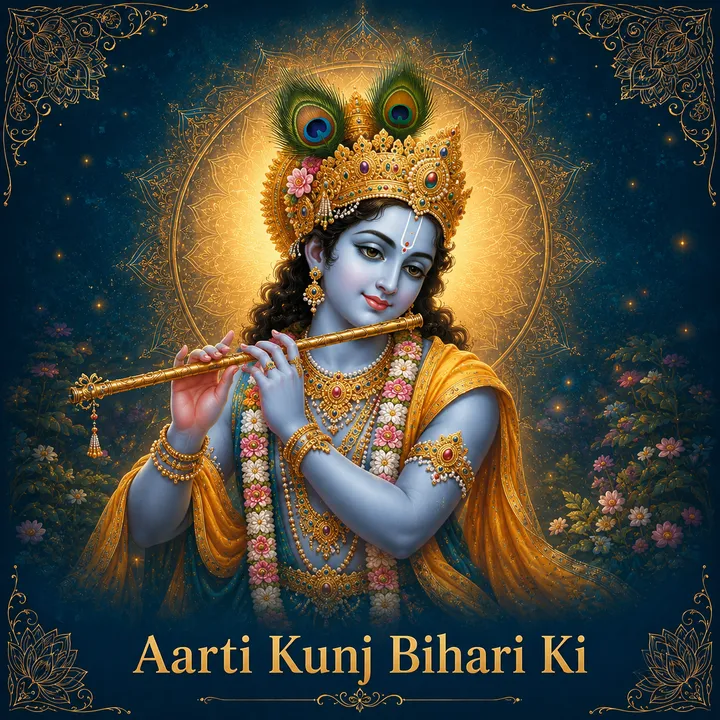
A garland of forest flowers around his neck, he plays his sweet flute, dear one. Earrings glimmer in his ears — the darling of Nanda, the delight of Nanda. His limbs are dark as the sky, and Radhika shines beside him. He stands amid the flowering vines, garlanded, with bee-black locks, a musk mark on his brow, a glow like the moon — the lovely, dark, beautiful form of Shyama. To Sri Giridhar, Krishna, Murari. Aarti to Kunj Bihari, to Sri Giridhar, Krishna, Murari.
- Stanza 3
कनकमय मोर मुकुट बिलसै, देवता दरसन को तरसैं।गगन सों सुमन रासि बरसै, बजे मुरचंग, मधुर मिरदंग, ग्वालिन संग, अतुल रति गोप कुमारी की॥श्री गिरिधर कृष्ण मुरारी की॥आरती कुंजबिहारी की, श्री गिरिधर कृष्ण मुरारी की॥
kanakamaya mora mukuṭa bilasai, devatā darasana ko tarasaiṃ।gagana soṃ sumana rāsi barasai, baje muracaṅga, madhura miradaṅga, gvālina saṅga, atula rati gopa kumārī kī॥śrī giridhara kṛṣṇa murārī kī॥āratī kuñjabihārī kī, śrī giridhara kṛṣṇa murārī kī॥
His golden peacock-feather crown gleams; even the gods long for his sight. Flowers rain down from the sky; the murchang and sweet mridang sound, amid the company of cowherd maidens — the matchless joy of the gopa maidens. To Sri Giridhar, Krishna, Murari. Aarti to Kunj Bihari, to Sri Giridhar, Krishna, Murari.
- Stanza 4
जहां ते प्रकट भई गंगा, कलुष कलि हारिणि श्रीगंगा।स्मरन ते होत मोह भंगा, बसी सिव सीस, जटा के बीच, हरै अघ कीच, चरन छवि श्रीबनवारी की॥श्री गिरिधर कृष्ण मुरारी की॥आरती कुंजबिहारी की, श्री गिरिधर कृष्ण मुरारी की॥
jahāṃ te prakaṭa bhaī gaṅgā, kaluṣa kali hāriṇi śrīgaṅgā।smarana te hota moha bhaṅgā, basī siva sīsa, jaṭā ke bīca, harai agha kīca, caraṇa chavi śrībanavārī kī॥śrī giridhara kṛṣṇa murārī kī॥āratī kuñjabihārī kī, śrī giridhara kṛṣṇa murārī kī॥
The Ganga sprang from his feet — the sacred Ganga who removes the stains of this age. Remembering it breaks the bonds of illusion; it rests amid Shiva's matted locks, washing away sin — such is the glory of Banwari's feet. To Sri Giridhar, Krishna, Murari. Aarti to Kunj Bihari, to Sri Giridhar, Krishna, Murari.
- Stanza 5
चमकती उज्ज्वल तट रेनू, बज रही वृंदावन बेनू।चहुं दिसि गोपि ग्वाल धेनू, हंसत मृदु मंद, चांदनी चंद, कटत भव फंद, टेर सुन दीन भिखारी की॥श्री गिरिधर कृष्ण मुरारी की॥आरती कुंजबिहारी की, श्री गिरिधर कृष्ण मुरारी की॥
camakatī ujjvala taṭa renū, baja rahī vṛndāvana benū।cahuṃ disi gopi gvāla dhenū, haṃsata mṛdu manda, cāṃdanī caṃda, kaṭata bhava phanda, ṭera suna dīna bhikhārī kī॥śrī giridhara kṛṣṇa murārī kī॥āratī kuñjabihārī kī, śrī giridhara kṛṣṇa murārī kī॥
The riverbank sand shines bright, and the flute plays on in Vrindavan. On every side are gopis, cowherds, and cows; the moon smiles softly, and hearing the cry of the poor and humble, he cuts the snare of worldly bondage. To Sri Giridhar, Krishna, Murari. Aarti to Kunj Bihari, to Sri Giridhar, Krishna, Murari.
Overview
Aarti Kunj Bihari Ki is a Braj Bhasha aarti of four stanzas in praise of Krishna, addressed to him as Kunj Bihari — the one who wanders the flowering groves (kunj) of Vrindavan. Each stanza closes with the line “Shri Giridhar Krishna Murari ki,” and the aarti’s own opening couplet is then repeated as a refrain between stanzas, exactly as it is sung and printed in devotional collections. It is a widely sung aarti in North Indian Vaishnav practice, heard nightly in Krishna temples and homes across India.
Origin and source
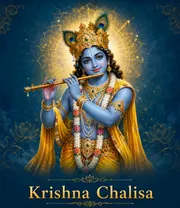
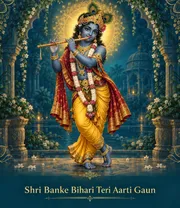
The composer of Aarti Kunj Bihari Ki is not reliably established. Devotional sources place it within the Braj Bhasha bhakti-poetry tradition that grew up around Vrindavan’s temples, in the same devotional world as the poet-saints of the Pushtimarg and other Krishna bhakti lineages, but they do not agree on a single named author — some describe it as part of a living oral tradition rather than a text with one certain point of origin. The stanzas describe Krishna’s iconography as Kunj Bihari: his flute, forest-flower garland, peacock-feather crown, and dark, radiant form. The third stanza draws on a belief shared across Vaishnav tradition — that the Ganga sprang from the feet of Vishnu, worshipped here in his form as Krishna, before coming to rest in Shiva’s matted hair.
How it is recited
Aarti Kunj Bihari Ki is sung daily by many Krishna devotees, most often at the evening aarti in home shrines and in Krishna temples such as those of Vrindavan and Mathura. It is especially prominent during Krishna Janmashtami, sung amid the wider celebration of Krishna’s birth. As with other aartis, it is usually sung while a lit diya or camphor flame is circled before the deity’s image, with the refrain — “Aarti Kunj Bihari ki, Shri Giridhar Krishna Murari ki” — repeated by everyone present between stanzas.
Frequently asked questions
How many verses does Aarti Kunj Bihari Ki have?
Who is Aarti Kunj Bihari Ki dedicated to?
When is Aarti Kunj Bihari Ki typically recited?
What language is Aarti Kunj Bihari Ki composed in?
What tradition is Aarti Kunj Bihari Ki associated with?
Is an English translation of Aarti Kunj Bihari Ki available?
Is there a Roman transliteration of Aarti Kunj Bihari Ki?
Sourcing
Checked against independent sources before publishing — see our sourcing and editorial policy. Spotted an error? Report an issue .