The text
Tap Recite along to follow verse by verse — use Next, or the arrow keys.
- Stanza 1 (refrain)
श्री गोवर्धन महाराज, ओ महाराज, तेरे माथे मुकुट विराज रहेओ॥
śrī govardhana mahārāja, o mahārāja, tere māthe mukuṭa virāja raheo॥
Victory to Shri Govardhan Maharaj, O great one — a crown shines upon your brow.
- Stanza 2
तोपे पान चढ़े, तोपे फूल चढ़े, तोपे चढ़े दूध की धार।श्री गोवर्धन महाराज, ओ महाराज, तेरे माथे मुकुट विराज रहेओ॥
tope pāna caḍhe, tope phūla caḍhe, tope caḍhe dūdha kī dhāra।śrī govardhana mahārāja, o mahārāja, tere māthe mukuṭa virāja raheo॥
Betel leaves are offered to you, flowers are offered to you, and a stream of milk is poured over you. Victory to Shri Govardhan Maharaj, O great one — a crown shines upon your brow.
- Stanza 3
तेरी सात कोस की परिकम्मा, चकलेश्वर है विश्राम।श्री गोवर्धन महाराज, ओ महाराज, तेरे माथे मुकुट विराज रहेओ॥
terī sāta kosa kī parikammā, cakaleśvara hai viśrāma।śrī govardhana mahārāja, o mahārāja, tere māthe mukuṭa virāja raheo॥
Your circling path stretches seven kos, resting at Chakleshwar. Victory to Shri Govardhan Maharaj, O great one — a crown shines upon your brow.
- Stanza 4
तेरे गले में कण्ठा साज रहेओ, ठोड़ी पे हीरा लाल।श्री गोवर्धन महाराज, ओ महाराज, तेरे माथे मुकुट विराज रहेओ॥
tere gale meṃ kaṇṭhā sāja raheo, ṭhoṛī pe hīrā lāla।śrī govardhana mahārāja, o mahārāja, tere māthe mukuṭa virāja raheo॥
A necklace adorns your neck, and a jewel of diamond and ruby rests at your chin. Victory to Shri Govardhan Maharaj, O great one — a crown shines upon your brow.
- Stanza 5
तेरे कानन कुण्डल चमक रहेओ, तेरी झाँकी बनी विशाल।श्री गोवर्धन महाराज, ओ महाराज, तेरे माथे मुकुट विराज रहेओ॥
tere kānana kuṇḍala camaka raheo, terī jhāṃkī banī viśāla।śrī govardhana mahārāja, o mahārāja, tere māthe mukuṭa virāja raheo॥
Earrings shine in your ears, and your ceremonial form appears magnificent. Victory to Shri Govardhan Maharaj, O great one — a crown shines upon your brow.
- Stanza 6
गिरिराज धरण प्रभु तेरी शरण, करो भक्त का बेड़ा पार।श्री गोवर्धन महाराज, ओ महाराज, तेरे माथे मुकुट विराज रहेओ॥
girirāja dharaṇa prabhu terī śaraṇa, karo bhakta kā beṛā pāra।śrī govardhana mahārāja, o mahārāja, tere māthe mukuṭa virāja raheo॥
O Lord Girirajdharan, we take refuge in you — carry your devotee's raft across. Victory to Shri Govardhan Maharaj, O great one — a crown shines upon your brow.
Overview
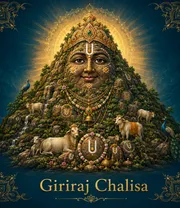
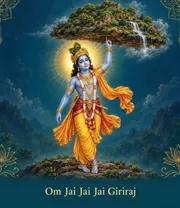
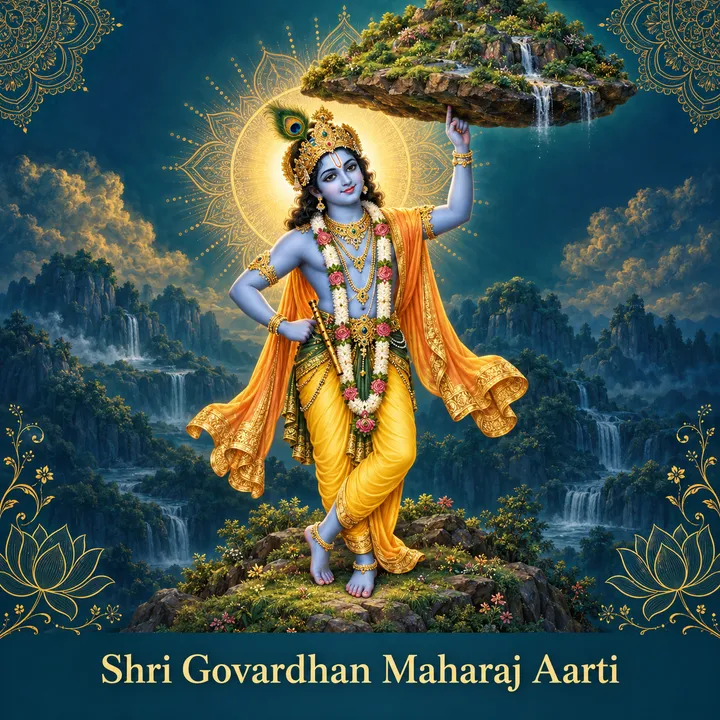
Shri Govardhan Maharaj Aarti is a Braj Bhasha aarti of five stanzas in praise of Govardhan Hill (Giriraj), the small mountain in the Braj region that, in the Bhagavata Purana’s account, Krishna lifted on the tip of his little finger for seven days to shelter Vrindavan’s cowherds and cattle from the deluge sent by an angered Indra. Each stanza describes Govardhan adorned like a deity in its own right — a crown at its brow, earrings, a jeweled necklace, and offerings of betel leaf, flowers, and poured milk — before the refrain “Shri Govardhan Maharaj, o Maharaj, tere mathe mukut viraj raheo” returns, exactly as it is sung and printed in devotional collections. It is sung especially around Govardhan Puja, the day after Diwali on which the hill itself, not only an image of Krishna, is worshipped directly.
Origin and source
The composer of this aarti is not reliably established; devotional sources present it as part of the Braj Bhasha oral tradition sung by pilgrims and worshippers at Govardhan Hill, rather than as a text with one certain point of origin. Its closing stanza turns from praising Govardhan’s ornaments to appeal directly to “Girirajdharan Prabhu” — Krishna, under the epithet that names him as the one who bore up Giriraj, the same epithet (“Giridhar”) used for him elsewhere in Braj devotional song. In the Pushtimarg tradition founded by Vallabhacharya, the connection between the hill and Krishna goes further still: Govardhan is worshipped not only as the setting of that story but, through a Govardhan Shila (a stone taken from the hill), as a direct, worshippable form of Krishna himself — distinct from being merely a place associated with him.
How it is recited
This aarti is sung on Govardhan Puja, the day after Diwali, when devotees shape a small representation of the hill from cow dung and offer it lamps, flowers, and the Annakut (“mountain of food”) — an array of dishes that gives the festival its other name. It is also sung by pilgrims completing the roughly seven-kos parikrama, the circumambulation path around Govardhan Hill named in the aarti’s own third stanza, which passes the Chakleshwar Mahadev shrine near its start. As with other aartis, it is sung while a lit diya or camphor flame is circled before the hill or its representation, with the refrain repeated by everyone present after each stanza.
Frequently asked questions
How many verses does Shri Govardhan Maharaj Aarti have?
Who is Shri Govardhan Maharaj Aarti dedicated to?
When is Shri Govardhan Maharaj Aarti typically recited?
What language is Shri Govardhan Maharaj Aarti composed in?
What tradition is Shri Govardhan Maharaj Aarti associated with?
Is an English translation of Shri Govardhan Maharaj Aarti available?
Is there a Roman transliteration of Shri Govardhan Maharaj Aarti?
Sourcing
Checked against independent sources before publishing — see our sourcing and editorial policy. Spotted an error? Report an issue .