Overview
Holi is two days. On the evening of Phalguna Purnima, the last full moon of the Hindu year, a bonfire is lit — Holika Dahan — and walked around; the next morning, on Chaitra Krishna Pratipada, the colours come out. The first day belongs to the story of Prahlad and his aunt Holika; the second belongs, in Braj, to Krishna and Radha. Most of India keeps both; the south keeps the bonfire and, in Tamil Nadu and Kerala, little of the colour.
The stories
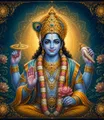
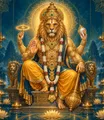
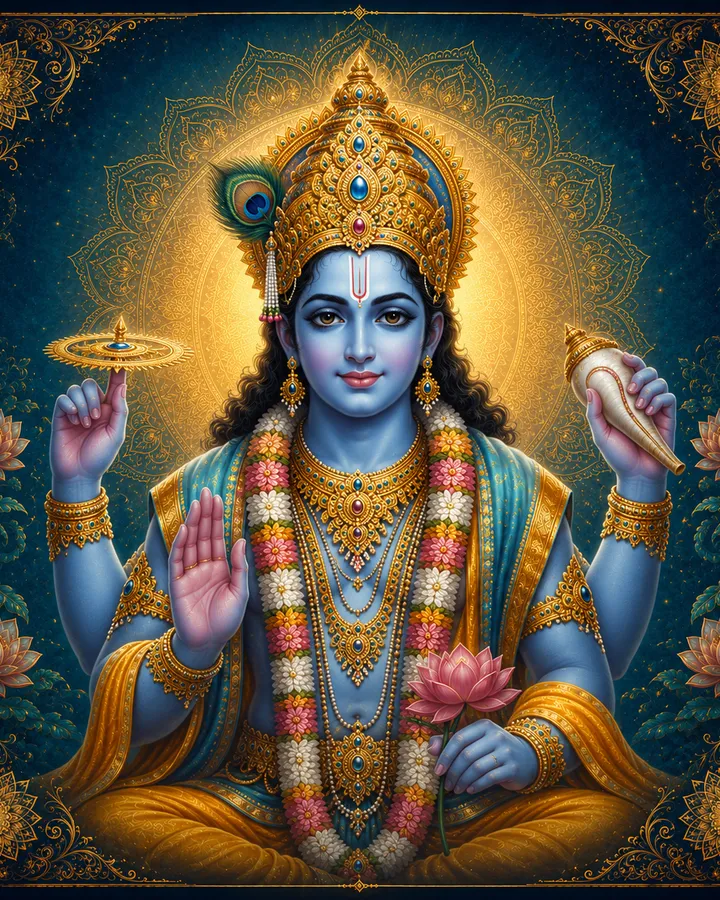
Prahlad and Holika. The Bhagavata Purana (7.5–7.8) tells of the asura king Hiranyakashipu, who could not be killed by man or beast, by day or night, indoors or out, and whose son Prahlad would not stop worshipping Vishnu. The king’s sister Holika had a boon that fire could not harm her; she sat in a fire with the boy in her lap, and it was she who burned while Prahlad walked out. The Purana’s story ends with Narasimha, the man-lion, killing the king at dusk on a threshold — see the Narasimha page. Holika Dahan is the bonfire in which Holika burned; the Narada and Bhavishya Puranas place it on Phalguna Purnima.
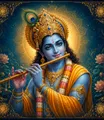
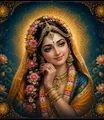
Krishna and the gopis. The colour-play has no Puranic charter; it belongs to Braj. Devotional tradition has the dark Krishna, teased about his colour beside the fair Radha, colouring her face in play, and the gopis answering in kind. Barsana’s Lathmar Holi, in which the women of Radha’s village drive off the men of Krishna’s Nandgaon with sticks, is kept about a week before the full moon; see the Radha page for the village tradition.
Kama and Shiva. In parts of the south the bonfire is Kama Dahana: Shiva, disturbed in meditation by Kama, the god of desire, burns him with his third eye, and the fire remembers that. The story is in the Shiva Purana and in Kalidasa’s Kumarasambhava.
How the days are kept
Holika Dahan. During the day a pyre of wood and dried cow-dung cakes is built at a crossroads or in a courtyard, often with an effigy of Holika and a small figure of Prahlad that is removed before the fire is lit. After sunset, once the Purnima tithi is current and the family’s calendar shows Bhadra clear, the fire is lit with a short puja — water, rice, turmeric, a thread wound around the pyre, and new grain (wheat or chickpeas) roasted in the flames and taken home as prasad. People circle the fire, and some carry embers home to light the household hearth.
Rangwali Holi. From morning, colour — dry gulal and coloured water — and the day’s licence to play. In Braj it runs for days; elsewhere it ends by early afternoon, followed by a bath, clean clothes and visits to relatives with sweets (gujiya in the north, puran poli in Maharashtra).
Jaap. The day has no fixed count. Families who keep one on Holika Dahan usually keep a Vishnu or Narasimha name; the Narasimha aarti and chalisa linked below are the texts tied to the bonfire’s story.
Regional forms
- Braj: Lathmar Holi at Barsana and Nandgaon, the flower Holi (Phoolon ki Holi) at Vrindavan’s Banke Bihari temple, and the Huranga at Baldeo the day after Holi.
- Punjab: Hola Mohalla, the Sikh gathering at Anandpur Sahib, falls the day after Holi with displays of martial skill.
- Maharashtra: Holi is the bonfire; the colour is Rang Panchami, five days later, on Chaitra Krishna Panchami.
- West Bengal and Odisha: Dol Jatra or Dol Purnima: images of Radha and Krishna are carried in procession on a swing, and the colour is played on the Purnima itself.
- Karnataka, Andhra and Tamil Nadu: Kama Dahana or Kamuni Punnami, the bonfire on the Purnima; colour is less prominent.
The date
Holika Dahan is the evening the Purnima tithi is current in pradosh kala; this site computes that window for New Delhi. It does not compute Bhadra, which local calendars use to fix the exact hour of the fire, so treat the table’s window as the tithi window, not the muhurat. Rangwali Holi is the next day.
Dates 2027
Dates are for New Delhi (IST), computed from the tithi rule for 1 Sept 2026 to 31 Dec 2027. Rows marked computed have not yet been checked against a published panchang — confirm with a local calendar before planning around them. Dates already past are kept for reference.
| Date | Observance | Tithi at sunrise | Tithi (IST) | Notes |
|---|---|---|---|---|
| Holi and Holika DahanRangwali Holi: 22 Mar 2027 | Shukla Chaturdashi, Phalguna | 21 Mar 18:22 → 22 Mar 16:14 | Pradosh kala 18:32–20:56 (New Delhi) computed |
Mantra, aarti and chalisa for Holi and Holika Dahan
Frequently asked questions
When is Holi and Holika Dahan in 2027?
Are Holika Dahan and Holi on the same day?
Why is the bonfire timed so carefully?
What is the connection between Holi and Krishna?
Is Holi a religious observance or a public festival?
Sourcing
Checked against independent sources before publishing — see our sourcing and editorial policy. Spotted an error? Report an issue .