Overview
Chaitra Navratri is the spring Navratri: nine tithis from Chaitra Shukla Pratipada, the first day of the Hindu lunar year, to Navami, which is Ram Navami. It keeps the same nine forms of Durga, the same fast and the same text — the Devi Mahatmya — as the autumn festival, and is kept more quietly. Its first day is the new year across much of India under other names: Ugadi in Andhra, Telangana and Karnataka, Gudi Padwa in Maharashtra, Cheti Chand for the Sindhi community, Navreh in Kashmir. Its last day is a public holiday in the north for Rama’s birth.
Story and scripture
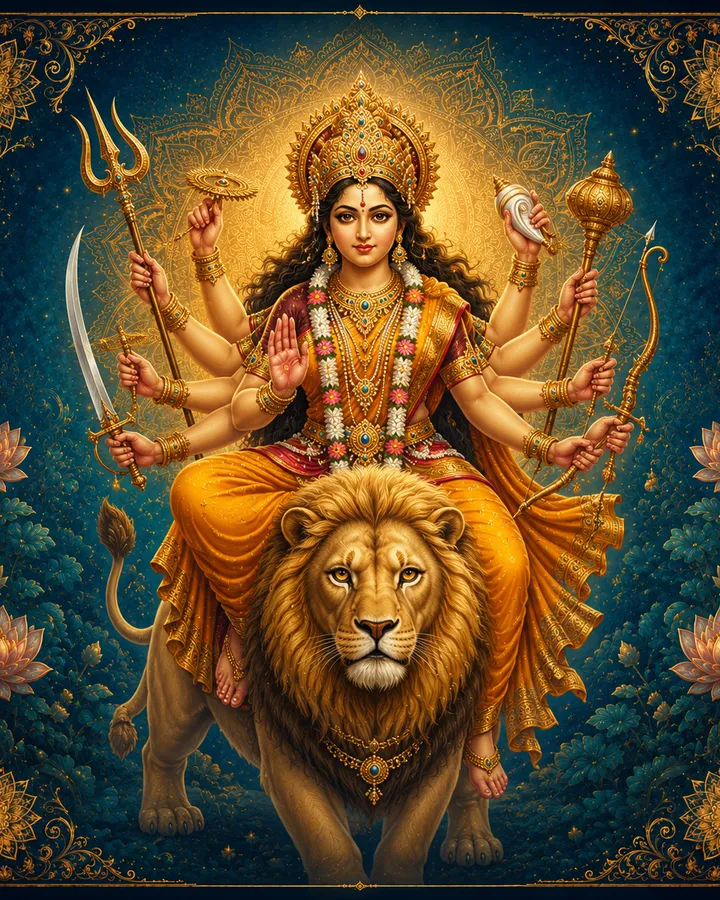
The Devi Bhagavata Purana (book 3) describes four Navratris in the year, one at each turn of season, and calls the Chaitra and Ashwin ones the principal pair — Vasanta (spring) and Sharad (autumn) Navratri. The text and the nine forms are as for Sharad Navratri: the Markandeya Purana’s Devi Mahatmya, read over the nine days or represented by its seven-verse Saptashloki, and the Navadurga of the Devi Kavacham — Shailaputri to Siddhidatri.
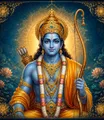
What Chaitra Navratri adds is the ending. The Ramcharitmanas (Bala Kanda) places Rama’s birth at noon on Chaitra Shukla Navami, so the ninth day of the Goddess is also the birthday of Vishnu’s avatar, and in Ayodhya and across the Hindi belt the festival’s last day is Ram Navami rather than a Goddess day. Households that keep both do Kanya Puja on Ashtami and Rama’s puja on Navami.
How the nine days are kept
- Ghatasthapana on the first morning, with the kalash and the barley sown in soil, as in autumn.
- Daily worship of the day’s form of Durga; the Devi Mahatmya or the Saptashloki; the aarti in the evening; the fast for those who keep it.
- Ashtami: Durga Ashtami, with Kanya Puja and, in many homes, the havan.
- Navami: Ram Navami — Rama’s birth at midday, the Ramcharitmanas or the Sundara Kanda read, and the fast broken.
Jaap. A Durga mantra through the nine days, the Durga Chalisa in the evening; on Navami, Rama’s name. The texts are linked below.
Regional forms
- Maharashtra: the first day is Gudi Padwa, with the gudi — a bright cloth, neem leaves and a copper pot raised on a pole outside the house — and the sweet-bitter shrikhand and neem; the Navratri itself is kept at the household shrine.
- Andhra, Telangana, Karnataka: Ugadi on the first day, with Ugadi pachadi, the six-taste chutney, and the reading of the year’s panchanga; the nine days are a temple observance more than a household one.
- North India: the fast and the daily worship; in Vaishno Devi and other Shakti shrines, the spring pilgrimage season peaks in these nine days.
- Sindhi community: Cheti Chand on the first day, the birthday of Jhulelal.
- Kashmir: Navreh, the new year, with the thal of rice, a pen, a coin and the new almanac shown at dawn.
The dates
Each day follows its tithi at sunrise in one’s own city; the first day is the day Pratipada is current in the morning. Because the month before Chaitra can carry an intercalary (adhik) month in some years, the festival’s Gregorian date moves by up to a month between years. The table shows New Delhi and marks any skipped or repeated tithi.
Dates 2027
Dates are for New Delhi (IST), computed from the tithi rule for 1 Sept 2026 to 31 Dec 2027. Rows marked computed have not yet been checked against a published panchang — confirm with a local calendar before planning around them. Dates already past are kept for reference.
| Date | Observance | Tithi at sunrise | Tithi (IST) | Notes |
|---|---|---|---|---|
| Day 1 | Shukla Pratipada, Chaitra | 7 Apr 05:21 → 8 Apr 04:29 | verified | |
| Day 2 | Shukla Dwitiya, Chaitra | 8 Apr 04:29 → 9 Apr 03:11 | computed | |
| Day 3 | Shukla Tritiya, Chaitra | 9 Apr 03:11 → 10 Apr 01:32 | computed | |
| Day 4 | Shukla Chaturthi, Chaitra | 10 Apr 01:32 → 10 Apr 23:40 | computed | |
| Day 5 | Shukla Panchami, Chaitra | 10 Apr 23:40 → 11 Apr 21:40 | computed | |
| Day 6 | Shukla Shashthi, Chaitra | 11 Apr 21:40 → 12 Apr 19:35 | computed | |
| Day 7 | Shukla Saptami, Chaitra | 12 Apr 19:35 → 13 Apr 17:29 | computed | |
| Day 8 | Shukla Ashtami, Chaitra | 13 Apr 17:29 → 14 Apr 15:24 | computed | |
| Day 9 | Shukla Navami, Chaitra | 14 Apr 15:24 → 15 Apr 13:21 | computed |
Mantra, aarti and chalisa for Chaitra Navratri


Frequently asked questions
When is Chaitra Navratri in 2027?
How is Chaitra Navratri different from Sharad Navratri?
Which Navratri is the 'main' one?
Are there really four Navratris?
What do people fast on?
Sourcing
Checked against independent sources before publishing — see our sourcing and editorial policy. Spotted an error? Report an issue .