Overview
Ugadi and Gudi Padwa are one day under two names: Chaitra Shukla Pratipada, the first day of the lunar year, kept as the new year in Andhra Pradesh, Telangana and Karnataka (Ugadi, Yugadi), in Maharashtra and Goa (Gudi Padwa), by the Sindhi community (Cheti Chand) and in Kashmir (Navreh). The same tithi begins Chaitra Navratri and the Vikram Samvat year in the north. Its practices are the new year’s: the house cleaned and decorated, the almanac for the year read aloud, a dish that tastes of every flavour the year will bring, and in Maharashtra the gudi — a bright cloth and a pot on a bamboo pole — raised at the door.
Story and scripture
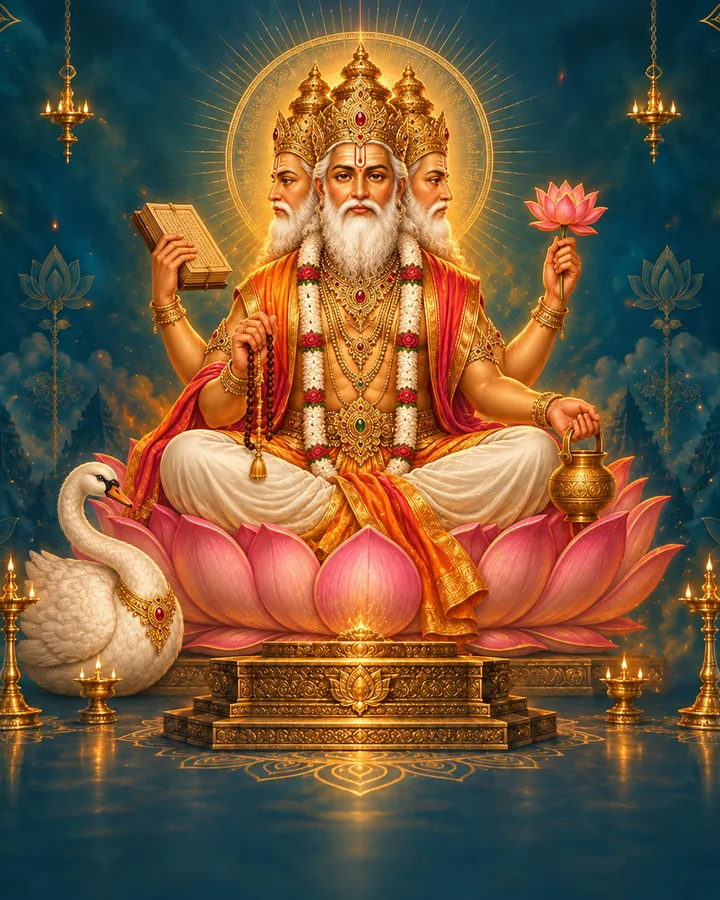
The Brahma Purana holds that Brahma began creation on this day, which is why it is Yugadi, the beginning of the age, and why the day is treated as auspicious without a muhurat — one of the sade teen muhurat. Maharashtra’s gudi has two stories: it is Rama’s victory flag, raised in Ayodhya on his return (the Ramayana places the return on this tithi in the Marathi telling), and it is the standard of Shalivahana, the Satavahana king whose defeat of the Shakas began the Shalivahana Shaka era on this day in 78 CE — the era the Indian national calendar still uses. Telugu tradition adds the Panchanga Sravanam: the reading of the new almanac’s forecast for the year at the temple after the puja, an act older than any story attached to it.
How the day is kept
Before dawn: an oil bath; the house swept and the door hung with mango leaves and, in Maharashtra, a rangoli.
Maharashtra — the gudi. A bamboo pole, a bright silk or cotton cloth tied at the top, a garland of neem leaves and sugar-crystal (gathi), and an upturned copper or silver pot on top, raised outside a window or on the roof before sunrise and worshipped; it stays up till sunset. Shrikhand-puri and the bitter-sweet neem and jaggery paste are the day’s food.
Andhra, Telangana, Karnataka — Ugadi. The Ugadi pachadi (Telugu) or bevu-bella (Kannada, neem and jaggery) eaten first; the puja; the Panchanga Sravanam at the temple; bobbatlu / holige (the sweet flatbread) at the meal; new clothes.
Jaap. Brahma’s — the Brahma Chalisa is linked below — or the family deity’s name. The day’s temple act is the almanac reading, not a count.
Regional forms
- Maharashtra and Goa: Gudi Padwa; the shobha yatras of Girgaon in Mumbai and of Pune and Nashik, with women on motorcycles in the nine-yard sari.
- Andhra and Telangana: Ugadi, with the pachadi and the kavi sammelanam (poets’ gathering) the day holds in Telugu literary life.
- Karnataka: Yugadi, with bevu-bella and holige; the Kannada new year.
- Sindhi community: Cheti Chand, the birthday of Jhulelal, the community’s Varuna deity.
- Kashmir: Navreh; the thal of rice, curd, a pen, a coin, the new almanac and a mirror seen at dawn.
- Manipur: Sajibu Cheiraoba on the same day.
The date
Pratipada at sunrise in one’s own city; a Pratipada that begins just after sunrise moves the day by one in some almanacs, and the table flags such years for New Delhi. Because Phalguna can carry an intercalary month in some years, the Gregorian date moves by up to a month between years.
Dates 2027
Dates are for New Delhi (IST), computed from the tithi rule for 1 Sept 2026 to 31 Dec 2027. Rows marked computed have not yet been checked against a published panchang — confirm with a local calendar before planning around them. Dates already past are kept for reference.
| Date | Observance | Tithi at sunrise | Tithi (IST) | Notes |
|---|---|---|---|---|
| Ugadi and Gudi Padwa | Shukla Pratipada, Chaitra | 7 Apr 05:21 → 8 Apr 04:29 | computed |
Mantra, aarti and chalisa for Ugadi and Gudi Padwa
Frequently asked questions
When is Ugadi and Gudi Padwa in 2027?
Are Ugadi and Gudi Padwa the same day?
Why is the Hindu new year on different days in different states?
What is the Ugadi pachadi?
Which mantra is chanted?
Sourcing
Checked against independent sources before publishing — see our sourcing and editorial policy. Spotted an error? Report an issue .