Overview
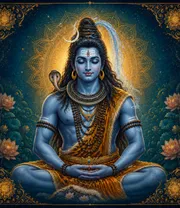
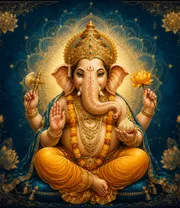
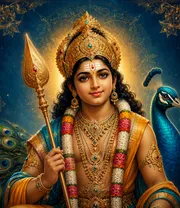
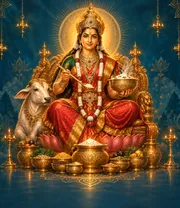
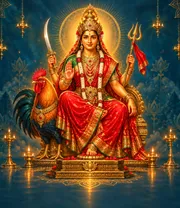
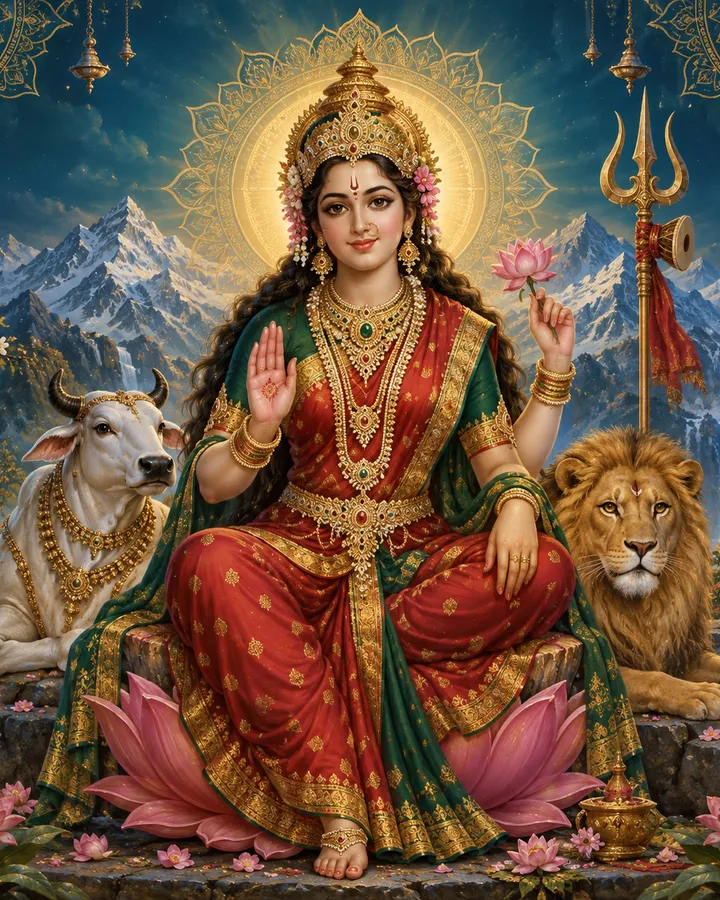
Parvati (पार्वती, Pārvatī) is the consort of Shiva and, in Shakta tradition, the Mahadevi, the Goddess in her fullest form, of whom every other goddess is understood as an aspect. Her name means “daughter of the mountain,” after her father Himavan, the personified Himalayas. She is the mother of Ganesh and Murugan, and one of the Tridevi alongside Lakshmi and Saraswati.
This page covers her family, the austerities that won her Shiva as a husband, her major regional forms, and the festivals — chiefly the various Teej observances and Navaratri — built around her worship.
Family
Parvati’s father is Himavan, personification of the Himalayan mountains, and her mother is named Mena (also given as Menavati). Her consort is Shiva, and she is mother to Ganesha and Kartikeya, known in South India chiefly as Murugan. Some Puranic genealogies name Durga‘s associated river-goddess Ganga as her sister, both daughters of Himavan — though this is not consistent across every text, and this page states it only as a tradition found in some sources rather than a settled fact.
She is understood in Puranic tradition as the reincarnation of Sati, Shiva’s first wife, who is said to have taken her own life at her father Daksha’s yajna after he insulted Shiva. Reborn as Himavan’s daughter, Parvati undertook the austerities described below to win Shiva as her husband a second time.
Mythology
Parvati’s tapasya, the severe austerities she performed to win Shiva’s attention after he had withdrawn into meditation following Sati’s death, is one of the central narratives of Shaiva mythology, told at length in Kalidasa’s classical poem Kumarasambhava. In one well-known episode, the god of desire, Kamadeva, is sent to disturb Shiva’s meditation on her behalf and is incinerated by Shiva’s opened third eye for the attempt — Parvati’s own devotion, rather than any external intervention, is what ultimately succeeds. Their marriage at Kailash follows, and from it come Ganesha and Kartikeya.
Regional forms
Parvati is worshipped across India under a range of regional names, each with its own temple tradition and, often, its own distinct local mythology layered onto the shared identity. Meenakshi, “fish-eyed,” is worshipped at the Meenakshi Amman Temple in Madurai, Tamil Nadu, alongside her consort Sundareswarar. Kamakshi is worshipped at Kanchipuram. Kamakhya, in Assam, is understood within the wider Shakti Peetha tradition as a related but distinct form, discussed at greater length on her own page. Annapurna, the food-giving aspect worshipped principally at Varanasi, is a further regional form, covered separately on this site.
Worship and festivals
Navaratri, the nine nights honoring the Goddess in her various forms, is Parvati’s broadest festival, culminating in Vijayadashami. Hartalika Teej commemorates her austerities to win Shiva and is observed mainly in North India by married and unmarried women together. Hariyali Teej and Kajari Teej, monsoon-season observances, welcome the rains and pray for marital wellbeing. Gangaur, observed in Chaitra month primarily in Rajasthan, honors Gauri alongside Shiva for the same purpose. Gauri Habba, also called Swarna Gowri Vratha, is observed the day before Ganesh Chaturthi in Karnataka, Andhra Pradesh, and Tamil Nadu, honoring Gowri specifically as Ganesha’s mother.
In scripture
- Devi-Bhagavata Purana — a principal Shakta text treating her as the supreme Devi.
- Devi Mahatmya (Markandeya Purana) — situates her within the wider tradition of the Goddess’s forms.
- Kalika Purana — Shakta material connecting her to the Shakti Peetha tradition described on Kamakhya’s page.
Parentage
 Child Parvati
Iconography at a glance
Major temples
Meenakshi Amman Temple
Madurai, Tamil Nadu, India
Dedicated to Meenakshi, a regional form of Parvati, together with her consort Sundareswarar (Shiva); one of India's largest and most architecturally significant temple complexes.
Open in Maps ↗Kamakhya Temple
Nilachal Hill, Guwahati, Assam, India
A major Shakti Peetha central to Shakta Tantra, discussed at greater length on the Kamakhya page.
Open in Maps ↗Map loads when scrolled into view.
Worth knowing
- Parvati is described in Puranic tradition as the reincarnation of Sati, Shiva's first consort, who died at her father Daksha's yajna.
- Her name means "daughter of the mountain" — her father, Himavan, is the personification of the Himalayas.
- She won Shiva as her husband through prolonged austerities (tapasya), a story told at length in Kalidasa's Kumarasambhava.
- Meenakshi at Madurai and Kamakshi at Kanchipuram are two of her most widely worshipped regional forms, each anchoring a major temple tradition of its own.
- She is one of the Tridevi, alongside Lakshmi and Saraswati.