Overview
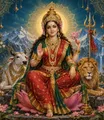
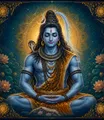
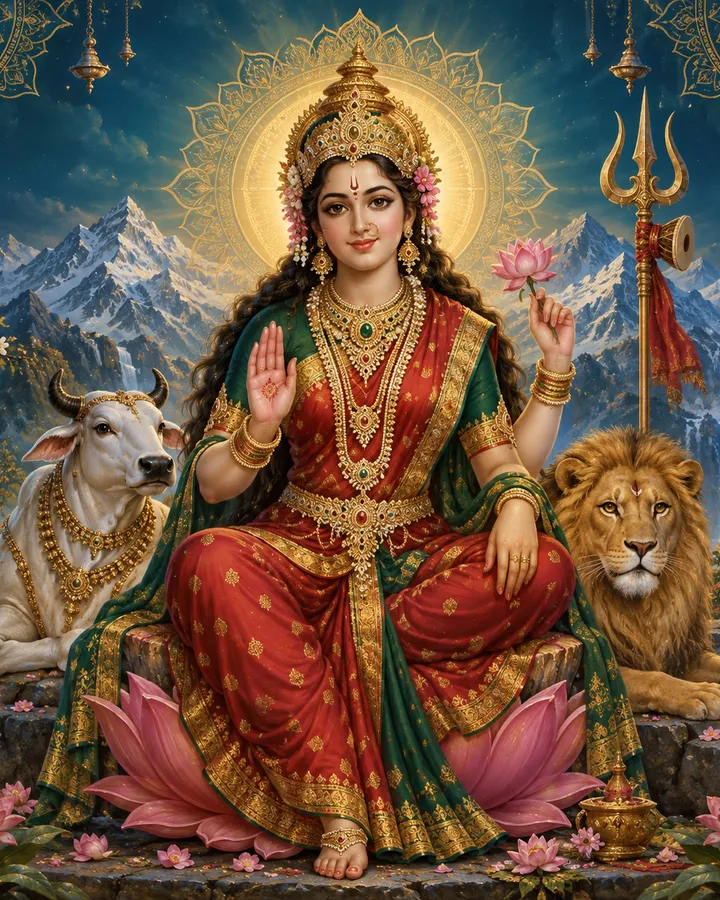
Hartalika Teej is Bhadrapada Shukla Tritiya, the day before Ganesh Chaturthi, and the strictest of the year’s three Teejs: a fast without food or water kept by married women — and by unmarried girls hoping to marry well — for Parvati, who won Shiva by her own penance. Women make small clay images of Shiva and Parvati, worship them through the night with the vrata story, and break the fast the next morning. In Maharashtra it opens the Ganesh days; in Bihar and eastern UP it is one of the year’s largest women’s observances. See the Parvati page.
Story and scripture
The Shiva Purana’s Parvati Khanda tells the tapas: Parvati, daughter of Himavat, resolves to marry Shiva and does penance for years in the forest — without food, then without leaves (aparna) — until he comes to test her disguised as a brahmin and, failing to shake her, accepts her. The Hartalika story, from the vrata katha tradition, adds the abduction that gives the day its name: Himavat, advised by Narada, has promised her to Vishnu; her friend carries her off to a cave to spare her the marriage, and it is there, on Bhadrapada Shukla Tritiya, that she makes a linga of sand and worships it through the night, and Shiva appears. Kalidasa’s Kumarasambhava, fifth canto, is the classical telling of the penance.
How the day is kept
The eve: a full meal (sargi) before the fast begins at night; mehndi; new clothes and bangles, green in Bihar and UP.
The day: no food or water. In the afternoon or evening women gather, make images of Shiva, Parvati and Ganesh from clay or sand — or use a picture — and set them under a small canopy of flowers; the puja follows the sixteen offerings, with the shringar items (bangles, sindoor, comb, mirror) given to Parvati; the katha is read; the group keeps a vigil through the night with songs, and worships the images again at each watch in the older form.
The morning: the images are immersed, and the fast is broken with the prasad.
Jaap. Parvati’s and Shiva’s names; the Parvati Chalisa is read at the gathering in Hindi-speaking homes. Linked below.
Regional forms
- Bihar, Jharkhand, eastern UP: the largest observance — Teej without qualification means this day; the nirjala fast and the night vigil are kept strictly.
- Maharashtra: Hartalika, the day before Ganesh Chaturthi; the sand images; the fast broken the next morning as the Ganesh image is brought home.
- Rajasthan and Haryana: the monsoon Teej of the swings and the ghewar sweet is Hariyali Teej in Shravana; Hartalika is kept in Rajasthan too, more quietly.
- Chhattisgarh: Teeja, with married daughters brought home to their parents’ house for the fast.
- Nepal: Teej is a three-day festival for women ending on the same Tritiya, with dancing in red on the first day and the nirjala fast on the second.
The date
Tritiya at sunrise in one’s own city. The vrata books prefer a Tritiya not overlapped by Dwitiya at sunrise; when Tritiya begins after sunrise on one day and is still current the next morning, calendars differ, and the table flags such years for New Delhi.
Dates 2026 and 2027
Dates are for New Delhi (IST), computed from the tithi rule for 1 Sept 2026 to 31 Dec 2027. Rows marked computed have not yet been checked against a published panchang — confirm with a local calendar before planning around them. Dates already past are kept for reference.
| Date | Observance | Tithi at sunrise | Tithi (IST) | Notes |
|---|---|---|---|---|
| Hartalika Teej | Shukla Tritiya, Bhadrapada | 13 Sept 07:09 → 14 Sept 07:08 | computed | |
| Hartalika Teej | Shukla Tritiya, Bhadrapada | 2 Sept 16:51 → 3 Sept 14:20 | computed |
Mantra, aarti and chalisa for Hartalika Teej
Frequently asked questions
When is Hartalika Teej in 2026?
When is Hartalika Teej in 2027?
What are the three Teejs?
Why 'Hartalika'?
Is the fast really without water?
What is the connection with Ganesh Chaturthi?
Sourcing
Checked against independent sources before publishing — see our sourcing and editorial policy. Spotted an error? Report an issue .