The text
Tap Recite along to follow verse by verse — use Next, or the arrow keys.
- Opening doha
- Doha (opening)
जय जय श्री महालक्ष्मी, करूँ मात तव ध्यान।सिद्ध काज मम किजिये, निज शिशु सेवक जान॥
jaya jaya śrī mahālakṣmī, karūṃ māta tava dhyāna।siddha kāja mama kijiye, nija śiśu sevaka jāna॥
Victory, victory to Shri Mahalakshmi — I meditate on you, Mother. Accomplish my task; know me as your own child and servant.
- The 40 chaupais
- Chaupai 1
नमो महा लक्ष्मी जय माता।तेरो नाम जगत विख्याता॥
namo mahā lakṣmī jaya mātā।tero nāma jagata vikhyātā॥
Salutation to Maha Lakshmi, victory to the Mother — your name is renowned throughout the world.
- Chaupai 2
आदि शक्ति हो मात भवानी।पूजत सब नर मुनि ज्ञानी॥
ādi śakti ho māta bhavānī।pūjata saba nara muni jñānī॥
You are the primal power, Mother Bhavani — all wise men and sages worship you.
- Chaupai 3
जगत पालिनी सब सुख करनी।निज जनहित भण्डारण भरनी॥
jagata pālinī saba sukha karanī।nija janahita bhaṇḍāraṇa bharanī॥
Sustainer of the world, source of every happiness — you keep the storehouse full for your own people's welfare.
- Chaupai 4
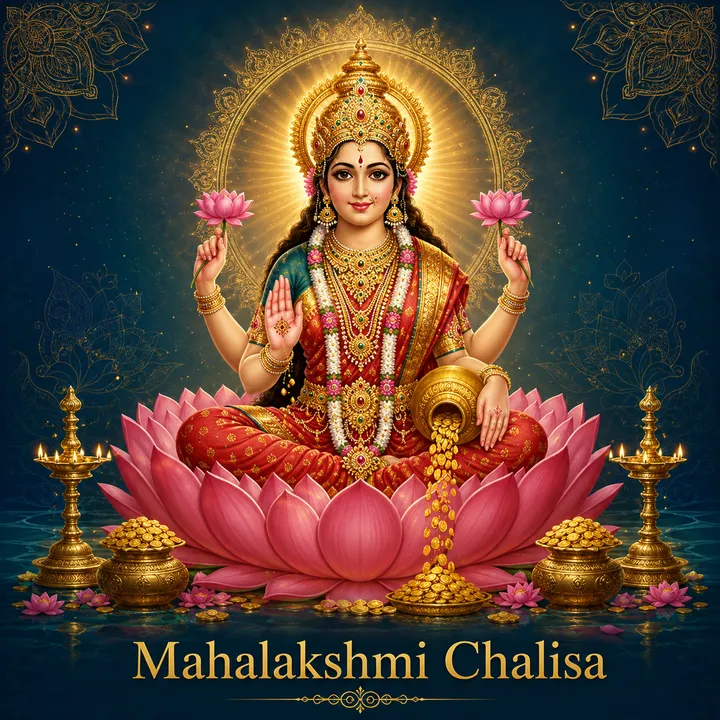
श्वेत कमल दल पर तव आसन।मात सुशोभित है पद्मासन॥
śveta kamala dala para tava āsana।māta suśobhita hai padmāsana॥
Your seat is a white lotus petal; Mother, you sit beautifully enthroned in padmasana.
- Chaupai 5
श्वेताम्बर अरू श्वेता भूषण।श्वेतही श्वेत सुसज्जित पुष्पन॥
śvetāmbara arū śvetā bhūṣaṇa।śvetahī śveta susajjita puṣpana॥
Clothed in white and adorned in white ornaments, dressed all in white, with white flowers arrayed.
- Chaupai 6
शीश छत्र अति रूप विशाला।गल सोहे मुक्तन की माला॥
śīśa chatra ati rūpa viśālā।gala sohe muktana kī mālā॥
A great canopy of splendid form rises above your head; a garland of pearls graces your neck.
- Chaupai 7
सुंदर सोहे कुंचित केशा।विमल नयन अरु अनुपम भेषा॥
sundara sohe kuñcita keśā।vimala nayana aru anupama bheṣā॥
Beautiful, lovely curling hair; pure eyes, and a form beyond compare.
- Chaupai 8
कमलनाल समभुज तवचारि।सुरनर मुनिजनहित सुखकारी॥
kamalanāla samabhuja tava cāri।suranara munijanahita sukhakārī॥
Your four arms are like lotus stalks; you bring happiness to gods, men, and sages.
- Chaupai 9
अद्भूत छटा मात तव बानी।सकलविश्व कीन्हो सुखखानी॥
adbhūta chaṭā māta tava bānī।sakala viśva kīnho sukha khānī॥
Wondrous is the splendor of your voice, Mother — you have made the whole world a treasury of joy.
- Chaupai 10
शांतिस्वभाव मृदुलतव भवानी।सकल विश्वकी हो सुखखानी॥
śāntisvabhāva mṛdulatava bhavānī।sakala viśvakī ho sukhakhānī॥
Of peaceful nature and gentle disposition, O Bhavani — you are the treasury of joy for the whole world.
- Chaupai 11
महालक्ष्मी धन्य हो माई।पंच तत्व में सृष्टि रचाई॥
mahālakṣmī dhanya ho māī।pañca tatva meṃ sṛṣṭi racāī॥
Blessed are you, Mahalakshmi, Mother — you fashioned creation out of the five elements.
- Chaupai 12
जीव चराचर तुम उपजाए।पशु पक्षी नर नारी बनाए॥
jīva carācara tuma upajāe।paśu pakṣī nara nārī banāe॥
You brought forth every moving and unmoving being; you made the animals, birds, men, and women.
- Chaupai 13
क्षितितल अगणित वृक्ष जमाए।अमितरंग फल फूल सुहाए॥
kṣititala agaṇita vṛkṣa jamāe।amitaraṅga phala phūla suhāe॥
You planted countless trees across the earth's surface, with fruits and flowers of boundless, lovely color.
- Chaupai 14
छवि विलोक सुरमुनि नरनारी।करे सदा तव जय-जय कारी॥
chavi viloka suramuni naranārī।kare sadā tava jaya-jaya kārī॥
Beholding your beauty, gods, sages, men, and women ever proclaim your victory.
- Chaupai 15
सुरपति औ नरपत सब ध्यावैं।तेरे सम्मुख शीश नवावैं॥
surapati au narapata saba dhyāvaiṃ।tere sammukha śīśa navāvaiṃ॥
Indra and all kings meditate upon you; they bow their heads before you.
- Chaupai 16
चारहु वेदन तब यश गाया।महिमा अगम पार नहिं पाये॥
cāharu vedana taba yaśa gāyā।mahimā agama pāra nahiṃ pāye॥
All four Vedas have sung your glory; your greatness is unfathomable, its limit never found.
- Chaupai 17
जापर करहु मातु तुम दाया।सोइ जग में धन्य कहाया॥
jāpara karahu mātu tuma dāyā।soi jaga meṃ dhanya kahāyā॥
Whoever you show mercy to, Mother, is called blessed in this world.
- Chaupai 18
पल में राजाहि रंक बनाओ।रंक राव कर बिमल न लाओ॥
pala meṃ rājāhi raṅka banāo।raṅka rāva kara bimala na lāo॥
In an instant you turn a king into a pauper, and a pauper into a king — without blemish to yourself.
- Chaupai 19
जिन घर करहु माततुम बासा।उनका यश हो विश्व प्रकाशा॥
jina ghara karahu māta tuma bāsā।unakā yaśa ho viśva prakāśā॥
The house where you, Mother, take up residence — its fame shines throughout the world.
- Chaupai 20
जो ध्यावै से बहु सुख पावै।विमुख रहे हो दुख उठावै॥
jo dhyāvai se bahu sukha pāvai।vimukha rahe ho dukha uṭhāvai॥
Whoever meditates on you obtains great happiness; whoever turns away bears sorrow.
- Chaupai 21
महालक्ष्मी जन सुख दाई।ध्याऊं तुमको शीश नवाई॥
mahālakṣmī jana sukha dāī।dhyāūṃ tumako śīśa navāī॥
Mahalakshmi, giver of happiness to your devotees — I meditate on you, bowing my head.
- Chaupai 22
निज जन जानीमोहीं अपनाओ।सुखसम्पति दे दुख नसाओ॥
nija jana jāni mohiṃ apanāo।sukha sampati de dukha nasāo॥
Knowing me as your own, accept me; give happiness and prosperity, and destroy my sorrow.
- Chaupai 23
ॐ श्री-श्री जयसुखकी खानी।रिद्धिसिद्ध देउ मात जनजानी॥
oṃ śrī-śrī jaya sukha kī khānī।riddhi siddha deu māta janajānī॥
Om Shri-Shri, treasury of victorious joy — knowing me as your devotee, grant riddhi and siddhi, Mother.
- Chaupai 24
ॐ ह्रीं-ॐ ह्रीं सब व्याधिहटाओ।जनउन विमल दृष्टिदर्शाओ॥
oṃ hrīṃ-oṃ hrīṃ saba vyādhi haṭāo।janauna vimala dṛṣṭi darśāo॥
Om Hrim, Om Hrim — remove every affliction; show your devotees your pure, gracious sight.
- Chaupai 25
ॐ क्लीं-ॐ क्लीं शत्रुन क्षयकीजै।जनहित मात अभय वरदीजै॥
oṃ klīṃ-oṃ klīṃ śatruna kṣaya kījai।janahita māta abhaya vara dījai॥
Om Klim, Om Klim — bring about the destruction of enemies; for your devotees' sake, Mother, grant fearlessness.
- Chaupai 26
ॐ जयजयति जयजननी।सकल काज भक्तन के सरनी॥
oṃ jayajayati jayajananī।sakala kāja bhaktana ke saranī॥
Om, victory, victory to the Mother of the world — you are the refuge for all your devotees' endeavors.
- Chaupai 27
ॐ नमो-नमो भवनिधि तारनी।तरणि भंवर से पार उतारनी॥
oṃ namo-namo bhavanidhi tāranī।taraṇi bhaṃvara se pāra utāranī॥
Om, salutation, salutation, deliverer across the ocean of existence — you who ferry souls across the whirlpool to the farther shore.
- Chaupai 28
सुनहु मात यह विनय हमारी।पुरवहु आशन करहु अबारी॥
sunahu māta yaha vinaya hamārī।puravahu āśana karahu abārī॥
Hear, Mother, this prayer of mine; fulfill my hope, and do it without delay.
- Chaupai 29
ऋणी दुखी जो तुमको ध्यावै।सो प्राणी सुख सम्पत्ति पावै॥
ṛṇī dukhī jo tumako dhyāvai।so prāṇī sukha sampatti pāvai॥
The debtor and the sorrowful who meditate on you obtain happiness and prosperity.
- Chaupai 30
रोग ग्रसित जो ध्यावै कोई।ताकी निर्मल काया होई॥
roga grasita jo dhyāvai koī।tākī nirmala kāyā hoī॥
Whoever afflicted by illness meditates on you — their body becomes whole again.
- Chaupai 31
विष्णु प्रिया जय-जय महारानी।महिमा अमित न जाय बखानी॥
viṣṇu priyā jaya-jaya mahārānī।mahimā amita na jāya bakhānī॥
Beloved of Vishnu, victory, victory to the great queen — your glory is boundless, beyond description.
- Chaupai 32
पुत्रहीन जो ध्यान लगावै।पाये सुत अतिहि हुलसावै॥
putrahīna jo dhyāna lagāvai।pāye suta atihi hulasāvai॥
The childless one who fixes their meditation on you obtains a son, and rejoices greatly.
- Chaupai 33
त्राहि त्राहि शरणागत तेरी।करहु मात अब नेक न देरी॥
trāhi trāhi śaraṇāgata terī।karahu māta aba neka na derī॥
Save me, save me — I have taken refuge in you; do not delay even a little now, Mother.
- Chaupai 34
आवहु मात विलम्ब न कीजै।हृदय निवास भक्त बर दीजै॥
āvahu māta vilamba na kījai।hṛdaya nivāsa bhakta bara dījai॥
Come, Mother, without delay; grant your devotee the boon of dwelling in their heart.
- Chaupai 35
जानूं जप तप का नहिं भेवा।पार करो भवनिध वन खेवा॥
jānūṃ japa tapa kā nahiṃ bhevā।pāra karo bhavanidha vana khevā॥
I know nothing of the secret of japa and tapa; ferry me across this ocean of worldly existence.
- Chaupai 36
बिनवों बार-बार कर जोरी।पूरण आशा करहु अब मोरी॥
binavoṃ bāra-bāra kara jorī।pūraṇa āśā karahu aba morī॥
Again and again I entreat you with folded hands; fulfill my hope now.
- Chaupai 37
जानि दास मम संकट टारौ।सकल व्याधि से मोहिं उबारौ॥
jāni dāsa mama saṅkaṭa ṭārau।sakala vyādhi se mohiṃ ubārau॥
Knowing me as your servant, remove my troubles; save me from every affliction.
- Chaupai 38
जो तव सुरति रहै लव लाई।सो जग पावै सुयश बड़ाई॥
jo tava surati rahai lava lāī।so jaga pāvai suyaśa baḍāī॥
Whoever keeps you in remembrance even for a moment obtains good fame and glory in the world.
- Chaupai 39
छायो यश तेरा संसारा।पावत शेष शम्भु नहिं पारा॥
chāyo yaśa terā saṃsārā।pāvata śeṣa śambhu nahiṃ pārā॥
Your fame has spread across the world; even Shesha and Shambhu cannot find its limit.
- Chaupai 40
गोविंद निशदिन शरण तिहारी।करहु पूरण अभिलाष हमारी॥
govinda niśadina śaraṇa tihārī।karahu pūraṇa abhilāṣa hamārī॥
Govind, day and night, takes refuge in you — fulfill my heart's desire.
- Closing doha
- Doha (closing)
महालक्ष्मी चालीसा, पढ़ै सुनै चित लाय।ताहि पदारथ मिलै, अब कहै वेद अस गाय॥
mahālakṣmī cālīsā, paḍhai sunai cita lāya।tāhi padāratha milai, aba kahai veda asa gāya॥
Whoever reads or hears this Mahalakshmi Chalisa with a focused mind obtains that treasure — so the Veda itself declares.
Overview
The Mahalakshmi Chalisa is a Hindi devotional composition of forty chaupai verses, framed by an opening and closing doha, addressed to Mahalakshmi — “the great Lakshmi.” It is a distinct composition from the site’s existing Lakshmi Chalisa: the two open with different dohas, follow different verse sequences, and dwell on different material. Where the Lakshmi Chalisa is built around a narrative — Lakshmi emerging from the churning of the ocean of milk and following Vishnu through his incarnations — this Chalisa spends its verses on Mahalakshmi’s iconography (a white lotus seat, white garments, four lotus-stalk arms) and her role as the one who “fashioned creation out of the five elements,” before turning, in its middle verses, to a set of bija-syllable salutations — Om Shreem, Om Hreem, Om Kleem — addressed to her directly. A Hindi-language editorial note on one of the sources consulted for this page makes the same point explicitly: “माता लक्ष्मी और महालक्ष्मी दोनों की चालीसा अलग अलग है” (“the chalisas for Mata Lakshmi and Mahalakshmi are separate from each other”).
Origin and source
This page’s Devanagari text follows a version that recurs, word for word, across a wide cluster of Hindi devotional-lyrics sites — Drikpanchang.com, BhaktiBharat.com, DivineAarti.com, SampurnChalisa.com, SriMandir.com, and the Hindi news portal Webdunia (hindi.webdunia.com) all carry this exact wording, down to shared idiosyncrasies of spacing (for example, “कमलनाल समभुज तवचारि” and “जानीमोहीं” run together identically everywhere). That level of agreement, including on unusual spacing, points to one dominant text circulating from a shared source rather than to six separate transcriptions — it is treated here as a single lineage, not independent confirmation on its own.
A separate transcription on HinduNidhi.com, however, diverges from that cluster in real wording at several points — “कमल नयन” where the cluster has “कमलनाल” in the verse on Mahalakshmi’s arms, and “कमल निशदिन शरण तिहारि” where the cluster’s closing verses have “गोविंद निशदिन शरण तिहारी” — while still matching the cluster’s opening doha, closing doha, overall verse order, and full count of forty chaupai. That combination — same composition and structure, independently varying wording — is what this page treats as genuine independent-lineage confirmation that this is a real, stable circulating text, distinct from both the Lakshmi Chalisa and from any single site’s copy of it. This page reproduces the dominant cluster’s reading as one coherent version, rather than splicing in HinduNidhi’s variant wording.
No source consulted attributes this Chalisa to a named author. Unlike the Lakshmi Chalisa, whose closing doha names “Ramdas” as its composer, this Chalisa’s closing doha credits its promised benefit to the Vedas’ own declaration rather than naming a poet, and authorship is not otherwise established in the sources checked.
How it is recited
The Mahalakshmi Chalisa is recited by many devotees on Friday, the day widely associated with Lakshmi worship in North Indian practice, often before a lit diya in front of her image. It is especially prominent during Diwali and during Mahalakshmi vrat observances, when it is read alongside other Lakshmi-focused prayers as part of household worship seeking her grace for the year ahead.
Frequently asked questions
How many verses does Mahalakshmi Chalisa have?
Who is Mahalakshmi Chalisa dedicated to?
When is Mahalakshmi Chalisa typically recited?
What language is Mahalakshmi Chalisa composed in?
What tradition is Mahalakshmi Chalisa associated with?
Is an English translation of Mahalakshmi Chalisa available?
Is there a Roman transliteration of Mahalakshmi Chalisa?
Sourcing
Checked against independent sources before publishing — see our sourcing and editorial policy. Spotted an error? Report an issue .