Overview
Sharad Purnima is the full moon of Ashwin, the first of autumn — Kojagari Purnima in the east, where it is the night of Lakshmi’s puja and vigil; Raas Purnima in Braj, where the Bhagavata places Krishna’s dance with the gopis; Kaumudi Purnima in the old texts, the moonlight festival. It is kept with a night vigil under the moon and with kheer left out in the moonlight to be eaten at dawn. Five days after Dussehra and twenty before Diwali, it is the full moon that the year’s Lakshmi season turns on.
Story and scripture
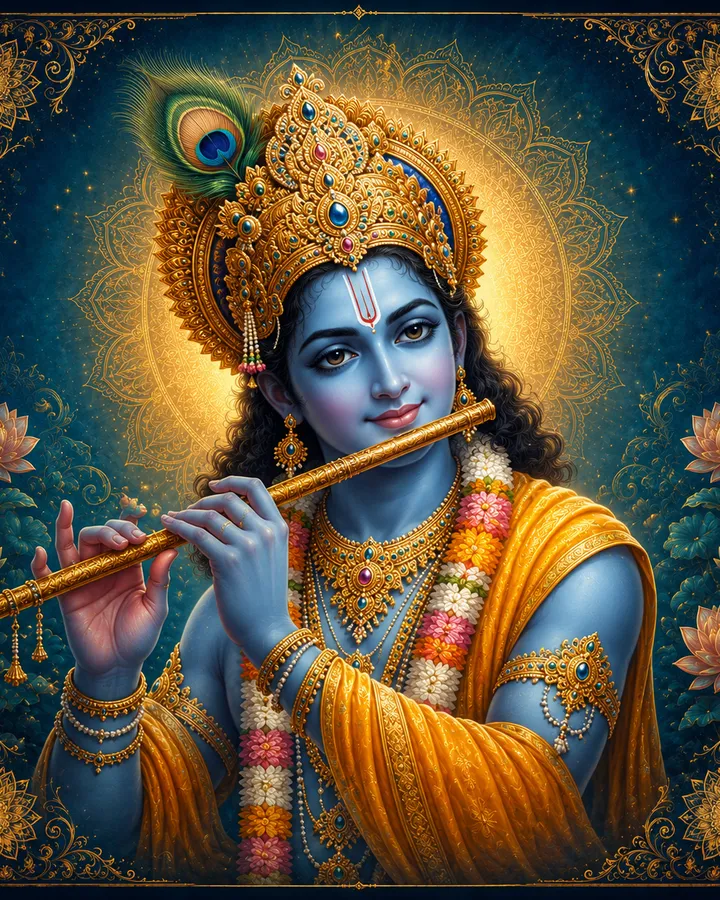
The Raas Lila. The Bhagavata Purana’s tenth canto (29–33) opens the Raas with the autumn full moon: Krishna’s flute calls the gopis from their homes, and the dance in the circle, with Krishna between each pair, lasts the length of a night of Brahma. Vrindavan performs the Raas Lila on this night every year. See the Radha and Krishna pages.
Kojagara. The Skanda and Linga Puranas and the Nirnaya Sindhu describe the Kojagara vrata: Lakshmi goes about on this night asking ko jagarti — who is awake? — and blesses the household that is; the observance is a night vigil with Lakshmi’s puja, dice or other games kept up till morning, and the moon watched. Bengal, Odisha, Assam and Mithila keep it as their Lakshmi Puja.
The moon’s amrita. The belief that the full moon of Sharad pours amrita in its rays, and the custom of the kheer under the moon, are in the household tradition rather than a particular text; Ayurvedic writers connect the night with the end of the monsoon’s pitta season.
How the night is kept
Evening: the Lakshmi puja in the east — the image or a painted alpana of her feet at the door, rice, coconut, sweets, the Kojagari katha read; elsewhere, a lamp and the moon’s arghya.
The vigil: the family stays awake, on the roof or in the courtyard; kheer in a wide vessel is set out under the moon and covered with a thin cloth; in Bengal, cards and games; in Braj, the Raas Lila at the temples.
Morning: the kheer eaten as prasad, the fast (where kept) broken.
Jaap. Lakshmi’s name in the east; the Hare Krishna mahamantra in Braj; the Lakshmi page links the texts.
Regional forms
- West Bengal, Assam, Tripura, Odisha: Kojagari Lakshmi Puja, the household Lakshmi puja of the year, with the alpana and the dhaan (paddy) offerings; in Odisha, Kumar Purnima, kept by unmarried girls for Kartikeya as well.
- Mithila (Bihar): Kojagara, with the newly married groom given betel and makhana by the bride’s family.
- Braj: Raas Purnima at Vrindavan’s temples, and the Raas Lila performances.
- Maharashtra: Kojagiri Purnima; the eldest child of the house honoured; masala milk drunk under the moon.
- Gujarat: Sharad Punam, the last night of the garba season, danced under the full moon.
- Punjab and the north: the kheer under the moon; a fast for the moon by married women in some families.
The date
The night on which Purnima is current at nishita (around local midnight) in one’s own city; the table gives New Delhi. Calendars that use the sunrise tithi may give the next morning’s date for the same night.
Dates 2026 and 2027
Dates are for New Delhi (IST), computed from the tithi rule for 1 Sept 2026 to 31 Dec 2027. Rows marked computed have not yet been checked against a published panchang — confirm with a local calendar before planning around them. Dates already past are kept for reference.
| Date | Observance | Tithi at sunrise | Tithi (IST) | Notes |
|---|---|---|---|---|
| Sharad Purnima (Kojagari) | Shukla Chaturdashi, Ashwin | 25 Oct 11:57 → 26 Oct 09:42 | computed | |
| Sharad Purnima (Kojagari) | Shukla Chaturdashi, Ashwin | 14 Oct 18:50 → 15 Oct 19:17 | computed |
Frequently asked questions
When is Sharad Purnima (Kojagari) in 2026?
When is Sharad Purnima (Kojagari) in 2027?
Why is kheer left out under the moon?
What is Kojagari?
What is the connection with Krishna?
Which mantra is chanted?
Sourcing
Checked against independent sources before publishing — see our sourcing and editorial policy. Spotted an error? Report an issue .