The text
Tap Recite along to follow verse by verse — use Next, or the arrow keys.
- Opening doha
- Doha (opening)
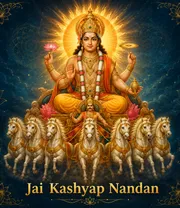
कनक बदन कुण्डल मकर, मुक्ता माला अङ्ग।पद्मासन स्थित ध्याइए, शंख चक्र के सङ्ग॥
kanaka badana kuṇḍala makara, muktā mālā aṅga।padmāsana sthita dhyāie, śaṅkha cakra ke saṅga॥
Golden of face, wearing makara-shaped earrings, a garland of pearls upon his body — meditate on him seated in the lotus posture, with the conch and discus at his side.
- The 40 chaupais
- Chaupai 1
जय सविता जय जयति दिवाकर, सहस्रांशु सप्ताश्व तिमिरहर॥
jaya savitā jaya jayati divākara, sahasrāṃśu saptāśva timirahara॥
Victory to Savitr, victory, all victory to Divakara (maker of the day) — the thousand-rayed one, drawn by seven horses, remover of darkness.
- Chaupai 2
भानु पतंग मरीची भास्कर, सविता हंस सुनूर विभाकर॥
bhānu pataṃga marīcī bhāskara, savitā haṃsa sunūra vibhākara॥
Bhanu, Patanga (the sky-goer), Marichi, Bhaskara; Savita, Hansa, of lovely radiance, Vibhakara (the illuminator).
- Chaupai 3
विवस्वान आदित्य विकर्तन, मार्तण्ड हरिरूप विरोचन॥
vivasvāna āditya vikartana, mārtaṇḍa harirūpa virocana॥
Vivasvan, Aditya, Vikartana (cutter of darkness); Martanda, of the form of Hari, Virochana, the shining one.
- Chaupai 4
अम्बरमणि खग रवि कहलाते, वेद हिरण्यगर्भ कह गाते॥
ambaramaṇi khaga ravi kahalāte, veda hiraṇyagarbha kaha gāte॥
He is called the jewel of the sky, Khaga, Ravi; the Vedas sing of him as Hiranyagarbha.
- Chaupai 5
सहस्रांशु प्रद्योतन, कहिकहि, मुनिगन होत प्रसन्न मोदलहि॥
sahasrāṃśu pradyotana, kahikahi, munigana hota prasanna modalahi॥
Repeating 'thousand-rayed, radiant one' again and again, the sages become joyful and delighted.
- Chaupai 6
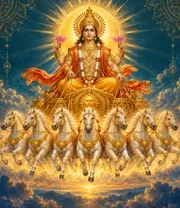
अरुण सदृश सारथी मनोहर, हांकत हय साता चढ़ि रथ पर॥
aruṇa sadṛśa sārathī manohara, hāṃkata haya sātā caḍhi ratha para॥
Aruna, his charming charioteer, drives the seven horses as he rides upon his chariot.
- Chaupai 7
मंडल की महिमा अति न्यारी, तेज रूप केरी बलिहारी॥
maṃḍala kī mahimā ati nyārī, teja rūpa kerī balihārī॥
The glory of his orb is wondrous beyond compare; I offer myself to his radiant form.
- Chaupai 8
उच्चैःश्रवा सदृश हय जोते, देखि पुरन्दर लज्जित होते॥
uccaiḥśravā sadṛśa haya jote, dekhi purandara lajjita hote॥
His horses are yoked like Uchchaihshrava, Indra's own steed; seeing them, Purandara (Indra) himself feels outshone.
- Chaupai 9
मित्र मरीचि, भानु, अरुण, भास्कर, सविता सूर्य अर्क खग कलिकर॥
mitra marīci, bhānu, aruṇa, bhāskara, savitā sūrya arka khaga kalikara॥
Mitra, Marichi, Bhanu, Aruna, Bhaskara; Savita, Surya, Arka, Khaga, Kalikara —
- Chaupai 10
पूषा रवि आदित्य नाम लै, हिरण्यगर्भाय नमः कहिकै॥
pūṣā ravi āditya nāma lai, hiraṇyagarbhāya namaḥ kahikai॥
— taking also the names Pusha, Ravi, and Aditya, and saying 'salutation to Hiranyagarbha.'
- Chaupai 11
द्वादस नाम प्रेम सों गावैं, मस्तक बारह बार नवावैं॥
dvādasa nāma prema sõ gāvaĩ, mastaka bāraha bāra navāvaĩ॥
Whoever sings these twelve names with love, bowing the head twelve times,
- Chaupai 12
चार पदारथ जन सो पावै, दुःख दारिद्र अघ पुंज नसावै॥
cāra padāratha jana so pāvai, duḥkha dāridra agha puṃja nasāvai॥
— that devotee obtains the four fruits of life, and their sorrow, poverty, and heap of sins are destroyed.
- Chaupai 13
नमस्कार को चमत्कार यह, विधि हरिहर को कृपासार यह॥
namaskāra ko camatkāra yaha, vidhi harihara ko kṛpāsāra yaha॥
Such is the wonder of this salutation — it carries the very essence of the grace of Brahma, Vishnu, and Shiva.
- Chaupai 14
सेवै भानु तुमहिं मन लाई, अष्टसिद्धि नवनिधि तेहिं पाई॥
sevai bhānu tumahiṃ mana lāī, aṣṭasiddhi navanidhi tehiṃ pāī॥
Whoever serves you, O Bhanu, with a devoted mind, obtains the eight siddhis and the nine treasures.
- Chaupai 15
बारह नाम उच्चारन करते, सहस जनम के पातक टरते॥
bāraha nāma uccārana karate, sahasa janama ke pātaka ṭarate॥
By reciting these twelve names, the sins of a thousand lifetimes are turned away.
- Chaupai 16
उपाख्यान जो करते तवजन, रिपु सों जमलहते सोतेहि छन॥
upākhyāna jo karate tavajana, ripu sõ jamalahate sotehi chana॥
Your devotees who recount this story gain the upper hand over their foes in that very moment.
- Chaupai 17
धन सुत जुत परिवार बढ़तु है, प्रबल मोह को फंद कटतु है॥
dhana suta juta parivāra baḍhatu hai, prabala moha ko phaṃda kaṭatu hai॥
Their wealth, children, and family increase; the snare of powerful delusion is cut away.
- Chaupai 18
अर्क शीश को रक्षा करते, रवि ललाट पर नित्य बिहरते॥
arka śīśa ko rakṣā karate, ravi lalāṭa para nitya biharate॥
Arka protects the head; Ravi ever dwells upon the forehead.
- Chaupai 19
सूर्य नेत्र पर नित्य विराजत, कर्ण देस पर दिनकर छाजत॥
sūrya netra para nitya virājata, karṇa desa para dinakara chājata॥
Surya is ever enthroned upon the eyes; Dinakar covers over the region of the ears.
- Chaupai 20
भानु नासिका वासकरहुनित, भास्कर करत सदा मुखको हित॥
bhānu nāsikā vāsakarahunita, bhāskara karata sadā mukhako hita॥
Bhanu ever dwells in the nostrils; Bhaskara always watches over the welfare of the mouth.
- Chaupai 21
ओंठ रहैं पर्जन्य हमारे, रसना बीच तीक्ष्ण बस प्यारे॥
oṃṭha rahaĩ parjanya hamāre, rasanā bīca tīkṣṇa basa pyāre॥
Parjanya dwells upon our lips; the sharp and beloved one abides within the tongue.
- Chaupai 22
कंठ सुवर्ण रेत की शोभा, तिग्म तेजसः कांधे लोभा॥
kaṃṭha suvarṇa reta kī śobhā, tigma tejasaḥ kāṃdhe lobhā॥
A golden radiance graces the throat; a fierce brilliance is the glory of the shoulders.
- Chaupai 23
पूषां बाहू मित्र पीठहिं पर, त्वष्टा वरुण रहत सुउष्णकर॥
pūṣāṃ bāhū mitra pīṭhahiṃ para, tvaṣṭā varuṇa rahata suuṣṇakara॥
Pusha dwells in the arms, Mitra upon the back; Tvashta and Varuna abide there as the warm-rayed one.
- Chaupai 24
युगल हाथ पर रक्षा कारन, भानुमान उरसर्म सुउदरचन॥
yugala hātha para rakṣā kārana, bhānumāna urasarma suudaracana॥
For the protection of both hands; Bhanuman is the guardian of the chest and the belly.
- Chaupai 25
बसत नाभि आदित्य मनोहर, कटिमंह, रहत मन मुदभर॥
basata nābhi āditya manohara, kaṭimaṃha, rahata mana mudabhara॥
The charming Aditya dwells in the navel; at the waist he abides, filling the mind with joy.
- Chaupai 26
जंघा गोपति सविता बासा, गुप्त दिवाकर करत हुलासा॥
jaṃghā gopati savitā bāsā, gupta divākara karata hulāsā॥
Gopati, Savita, resides in the thighs; Divakara, unseen, fills the hidden parts with delight.
- Chaupai 27
विवस्वान पद की रखवारी, बाहर बसते नित तम हारी॥
vivasvāna pada kī rakhavārī, bāhara basate nita tama hārī॥
Vivasvan keeps watch over the feet; the destroyer of darkness ever dwells without, guarding the whole.
- Chaupai 28
सहस्रांशु सर्वांग सम्हारै, रक्षा कवच विचित्र विचारे॥
sahasrāṃśu sarvāṃga samhārai, rakṣā kavaca vicitra vicāre॥
So the thousand-rayed one safeguards every limb — consider this his wondrous armor of protection.
- Chaupai 29
अस जोजन अपने मन माहीं, भय जगबीच करहुं तेहि नाहीं॥
asa jojana apane mana māhĩ, bhaya jagabīca karahuṃ tehi nāhĩ॥
Whoever holds this union of names and body in the mind will feel no fear in this world.
- Chaupai 30
दद्रु कुष्ठ तेहिं कबहु न व्यापै, जोजन याको मन मंह जापै॥
dadru kuṣṭha tehiṃ kabahu na vyāpai, jojana yāko mana maṃha jāpai॥
Ringworm and leprosy never afflict the one who holds this and recites it within the mind.
- Chaupai 31
अंधकार जग का जो हरता, नव प्रकाश से आनन्द भरता॥
andhakāra jaga kā jo haratā, nava prakāśa se ānanda bharatā॥
He who removes the darkness of the world, filling it with joy through ever-new light —
- Chaupai 32
ग्रह गन ग्रसि न मिटावत जाही, कोटि बार मैं प्रनवौं ताही॥
graha gana grasi na miṭāvata jāhī, koṭi bāra maĩ pranavaũ tāhī॥
— whom no host of planets can seize or destroy, to him I bow, a million times over.
- Chaupai 33
मंद सदृश सुत जग में जाके, धर्मराज सम अद्भुत बांके॥
manda sadṛśa suta jaga meṃ jāke, dharmarāja sama adbhuta bāṃke॥
Whose son in this world is Manda (Shani), and who is as wondrous and glorious as Dharmaraja (Yama).
- Chaupai 34
धन्य-धन्य तुम दिनमनि देवा, किया करत सुरमुनि नर सेवा॥
dhanya-dhanya tuma dinamani devā, kiyā karata suramuni nara sevā॥
Blessed, blessed are you, O jewel of the day! Gods, sages, and men perform your service.
- Chaupai 35
भक्ति भावयुत पूर्ण नियम सों, दूर हटतसो भवके भ्रम सों॥
bhakti bhāvayuta pūrṇa niyama sõ, dūra haṭataso bhavake bhrama sõ॥
With devotion, feeling, and complete discipline, one moves far from the delusions of worldly existence.
- Chaupai 36
परम धन्य सों नर तनधारी, हैं प्रसन्न जेहि पर तम हारी॥
parama dhanya sõ nara tanadhārī, haĩ prasanna jehi para tama hārī॥
Most blessed indeed is the human being upon whom the destroyer of darkness is pleased.
- Chaupai 37
अरुण माघ महं सूर्य फाल्गुन, मधु वेदांग नाम रवि उदयन॥
aruṇa māgha mahaṃ sūrya phālguna, madhu vedāṃga nāma ravi udayana॥
In Magh he is called Aruna, in Phalgun, Surya; in Madhu (Chaitra) and Vedang, these are the names of the rising sun.
- Chaupai 38
भानु उदय बैसाख गिनावै, ज्येष्ठ इन्द्र आषाढ़ रवि गावै॥
bhānu udaya baisākha gināvai, jyeṣṭha indra āṣāḍha ravi gāvai॥
In Baisakh he is counted as the rising Bhanu; in Jyeshtha, Indra, and in Ashadh he is sung as Ravi.
- Chaupai 39
यम भादों आश्विन हिमरेता, कातिक होत दिवाकर नेता॥
yama bhādõ āśvina himaretā, kātika hota divākara netā॥
In Bhadon he is Yama, in Ashwin, Himareta; in Kartik, Divakar becomes the guiding lord.
- Chaupai 40
अगहन भिन्न विष्णु हैं पूसहिं, पुरुष नाम रवि हैं मलमासहिं॥
agahana bhinna viṣṇu haĩ pūsahiṃ, puruṣa nāma ravi haĩ malamāsahiṃ॥
In Aghan he is Vishnu in another form, and likewise in Poos; in the intercalary month, the sun bears the name Purusha.
- Closing doha
- Doha (closing)
भानु चालीसा प्रेम युत, गावहिं जे नर नित्य।सुख सम्पत्ति लहि बिबिध, होंहिं सदा कृतकृत्य॥
bhānu cālīsā prema yuta, gāvahiṃ je nara nitya।sukha sampatti lahi bibidha, hoṃhiṃ sadā kṛtakṛtya॥
Those who sing this Bhanu Chalisa daily, filled with love, obtain manifold happiness and prosperity, and become ever content and fulfilled.
Overview
The Surya Chalisa is a forty-verse Hindi hymn to Surya, the sun, framed by an opening and closing doha in the same pattern as other chalisas. After an opening verse of meditation on Surya’s radiant, ornamented form, the body of the text moves through his many Vedic and Puranic names — Savita, Divakara, Bhanu, Aditya, Martanda, Vivasvan, and others — and gathers twelve of them into a set said to bring particular benefit when sung with devotion. A central section then works down the body from head to feet, naming a different solar epithet as the guardian of each part in the manner of a kavach, a protective hymn. The closing section names Surya differently for each month of the Hindu lunisolar calendar, before a final doha on the benefit of reciting the chalisa daily. The composition is also called, in its own closing line, the “Bhanu Chalisa.”
Origin and source
Like many chalisas, the Surya Chalisa’s authorship is not attributed to a named poet in the way the Hanuman Chalisa is attributed to Tulsidas — it circulates as a traditional composition in Hindi devotional collections, without a single agreed source text. Its twelve-name section overlaps closely with the older, separately circulating list of Surya’s twelve names (found on this site as the Surya Dwadasha Naam) — both draw on the same cluster of Vedic solar epithets, including several, such as Mitra, Pushan, and Savitr, that were once names of distinct Vedic deities before later tradition gathered them as aspects of the sun. A different, less widely circulated Surya Chalisa also exists under the same title, beginning “Jai Bhagwan Surya Tumhari” — this page presents the more widely attested of the two, the one beginning “Jai Savita Jai Jayati Diwakar.”
How it is recited
The Surya Chalisa is recited on Sunday, the day of the week traditionally linked to Surya in Hindu practice, often at sunrise facing the rising sun after offering water. It is also recited during Chhath Puja, the multi-day festival of sun worship observed mainly in Bihar, eastern Uttar Pradesh, and Nepal, where devotees offer arghya to the sun at dawn and dusk, and at Makar Sankranti, the harvest festival marking the sun’s move into the northern half of its path.
Frequently asked questions
How many verses does Surya Chalisa have?
Who is Surya Chalisa dedicated to?
When is Surya Chalisa typically recited?
What language is Surya Chalisa composed in?
What tradition is Surya Chalisa associated with?
Is an English translation of Surya Chalisa available?
Is there a Roman transliteration of Surya Chalisa?
Sourcing
Checked against independent sources before publishing — see our sourcing and editorial policy. Spotted an error? Report an issue .