The text
Tap Recite along to follow verse by verse — use Next, or the arrow keys.
- Opening dohas
- Doha 1
जय गणेश गिरिजा सुवन, मंगल करण कृपाल।दीनन के दुख दूर करि, कीजै नाथ निहाल॥
jaya gaṇeśa girijā suvana, maṅgala karaṇa kṛpāla।dīnana ke dukha dūra kari, kījai nātha nihāla॥
Victory to Ganesha, son of Girija (Parvati), gracious doer of auspicious things — removing the sorrows of the humble, O Lord, make them joyful.
- Doha 2
जय जय श्री शनिदेव प्रभु, सुनहु विनय महाराज।करहु कृपा हे रवि तनय, राखहु जन की लाज॥
jaya jaya śrī śanideva prabhu, sunahu vinaya mahārāja।karahu kṛpā he ravi tanaya, rākhahu jana kī lāja॥
Victory, victory to Lord Shanidev — hear this humble prayer, O great king. Show grace, O son of the Sun, and preserve the honor of your devotee.
- The 40 chaupais
- Chaupai 1
जयति जयति शनिदेव दयाला।करत सदा भक्तन प्रतिपाला॥
jayati jayati śanideva dayālā।karata sadā bhaktana pratipālā॥
Victory, victory to the merciful Shanidev, who ever nurtures and protects his devotees.
- Chaupai 2
चारि भुजा, तनु श्याम विराजै।माथे रतन मुकुट छवि छाजै॥
cāri bhujā, tanu śyāma virājai।māthe ratana mukuṭa chavi chājai॥
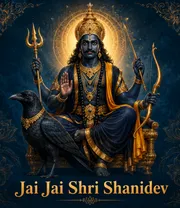
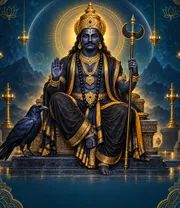
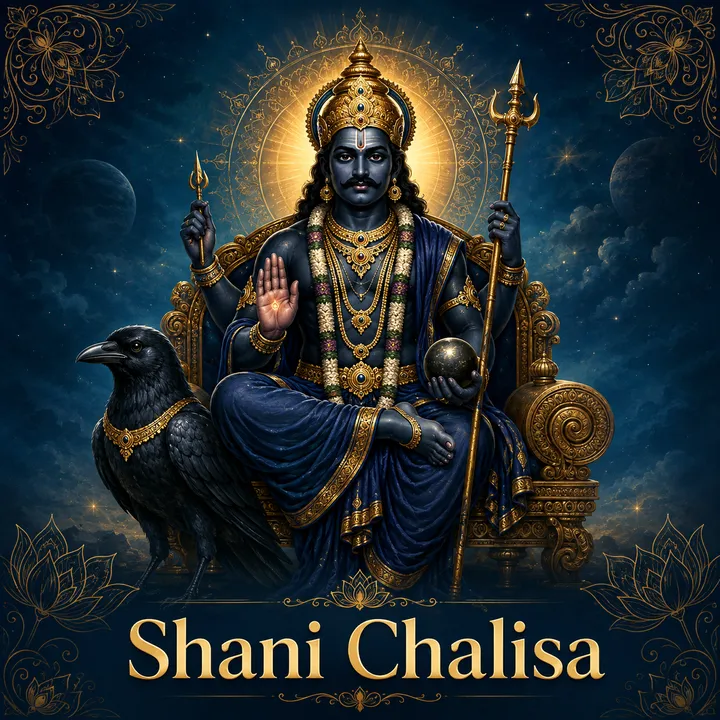
Four-armed, his dark form resplendent, a jeweled crown adorns his forehead with radiance.
- Chaupai 3
परम विशाल मनोहर भाला।टेढ़ी दृष्टि भृकुटि विकराला॥
parama viśāla manohara bhālā।teḍhī dṛṣṭi bhṛkuṭi vikarālā॥
His forehead is broad and beautiful, yet his gaze is oblique and his knitted brow fearsome.
- Chaupai 4
कुण्डल श्रवण चमाचम चमके।हिय माल मुक्तन मणि दमके॥
kuṇḍala śravaṇa camācama camake।hiya māla muktana maṇi damake॥
Earrings glitter and flash upon his ears; a garland of pearls and jewels shines upon his chest.
- Chaupai 5
कर में गदा त्रिशूल कुठारा।पल बिच करैं अरिहिं संहारा॥
kara meṃ gadā triśūla kuṭhārā।pala bica karaiṃ arihiṃ saṃhārā॥
A mace, trident, and axe are in his hands; in an instant he destroys his enemies.
- Chaupai 6
पिंगल, कृष्णो, छाया नन्दन।यम, कोणस्थ, रौद्र, दुखभंजन॥
piṃgala, kṛṣṇo, chāyā nandana।yama, koṇastha, raudra, dukhabhaṃjana॥
Pingala, Krishno, son of Chhaya; Yama, Konastha, Raudra, destroyer of sorrow —
- Chaupai 7
सौरी, मन्द, शनी, दश नामा।भानु पुत्र पूजहिं सब कामा॥
saurī, manda, śanī, daśa nāmā।bhānu putra pūjahiṃ saba kāmā॥
Sauri, Manda, Shani — these are ten names of the sun's son; worshiping him fulfills every desire.
- Chaupai 8
जा पर प्रभु प्रसन्न ह्वैं जाहीं।रंकहुं राव करैं क्षण माहीं॥
jā para prabhu prasanna hvaiṃ jāhīṃ।raṃkahuṃ rāva karaiṃ kṣaṇa māhīṃ॥
The one on whom this Lord becomes pleased, he makes a king out of a pauper in an instant.
- Chaupai 9
पर्वतहू तृण होइ निहारत।तृणहू को पर्वत करि डारत॥
parvatahū tṛṇa hoi nihārata।tṛṇahū ko parvata kari ḍārata॥
He can make a mountain seem as light as a blade of grass, and turn a blade of grass into a mountain.
- Chaupai 10
राज मिलत बन रामहिं दीन्हयो।कैकेइहुँ की मति हरि लीन्हयो॥
rāja milata bana rāmahiṃ dīnhayo।kaikeihũ kī mati hari līnhayo॥
He gave Rama a kingdom, then sent him to the forest instead; he seized away Kaikeyi's own good sense.
- Chaupai 11
वनहूं में मृग कपट दिखाई।मातु जानकी गई चुराई॥
vanahūṃ meṃ mṛga kapaṭa dikhāī।mātu jānakī gaī curāī॥
Even in the forest he showed the deceit of the golden deer, and mother Janaki (Sita) was carried away.
- Chaupai 12
लखनहिं शक्ति विकल करिडारा।मचिगा दल में हाहाकारा॥
lakhanahiṃ śakti vikala karidārā।macigā dala meṃ hāhākārā॥
He struck Lakshman senseless with the Shakti weapon, and an uproar of grief broke out in the army.
- Chaupai 13
रावण की गति-मति बौराई।रामचन्द्र सों बैर बढ़ाई॥
rāvaṇa kī gati-mati baurāī।rāmacandra sõ baira baḍhāī॥
He deranged Ravana's course and reason, so that he increased his enmity with Ramachandra.
- Chaupai 14
दियो कीट करि कंचन लंका।बजि बजरंग बीर की डंका॥
diyo kīṭa kari kaṃcana laṃkā।baji bajaraṃga bīra kī ḍaṃkā॥
He turned the golden Lanka to ash, as the drum of the mighty hero Bajrang (Hanuman) resounded.
- Chaupai 15
नृप विक्रम पर तुहि पगु धारा।चित्र मयूर निगलि गै हारा॥
nṛpa vikrama para tuhi pagu dhārā।citra mayūra nigali gai hārā॥
You set foot even upon King Vikram; a painted peacock swallowed his necklace.
- Chaupai 16
हार नौलखा लाग्यो चोरी।हाथ पैर डरवायो तोरी॥
hāra naulakhā lāgyo corī।hātha paira ḍaravāyo torī॥
A necklace worth nine lakhs was accused as stolen, and his hands and feet were broken in fear.
- Chaupai 17
भारी दशा निकृष्ट दिखायो।तेलिहिं घर कोल्हू चलवायो॥
bhārī daśā nikṛṣṭa dikhāyo।telihiṃ ghara kolhū calavāyo॥
He showed him a grievous and lowly state, making him turn the oil-press in an oilman's house.
- Chaupai 18
विनय राग दीपक महं कीन्हयों।तब प्रसन्न प्रभु ह्वै सुख दीन्हयों॥
vinaya rāga dīpaka mahaṃ kīnhayoṃ।taba prasanna prabhu hvai sukha dīnhayoṃ॥
When he made a humble plea within Raag Deepak, the pleased Lord then granted him happiness.
- Chaupai 19
हरिश्चन्द्र नृप नारि बिकानी।आपहुं भरे डोम घर पानी॥
hariścandra nṛpa nāri bikānī।āpahuṃ bhare ḍoma ghara pānī॥
King Harishchandra's own wife was sold, and he himself carried water in a Dom's house.
- Chaupai 20
तैसे नल पर दशा सिरानी।भूंजी-मीन कूद गई पानी॥
taise nala para daśā sirānī।bhūṃjī-mīna kūda gaī pānī॥
Such a state also befell King Nala, when even a roasted fish leapt back into the water.
- Chaupai 21
श्री शंकरहिं गह्यो जब जाई।पारवती को सती कराई॥
śrī śaṃkarahiṃ gahyo jaba jāī।pāravatī ko satī karāī॥
When he even seized hold of Lord Shankar, he brought about the self-immolation of Parvati.
- Chaupai 22
तनिक विलोकत ही करि रीसा।नभ उड़ि गयो गौरिसुत सीसा॥
tanika vilokata hī kari rīsā।nabha uḍi gayo gaurisuta sīsā॥
With but a single angry glance, the head of Gauri's son (Ganesha) flew off into the sky.
- Chaupai 23
पाण्डव पर भै दशा तुम्हारी।बची द्रौपदी होति उघारी॥
pāṇḍava para bhai daśā tumhārī।bacī draupadī hoti ughārī॥
Your affliction fell also upon the Pandavas; Draupadi barely escaped being disrobed.
- Chaupai 24
कौरव के भी गति मति मारयो।युद्ध महाभारत करि डारयो॥
kaurava ke bhī gati mati māryo।yuddha mahābhārata kari ḍāryo॥
You destroyed the course and reason of the Kauravas too, and brought about the great war of the Mahabharata.
- Chaupai 25
रवि कहँ मुख महँ धरि तत्काला।लेकर कूदि परयो पाताला॥
ravi kahã mukha mahã dhari tatkālā।lekara kūdi paryo pātālā॥
He instantly seized the sun in his mouth, and leapt with him down into the netherworld.
- Chaupai 26
शेष देव-लखि विनती लाई।रवि को मुख ते दियो छुड़ाई॥
śeṣa deva-lakhi vinatī lāī।ravi ko mukha te diyo chuḍāī॥
Seeing this, Lord Sheshnag brought a plea, and freed the sun from his mouth.
- Chaupai 27
वाहन प्रभु के सात सुजाना।जग दिग्गज गर्दभ मृग स्वाना॥
vāhana prabhu ke sāta sujānā।jaga diggaja gardabha mṛga svānā॥
This wise Lord has seven mounts — the elephant of the world, the donkey, the deer, and the dog —
- Chaupai 28
जम्बुक सिंह आदि नख धारी।सो फल ज्योतिष कहत पुकारी॥
jambuka siṃha ādi nakha dhārī।so phala jyotiṣa kahata pukārī॥
the jackal, the lion, and other claw-bearing creatures — astrology proclaims aloud the result of each.
- Chaupai 29
गज वाहन लक्ष्मी गृह आवैं।हय ते सुख सम्पत्ति उपजावैं॥
gaja vāhana lakṣmī gṛha āvaiṃ।haya te sukha sampatti upajāvaiṃ॥
On the elephant mount, Lakshmi comes to the house; on the horse, happiness and wealth are produced.
- Chaupai 30
गर्दभ हानि करै बहु काजा।सिंह सिद्धकर राज समाजा॥
gardabha hāni karai bahu kājā।siṃha siddhakara rāja samājā॥
On the donkey he causes loss in many undertakings; on the lion he brings success in royal affairs.
- Chaupai 31
जम्बुक बुद्धि नष्ट कर डारै।मृग दे कष्ट प्राण संहारै॥
jambuka buddhi naṣṭa kara ḍārai।mṛga de kaṣṭa prāṇa saṃhārai॥
On the jackal he destroys the intellect; on the deer he gives suffering and can even take life.
- Chaupai 32
जब आवहिं प्रभु स्वान सवारी।चोरी आदि होय डर भारी॥
jaba āvahiṃ prabhu svāna savārī।corī ādi hoya ḍara bhārī॥
When this Lord comes mounted on the dog, there is great fear of theft and the like.
- Chaupai 33
तैसहि चारि चरण यह नामा।स्वर्ण लौह चाँदी अरु तामा॥
taisahi cāri caraṇa yaha nāmā।svarṇa lauha cāṃdī aru tāmā॥
In just this way, he has four named feet — of gold, iron, silver, and copper.
- Chaupai 34
लौह चरण पर जब प्रभु आवैं।धन जन सम्पत्ति नष्ट करावैं॥
lauha caraṇa para jaba prabhu āvaiṃ।dhana jana sampatti naṣṭa karāvaiṃ॥
When the Lord comes upon his iron foot, he brings the destruction of wealth, people, and possessions.
- Chaupai 35
समता ताम्र रजत शुभकारी।स्वर्ण सर्व सुख मंगल भारी॥
samatā tāmra rajata śubhakārī।svarṇa sarva sukha maṃgala bhārī॥
The copper and silver feet bring balance and good fortune; the golden foot brings every happiness and abundant blessing.
- Chaupai 36
जो यह शनि चरित्र नित गावै।कबहुं न दशा निकृष्ट सतावै॥
jo yaha śani caritra nita gāvai।kabahuṃ na daśā nikṛṣṭa satāvai॥
Whoever daily sings this account of Shani's deeds is never troubled by an evil planetary period.
- Chaupai 37
अद्भुत नाथ दिखावैं लीला।करैं शत्रु के नशि बलि ढीला॥
adbhuta nātha dikhāvaiṃ līlā।karaiṃ śatru ke naśi bali ḍhīlā॥
This wondrous Lord displays his divine play, and loosens the strength of one's enemies to nothing.
- Chaupai 38
जो पण्डित सुयोग्य बुलवाई।विधिवत शनि ग्रह शांति कराई॥
jo paṇḍita suyogya bulavāī।vidhivata śani graha śāṃti karāī॥
Whoever calls a suitably learned pandit and duly performs the peace-rite for the planet Shani —
- Chaupai 39
पीपल जल शनि दिवस चढ़ावत।दीप दान दै बहु सुख पावत॥
pīpala jala śani divasa caḍhāvata।dīpa dāna dai bahu sukha pāvata॥
— and offers water to the peepal tree on Shani's day, giving lamps and gifts, obtains great happiness.
- Chaupai 40
कहत राम सुन्दर प्रभु दासा।शनि सुमिरत सुख होत प्रकाशा॥
kahata rāma sundara prabhu dāsā।śani sumirata sukha hota prakāśā॥
So says Ram Sundar, servant of the Lord: remembering Shani, happiness comes to light.
- Closing doha
- Doha (closing)
पाठ शनिश्चर देव को, की हों 'भक्त' तैयार।करत पाठ चालीस दिन, हो भवसागर पार॥
pāṭha śaniścara deva ko, kī hoṃ 'bhakta' taiyāra।karata pāṭha cālīsa dina, ho bhavasāgara pāra॥
'Bhakt' stands ready to recite the text of Lord Shanishchar — reciting it for forty days, one crosses the ocean of worldly existence.
Overview
The Shani Chalisa is a forty-verse Hindi hymn to Shani, the planet Saturn and one of the Navagraha, framed by two opening doha and a single closing doha in the same pattern as other chalisas. After invoking Ganesha and then Shani himself, the opening chaupai describe his four-armed, dark-complexioned form — jeweled crown, oblique gaze, mace, trident, and axe — before gathering ten of his epithets: Pingala, Krishno, Chhayanandan (son of Chhaya), Yama, Konastha, Raudra, Dukhabhanjan, Sauri, Manda, and Shani. The bulk of the composition is unusual among chalisas for a long narrative catalogue: rather than staying with a single deity’s form and praise, it recounts one figure after another from the Ramayana, the Mahabharata, and Puranic story who is said to have come under Shani’s dasha (astrological influence) — Rama’s exile and Sita’s abduction, Lakshman struck down, Ravana’s ruin, King Vikramaditya and King Nala’s reversals of fortune, Harishchandra’s trials, Shiva and Parvati’s own encounter with Shani’s gaze and the beheading of Ganesha, and the Pandavas’, Draupadi’s, and the Kauravas’ suffering leading into the Mahabharata war. It then turns to Shani’s seven mounts — elephant, horse, donkey, lion, jackal, deer, and dog — and the differing fortune each is said to bring, and to his four metaled feet (gold, iron, silver, copper), before a closing section on the benefit of reciting the chalisa and performing a proper Shani graha-shanti rite.
Origin and source
The closing chaupai names its composer in a common signature formula: “कहत राम सुन्दर प्रभु दासा” — “so says Ram Sundar, the Lord’s servant.” The same name, in the same closing position, appears in this site’s Navagraha Chalisa, which notes it as resembling — without confirming an identity with — a “Ramsundar” or “Ram Sunder Prabhu Das” credited in some tellings of the Ganesh Chalisa’s own closing doha; whether one composer’s work circulated across several chalisas, a lineage of devotional poets shared the convention, or the phrase is simply a formula borrowed within the wider genre is not established here. The closing doha’s word “भक्त” (“devotee”), set off in quotation marks in some printed and recorded versions of the text, may itself be a second pen-name rather than a plain noun — the sources consulted for this page don’t resolve which, and this page doesn’t guess.
How it is recited
The Shani Chalisa is recited on Saturday (Shanivar), the day of the week traditionally linked to Shani, and is turned to especially often during Sade Sati or Dhaiya — the extended multi-year periods in Vedic astrology when Shani’s transit is held to press most heavily on a horoscope. Its own closing doha states that reciting it daily for forty days carries the reciter across the ocean of worldly existence, and its body describes companion practices — offering water to a peepal tree on Shani’s day, giving lamps and gifts, and having a qualified pandit perform a proper graha-shanti rite. This site does not assert that reciting this chalisa changes the outcome of anyone’s horoscope; it describes, without adopting, what this devotional and astrological tradition holds the text and Shani to mean.
Frequently asked questions
How many verses does Shani Chalisa have?
Who is Shani Chalisa dedicated to?
When is Shani Chalisa typically recited?
What language is Shani Chalisa composed in?
What tradition is Shani Chalisa associated with?
Is an English translation of Shani Chalisa available?
Is there a Roman transliteration of Shani Chalisa?
Sourcing
Checked against independent sources before publishing — see our sourcing and editorial policy. Spotted an error? Report an issue .