The text
Tap Recite along to follow verse by verse — use Next, or the arrow keys.
- Opening dohas
- Doha (opening) 1
जनक जननि पद कमल रज, निज मस्तक पर धारि।बन्दौं मातु सरस्वती, बुद्धि बल दे दातारि॥
janaka janani pada kamala raja, nija mastaka para dhāri।bandauṃ mātu sarasvatī, buddhi bala de dātāri॥
Taking the dust of my father's and mother's feet upon my head, I bow to Mother Saraswati, giver of the strength of wisdom.
- Doha (opening) 2
पूर्ण जगत में व्याप्त तव, महिमा अमित अनंतु।रामसागर के पाप को, मातु तुही अब हन्तु॥
pūrṇa jagata meṃ vyāpta tava, mahimā amita anantu।rāmasāgara ke pāpa ko, mātu tuhī aba hantu॥
Your glory pervades and fills the whole world, immeasurable and endless — Mother, now put an end to the sins of Ramsagar.
- The 39 chaupais
- Chaupai 1
जय श्री सकल बुद्धि बलरासी।जय सर्वज्ञ अमर अविनासी॥
jaya śrī sakala buddhi balarāsī।jaya sarvajña amara avināsī॥
Victory to Shri, the treasure-mound of all wisdom and strength; victory to the all-knowing, immortal, imperishable one.
- Chaupai 2
जय जय जय वीणाकर धारी।करती सदा सुहंस सवारी॥
jaya jaya jaya vīṇākara dhārī।karatī sadā suhaṃsa savārī॥
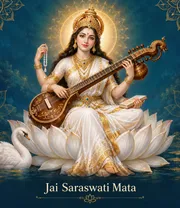
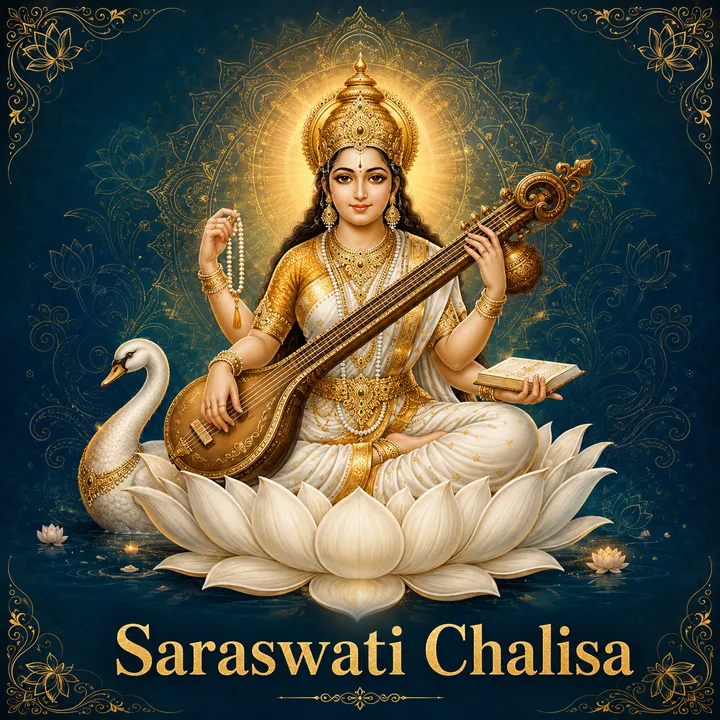
Victory, victory, victory to the one who holds the veena in her hand; she ever rides upon the beautiful swan.
- Chaupai 3
रूप चतुर्भुजधारी माता।सकल विश्व अन्दर विख्याता॥
rūpa caturbhujadhārī mātā।sakala viśva andara vikhyātā॥
The Mother's form bears four arms; she is renowned throughout the whole universe.
- Chaupai 4
जग में पाप बुद्धि जब होती।जबहि धर्म की फीकी ज्योती॥
jaga meṃ pāpa buddhi jaba hotī।jabahi dharma kī phīkī jyotī॥
Whenever sinful thinking arises in the world, and the light of dharma grows dim,
- Chaupai 5
तबहि मातु ले निज अवतारा।पाप हीन करती महि तारा॥
tabahi mātu le nija avatārā।pāpa hīna karatī mahi tārā॥
then the Mother takes birth in her own incarnation, freeing the earth of sin and carrying it across.
- Chaupai 6
बाल्मीकि जी थे बहम ज्ञानी।तव प्रसाद जानै संसारा॥
bālmīki jī the bahama jñānī।tava prasāda jānai saṃsārā॥
Sage Valmiki was a man of great wisdom; the world knows this was by your grace.
- Chaupai 7
रामायण जो रचे बनाई।आदि कवी की पदवी पाई॥
rāmāyaṇa jo race banāī।ādi kavī kī padavī pāī॥
He composed and completed the Ramayana, and thereby earned the title of the first poet.
- Chaupai 8
कालिदास जो भये विख्याता।तेरी कृपा दृष्टि से माता॥
kālidāsa jo bhaye vikhyātā।terī kṛpā dṛṣṭi se mātā॥
Kalidasa, too, became renowned, Mother, through your merciful glance.
- Chaupai 9
तुलसी सूर आदि विद्धाना।भये और जो ज्ञानी नाना॥
tulasī sūra ādi viddhānā।bhaye aura jo jñānī nānā॥
Tulsidas, Surdas, and other scholars, and every other wise soul who ever lived,
- Chaupai 10
तिन्हहिं न और रहेउ अवलम्बा।केवल कृपा आपकी अम्बा॥
tinhahiṃ na aura raheu avalambā।kevala kṛpā āpakī ambā॥
had no other support to rely on — it was your grace alone, O Mother.
- Chaupai 11
करहु कृपा सोइ मातु भवानी।दुखित दीन निज दासहि जानी॥
karahu kṛpā soi mātu bhavānī।dukhita dīna nija dāsahi jānī॥
Show that same grace, Mother Bhavani, knowing this humble servant to be sorrowful and poor.
- Chaupai 12
पुत्र करै अपराध बहूता।तेहि न धरइ चित सुन्दर माता॥
putra karai aparādha bahūtā।tehi na dharai cita sundara mātā॥
Even if a child commits many faults, a good mother does not hold them against him.
- Chaupai 13
राखु लाज जननी अब मेरी।विनय करूं बहु भाँति घनेरी॥
rākhu lāja jananī aba merī।vinaya karūṃ bahu bhām̐ti ghanerī॥
Preserve my honor now, O Mother; I offer you my humble prayer in many ways.
- Chaupai 14
मैं अनाथ तेरी अवलंबा।कृपा करउ जय जय जगदंबा॥
maiṃ anātha terī avalaṃbā।kṛpā karau jaya jaya jagadaṃbā॥
I am orphaned, dependent on you alone; show mercy, victory, victory to the Mother of the world.
- Chaupai 15
मधु कैटभ जो अति बलवाना।बाहुयुद्ध विष्णू ते ठाना॥
madhu kaiṭabha jo ati balavānā।bāhuyuddha viṣṇū te ṭhānā॥
Madhu and Kaitabha, who were exceedingly powerful, took up hand-to-hand combat with Vishnu.
- Chaupai 16
समर हजार पांच में घोरा।फिर भी मुख उनसे नहिं मोरा॥
samara hajāra pāṃca meṃ ghorā।phira bhī mukha unase nahiṃ morā॥
The terrible battle raged for five thousand years, yet still he did not turn his face from them.
- Chaupai 17
मातु सहाय भई तेहि काला।बुद्धि विपरीत करी खलहाला॥
mātu sahāya bhaī tehi kālā।buddhi viparīta karī khalahālā॥
At that time the Mother came to his aid, and turned the wicked pair's own reason against them.
- Chaupai 18
तेहि ते मृत्यु भई खल केरी।पुरवहु मातु मनोरथ मेरी॥
tehi te mṛtyu bhaī khala kerī।puravahu mātu manoratha merī॥
By that, death came to those two demons — Mother, fulfil this longing of mine as well.
- Chaupai 19
चंड मुण्ड जो थे विख्याता।छण महुं संहारेउ तेहि माता॥
caṃḍa muṇḍa jo the vikhyātā।chaṇa mahuṃ saṃhāreu tehi mātā॥
Chanda and Munda, who were notorious demons — the Mother destroyed them in an instant.
- Chaupai 20
रक्तबीज से समरथ पापी।सुर-मुनि हृदय धरा सब कांपी॥
raktabīja se samaratha pāpī।sura-muni hṛdaya dharā saba kāṃpī॥
Raktabija, a sinner of such might that the hearts of gods and sages alike trembled with fear,
- Chaupai 21
काटेउ सिर जिम कदली खम्बा।बार बार बिनवउं जगदंबा॥
kāṭeu sira jima kadalī khambā।bāra bāra binavauṃ jagadaṃbā॥
you severed his head as easily as a banana stalk — again and again I offer my prayer to you, Mother of the world.
- Chaupai 22
जग प्रसिद्ध जो शुंभ निशुंभा।छिन में बधे ताहि तू अम्बा॥
jaga prasiddha jo śuṃbha niśuṃbhā।china meṃ badhe tāhi tū ambā॥
Shumbha and Nishumbha, so famed throughout the world — you, O Mother, slew them both in an instant.
- Chaupai 23
भरत-मातु बुधि फेरेउ जाई।रामचन्द्र बनवास कराई॥
bharata-mātu budhi phereu jāī।rāmacandra banavāsa karāī॥
You turned Bharata's mother's mind, and so brought about Ramachandra's exile to the forest —
- Chaupai 24
एहि विधि रावन वध तुम कीन्हा।सुर नर मुनि सब कहुं सुख दीन्हा॥
ehi vidhi rāvana vadha tuma kīnhā।sura nara muni saba kahuṃ sukha dīnhā॥
it was by this design that you brought about Ravana's death, and gave joy to gods, men, and sages alike.
- Chaupai 25
को समरथ तव यश गुन गाना।निगम अनादि अनंत बखाना॥
ko samaratha tava yaśa guna gānā।nigama anādi ananta bakhānā॥
Who has the power to sing your fame and virtues? The scriptures themselves declare them beginningless and endless.
- Chaupai 26
विष्णु रूद्र अज सकहिं न मारी।जिनकी हो तुम रक्षाकारी॥
viṣṇu rūdra aja sakahiṃ na mārī।jinakī ho tuma rakṣākārī॥
Not even Vishnu, Rudra, or Brahma (the unborn) can slay one whom you have chosen to protect.
- Chaupai 27
रक्त दन्तिका और शताक्षी।नाम अपार है दानव भक्षी॥
rakta dantikā aura śatākṣī।nāma apāra hai dānava bhakṣī॥
As Raktadantika and Shatakshi your names are countless — devourer of demons.
- Chaupai 28
दुर्गम काज धरा पर कीन्हा।दुर्गा नाम सकल जग लीन्हा॥
durgama kāja dharā para kīnhā।durgā nāma sakala jaga līnhā॥
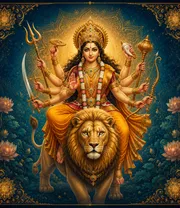
You accomplished the hardest of tasks upon this earth, and so the whole world came to call you Durga.
- Chaupai 29
दुर्ग आदि हरनी तू माता।कृपा करहु जब जब सुखदाता॥
durga ādi haranī tū mātā।kṛpā karahu jaba jaba sukhadātā॥
You are the remover of hardship and every trouble, Mother — show your mercy again and again, giver of happiness.
- Chaupai 30
नृप कोपित जो मारन चाहै।कानन में घेरे मृग नाहै॥
nṛpa kopita jo mārana cāhai।kānana meṃ ghere mṛga nāhai॥
When an angry king seeks to kill, or wild beasts surround one in the forest,
- Chaupai 31
सागर मध्य पोत के भंगे।अति तूफान नहिं कोऊ संगे॥
sāgara madhya pota ke bhaṃge।ati tūphāna nahiṃ koū saṃge॥
when a ship is wrecked in the middle of the ocean amid a fierce storm with no one at one's side,
- Chaupai 32
भूत प्रेत बाधा या दुःख में।हो दरिद्र अथवा संकट में॥
bhūta preta bādhā yā duḥkha meṃ।ho daridra athavā saṃkaṭa meṃ॥
or one is troubled by ghosts and spirits, or is poor, or caught in any difficulty —
- Chaupai 33
नाम जपे मंगल सब होई।संशय इसमें करइ न कोई॥
nāma jape maṃgala saba hoī।saṃśaya isameṃ karai na koī॥
chanting your name brings about every good — let no one doubt this.
- Chaupai 34
पुत्रहीन जो आतुर भाई।सबै छांड़ि पूजें एहि माई॥
putrahīna jo ātura bhāī।sabai chāṃḍi pūjeṃ ehi māī॥
One who is childless and distressed should set everything else aside and worship this Mother alone.
- Chaupai 35
करै पाठ नित यह चालीसा।होय पुत्र सुन्दर गुण ईसा॥
karai pāṭha nita yah cālīsā।hoya putra sundara guṇa īsā॥
One who recites this Chalisa daily is blessed with a son of fine form and noble qualities.
- Chaupai 36
धूपादिक नैवेद्य चढावै।संकट रहित अवश्य हो जावै॥
dhūpādika naivedya caḍhāvai।saṃkaṭa rahita avaśya ho jāvai॥
One who offers incense and other food offerings to her is certainly freed of all troubles.
- Chaupai 37
भक्ति मातु की करै हमेशा।निकट न आवै ताहि कलेशा॥
bhakti mātu kī karai hameśā।nikaṭa na āvai tāhi kaleśā॥
One who is ever devoted to the Mother is never approached by suffering.
- Chaupai 38
बंदी पाठ करें शत बारा।बंदी पाश दूर हो सारा॥
baṃdī pāṭha kareṃ śata bārā।baṃdī pāśa dūra ho sārā॥
If a prisoner recites it a hundred times, every bond of his captivity falls away.
- Chaupai 39
करहु कृपा भवमुक्ति भवानी।मो कहं दास सदा निज जानी॥
karahu kṛpā bhavamukti bhavānī।mo kahaṃ dāsa sadā nija jānī॥
Grant me freedom from this worldly bondage, Bhavani — knowing me always as your own servant.
- Closing dohas
- Doha (closing) 1
माता सूरज कान्ति तव, अंधकार मम रूप।डूबन ते रक्षा करहु, परूं न मैं भव-कूप॥
mātā sūraja kānti tava, andhakāra mama rūpa।ḍūbana te rakṣā karahu, parūṃ na maiṃ bhava-kūpa॥
Mother, your radiance is like the sun, while my nature is darkness itself; save me from drowning, so that I do not sink into this well of worldly existence.
- Doha (closing) 2
बल बुद्धि विद्या देहुं मोहि, सुनहु सरस्वति मातु।अधम रामसागरहिं तुम, आश्रय देउ पुनातु॥
bala buddhi vidyā dehuṃ mohi, sunahu sarasvati mātu।adhama rāmasāgarahiṃ tuma, āśraya deu punātu॥
Grant me strength, wisdom, and learning — hear me, Mother Saraswati; give shelter and sanctify this lowly Ramsagar.
Overview
The Saraswati Chalisa is a Hindi devotional composition in praise of Saraswati, the goddess of knowledge, speech, learning, and the arts. Like other chalisas, its name reflects the traditional association of the genre with the number forty, though this particular composition divides into two opening dohas, thirty-nine chaupai couplets, and two closing dohas. Its verses credit Saraswati with inspiring the great poets of Hindu tradition, identify her with the demon-slaying deeds usually told of Durga, and close with a description of the benefits said to come from reciting it.
Origin and source
The closing lines of the chalisa’s dohas name its composer directly — “the sins of Ramsagar” in the opening doha, and “this lowly Ramsagar” in the closing doha — which is why devotional publishers and collections attribute the text to a poet named Ramsagar (also written Ram Sagar). As with many chalisas of this kind, little else about the author is documented outside the verses themselves, so this page treats the composition as a traditional Hindi devotional text whose authorship is named within its own lines but not otherwise firmly established in secondary sources.
The body of the text first credits Saraswati’s grace for the achievements of India’s celebrated poets — Valmiki’s authorship of the Ramayana, and the renown of Kalidasa, Tulsidas, and Surdas. It then turns to a set of verses that identify her with Durga, recounting the demon-slaying episodes of the Devi Mahatmyam — the defeat of Madhu and Kaitabha, Chanda and Munda, Raktabija, and Shumbha and Nishumbha — and stating plainly that the world came to call her Durga because of these deeds (Chaupai 28). One verse also credits her with turning Kaikeyi’s mind toward sending Rama into exile (Chaupai 23), a claim specific to this text’s Shakta framing, in which the Goddess’s will moves quietly behind the events of the Ramayana. The chalisa closes, like others in the genre, with a doha naming the benefits of reciting it with devotion.
How it is recited
The Saraswati Chalisa is recited daily by many devotees of the goddess, often alongside her aarti or other prayers for wisdom and clarity of mind. It is especially associated with Basant Panchami, the spring festival dedicated to Saraswati that traditionally marks an auspicious day to begin learning, and it is commonly recited by students during exam season, seeking her blessing for focus and success in their studies. Its final chaupai verses also promise more general benefits — freedom from trouble, from poverty, and from the fear of harm — for anyone who recites it with steady devotion.
Frequently asked questions
How many verses does Saraswati Chalisa have?
Who is Saraswati Chalisa dedicated to?
When is Saraswati Chalisa typically recited?
What language is Saraswati Chalisa composed in?
What tradition is Saraswati Chalisa associated with?
Is an English translation of Saraswati Chalisa available?
Is there a Roman transliteration of Saraswati Chalisa?
Sourcing
Checked against independent sources before publishing — see our sourcing and editorial policy. Spotted an error? Report an issue .