The text
Tap Recite along to follow verse by verse — use Next, or the arrow keys.
- Opening doha
- Doha (opening)
श्री गणपति पद नाय सिर, धरि हिय शारदा ध्यान।सन्तोषी मां की करुँ, कीरति सकल बखान॥
śrī gaṇapati pada nāya sira, dhari hiya śāradā dhyāna।santoṣī mā̃ kī karũ, kīrati sakala bakhāna॥
Bowing my head at Ganapati's feet, holding Sharada (Saraswati) in my heart in meditation, I shall tell the complete glory of Santoshi Maa.
- The 40 chaupais
- Chaupai 1
जय संतोषी मां जग जननी।खल मति दुष्ट दैत्य दल हननी॥
jaya santoṣī mā̃ jaga jananī।khala mati duṣṭa daitya dala hananī॥
Victory to Santoshi Maa, mother of the world — destroyer of the wicked-minded, evil demon hosts.
- Chaupai 2
गणपति देव तुम्हारे ताता।रिद्धि सिद्धि कहलावहं माता॥
gaṇapati deva tumhāre tātā।riddhi siddhi kahalāvahaṃ mātā॥
Lord Ganapati is your father; Riddhi and Siddhi are called your mothers.
- Chaupai 3
माता-पिता की रहौ दुलारी।कीरति केहि विधि कहुं तुम्हारी॥
mātā-pitā kī rahau dulārī।kīrati kehi vidhi kahũ tumhārī॥
You remain the beloved darling of your mother and father — in what manner can I tell of your glory?
- Chaupai 4
क्रीट मुकुट सिर अनुपम भारी।कानन कुण्डल को छवि न्यारी॥
krīṭa mukuṭa sira anupama bhārī।kānana kuṇḍala ko chavi nyārī॥
An incomparable, splendid crown rests upon your head; the earrings in your ears carry a beauty all their own.
- Chaupai 5
सोहत अंग छटा छवि प्यारी।सुन्दर चीर सुनहरी धारी॥
sohata aṅga chaṭā chavi pyārī।sundara cīra sunaharī dhārī॥
The radiance of your form shines with lovely beauty; you wear a beautiful garment of gold.
- Chaupai 6
आप चतुर्भुज सुघड़ विशाला।धारण करहु गले वन माला॥
āpa caturbhuja sughaḍa viśālā।dhāraṇa karahu gale vana mālā॥
You are four-armed, well-formed and grand; you wear a garland of forest flowers around your neck.
- Chaupai 7
निकट है गौ अमित दुलारी।करहु मयूर आप असवारी॥
nikaṭa hai gau amita dulārī।karahu mayūra āpa asavārī॥
The beloved, boundless cow stays near you; you ride upon a peacock.
- Chaupai 8
जानत सबही आप प्रभुताई।सुर नर मुनि सब करहिं बड़ाई॥
jānata sabahī āpa prabhutāī।sura nara muni saba karahiṃ baḍāī॥
Everyone knows your sovereign glory; gods, men, and sages all sing your praise.
- Chaupai 9
तुम्हरे दरश करत क्षण माई।दुख दरिद्र सब जाय नसाई॥
tumhare daraśa karata kṣaṇa māī।dukha daridra saba jāya nasāī॥
The moment one has your darshan, O Mother, all sorrow and poverty are destroyed.
- Chaupai 10
वेद पुराण रहे यश गाई।करहु भक्त की आप सहाई॥
veda purāṇa rahe yaśa gāī।karahu bhakta kī āpa sahāī॥
The Vedas and Puranas have sung your glory; you are the helper of your devotees.
- Chaupai 11
ब्रह्मा ढिंग सरस्वती कहाई।लक्ष्मी रूप विष्णु ढिंग आई॥
brahmā ḍhiṅga sarasvatī kahāī।lakṣmī rūpa viṣṇu ḍhiṅga āī॥
Beside Brahma you are called Saraswati; beside Vishnu you have come as the form of Lakshmi.
- Chaupai 12
शिव ढिंग गिरजा रूप बिराजी।महिमा तीनों लोक में गाजी॥
śiva ḍhiṅga girajā rūpa birājī।mahimā tīnõ loka meṃ gājī॥
Beside Shiva you are seated in the form of Girija (Parvati); your glory resounds through the three worlds.
- Chaupai 13
शक्ति रूप प्रगटी जन जानी।रुद्र रूप भई मात भवानी॥
śakti rūpa pragaṭī jana jānī।rudra rūpa bhaī māta bhavānī॥
People know you as manifest in the form of Shakti; as the form of Rudra, you became Mother Bhavani.
- Chaupai 14
दुष्टदलन हित प्रगटी काली।जगमग ज्योति प्रचंड निराली॥
duṣṭadalana hita pragaṭī kālī।jagamaga jyoti pracaṇḍa nirālī॥
For the destruction of the wicked you appeared as Kali, a blazing, fierce, and matchless flame.
- Chaupai 15
चण्ड मुण्ड महिषासुर मारे।शुम्भ निशुम्भ असुर हनि डारे॥
caṇḍa muṇḍa mahiṣāsura māre।śumbha niśumbha asura hani ḍāre॥
You slew Chanda and Munda and the buffalo-demon Mahishasura; you struck down the demons Shumbha and Nishumbha.
- Chaupai 16
महिमा वेद पुरनान बरनी।निज भक्तन के संकट हरनी॥
mahimā veda puranāna baranī।nija bhaktana ke saṅkaṭa haranī॥
The Vedas and Puranas describe your glory — remover of troubles for your own devotees.
- Chaupai 17
रूप शारदा हंस मोहिनी।निरंकार साकार दाहिनी॥
rūpa śāradā haṃsa mohinī।niraṅkāra sākāra dāhinī॥
In the form of Sharada you are enchanting upon your swan; you are formless, and also form itself, ever gracious.
- Chaupai 18
प्रगटाई चहुंदिश निज माया।कण कण में है तेज समाया॥
pragaṭāī cahũdiśa nija māyā।kaṇa kaṇa meṃ hai teja samāyā॥
You have manifested your maya in every direction; your radiance is present in every single particle.
- Chaupai 19
पृथ्वी सूर्य चन्द्र अरु तारे।तव इंगित क्रम बद्ध हैं सारे॥
pṛthvī sūrya candra aru tāre।tava iṅgita krama baddha haiṃ sāre॥
The earth, sun, moon, and stars — all move bound to order at your command.
- Chaupai 20
पालन पोषण तुमहीं करता।क्षण भंगुर में प्राण हरता॥
pālana poṣaṇa tumahī kartā।kṣaṇa bhaṅgura meṃ prāṇa hartā॥
You alone nurture and sustain; in a fleeting instant you can also take life away.
- Chaupai 21
ब्रह्मा विष्णु तुम्हें नित ध्यावैं।शेष महेश सदा मन लावे॥
brahmā viṣṇu tumhẽ nita dhyāvai।śeṣa maheśa sadā mana lāve॥
Brahma and Vishnu meditate on you constantly; Shesha and Mahesh (Shiva) always fix their mind on you.
- Chaupai 22
मनोकमना पूरण करनी।पाप काटनी भव भय तरनी॥
manokamanā pūraṇa karanī।pāpa kāṭanī bhava bhaya taranī॥
You are the fulfiller of heartfelt wishes, the cutter of sins, the boat that carries one across the fear of worldly existence.
- Chaupai 23
चित्त लगाय तुम्हें जो ध्याता।सो नर सुख सम्पत्ति है पाता॥
citta lagāya tumhẽ jo dhyātā।so nara sukha sampatti hai pātā॥
Whoever fixes their mind and meditates on you attains happiness and prosperity.
- Chaupai 24
बन्ध्या नारि तुमहिं जो ध्यावैं।पुत्र पुष्प लता सम वह पावैं॥
bandhyā nāri tumahiṃ jo dhyāvai।putra puṣpa latā sama vaha pāvai॥
The barren woman who meditates upon you obtains a son, as a creeper comes to bear its flower.
- Chaupai 25
पति वियोगी अति व्याकुलनारी।तुम वियोग अति व्याकुलयारी॥
pati viyogī ati vyākulanārī।tuma viyoga ati vyākulayārī॥
The woman deeply anguished by separation from her husband — through you, her deep anguish of separation is relieved.
- Chaupai 26
कन्या जो कोइ तुमको ध्यावै।अपना मन वांछित वर पावै॥
kanyā jo koi tumako dhyāvai।apanā mana vāñchita vara pāvai॥
Any young woman who meditates upon you obtains the husband her heart desires.
- Chaupai 27
शीलवान गुणवान हो मैया।अपने जन की नाव खिवैया॥
śīlavāna guṇavāna ho maiyā।apane jana kī nāva khivaiyā॥
O Mother, you are virtuous and full of good qualities, the ferrywoman who rows the boat for your own people.
- Chaupai 28
विधि पूर्वक व्रत जो कोई करहीं।ताहि अमित सुख संपत्ति भरहीं॥
vidhi pūrvaka vrata jo koī karahī̃।tāhi amita sukha sampatti bharahī̃॥
Whoever observes the vrat according to the proper method, for them you fill up boundless happiness and prosperity.
- Chaupai 29
गुड़ और चना भोग तोहि भावै।सेवा करै सो आनंद पावै॥
guḍa aura canā bhoga tohi bhāvai।sevā karai so ānanda pāvai॥
Jaggery and roasted gram are the offering that pleases you; whoever serves you in this way attains bliss.
- Chaupai 30
श्रद्धा युक्त ध्यान जो धरहीं।सो नर निश्चय भव सों तरहीं॥
śraddhā yukta dhyāna jo dharahī̃।so nara niścaya bhava sõ tarahī̃॥
Whoever holds meditation on you with true faith certainly crosses over worldly existence.
- Chaupai 31
उद्यापन जो करहि तुम्हारा।ताको सहज करहु निस्तारा॥
udyāpana jo karahi tumhārā।tāko sahaja karahu nistārā॥
Whoever performs the udyapan, the concluding rite of your vrat, for them you make deliverance easy.
- Chaupai 32
नारि सुहागिन व्रत जो करती।सुख सम्पत्ति सों गोदी भरती॥
nāri suhāgina vrata jo karatī।sukha sampatti sõ godī bharatī॥
The married woman who keeps this vrat has her lap filled with happiness and prosperity.
- Chaupai 33
जो सुमिरत जैसी मन भावा।सो नर वैसो ही फल पावा॥
jo sumirata jaisī mana bhāvā।so nara vaiso hī phala pāvā॥
Whoever remembers you with whatever wish is dear to their heart obtains exactly that fruit.
- Chaupai 34
सात शुक्र जो व्रत मन धारे।ताके पूर्ण मनोरथ सारे॥
sāta śukra jo vrata mana dhāre।tāke pūrṇa manoratha sāre॥
Whoever holds the vrat in mind for seven Fridays — all of their heartfelt wishes are fulfilled.
- Chaupai 35
सेवा करहि भक्ति युत जोई।ताको दूर दरिद्र दुख होई॥
sevā karahi bhakti yuta joī।tāko dūra daridra dukha hoī॥
Whoever serves you with devotion has their poverty and sorrow driven far away.
- Chaupai 36
जो जन शरण माता तेरी आवै।ताके क्षण में काज बनावै॥
jo jana śaraṇa mātā terī āvai।tāke kṣaṇa meṃ kāja banāvai॥
Whichever person comes to your refuge, O Mother, you accomplish their task in an instant.
- Chaupai 37
जय जय जय अम्बे कल्यानी।कृपा करौ मोरी महारानी॥
jaya jaya jaya ambe kalyānī।kṛpā karau morī mahārānī॥
Victory, victory, victory to you, gracious Mother — show your grace, my great Queen.
- Chaupai 38
जो कोई पढ़ै मात चालीसा।तापे करहिं कृपा जगदीशा॥
jo koī paḍhai māta cālīsā।tāpe karahiṃ kṛpā jagadīśā॥
Whoever recites this Chalisa of the Mother, upon them the Lord of the universe shows grace.
- Chaupai 39
नित प्रति पाठ करै इक बारा।सो नर रहै तुम्हारा प्यारा॥
nita prati pāṭha karai ika bārā।so nara rahai tumhārā pyārā॥
Whoever recites it once every day remains dear to you.
- Chaupai 40
नाम लेत ब्याधा सब भागे।रोग दोष कबहूँ नहीं लागे॥
nāma leta byādhā saba bhāge।roga doṣa kabahū̃ nahī̃ lāge॥
At the taking of your name, all afflictions flee; illness and fault never touch them.
- Closing doha
- Doha (closing)
सन्तोषी माँ के सदा, बन्दहुँ पग निश वास।पूर्ण मनोरथ हों सकल, मात हरौ भव त्रास॥
santoṣī mā̃ ke sadā, bandahũ paga niśa vāsa।pūrṇa manoratha hõ sakala, māta harau bhava trāsa॥
I ever bow, dwelling near, at the feet of Santoshi Maa — may all my heartfelt wishes be fulfilled, O Mother, and may you remove the fear of worldly existence.
Overview
The Santoshi Mata Chalisa is a Hindi devotional composition in praise of Santoshi Mata, “the Mother of Contentment,” framed by an opening and closing doha around forty chaupai verses — the standard shape of the chalisa genre. The verses praise her radiant form and ornaments, identify her with the great goddesses of Puranic tradition, recount episodes of demon-slaying drawn from Devi Mahatmyam narratives, and describe the benefits — relief from poverty, sorrow, and childlessness, and fulfillment of heartfelt wishes — said to come to those who observe her vrat (fast) and recite her name with devotion.
Origin and source
Santoshi Mata is a comparatively recent and distinct figure in Hindu devotion, not one of the goddesses named in the classical Puranas. Her worship is generally described as having spread across North India from around the early 1960s onward, largely among women, through word of mouth, pamphlet vrat-kathas, and poster art, well before it became a nationwide devotional phenomenon after the hit 1975 Hindi film Jai Santoshi Maa. That film popularized an account of her as the daughter of Ganesha, born from his wives Riddhi and Siddhi — a lineage this chalisa’s own text repeats directly (“Ganpati is your father; Riddhi and Siddhi are called your mothers”), though the earlier vrat-katha tradition on which the film drew did not itself include this parentage.
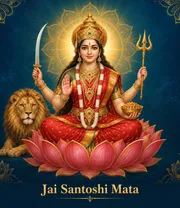
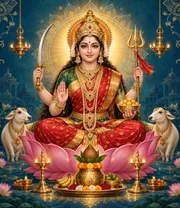
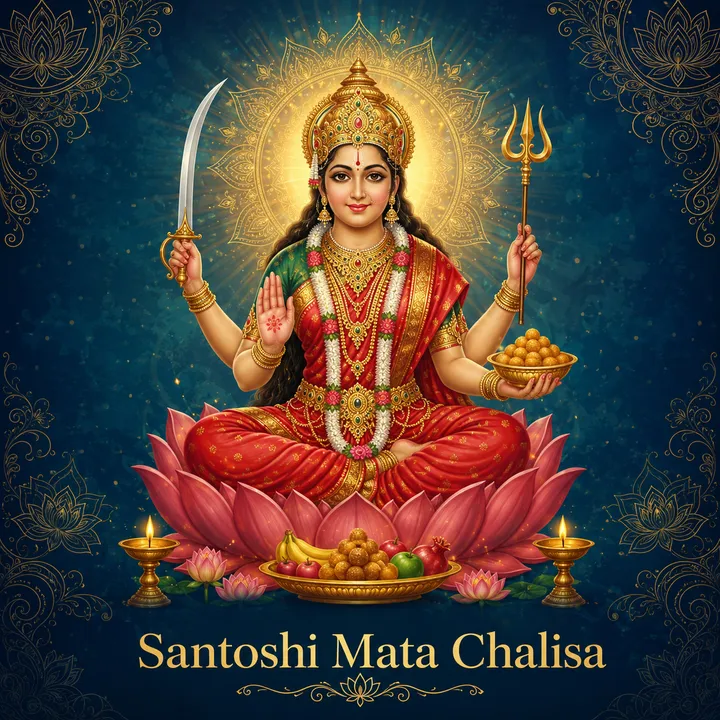
Santoshi Mata is not traditionally identified as a form of Durga in the way some other regional goddesses are said to be. Her iconography borrows attributes associated with other goddesses — a sword and trident reminiscent of Durga, a lotus seat reminiscent of Lakshmi — and this chalisa’s verses likewise praise her by tracing her presence through Saraswati, Lakshmi, Parvati (Girija), Kali, and Bhavani in turn. That poetic device places her within the wider Shakta understanding of a single Goddess appearing in many forms, but it stops short of naming her as a specific, established form of Durga herself. The chalisa’s author is not identified in the text and is not otherwise documented in available sources.
How it is recited
Santoshi Mata is especially associated with Friday, and her best-known devotional practice is the sixteen-Friday vrat (solah shukravar vrat): sixteen consecutive Fridays of fasting and worship, offering jaggery (gur) and roasted chickpeas (chana) — exactly the offering this chalisa names — and avoiding sour foods on the day of the vrat. The observance traditionally concludes with an udyapan ceremony, mentioned in the chalisa itself, at which the vrat is formally closed and a meal is served to young boys as an act of devotion. This chalisa’s own closing verses speak of a shorter span, seven Fridays, as sufficient for a wish to be granted — a reminder that devotional practice around Santoshi Mata has never settled into one single fixed form, and that this text represents one thread within it.
Frequently asked questions
How many verses does Santoshi Mata Chalisa have?
Who is Santoshi Mata Chalisa dedicated to?
When is Santoshi Mata Chalisa typically recited?
What language is Santoshi Mata Chalisa composed in?
What tradition is Santoshi Mata Chalisa associated with?
Is an English translation of Santoshi Mata Chalisa available?
Is there a Roman transliteration of Santoshi Mata Chalisa?
Sourcing
Checked against independent sources before publishing — see our sourcing and editorial policy. Spotted an error? Report an issue .