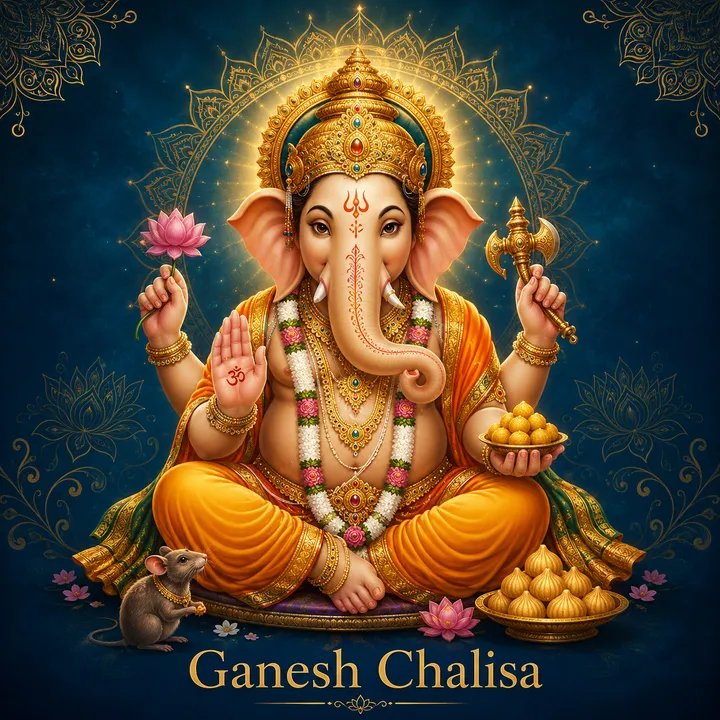
The text
Tap Recite along to follow verse by verse — use Next, or the arrow keys.
- Opening doha
- Doha (opening)
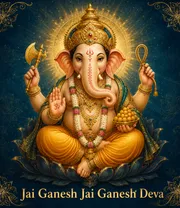
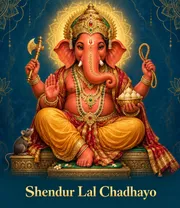
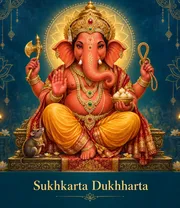
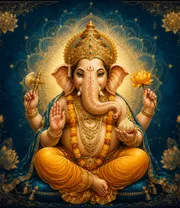
जय गणपति सद्गुण सदन, कविवर बदन कृपाल।विघ्न हरण मंगल करण, जय जय गिरिजा लाल॥
jaya gaṇapati sadguṇa sadana, kavivara badana kṛpāla।vighna haraṇa maṅgala karaṇa, jaya jaya girijā lāla॥
Victory to Ganapati, abode of noble virtue, gracious of face, patron of poets. Remover of obstacles, doer of auspiciousness — victory, victory to the beloved son of Girija (Parvati).
- The 38 chaupais
- Chaupai 1
जय जय जय गणपति गणराजू।मंगल भरण करण शुभ काजू॥
jaya jaya jaya gaṇapati gaṇarājū।maṅgala bharaṇa karaṇa śubha kājū॥
Victory, victory, victory to Ganapati, king of the ganas — filler of auspiciousness, doer of good deeds.
- Chaupai 2
जय गजबदन सदन सुखदाता।विश्व विनायक बुद्धि विधाता॥
jaya gajabadana sadana sukhadātā।viśva vināyaka buddhi vidhātā॥
Victory to the elephant-faced one, abode and giver of happiness — Vinayaka of the universe, ordainer of intelligence.
- Chaupai 3
वक्र तुण्ड शुचि शुण्ड सुहावन।तिलक त्रिपुण्ड भाल मन भावन॥
vakra tuṇḍa śuci śuṇḍa suhāvana।tilaka tripuṇḍa bhāla mana bhāvana॥
Curved of face, with a pure and lovely trunk; the tripundra mark upon your forehead delights the mind.
- Chaupai 4
राजत मणि मुक्तन उर माला।स्वर्ण मुकुट शिर नयन विशाला॥
rājata maṇi muktana ura mālā।svarṇa mukuṭa śira nayana viśālā॥
A garland of jewels and pearls shines upon your chest; a golden crown upon your head, and wide, large eyes.
- Chaupai 5
पुस्तक पाणि कुठार त्रिशूलं।मोदक भोग सुगन्धित फूलं॥
pustaka pāṇi kuṭhāra triśūlaṃ।modaka bhoga sugandhita phūlaṃ॥
A book, an axe, and a trident in your hands; modak sweets for offering, and fragrant flowers.
- Chaupai 6
सुन्दर पीताम्बर तन साजित।चरण पादुका मुनि मन राजित॥
sundara pītāmbara tana sājita।caraṇa pādukā muni mana rājita॥
Your form is adorned with beautiful yellow garments; the sandals on your feet delight the minds of sages.
- Chaupai 7
धनि शिव सुवन षडानन भ्राता।गौरी लालन विश्व-विख्याता॥
dhani śiva suvana ṣaḍānana bhrātā।gaurī lālana viśva-vikhyātā॥
Blessed son of Shiva, brother of the six-faced one (Kartikeya) — beloved child of Gauri, renowned throughout the world.
- Chaupai 8
ऋद्धि-सिद्धि तव चंवर सुधारे।मुषक वाहन सोहत द्वारे॥
ṛddhi-siddhi tava caṃvara sudhāre।muṣaka vāhana sohata dvāre॥
Riddhi and Siddhi wave the fly-whisk over you; your mouse-mount graces your doorway.
- Chaupai 9
कहौ जन्म शुभ कथा तुम्हारी।अति शुचि पावन मंगलकारी॥
kahau janma śubha kathā tumhārī।ati śuci pāvana maṅgalakārī॥
Let me tell the auspicious story of your birth — utterly pure, sanctifying, and bestowing good fortune.
- Chaupai 10
एक समय गिरिराज कुमारी।पुत्र हेतु तप कीन्हा भारी॥
eka samaya girirāja kumārī।putra hetu tapa kīnhā bhārī॥
Once, the daughter of the mountain-king (Parvati) performed great austerity for the sake of a son.
- Chaupai 11
भयो यज्ञ जब पूर्ण अनूपा।तब पहुंच्यो तुम धरि द्विज रूपा॥
bhayo yajña jaba pūrṇa anūpā।taba pahũcyo tuma dhari dvija rūpā॥
When the incomparable rite was complete, you arrived, having taken the form of a Brahmin.
- Chaupai 12
अतिथि जानि के गौरी सुखारी।बहुविधि सेवा करी तुम्हारी॥
atithi jāni ke gaurī sukhārī।bahuvidhi sevā karī tumhārī॥
Knowing you to be a guest, Gauri was glad, and served you in many ways.
- Chaupai 13
अति प्रसन्न हवै तुम वर दीन्हा।मातु पुत्र हित जो तप कीन्हा॥
ati prasanna havai tuma vara dīnhā।mātu putra hita jo tapa kīnhā॥
Greatly pleased, you granted the boon: that the mother's austerity, undertaken for a son's sake, would bear fruit.
- Chaupai 14
मिलहि पुत्र तुहि, बुद्धि विशाला।बिना गर्भ धारण यहि काला॥
milahi putra tuhi, buddhi viśālā।binā garbha dhāraṇa yahi kālā॥
You shall obtain a son of vast wisdom, this very time, without bearing a womb.
- Chaupai 15
गणनायक गुण ज्ञान निधाना।पूजित प्रथम रूप भगवाना॥
gaṇanāyaka guṇa jñāna nidhānā।pūjita prathama rūpa bhagavānā॥
A lord of the ganas, a treasure of virtue and wisdom — worshipped first, the very form of God.
- Chaupai 16
अस कहि अन्तर्धान रूप हवै।पालना पर बालक स्वरूप हवै॥
asa kahi antardhāna rūpa havai।pālanā para bālaka svarūpa havai॥
Having said this, you vanished from sight, and appeared as an infant in the cradle.
- Chaupai 17
बनि शिशु रुदन जबहिं तुम ठाना।लखि मुख सुख नहिं गौरी समाना॥
bani śiśu rudana jabahĩ tuma ṭhānā।lakhi mukha sukha nahĩ gaurī samānā॥
As an infant, when you began to cry, seeing your face, no joy could compare to Gauri's.
- Chaupai 18
सकल मगन, सुखमंगल गावहिं।नाभ ते सुरन, सुमन वर्षावहिं॥
sakala magana, sukhamaṅgala gāvahĩ।nābha te surana, sumana varṣāvahĩ॥
All were lost in joy, singing songs of happiness and blessing; from the sky, the gods rained down flowers.
- Chaupai 19
शम्भु, उमा, बहु दान लुटावहिं।सुर मुनिजन, सुत देखन आवहिं॥
śambhu, umā, bahu dāna luṭāvahĩ।sura munijana, suta dekhana āvahĩ॥
Shiva and Uma gave away gifts in abundance; the gods and sages came to see the child.
- Chaupai 20
लखि अति आनन्द मंगल साजा।देखन भी आये शनि राजा॥
lakhi ati ānanda maṅgala sājā।dekhana bhī āye śani rājā॥
Seeing the great joy and festivity, King Shani (Saturn) also came to see the child.
- Chaupai 21
निज अवगुण गुनि शनि मन माहीं।बालक, देखन चाहत नाहीं॥
nija avaguṇa guni śani mana māhĩ।bālaka, dekhana cāhata nāhĩ॥
Aware in his mind of his own affliction — his inauspicious gaze — Shani did not wish to look at the child.
- Chaupai 22
गिरिजा कछु मन भेद बढ़ायो।उत्सव मोर, न शनि तुही भायो॥
girijā kachu mana bheda baḍhāyo।utsava mora, na śani tuhī bhāyo॥
Girija felt a slight in her heart: "Does my festival not please you, Shani?"
- Chaupai 23
कहत लगे शनि, मन सकुचाई।का करिहौं, शिशु मोहि दिखाई॥
kahata lage śani, mana sakucāī।kā karihaũ, śiśu mohi dikhāī॥
Shani, hesitant at heart, began to say: "What shall become of this, if the child is shown to me?"
- Chaupai 24
नहिं विश्वास, उमा उर भयऊ।शनि सों बालक देखन कहयऊ॥
nahĩ viśvāsa, umā ura bhayaū।śani sõ bālaka dekhana kahayaū॥
Not believing his reluctance, Uma pressed Shani to look at the child.
- Chaupai 25
पड़तहिं शनि दृग कोण प्रकाशा।बालक सिर उड़ि गयो अकाशा॥
paḍatahĩ śani dṛga koṇa prakāśā।bālaka sira uḍi gayo ākāśā॥
The moment Shani's sidelong glance fell upon him, the child's head flew off into the sky.
- Chaupai 26
गिरिजा गिरीं विकल हवै धरणी।सो दुःख दशा गयो नहीं वरणी॥
girijā girī̃ vikala havai dharaṇī।so duḥkha daśā gayo nahī̃ varaṇī॥
Girija fell to the ground in anguish — that sorrowful state cannot be described in words.
- Chaupai 27
हाहाकार मच्यौ कैलाशा।शनि कीन्हों लखि सुत को नाशा॥
hāhākāra macyau kailāśā।śani kīnhõ lakhi suta ko nāśā॥
An uproar of grief broke out on Kailash, seeing that Shani had brought about the destruction of the son.
- Chaupai 28
तुरत गरुड़ चढ़ि विष्णु सिधायो।काटी चक्र सो गज सिर लाये॥
turata garuḍa caḍhi viṣṇu sidhāyo।kāṭī cakra so gaja sira lāye॥
At once Vishnu set out riding Garuda, and, cutting it with his discus, brought back the head of an elephant.
- Chaupai 29
बालक के धड़ ऊपर धारयो।प्राण मन्त्र पढ़ि शंकर डारयो॥
bālaka ke dhaḍa ūpara dhārayo।prāṇa mantra paḍhi śaṅkara ḍārayo॥
It was placed upon the child's body; reciting the mantra of life, Shankar restored his breath.
- Chaupai 30
नाम गणेश शम्भु तब कीन्हे।प्रथम पूज्य बुद्धि निधि वर दीन्हे॥
nāma gaṇeśa śambhu taba kīnhe।prathama pūjya buddhi nidhi vara dīnhe॥
Then Shiva gave him the name Ganesh, and granted him the boon of being worshipped first, a treasury of wisdom.
- Chaupai 31
बुद्धि परीक्षा जब शिव कीन्हा।पृथ्वी कर प्रदक्षिणा लीन्हा॥
buddhi parīkṣā jaba śiva kīnhā।pṛthvī kara pradakṣiṇā līnhā॥
When Shiva tested his sons' wisdom by setting them to circle the earth —
- Chaupai 32
चले षडानन भरमि भुलाई।रचे बैठ तुम बुद्धि उपाई॥
cale ṣaḍānana bharami bhulāī।race baiṭha tuma buddhi upāī॥
the six-faced one (Kartikeya) set off, taken in by the illusion of the task, while you sat and devised a wise solution.
- Chaupai 33
चरण मातु-पितु के धर लीन्हें।तिनके सात प्रदक्षिण कीन्हें॥
caraṇa mātu-pitu ke dhara līnhẽ।tinake sāta pradakṣiṇa kīnhẽ॥
You took hold of your mother and father's feet, and circled them seven times.
- Chaupai 34
धनि गणेश कहि शिव हिय हरषे।नभ ते सुरन सुमन बहु बरसे॥
dhani gaṇeśa kahi śiva hiya haraṣe।nabha te surana sumana bahu barase॥
Saying, "Blessed Ganesh!" Shiva's heart rejoiced; from the sky, the gods showered down abundant flowers.
- Chaupai 35
तुम्हरी महिमा बुद्धि बड़ाई।शेष सहसमुख सके न गाई॥
tumharī mahimā buddhi baḍāī।śeṣa sahasamukha sake na gāī॥
Your glory and the greatness of your wisdom cannot be sung even by thousand-mouthed Shesha.
- Chaupai 36
मैं मतिहीन मलीन दुखारी।करहुं कौन विधि विनय तुम्हारी॥
maĩ matihīna malīna dukhārī।karahũ kauna vidhi vinaya tumhārī॥
I am without wisdom, impure, and sorrowful — in what manner can I offer my prayer to you?
- Chaupai 37
भजत रामसुन्दर प्रभुदासा।जग प्रयाग, ककरा, दुर्वासा॥
bhajata rāmasundara prabhudāsā।jaga prayāga, kakarā, durvāsā॥
Ramsundar, servant of the Lord, worships you — renowned at Prayag, at Kakra, and at Durvasa.
- Chaupai 38
अब प्रभु दया दीना पर कीजै।अपनी शक्ति भक्ति कुछ दीजै॥
aba prabhu dayā dīnā para kījai।apanī śakti bhakti kucha dījai॥
Now, O Lord, show mercy upon this humble one; grant me some measure of your power and devotion.
- Closing doha
- Doha (closing)
श्री गणेश यह चालीसा, पाठ करै कर ध्यान।नित नव मंगल गृह बसै, लहे जगत सन्मान॥
śrī gaṇeśa yaha cālīsā, pāṭha karai kara dhyāna।nita nava maṅgala gṛha basai, lahe jagata sanmāna॥
Whoever recites this Chalisa of Shri Ganesh with focused attention — ever-new auspiciousness shall dwell in their home, and they shall gain honor in the world.
Overview
The Ganesh Chalisa is a devotional composition in praise of Ganesha, framed by an opening doha and a closing doha, with a body of chaupai verses recounting his birth, his form, and the benefits said to come from reciting his name. Like the Hanuman Chalisa, it belongs to the widespread North Indian genre of the “chalisa” — a devotional text conventionally associated with the number forty — and it is recited daily by devotees across sectarian lines, since Ganesha is invoked at the start of worship and undertakings regardless of which deity a household otherwise favors.
Origin and source
Unlike the Hanuman Chalisa, which is confidently attributed to Tulsidas, the Ganesh Chalisa’s authorship is not securely established. Popular tradition and some publishers attribute it to Tulsidas as well, but this attribution is not well supported. The text itself offers a more direct clue: near its end, the composer names himself — “Ramsundar, servant of the Lord” (chaupai 37) — which aligns with the attribution some sources give to a poet called Ramsundar (or Ram Sunder Prabhu Das). Given the uncertainty in the secondary literature, this page treats the Chalisa as a traditional composition recited across Hindu practice, with its authorship named within the verses themselves but not otherwise firmly documented.
The body of the text narrates Ganesha’s birth from Parvati, his form and ornaments, the story of his beheading after an inauspicious glance from Shani (Saturn) and his restoration with an elephant’s head by Vishnu and Shiva, and the contest of wisdom in which he circled his parents rather than the earth to win the title of “first among the gods to be worshipped.” It closes, like other chalisas, with a doha describing the benefit of reciting it with attention.
How it is recited
The Ganesh Chalisa is recited daily by many devotees, often before other prayers, since Ganesha is traditionally invoked first to remove obstacles to whatever follows. It is especially associated with Wednesday, the day traditionally linked to Ganesha in North Indian devotional practice, and with Ganesh Chaturthi, his major annual festival. It is also commonly recited before starting a new venture — a business, a journey, an exam, or any undertaking where devotees seek his blessing for an auspicious beginning.
Frequently asked questions
How many verses does Ganesh Chalisa have?
Who is Ganesh Chalisa dedicated to?
When is Ganesh Chalisa typically recited?
What language is Ganesh Chalisa composed in?
What tradition is Ganesh Chalisa associated with?
Is an English translation of Ganesh Chalisa available?
Is there a Roman transliteration of Ganesh Chalisa?
Sourcing
Checked against independent sources before publishing — see our sourcing and editorial policy. Spotted an error? Report an issue .