The text
Tap Recite along to follow verse by verse — use Next, or the arrow keys.
- Opening doha
- Doha (opening)
जय जय जय जग पावनी, जयति देवसरि गंग।जय शिव जटा निवासिनी, अनुपम तुंग तरंग॥
jaya jaya jaya jaga pāvanī, jayati devasari gaṃga।jaya śiva jaṭā nivāsinī, anupama tuṃga taraṃga॥
Victory, victory, victory to the purifier of the world — glory to the celestial river Ganga. Victory to her who dwells in Shiva's matted hair, of incomparable, towering waves.
- The 40 chaupais
- Chaupai 1
जय जग जननि अघ खानी।आनन्द करनि गंग महरानी॥
jaya jaga janani agha khānī।ānanda karani gaṃga maharānī॥
Victory to the World-Mother, the destroyer of sin — giver of joy, O Queen Ganga.
- Chaupai 2
जय भागीरथि सुरसरि माता।कलिमल मूल दलनि विखयाता॥
jaya bhāgīrathi surasari mātā।kalimala mūla dalani vikhyātā॥
Victory to Bhagirathi, mother of the celestial river — renowned as the one who tears out the very root of the sins of this dark age.
- Chaupai 3
जय जय जय हनु सुता अघ अननी।भीषम की माता जग जननी॥
jaya jaya jaya hanu sutā agha ananī।bhīṣama kī mātā jaga jananī॥
Victory, victory, victory to the sage's daughter who removes sin — mother of Bhishma, mother of the world.
- Chaupai 4
धवल कमल दल मम तनु साजे।लखि शत शरद चन्द्र छवि लाजे॥
dhavala kamala dala mama tanu sāje।lakhi śata śarada candra chavi lāje॥
Her form is adorned like a white lotus petal; seeing it, a hundred autumn moons would feel outshone.
- Chaupai 5
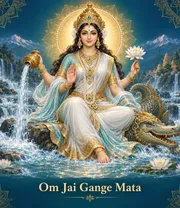
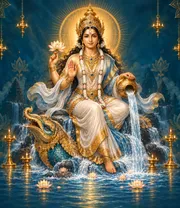
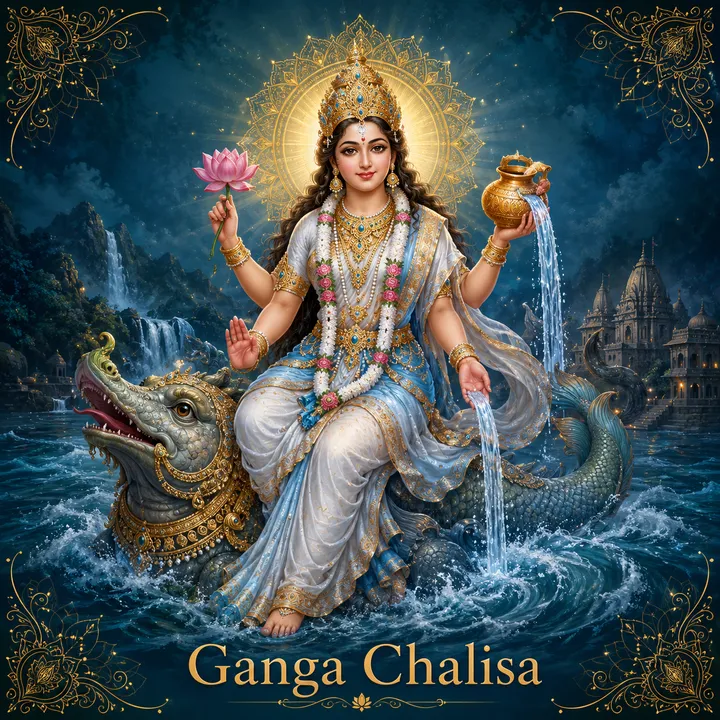
वाहन मकर विमल शुचि सोहै।अमिय कलश कर लखि मन मोहै॥
vāhana makara vimala śuci sohai।amiya kalaśa kara lakhi mana mohai॥
Her mount, the pure and radiant crocodile, shines forth; the nectar-vessel in her hand delights the mind of all who see it.
- Chaupai 6
जडित रत्न कंचन आभूषण।हिय मणि हार हरणितम दूषण॥
jaḍita ratna kaṃcana ābhūṣaṇa।hiya maṇi hāra haraṇitama dūṣaṇa॥
She is adorned with jewel-studded gold ornaments; the gem necklace at her breast removes the deepest darkness of faults.
- Chaupai 7
जग पावनि त्रय ताप नसावनि।तरल तरंग तंग मन भावनि॥
jaga pāvani traya tāpa nasāvani।tarala taraṃga taṃga mana bhāvani॥
Purifier of the world, destroyer of the three kinds of suffering — her flowing, towering waves delight the mind.
- Chaupai 8
जो गणपति अति पूज्य प्रधाना।तिहुं ते प्रथम गंग अस्नाना॥
jo gaṇapati ati pūjya pradhānā।tihuṃ te prathama gaṃga asnānā॥
Ganapati is most worthy of worship, foremost among the gods — yet bathing in the Ganga comes before even that.
- Chaupai 9
ब्रह्म कमण्डल वासिनी देवी।श्री प्रभु पद पंकज सुख सेवी॥
brahma kamaṇḍala vāsinī devī।śrī prabhu pada paṃkaja sukha sevī॥
Goddess who dwells within Brahma's water-vessel, she joyfully serves at the lotus feet of the Lord.
- Chaupai 10
साठि सहत्र सगर सुत तारयो।गंगा सागर तीरथ धारयो॥
sāṭhi sahatra sagara suta tārayo।gaṃgā sāgara tīratha dhārayo॥
She delivered the sixty thousand sons of King Sagara, and established the sacred site of Gangasagar.
- Chaupai 11
अगम तरंग उठयो मन भावन।लखि तीरथ हरिद्वार सुहावन॥
agama taraṃga uṭhayo mana bhāvana।lakhi tīratha haridvāra suhāvana॥
Her unfathomable waves rise, delightful to behold, at the beautiful pilgrimage site of Haridwar.
- Chaupai 12
तीरथ राज प्रयाग अक्षैवट।धरयौ मातु पुनि काशी करवट॥
tīratha rāja prayāga akṣaivaṭa।dharayau mātu puni kāśī karavaṭa॥
She graces Prayag, the king of pilgrimage sites, and its imperishable banyan tree; the Mother then turned toward Kashi.
- Chaupai 13
धनि धनि सुरसरि स्वर्ग की सीढ़ी।तारणि अमित पितृ पद पीढी॥
dhani dhani surasari svarga kī sīḍhī।tāraṇi amita pitṛ pada pīḍhi॥
Blessed, blessed is the celestial river, the very staircase to heaven — she who delivers countless generations of ancestors.
- Chaupai 14
भागीरथ तप कियो अपारा।दियो ब्रह्म तब सुरसरि धारा॥
bhāgīratha tapa kiyo apārā।diyo brahma taba surasari dhārā॥
Bhagiratha performed boundless austerity; then Brahma released the stream of the celestial river.
- Chaupai 15
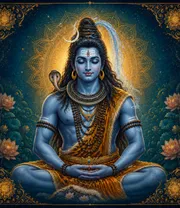
जब जग जननी चल्यो लहराई।शंभु जटा महं रह्यो समाई॥
jaba jaga jananī calyo laharāī।śaṃbhu jaṭā mahaṃ rahyo samāī॥
When the World-Mother set out, surging in great waves, she came to rest, held within Shambhu's (Shiva's) matted hair.
- Chaupai 16
वर्ष पर्यन्त गंग महरानी।रहीं शंभु के जटा भुलानी॥
varṣa paryanta gaṃga maharānī।rahīṃ śaṃbhu ke jaṭā bhulānī॥
For a full year, Queen Ganga remained lost within Shambhu's matted locks.
- Chaupai 17
मुनि भागीरथ शंभुहिं ध्यायो।तब इक बूंद जटा से पायो॥
muni bhāgīratha śaṃbhuhiṃ dhyāyo।taba ika būṃda jaṭā se pāyo॥
The sage Bhagiratha meditated upon Shambhu; then he obtained a single drop released from his matted hair.
- Chaupai 18
ताते मातु भई त्रय धारा।मृत्यु लोक नभ अरु पातारा॥
tāte mātu bhaī traya dhārā।mṛtyu loka nabha aru pātārā॥
From that drop, the Mother became three streams — flowing to the mortal world, to the heavens, and to the netherworld.
- Chaupai 19
गई पाताल प्रभावति नामा।मन्दाकिनी गई गगन ललामा॥
gaī pātāla prabhāvati nāmā।mandākinī gaī gagana lalāmā॥
The stream that went to the netherworld took the name Prabhavati; the one that adorned the sky became Mandakini.
- Chaupai 20
मृत्यु लोक जाह्नवी सुहावनि।कलिमल हरणि अगम जग पावनि॥
mṛtyu loka jāhnavī suhāvani।kalimala haraṇi agama jaga pāvani॥
The stream in the mortal world, beautiful Jahnavi, removes the sins of this dark age, purifying the world beyond measure.
- Chaupai 21
धनि मइया तव महिमा भारी।धर्म धुरि कलि कलुष कुठारी॥
dhani maiyā tava mahimā bhārī।dharma dhuri kali kaluṣa kuṭhārī॥
Blessed, Mother, is your immense glory — the very axle of dharma, the axe that fells the impurity of this dark age.
- Chaupai 22
मातु प्रभावति धनि मन्दाकिनी।धनि सुरसरित सकल भयनासिनी॥
mātu prabhāvati dhani mandākinī।dhani surasarita sakala bhayanāsinī॥
Blessed Mother Prabhavati, blessed Mandakini — blessed celestial river who destroys every fear.
- Chaupai 23
पान करत निर्मल गंगाजल।पावत मन इच्छित अनन्त फल॥
pāna karata nirmala gaṃgājala।pāvata mana icchita ananta phala॥
Drinking the pure water of the Ganga, one obtains the boundless fruit of every heartfelt wish.
- Chaupai 24
पूरब जन्म पुण्य जब जागत।तबहिं ध्यान गंगा महं लागत॥
pūraba janma puṇya jaba jāgata।tabahiṃ dhyāna gaṃgā mahaṃ lāgata॥
Only when the merit of a past life awakens does the mind come to rest in meditation upon the Ganga.
- Chaupai 25
जई पगु सुरसरि हेतु उठावहिं।तइ जगि अश्वमेध फल पावहिं॥
jaī pagu surasari hetu uṭhāvahiṃ।tai jagi aśvamedha phala pāvahiṃ॥
Whoever takes even a single step for the sake of the celestial river obtains, in this world, the fruit of an Ashvamedha sacrifice.
- Chaupai 26
महा पतित जिन काहु न तारे।तिन तारे इक नाम तिहारे॥
mahā patita jina kāhu na tāre।tina tāre ika nāma tihāre॥
Those so greatly fallen that no one else could deliver them — your name alone has delivered them.
- Chaupai 27
शत योजनहू से जो ध्यावहिं।निश्चय विष्णु लोक पद पावहिं॥
śata yojanahū se jo dhyāvahiṃ।niścaya viṣṇu loka pada pāvahiṃ॥
Whoever meditates on you from even a hundred yojanas away shall surely attain the abode of Vishnu.
- Chaupai 28
नाम भजत अगणित अघ नाशै।विमल ज्ञान बल बुद्धि प्रकाशै॥
nāma bhajata agaṇita agha nāśai।vimala jñāna bala buddhi prakāśai॥
Chanting your name destroys countless sins; it kindles pure knowledge, strength, and wisdom.
- Chaupai 29
जिमि धन मूल धर्म अरु दाना।धर्म मूल गंगाजल पाना॥
jimi dhana mūla dharma aru dānā।dharma mūla gaṃgājala pānā॥
Just as wealth is the root of righteousness and charity, so the water of the Ganga is the very root of dharma.
- Chaupai 30
तव गुण गुणन करत सुख भाजत।गृह गृह सम्पत्ति सुमति विराजत॥
tava guṇa guṇana karata sukha bhājata।gṛha gṛha sampatti sumati virājata॥
Recounting your virtues drives away sorrow; prosperity and good sense come to dwell in every home.
- Chaupai 31
गंगहिं नेम सहित निज ध्यावत।दुर्जनहूं सज्जन पद पावत॥
gaṃgahiṃ nema sahita nija dhyāvata।durjanahūṃ sajjana pada pāvata॥
One who meditates on the Ganga with disciplined devotion — even the wicked attain the standing of the virtuous.
- Chaupai 32
बुद्धिहीन विद्या बल पावै।रोगी रोग मुक्त ह्वै जावै॥
buddhihīna vidyā bala pāvai।rogī roga mukta hvai jāvai॥
The unwise gain the strength of learning; the sick are freed from their disease.
- Chaupai 33
गंगा गंगा जो नर कहहीं।भूखे नंगे कबहूं न रहहीं॥
gaṃgā gaṃgā jo nara kahahīṃ।bhūkhe naṃge kabahūṃ na rahahīṃ॥
Whoever utters 'Ganga, Ganga' never remains hungry or destitute.
- Chaupai 34
निकसत की मुख गंगा माई।श्रवण दाबि यम चलहिं पराई॥
nikasata kī mukha gaṃgā māī।śravaṇa dābi yama calahiṃ parāī॥
The moment 'Mother Ganga' leaves one's lips, Yama covers his ears and flees far away.
- Chaupai 35
महां अधिन अधमन कहं तारें।भए नर्क के बन्द किवारे॥
mahāṃ adhina adhamana kahaṃ tāreṃ।bhae narka ke banda kivāre॥
She delivers even the most fallen and wretched sinners; for them, the very doors of hell stand shut.
- Chaupai 36
जो नर जपै गंग शत नामा।सकल सिद्ध पूरण ह्वै कामा॥
jo nara japai gaṃga śata nāmā।sakala siddha pūraṇa hvai kāmā॥
Whoever recites the hundred names of the Ganga has every desire fully accomplished.
- Chaupai 37
सब सुख भोग परम पद पावहिं।आवागमन रहित ह्वै जावहिं॥
saba sukha bhoga parama pada pāvahiṃ।āvāgamana rahita hvai jāvahiṃ॥
They enjoy every happiness and attain the supreme state, freed from the cycle of birth and death.
- Chaupai 38
धनि मइया सुरसरि सुखदैनी।धनि धनि तीरथ राज त्रिवेणी॥
dhani maiyā surasari sukhadainī।dhani dhani tīratha rāja triveṇī॥
Blessed is the Mother, the joy-giving celestial river; blessed, blessed is Triveni, the king of pilgrimage sites.
- Chaupai 39
ककरा ग्राम ऋषि दुर्वासा।सुन्दरदास गंगा कर दासा॥
kakarā grāma ṛṣi durvāsā।sundaradāsa gaṃgā kara dāsā॥
At the village of Kakra, home of the sage Durvasa — Sundardas is a servant of the Ganga.
- Chaupai 40
जो यह पढ़ै गंगा चालीसा।मिलै भक्ति अविरल वागीसा॥
jo yaha paḍhai gaṃgā cālīsā।milai bhakti avirala vāgīsā॥
Whoever reads this Ganga Chalisa attains unbroken devotion and mastery of speech.
- Closing dohas
- Doha (closing)
नित नव सुख सम्पत्ति लहैं, धरैं गंग का ध्यान।अन्त समय सुरपुर बसै, सादर बैठि विमान॥
nita nava sukha sampatti lahaiṃ, dharaiṃ gaṃga kā dhyāna।anta samaya surapura basai, sādara baiṭhi vimāna॥
One who holds the Ganga in meditation ever attains new happiness and prosperity; at life's end, they dwell in the abode of the gods, seated with honor upon a celestial chariot.
- Doha (colophon)
सम्वत् भुज नभ दिशि, राम जन्म दिन चैत्र।पूण चालीसा कियो, हरि भक्तन हित नैत्र॥
samvat bhuja nabha diśi, rāma janma dina caitra।pūṇa cālīsā kiyo, hari bhaktana hita naitra॥
In the era recorded here in number-words, on Rama's birth-day in the month of Chaitra, this Chalisa was completed, for the good and the sight of the Lord's devotees.
Overview
The Ganga Chalisa is a Hindi devotional composition in praise of the river Ganga, worshipped across Hindu tradition as a goddess, a mother, and the physical embodiment of purification. Like the Ganesh Chalisa, it is framed by an opening doha and closes with not one but two dohas — a benedictory closing verse and, unusually, a short colophon verse recording the date of composition in number-words. Between them run forty numbered chaupai lines, each a self-contained couplet, giving the text the “forty” of its name distinct from the three framing dohas. The verses describe Ganga’s iconography — her crocodile mount, her vessel of nectar, her jewelled ornaments — recount the story of her descent from the heavens through Bhagiratha’s austerity and Shiva’s matted hair, and catalogue the merit said to come from bathing in her waters, drinking them, or simply speaking her name.
Origin and source
The Ganga Chalisa’s authorship is not well established in secondary literature. The text itself, in its next-to-last chaupai, names its composer: “Sundardas, servant of the Ganga” (चौपाई ३९), locating him at “Kakra village” in the company of the sage Durvasa. This is the same place-name and sage — Kakra and Durvasa — that the Ganesh Chalisa’s closing verses attribute to a poet it names “Ramsundar” (or Ram Sunder Prabhu Das). Whether “Sundardas” and “Ramsundar” reflect the same author, two names for one composer, or simply a shared regional tradition of self-naming within chalisa verses, the connection is not resolved in the sources consulted for this page, and no firmer scholarly attribution has been found. As with the Ganesh Chalisa, this page treats the Ganga Chalisa as a traditional composition recited across Hindu practice, with its authorship named within the verses but not otherwise independently documented.
The chaupai narrate the well-known account of Ganga’s descent: King Sagara’s sixty thousand sons, reduced to ash, could be liberated only by the touch of Ganga’s waters; his descendant Bhagiratha performed great austerities to bring her down from the heavens; and because the force of her fall would have shattered the earth, Shiva caught her in his matted hair, where she wandered lost for a year before Bhagiratha’s renewed meditation released a single drop. That drop is described as dividing into three streams — one to the netherworld (named Prabhavati), one adorning the sky (Mandakini), and one flowing through the mortal world as Jahnavi, the Ganga known to pilgrims today. The verses also touch on her sacred geography — Haridwar, Prayag, Kashi, Gangasagar, and the Triveni confluence — and close, like other chalisas, with a doha on the benefit of reciting it, followed by the colophon doha marking when the text was composed.
How it is recited
The Ganga Chalisa is read by devotees at her temples and ghats throughout the year, and especially on Ganga Dussehra and Ganga Saptami, the festivals marking her descent to earth. It is commonly recited before or after snan — ritual bathing in the river, or in Ganga water kept at home — as an accompaniment to the physical act of purification the chalisa itself describes. Alongside the chalisa, many households and temples also sing “Om Jai Gange Mata,” a separate aarti addressed to Ganga, typically in the evening with a lit lamp; the two texts are distinct compositions but are often recited together as part of the same round of worship.
Frequently asked questions
How many verses does Ganga Chalisa have?
Who is Ganga Chalisa dedicated to?
When is Ganga Chalisa typically recited?
What language is Ganga Chalisa composed in?
What tradition is Ganga Chalisa associated with?
Is an English translation of Ganga Chalisa available?
Is there a Roman transliteration of Ganga Chalisa?
Sourcing
Checked against independent sources before publishing — see our sourcing and editorial policy. Spotted an error? Report an issue .