The text
Tap Recite along to follow verse by verse — use Next, or the arrow keys.
- Opening dohas
- Doha (opening) 1
सुमिर चित्रगुप्त ईश को, सतत नवाऊ शीश।ब्रह्मा विष्णु महेश सह, रिनिहा भए जगदीश॥
sumira citragupta īśa ko, satata navāū śīśa।brahmā viṣṇu maheśa saha, rinihā bhae jagadīśa॥
Remembering Lord Chitragupta, I bow my head again and again — together with Brahma, Vishnu, and Mahesh, all stand in your debt, O lord of the universe.
- Doha (opening) 2
करो कृपा करिवर वदन, जो सरशुती सहाय।चित्रगुप्त जस विमलयश, वंदन गुरूपद लाय॥
karo kṛpā karivara vadana, jo saraśutī sahāya।citragupta jasa vimalayaśa, vandana gurūpada lāya॥
Show your grace, O elephant-faced one, you who have Saraswati's aid — so that I, bowing at my guru's feet, may sing Chitragupta's pure and unblemished glory.
- The 40 chaupais
- Chaupai 1
जय चित्रगुप्त ज्ञान रत्नाकर।जय यमेश दिगंत उजागर॥
jaya citragupta jñāna ratnākara।jaya yameśa digaṃta ujāgara॥
Victory to Chitragupta, ocean of wisdom! Victory to you who illumine the far horizons, seated beside Yama, lord of death.
- Chaupai 2
आज सहाय अवतरेउ गुसांई।कीन्हेउ काज ब्रम्ह कीनाई॥
āja sahāya avatareu gusāṃī।kīnheu kāja brahma kīnāī॥
You came to his aid and took incarnation, O Lord — you carried out Brahma's own task.
- Chaupai 3
अज की रचना मानव सुंदर।मानव मति अज होई निरूत्तर॥
aja kī racanā mānava suṃdara।mānava mati aja hoī nirūttara॥
Beautiful is Aja's [Brahma's] creation of humankind — yet human understanding remains unable to fully know Aja.
- Chaupai 4
भए प्रकट चित्रगुप्त सहाई।धर्मा धर्म गुण ज्ञान कराई॥
bhae prakaṭa citragupta sahāī।dharmā dharma guṇa jñāna karāī॥
Chitragupta appeared as a helper, imparting the knowledge to discern right from wrong.
- Chaupai 5
राचेउ धरम धरम जग मांही।धर्म अवतार लेत तुम पांही॥
rāceu dharama dharama jaga māṃhī।dharma avatāra leta tuma pāṃhī॥
You upheld dharma amid dharma throughout the world; you yourself take incarnation for dharma's sake.
- Chaupai 6
अहम विवेकइ तुमहि विधाता।निज सत्ता पा करहिं कुघाता॥
ahama vivekai tumahi vidhātā।nija sattā pā karahiṃ kughātā॥
You alone discern pride and self-conceit, O ordaining one; you take note of those who, gaining power, commit evil deeds.
- Chaupai 7
श्रृष्टि संतुलन के तुम स्वामी।त्रय देवन कर शक्ति समानी॥
śṛṣṭi saṃtulana ke tuma svāmī।traya devana kara śakti samānī॥
You are the master of creation's balance; the power of the three gods is equally present within you.
- Chaupai 8
पाप मृत्यु जग में तुम लाए।भय का भूत सकल जग छाए॥
pāpa mṛtyu jaga meṃ tuma lāe।bhaya kā bhūta sakala jaga chāe॥
You brought sin and death into the world; the specter of fear has spread across the whole world.
- Chaupai 9
महाकाल के तुम हो साक्षी।ब्रम्हउ मरन न जान मीनाक्षी॥
mahākāla ke tuma ho sākṣī।brahmau marana na jāna mīnākṣī॥
You are witness to the great dissolution of time itself; even Brahma cannot know the hour of death, O fish-eyed one.
- Chaupai 10
धर्म कृष्ण तुम जग उपजायो।कर्म क्षेत्र गुण ज्ञान करायो॥
dharma kṛṣṇa tuma jaga upajāyo।karma kṣetra guṇa jñāna karāyo॥
You brought forth Dharma and Krishna into the world; you made known the virtue and wisdom of the field of action.
- Chaupai 11
राम धर्म हित जग पगु धारे।मानव गुण सद्गुण अति प्यारे॥
rāma dharma hita jaga pagu dhāre।mānava guṇa sadguṇa ati pyāre॥
For dharma's sake Rama set foot upon the earth; human virtue and goodness became most cherished.
- Chaupai 12
विष्णु चक्र पर तुम्हीं विराजे।पालन धर्म करम शुचि साजे॥
viṣṇu cakra para tumhīṃ virāje।pālana dharma karama śuci sāje॥
You alone are seated upon Vishnu's discus; you array the pure deeds of preservation and dharma.
- Chaupai 13
महादेव के तुम त्रय लोचन।प्रेरक शिव अस तांडव नर्तन॥
mahādeva ke tuma traya locana।preraka śiva asa tāṃḍava nartana॥
You are Mahadev's three eyes; you inspire Shiva's own tandava dance.
- Chaupai 14
सावित्री पर कृपा निराली।विद्यानिधि मां सब जग आली॥
sāvitrī para kṛpā nirālī।vidyānidhi māṃ saba jaga ālī॥
Savitri's grace here is singular — O treasury of learning, mother pervading the whole world.
- Chaupai 15
रमा भाल पर कर अति दाया।श्रीनिधि अगम अकूत अगाया॥
ramā bhāla para kara ati dāyā।śrīnidhi agama akūta agāyā॥
Your hand rests in great favor upon Lakshmi's brow; O treasury of splendor, unfathomable and boundless is your glory.
- Chaupai 16
उमा विच शक्ति शुचि राच्यो।जाके बिन शिव शव जग बाच्यो॥
umā vica śakti śuci rācyo।jāke bina śiva śava jaga bācyo॥
Uma's power is purely interwoven within you; without her, Shiva is known in this world as a mere corpse.
- Chaupai 17
गुरु बृहस्पति सुर पति नाथा।जाके कर्म गहइ तव हाथा॥
guru bṛhaspati sura pati nāthā।jāke karma gahai tava hāthā॥
Even Guru Brihaspati, teacher and lord of the gods — his deeds too are upheld by your hand.
- Chaupai 18
रावण कंस सकल मतवारे।तव प्रताप सब सरग सिधारे॥
rāvaṇa kaṃsa sakala matavāre।tava pratāpa saba saraga sidhāre॥
Ravana, Kansa, and all such arrogant, deluded ones — by your power, every one of them was dispatched from this world.
- Chaupai 19
प्रथम पूज्य गणपति महदेवा।सोऊ करत तुम्हारी सेवा॥
prathama pūjya gaṇapati mahadevā।soū karata tumhārī sevā॥
Ganapati, foremost among the worshipped and a great god himself, performs service to you.
- Chaupai 20
रिद्धी सिद्धी पाय द्वैनारी।विघ्नहरण शुभ काज संवारी॥
riddhī siddhī pāya dvainārī।vighnaharaṇa śubha kāja saṃvārī॥
Riddhi and Siddhi, the two goddesses, having received your grace, remove obstacles and set every auspicious task right.
- Chaupai 21
व्यास रचहि जब वेद पुराना।गणपति लिपिबद्ध हितमन ठाना॥
vyāsa racahi jaba veda purānā।gaṇapati lipibaddha hitamana ṭhānā॥
As Vyas set about composing the Vedas and Puranas, Ganapati resolved, with a caring mind, to set them down in writing.
- Chaupai 22
पोथी मसि शुचि लेखली दीन्हा।अवसर देय जगत कृत कीन्हा॥
pothī masi śuci lekhalī dīnhā।avasara deya jagata kṛta kīnhā॥
You gave the pure manuscript, ink, and pen for that task, granting the occasion for the world's benefit.
- Chaupai 23
लेखनी मसि सद कागद कोरा।तव प्रताप अजु जगत मझोरा॥
lekhanī masi sada kāgada korā।tava pratāpa aju jagata majhorā॥
The pen, the ink, and the blank paper — through your glory alone, they stand today at the very pivot of the world.
- Chaupai 24
विद्या विनय पराक्रम भारी।तुम आधार जगत आभारी॥
vidyā vinaya parākrama bhārī।tuma ādhāra jagata ābhārī॥
Great is your learning, humility, and might; you are the support for which the world is grateful.
- Chaupai 25
राम कृष्ण गुरुवर गृह जाई।प्रथम गुरु महिमा गुण गाई॥
rāma kṛṣṇa guruvara gṛha jāī।prathama guru mahimā guṇa gāī॥
Rama and Krishna themselves went to their guru's house, singing first the glory and virtue of the guru.
- Chaupai 26
देववृत जप तप व्रत कीन्हा।इच्छा मृत्यु परम वर दीन्हा॥
devavrata japa tapa vrata kīnhā।icchā mṛtyu parama vara dīnhā॥
The gods themselves undertook japa, austerity, and vows; you granted them the great boon of choosing the hour of their own death.
- Chaupai 27
धर्म हीन सौदास कुराजा।तप तुम्हार बैकुंठ विराजा॥
dharma hīna saudāsa kurājā।tapa tumhāra baikuṃṭha virājā॥
Saudasa, a king devoid of righteousness — even so, through your working, his penance found him a seat in Vaikuntha.
- Chaupai 28
हरि पद दीन्ह धर्म हरि नामा।कायथ परिजन परम पितामा॥
hari pada dīnha dharma hari nāmā।kāyatha parijana parama pitāmā॥
You granted the station and the very name of Hari's own dharma; to the Kayastha community you are their supreme ancestor.
- Chaupai 29
सूर सुता नंदनी मनोहर।चित्रगुप्त संग ब्याही सुंदर॥
sūra sutā naṃdinī manohara।citragupta saṃga byāhī suṃdara॥
The lovely and gracious Nandini, daughter of the Sun, was married to Chitragupta.
- Chaupai 30
भानु विभानु विश्वभानु सुहाए।वीर्यभानु चतुरथ सुत पाए॥
bhānu vibhānu viśvabhānu suhāe।vīryabhānu caturatha suta pāe॥
The auspicious sons Bhanu, Vibhanu, and Vishvabhanu were born to them, along with the fourth son, Viryabhanu.
- Chaupai 31
नागसुता एरावती सयानी।अति सुंदर अति गुण खानी॥
nāgasutā erāvatī sayānī।ati suṃdara ati guṇa khānī॥
The wise Naga-princess Iravati — utterly beautiful, a very mine of virtues —
- Chaupai 32
ब्याही दूजी भामिनी सुंदर।अष्ठ पुत्र जिनके अति सुंदर॥
byāhī dūjī bhāminī suṃdara।aṣṭha putra jinake ati suṃdara॥
was wed as the second, most lovely consort; to her were born eight sons, every one exceedingly fine.
- Chaupai 33
चारू सुचारू चित्र मतिभाना।चितचारू उरूण अतिंद्र हिमवाना॥
cārū sucārū citra matibhānā।citacārū uruṇa atiṃdra himavānā॥
Their names: Charu, Sucharu, Chitra, and Matibhana; Chitcharu, Uruna, Atindra, and Himavana.
- Chaupai 34
द्वादस पूत जगत अस लाए।राशी चक्र आधार सुहाए॥
dvādasa pūta jagata asa lāe।rāśī cakra ādhāra suhāe॥
Thus twelve sons were brought into the world, becoming the very foundation of the zodiac wheel.
- Chaupai 35
जस पूता तस राशी रचाना।ज्योतिष के तुम जनक महाना॥
jasa pūtā tasa rāśī racānā।jyotiṣa ke tuma janaka mahānā॥
As were the sons, so was the zodiac fashioned; you are the great progenitor of astrology itself.
- Chaupai 36
तिथि लगन होरा दिग्दर्शन।चारि अष्ट चित्रांश सुदर्शन॥
tithi lagana horā digdarśana।cāri aṣṭa citrāṃśa sudarśana॥
Tithi, lagna, hora, and the reading of directions; the fourfold and eightfold divisions of the chitramsha —
- Chaupai 37
राशी नखत जो जातक धारे।धर्म कर्म फल तुमहि अधारे॥
rāśī nakhata jo jātaka dhāre।dharma karma phala tumahi adhāre॥
whatever fate a person bears by constellation and lunar mansion — the fruit of their dharma and karma rests upon you.
- Chaupai 38
जय जय जय चित्रगुप्त गुसांई।गुरूवर गुरु पद पाय सहांई॥
jaya jaya jaya citragupta gusāṃī।gurūvara guru pada pāya sahāṃī॥
Victory, victory, victory to Chitragupta, O Lord — having reached your guru's feet, you became his helper.
- Chaupai 39
जो शत पाठ करइ चालीसा।जन्म मरण दुःख कटइ कलेसा॥
jo śata pāṭha karai cālīsā।janma maraṇa duḥkha kaṭai kalesā॥
Whoever recites this chalisa a hundred times — their sorrows of birth and death are cut away.
- Chaupai 40
विनय करैं कुलदीप शुवेशा।राख पिता सम नेह हमेशा॥
vinaya karaiṃ kuladīpa śuveśā।rākha pitā sama neha hameśā॥
This lamp of the family humbly prays: keep for me always the love of a father.
- Closing dohas
- Doha (closing) 1
ज्ञान कलम, मसि सरस्वती, अंबर है मसिपात्र।कालचक्र की पुस्तिका, सदा रखे दंडास्त्र॥
jñāna kalama, masi sarasvatī, aṃbara hai masipātra।kālacakra kī pustikā, sadā rakhe daṃḍāstra॥
Knowledge is your pen, Saraswati your ink, the sky itself your inkpot; you hold the book of the wheel of time always, along with your rod of justice.
- Doha (closing) 2
पाप पुन्य लेखा करन, धार्यो चित्र स्वरूप।श्रृष्टिसंतुलन स्वामीसदा, सरग नरक कर भूप॥
pāpa punya lekhā karana, dhāryo citra svarūpa।śṛṣṭisaṃtulana svāmīsadā, saraga naraka kara bhūpa॥
To reckon the account of sin and merit, you have taken this recorded form; ever the lord of creation's balance, you are sovereign of both heaven and hell.
Overview
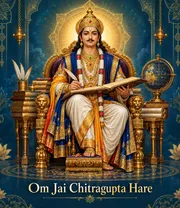
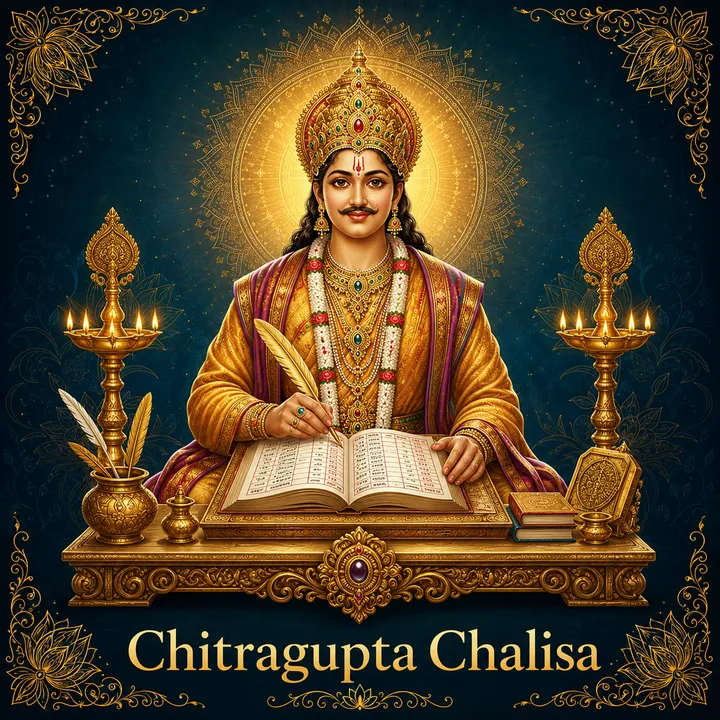
The Chitragupta Chalisa is a forty-couplet Hindi devotional composition — framed by two opening dohas and two closing dohas — in praise of Chitragupta, the scribe deity who, in Hindu tradition, keeps the written record of every being’s deeds and reads it before Yama, lord of death, at the time of judgment. Rather than narrating one single myth, its chaupais move through Chitragupta’s cosmological origin as Brahma’s helper in creation, his identification with the balance and order of the universe (invoking, in turn, the power of Brahma, Vishnu, and Shiva), his role in the writing of the Vedas and Puranas at Ganesha’s pen, the astrological order (the zodiac, tithi, and lagna) he is said to have laid down, and — distinctively — the names of his two wives and twelve sons, whom Kayastha tradition holds to be the ancestors of the community’s principal sub-castes. It closes, as the genre typically does, with a verse on the benefit of reciting the chalisa.
Origin and source
Four of the sources checked for this page — TransLiteral (dated February 2018), Divya Narmada (a blog post dated April 2019), Sri Mandir (a devotional-services company’s article, dated March 2025), and Bhaktvatsal (an undated lyrics aggregator) — reproduce the same text character-for-character, down to shared idiosyncrasies such as “मानव संदर” (an apparent typo for “सुंदर”) and a single garbled couplet (“शुर शुयशमा बन जामाता। क्षत्रिय विप्र सकल आदाता॥”) that reads as a compressed remnant of a longer passage. These four sites are one mirrored lineage, not independent witnesses of one another, and their shared text runs to only 38 couplets.
A fifth source, Kayastha Samaj — a community organization site for the Kayastha caste, which reveres Chitragupta as its progenitor — carries a different, self-numbered 40-couplet text, matching the “chalisa” name itself where the mirrored text above falls two couplets short. It diverges from the mirrored text throughout in wording and couplet order, and, most substantively, restores five couplets missing from the mirrored text: verses naming Chitragupta’s two wives — Nandini, daughter of the Sun, and the Naga princess Iravati — and the twelve sons born to them. This also resolves an internal problem in the shorter, mirrored text: its couplet “द्वादस पूत जगत अस लाए” (“thus twelve sons were brought into the world”) has no antecedent naming any sons at all, while the Kayastha Samaj text supplies exactly that antecedent immediately beforehand. This page follows the Kayastha Samaj text as its base transcription for that reason — it reads as the more complete recension of the same composition, and the genealogical tradition it preserves (Chitragupta’s two wives and twelve sons as founders of the Kayastha sub-castes) is independently well documented as the community’s own account of its origins, apart from this chalisa. The shorter, four-times-mirrored text nonetheless remains the version circulating far more widely on devotional lyrics sites online, and a reader encountering this chalisa elsewhere may well meet that 38-couplet form instead.
As with several other chalisas in this collection, no composer is named in the text and none is documented in the sources consulted, so this page treats it as an anonymous traditional composition. The verses’ own Awadhi-inflected verb forms — “कीन्हेउ,” “अवतरेउ,” “राचेउ” — place it within the same older, Ramcharitmanas-adjacent literary register shared by many chalisas in this collection, rather than in plain modern Hindi.
How it is recited
The Chitragupta Chalisa is recited especially around Chitragupta Puja, observed on Yama Dwitiya (Bhai Dooj, the second day after the Diwali festival), when the Kayastha community — which traces its own name and lineage to Chitragupta — worships him alongside the pen, ink, and ledger books that are the implements of his role as the divine record-keeper. It is also read by devotees more broadly who look to him for a favorable reckoning in the life to come.
Frequently asked questions
How many verses does Chitragupta Chalisa have?
Who is Chitragupta Chalisa dedicated to?
When is Chitragupta Chalisa typically recited?
What language is Chitragupta Chalisa composed in?
What tradition is Chitragupta Chalisa associated with?
Is an English translation of Chitragupta Chalisa available?
Is there a Roman transliteration of Chitragupta Chalisa?
Sourcing
Checked against independent sources before publishing — see our sourcing and editorial policy. Spotted an error? Report an issue .