The text
Tap Recite along to follow verse by verse — use Next, or the arrow keys.
- Stanza 1 (refrain)
ॐ जय गंगे माता, श्री जय गंगे माता।जो नर तुमको ध्याता, मनवांछित फल पाता॥
oṃ jaya gaṅge mātā, śrī jaya gaṅge mātā।jo nara tumako dhyātā, manavā̃chita phala pātā॥
Victory to Mother Ganga, victory to holy Mother Ganga. Whoever meditates on you obtains the fruit of their heart's desire.
- Stanza 2
चन्द्र सी ज्योति तुम्हारी, जल निर्मल आता।शरण पड़े जो तेरी, सो नर तर जाता॥ॐ जय गंगे माता, श्री जय गंगे माता।जो नर तुमको ध्याता, मनवांछित फल पाता॥
candra sī jyoti tumhārī, jala nirmala ātā।śaraṇa paṛe jo terī, so nara tara jātā॥oṃ jaya gaṅge mātā, śrī jaya gaṅge mātā।jo nara tumako dhyātā, manavā̃chita phala pātā॥
Your radiance is like the moon, and your water flows pure and clear; whoever takes refuge in you crosses safely over. Victory to Mother Ganga, victory to holy Mother Ganga. Whoever meditates on you obtains the fruit of their heart's desire.
- Stanza 3
पुत्र सगर के तारे, सब जग को ज्ञाता।कृपा दृष्टि तुम्हारी, त्रिभुवन सुखदाता॥ॐ जय गंगे माता, श्री जय गंगे माता।जो नर तुमको ध्याता, मनवांछित फल पाता॥
putra sagara ke tāre, saba jaga ko jñātā।kṛpā dṛṣṭi tumhārī, tribhuvana sukhadātā॥oṃ jaya gaṅge mātā, śrī jaya gaṅge mātā।jo nara tumako dhyātā, manavā̃chita phala pātā॥
You freed the sons of Sagara, and you know the whole world; your glance of grace grants happiness to all three worlds. Victory to Mother Ganga, victory to holy Mother Ganga. Whoever meditates on you obtains the fruit of their heart's desire.
- Stanza 4
एक ही बार जो तेरी, शरणागति आता।यम की त्रास मिटाकर, परमगति पाता॥ॐ जय गंगे माता, श्री जय गंगे माता।जो नर तुमको ध्याता, मनवांछित फल पाता॥
eka hī bāra jo terī, śaraṇāgati ātā।yama kī trāsa miṭākara, paramagati pātā॥oṃ jaya gaṅge mātā, śrī jaya gaṅge mātā।jo nara tumako dhyātā, manavā̃chita phala pātā॥
Whoever comes to your refuge even once has their fear of Yama, lord of death, dispelled, and attains the highest state. Victory to Mother Ganga, victory to holy Mother Ganga. Whoever meditates on you obtains the fruit of their heart's desire.
- Stanza 5
आरती मात तुम्हारी, जो जन नित गाता।दास वही सहज में, मुक्ति को पाता॥ॐ जय गंगे माता, श्री जय गंगे माता।जो नर तुमको ध्याता, मनवांछित फल पाता॥
āratī māta tumhārī, jo jana nita gātā।dāsa vahī sahaja mẽ, mukti ko pātā॥oṃ jaya gaṅge mātā, śrī jaya gaṅge mātā।jo nara tumako dhyātā, manavā̃chita phala pātā॥
Whoever daily sings your aarti, Mother, that servant easily attains liberation. Victory to Mother Ganga, victory to holy Mother Ganga. Whoever meditates on you obtains the fruit of their heart's desire.
Overview
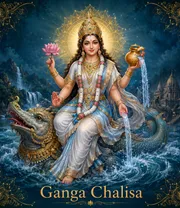
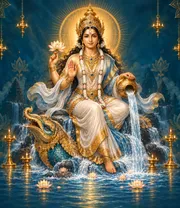
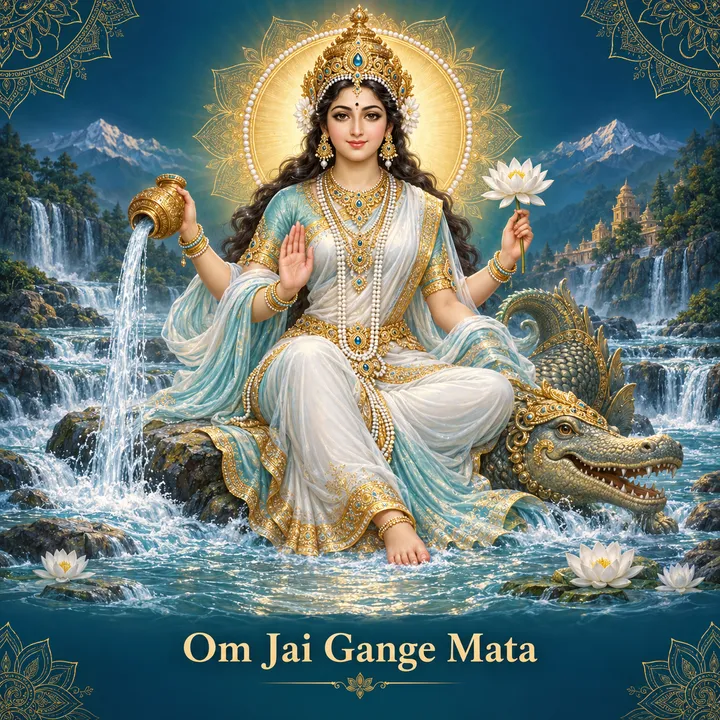
Om Jai Gange Mata is a short Hindi aarti of five stanzas in praise of the river Ganga, worshipped as a goddess and mother across Hindu tradition. Each stanza is followed by the opening refrain, “Om jai Gange mata, shri jai Gange mata,” exactly as it is sung and printed in devotional collections. It is one of the aartis most commonly heard at the river’s ghats, distinct from longer aartis to Durga or Lakshmi in its brevity and its direct focus on the Ganga’s purifying waters.
Origin and source
Om Jai Gange Mata is an anonymous, traditionally transmitted composition; devotional lyric sites that publish it do not attribute it to a named author, unlike some other popular aartis. Its third stanza — “you freed the sons of Sagara” — points to the Puranic and Ramayana story of King Bhagiratha, who performed long austerities to bring the celestial Ganga down to earth so her waters could liberate the sixty thousand sons of King Sagara, reduced to ashes by a sage’s curse. The aarti’s closing stanzas, on taking refuge in the river and being freed from the fear of Yama, reflect the broader Hindu understanding of the Ganga as a goddess whose waters purify and liberate those who bathe in her or invoke her with devotion.
How it is recited
Om Jai Gange Mata is sung at the daily evening Ganga aarti performed on the river’s ghats, most famously at Har Ki Pauri in Haridwar and at the ghats of Varanasi, where priests circle large multi-tiered lamps before the river as crowds gather at dusk. It is also sung in home worship and at smaller riverside and temple aartis elsewhere, and it takes on particular importance on Ganga Dussehra, the festival that marks the river’s mythic descent to earth. As with other aartis, it is sung while a lit lamp or flame is offered to the deity — here, offered toward the river itself — with the refrain repeated by everyone present after each stanza.
Frequently asked questions
How many verses does Om Jai Gange Mata have?
Who is Om Jai Gange Mata dedicated to?
When is Om Jai Gange Mata typically recited?
What language is Om Jai Gange Mata composed in?
What tradition is Om Jai Gange Mata associated with?
Is an English translation of Om Jai Gange Mata available?
Is there a Roman transliteration of Om Jai Gange Mata?
Sourcing
Checked against independent sources before publishing — see our sourcing and editorial policy. Spotted an error? Report an issue .