The text
Tap Recite along to follow verse by verse — use Next, or the arrow keys.
- Stanza 1 (refrain)
जय सरस्वती माता, मैया जय सरस्वती माता।सदगुण वैभव शालिनी, त्रिभुवन विख्याता॥
jaya sarasvatī mātā, maiyā jaya sarasvatī mātā।sadaguṇa vaibhava śālinī, tribhuvana vikhyātā॥
Victory to Mother Saraswati — victory to you, Mother Saraswati. Radiant with noble virtues, you are renowned throughout the three worlds.
- Stanza 2
चन्द्रवदनि पद्मासिनि, द्युति मंगलकारी।सोहे शुभ हंस सवारी, अतुल तेजधारी॥जय जय सरस्वती माता॥
candravadani padmāsini, dyuti maṅgalakārī।sohe śubha haṃsa savārī, atula tejadhārī॥jaya jaya sarasvatī mātā॥
Moon-faced, seated on a lotus, your radiance brings auspiciousness; you shine, mounted gracefully on your swan, bearing unmatched brilliance. Victory, victory to Mother Saraswati.
- Stanza 3
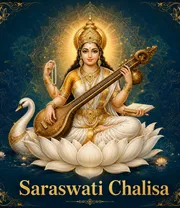
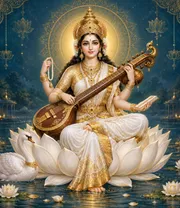
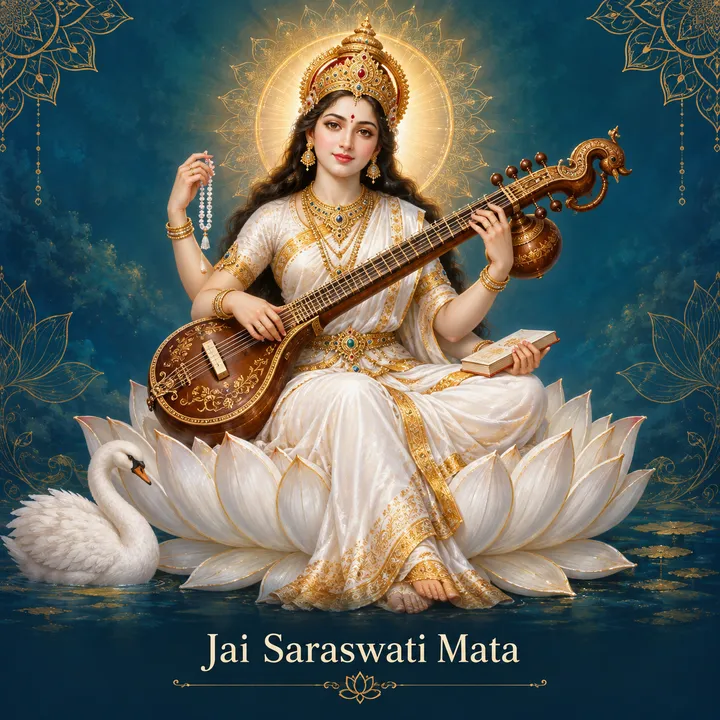
बाएं कर में वीणा, दाएं कर माला।शीश मुकुट मणि सोहे, गल मोतियन माला॥जय जय सरस्वती माता॥
bāẽ kara meṃ vīṇā, dāẽ kara mālā।śīśa mukuṭa maṇi sohe, gala motiyana mālā॥jaya jaya sarasvatī mātā॥
A veena rests in your left hand, a rosary in your right; a jewel-studded crown shines on your head, and a pearl garland adorns your neck. Victory, victory to Mother Saraswati.
- Stanza 4
देवी शरण जो आए, उनका उद्धार किया।पैठी मंथरा दासी, रावण संहार किया॥जय जय सरस्वती माता॥
devī śaraṇa jo āe, unakā uddhāra kiyā।paiṭhī mantharā dāsī, rāvaṇa sanhāra kiyā॥jaya jaya sarasvatī mātā॥
Whoever has taken refuge in the Goddess, she has delivered; entering as the maidservant Manthara, she brought about Ravana's destruction. Victory, victory to Mother Saraswati.
- Stanza 5
विद्या ज्ञान प्रदायिनि, ज्ञान प्रकाश भरो।मोह अज्ञान और तिमिर का, जग से नाश करो॥जय जय सरस्वती माता॥
vidyā jñāna pradāyini, jñāna prakāśa bharo।moha ajñāna aura timira kā, jaga se nāśa karo॥jaya jaya sarasvatī mātā॥
O giver of learning and knowledge, fill us with the light of knowledge; remove attachment, ignorance, and darkness from the world. Victory, victory to Mother Saraswati.
- Stanza 6
धूप दीप फल मेवा, माँ स्वीकार करो।ज्ञानचक्षु दे माता, जग निस्तार करो॥जय जय सरस्वती माता॥
dhūpa dīpa phala mevā, mā̃ svīkāra karo।jñānacakṣu de mātā, jaga nistāra karo॥jaya jaya sarasvatī mātā॥
Accept, O Mother, this incense, lamp, fruit, and dried-fruit offering; grant us the eye of knowledge, Mother, and deliver the world. Victory, victory to Mother Saraswati.
- Stanza 7 (closing)
माँ सरस्वती की आरती, जो कोई जन गावे।हितकारी सुखकारी, ज्ञान भक्ति पावे॥जय सरस्वती माता, जय जय सरस्वती माता।सदगुण वैभव शालिनी, त्रिभुवन विख्याता॥
mā̃ sarasvatī kī āratī, jo koī jana gāve।hitakārī sukhakārī, jñāna bhakti pāve॥jaya sarasvatī mātā, jaya jaya sarasvatī mātā।sadaguṇa vaibhava śālinī, tribhuvana vikhyātā॥
Whoever sings this aarti of Mother Saraswati gains benefit and happiness, and attains knowledge and devotion. Victory to Mother Saraswati, victory, victory to Mother Saraswati — radiant with noble virtues, renowned throughout the three worlds.
Overview
Jai Saraswati Mata is a Hindi aarti in praise of Saraswati, the goddess of learning, music, and speech. Its opening line, “Jai Saraswati Mata, maiya jai Saraswati Mata,” is repeated as a short refrain after every stanza, and the whole song closes by returning to that same opening verse — a bookend structure common to this family of Hindi aartis. It describes Saraswati’s iconography — her moon-like face, her lotus seat, her swan mount, the veena in her left hand and the rosary in her right — and asks her to remove ignorance and grant the light of knowledge.
Origin and source
Jai Saraswati Mata is a traditional composition transmitted through devotional collections and oral practice; devotional publishers and lyric sites do not agree on a single named author, and no one attribution could be verified here, so none is given. Its meter and refrain pattern place it in the same broad family of Hindi “Jai ___ Mata” aartis as Jai Ambe Gauri, though the two are separate compositions with different authorial histories where those are known.
One stanza recalls a Puranic-adjacent legend, found in some devotional retellings of the Ramayana, in which Saraswati is said to have entered the household of Ravana in the guise of the maidservant Manthara, setting in motion the events that led to his downfall — a story not found in Valmiki’s Ramayana itself but preserved in later devotional tradition, and cited here as the basis for that verse rather than as settled history.
How it is recited
Jai Saraswati Mata is sung in homes and temples much like other aartis, with a lit diya or camphor flame circled before the deity’s image while the refrain is repeated by everyone present. It is especially associated with Basant Panchami, the spring festival dedicated to Saraswati, when it is sung as part of her puja. It is also widely used outside formal worship: many schools in North India open the day with it as a morning prayer, and it is recited at Vidyarambh, the ceremony that marks a child’s first formal introduction to letters and learning, reflecting Saraswati’s role as the goddess invoked at the start of education.
Frequently asked questions
How many verses does Jai Saraswati Mata have?
Who is Jai Saraswati Mata dedicated to?
When is Jai Saraswati Mata typically recited?
What language is Jai Saraswati Mata composed in?
What tradition is Jai Saraswati Mata associated with?
Is an English translation of Jai Saraswati Mata available?
Is there a Roman transliteration of Jai Saraswati Mata?
Sourcing
Checked against independent sources before publishing — see our sourcing and editorial policy. Spotted an error? Report an issue .