Overview
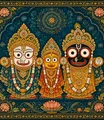
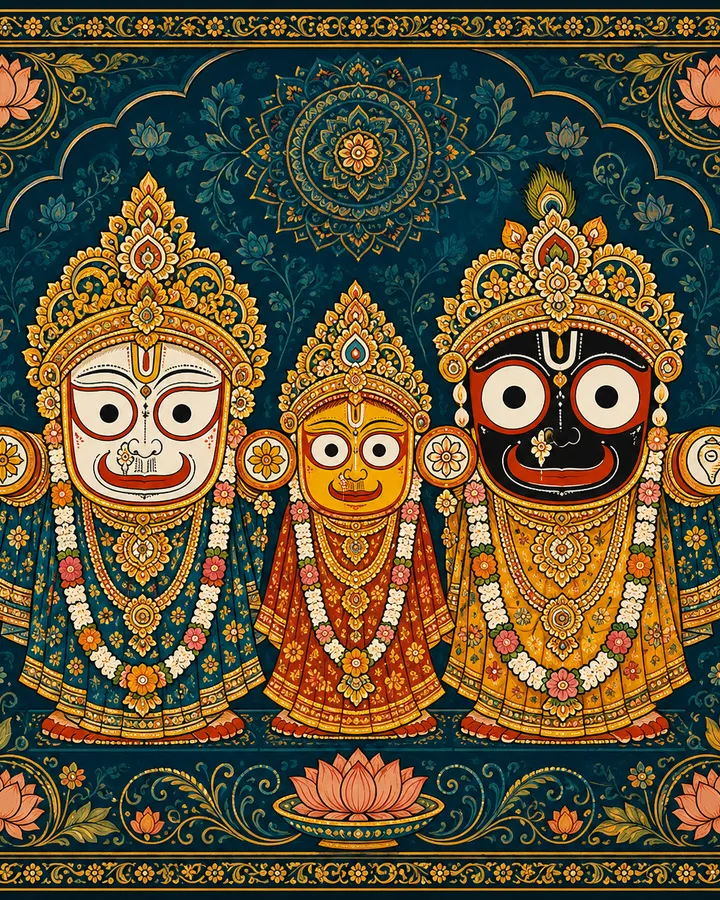
Rath Yatra is the chariot festival of Jagannath at Puri, on Ashadha Shukla Dwitiya: the three deities — Jagannath, his brother Balabhadra and sister Subhadra — are carried from the temple to three huge wooden chariots and pulled by the crowd along the Grand Road to the Gundicha temple, where they stay nine days before returning. It is the one time in the year the deities are seen outside the temple, by anyone, and it draws over a million people. See the Jagannath page for the deity and the temple.
Story and scripture
The Skanda Purana’s Purushottama Kshetra Mahatmya describes Puri, the deities and the yatra, and gives the tradition’s reason: Jagannath’s yearly journey to Gundicha — the Adapa Mandapa, held to be the place where the images were first made — and his aunt’s house, at his devotees’ request. The Brahma Purana treats the same ground. Odia tradition, kept in the Madala Panji, the temple chronicle, adds the details of the chariots, the rituals and the king’s role. The nine days at Gundicha are read in the Gaudiya tradition as Krishna’s return to Vrindavan from Dwarka: Chaitanya Mahaprabhu danced before the chariots each year of his life in Puri, and the Chaitanya Charitamrita describes it at length; see the Chaitanya Mahaprabhu page.
The days
- Snana Purnima (Jyeshtha Purnima): the deities are bathed with 108 pots of water on the bathing platform and, by tradition, fall ill; the temple closes for the Anasara fortnight while they recover.
- Rath Yatra (Ashadha Shukla Dwitiya): the Pahandi — the deities carried out to the chariots in a swaying procession; Chhera Pahanra — the king sweeps the chariots; the ropes are taken up and the chariots move, Balabhadra’s first, then Subhadra’s, then Jagannath’s.
- At Gundicha: nine days of darshan at the garden temple; Hera Panchami on the fifth, when Lakshmi comes in procession to reproach Jagannath for leaving without her.
- Bahuda Yatra (Ashadha Shukla Dashami): the return, with a stop at the Mausi Maa temple for the deities’ favourite poda pitha.
- Suna Besha, Niladri Bije: the deities in gold ornaments on the chariots the next day, and the return into the temple on Dwadashi — where Lakshmi, still displeased, has the door shut on Jagannath until he offers her rasagola.
Jaap. Jai Jagannath; the Hare Krishna mahamantra in the kirtan parties that walk with the chariots; the Jagannath Ashtakam.
Regional forms
- Puri: the yatra itself; the town’s population is a fraction of the crowd that day.
- Across Odisha: every town with a Jagannath temple holds its own Rath Yatra on the same day with smaller chariots; Baripada’s is the oldest after Puri’s.
- Kolkata and Bengal: the Mahesh Rath Yatra at Serampore, said to date from 1396, and the ISKCON Kolkata yatra.
- Ahmedabad: the Jagannath temple’s yatra through the old city, with elephants, one of the largest outside Odisha.
- ISKCON worldwide: Rath Yatras in London, New York, San Francisco and dozens of cities, on the Puri day or a nearby weekend, from Prabhupada’s first Golden Gate Park yatra in 1967.
The date
Ashadha Shukla Dwitiya at sunrise, by the Puri temple’s own almanac; this site computes the same tithi for New Delhi and Kolkata and notes any difference. The Bahuda Yatra is eight days later, on Dashami.
Dates 2027
Dates are for New Delhi (IST), computed from the tithi rule for 1 Sept 2026 to 31 Dec 2027. Rows marked computed have not yet been checked against a published panchang — confirm with a local calendar before planning around them. Dates already past are kept for reference.
| Date | Observance | Tithi at sunrise | Tithi (IST) | Notes |
|---|---|---|---|---|
| Rath Yatra | Shukla Dwitiya, Ashadha | 5 Jul 04:51 → 6 Jul 01:14 | computed |
Frequently asked questions
When is Rath Yatra in 2027?
What are the three chariots?
Why do the deities leave the temple?
What is Chhera Pahanra?
Which mantra is chanted?
Sourcing
Checked against independent sources before publishing — see our sourcing and editorial policy. Spotted an error? Report an issue .