

Overview
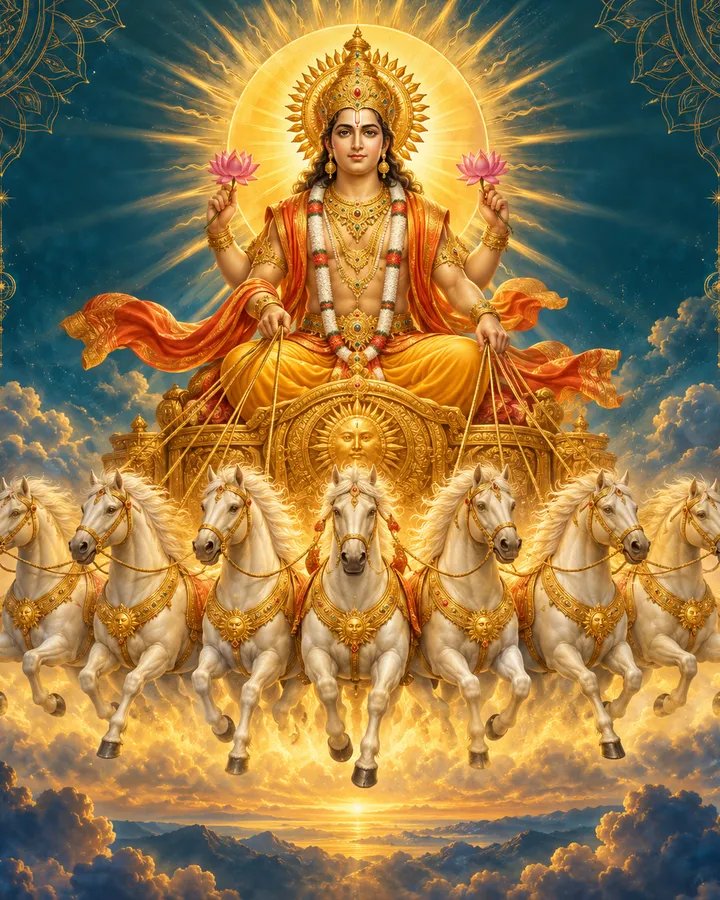
Makar Sankranti is the Sun’s entry into Makara — Capricorn — in the sidereal zodiac, on 14 or 15 January. It is the one major festival on a nearly fixed date, because it follows the Sun and not the Moon, and it is kept under a dozen names across India: Pongal in Tamil Nadu, Uttarayan in Gujarat, Maghi in Punjab (the day after Lohri), Magh Bihu in Assam, Poush Sankranti in Bengal, Makara Vilakku in Kerala, Khichdi in eastern UP and Bihar. The common threads are the sun, the harvest, a bath in a river, sesame and jaggery, and — in the west — kites.
Story and scripture
The Mahabharata gives the day its best-known association: Bhishma, mortally wounded, lies on his bed of arrows through the dark half of the year and waits for the Sun to turn north before he dies, since the Gita (8.24) names Uttarayan as the path of those who do not return. The tradition that Uttarayan begins on Makar Sankranti is old; astronomically the northward turn is the solstice in December, and the two have drifted apart, but the festival keeps the name and the meaning.
The Skanda Purana and the Puranic bathing calendars make the day a snana — a bath in the Ganga or another river — and the Prayag Magh Mela and the Gangasagar Mela at the Ganga’s mouth in Bengal both centre on it. The Kumbh Mela’s first bathing day, when the Kumbh falls at Prayag, is Makar Sankranti.
The story of the Sun visiting his son Shani (Saturn), the lord of Makara, on this day, and their reconciliation, is told in the household tradition and explains the offering of black sesame, Shani’s grain.
How the day is kept
Sunrise: a bath — in the river where there is one, at home otherwise — and the arghya to the Sun, water poured from a copper vessel with the Surya names; the twelve names or the Gayatri as the day’s jaap.
Til and gud: sesame and jaggery, as laddus (tilgul in Maharashtra, til ke laddoo in the north, ellu bella in Karnataka), exchanged with the Marathi phrase tilgul ghya, god god bola — take the sweet, speak sweetly. Khichdi of rice and lentils in the east; pongal of new rice in the south.
Kites: Gujarat’s Uttarayan is a kite festival above all, Ahmedabad’s sky full for two days; Jaipur, Delhi and Lucknow fly too.
Daan: the day is a day for giving — grain, blankets, sesame, a cow in the old texts — and the Puranic snana is completed by daan.
Regional forms
- Tamil Nadu: Pongal, four days, with the pot boiling over on the second.
- Gujarat and Rajasthan: Uttarayan; kites, undhiyu and chikki; a second day, Vasi Uttarayan, on 15 January.
- Punjab: Lohri on the eve — the bonfire, sesame, popcorn, the songs of Dulla Bhatti — and Maghi on the day.
- Maharashtra: tilgul, and married women exchange haldi-kumkum through the month.
- Karnataka, Andhra, Telangana: Sankranti with ellu bella, cattle decorated, and the Bhogi bonfire the day before.
- Kerala: Makara Vilakku at Sabarimala, the light on the Ponnambalamedu hill seen by the pilgrims, and the end of the Mandala–Makaravilakku season; see the Ayyappa page.
- Assam: Magh Bihu, the harvest feast with the meji bonfire the next morning.
- Bengal: Poush Sankranti, with pithe (rice-flour sweets) and the Gangasagar bath.
- Uttar Pradesh and Bihar: Khichdi; the Magh Mela at Prayag.
The date
The day of the Sun’s sidereal entry into Makara, by the Lahiri ayanamsa; if the ingress is after sunset, the next day. The table gives the ingress time for New Delhi and the resulting date. Solar festivals do not vary by region except by this sunset rule, which can put Kerala’s Makara Vilakku on the ingress day when the north keeps the day after.
Dates 2027
Dates are for New Delhi (IST), computed from the tithi rule for 1 Sept 2026 to 31 Dec 2027. Rows marked computed have not yet been checked against a published panchang — confirm with a local calendar before planning around them. Dates already past are kept for reference.
| Date | Observance | Tithi at sunrise | Tithi (IST) | Notes |
|---|---|---|---|---|
| Makar Sankranti | Shukla Saptami, Pausha | — | computed |
Mantra, aarti and chalisa for Makar Sankranti
Frequently asked questions
When is Makar Sankranti in 2027?
Why is Makar Sankranti on a fixed date when other festivals move?
Is Makar Sankranti the winter solstice or the start of Uttarayan?
Why 14 January one year and 15 the next?
Which mantra is chanted?
Sourcing
Checked against independent sources before publishing — see our sourcing and editorial policy. Spotted an error? Report an issue .

