The text
Tap Recite along to follow verse by verse — use Next, or the arrow keys.
This is the accented recension, with Vedic svara marks. It is a separate line of transmission, not a corrected version of the plain text — a few readings genuinely differ. The transliteration and meaning below follow the plain recension; where the two diverge, the differences are listed under “On the text printed here”.
- Shanti Path
ॐ भद्रं कर्णेभिः शृणुयाम देवा ।भद्रं पश्येमाक्षभिर्यजत्राः ॥स्थिरैरङ्गैस्तुष्टुवांसस्तनूभिः ।व्यशेम देवहितं यदायुः ॥ॐ स्वस्ति न इन्द्रो वृद्धश्रवाः ।स्वस्ति नः पूषा विश्ववेदाः ॥स्वस्तिनस्तार्क्ष्यो अरिष्टनेमिः ।स्वस्ति नो बृहस्पतिर्दधातु ॥ॐ तन्मामवतु तद् वक्तारमवतु अवतु माम् अवतु वक्तारम् ॐ शांतिः ।शांतिः ॥शांतिः॥।
ओं भ॒द्रं कर्णे॑भिः शृणु॒याम॑ देवाः ।भ॒द्रं प॑श्येमा॒क्षभि॒र्यज॑त्राः ।स्थि॒रैरङ्गै᳚स्तुष्टु॒वाग्ं स॑स्त॒नूभि॑: ।व्यशे॑म दे॒वहि॑तं॒ यदायु॑: ।स्व॒स्ति न॒ इन्द्रो॑ वृ॒द्धश्र॑वाः ।स्व॒स्ति न॑: पू॒षा वि॒श्ववे॑दाः ।स्व॒स्ति न॒स्तार्क्ष्यो॒ अरि॑ष्टनेमिः ।स्व॒स्ति नो॒ बृह॒स्पति॑र्दधातु ॥ओं शान्ति॒: शान्ति॒: शान्ति॑: ॥
oṃ bhadraṃ karṇebhiḥ śṛṇuyāma devā ।bhadraṃ paśyemākṣabhiryajatrāḥ ॥sthirairaṅgaistuṣṭuvāṃsastanūbhiḥ ।vyaśema devahitaṃ yadāyuḥ ॥oṃ svasti na indro vṛddhaśravāḥ ।svasti naḥ pūṣā viśvavedāḥ ॥svastinastārkṣyo ariṣṭanemiḥ ।svasti no bṛhaspatirdadhātu ॥oṃ tanmāmavatu tad vaktāramavatu avatu mām avatu vaktāram oṃ śāntiḥ ।śāntiḥ ॥śāntiḥ ॥
Om. May we hear what is auspicious with our ears, O gods; may we see what is auspicious with our eyes, O worshipful ones. May we, with steady limbs and bodies, praising you, obtain the span of life allotted by the gods. Om. May Indra of great renown bless us; may Pusha, knower of all, bless us; may Tarkshya of unhindered course bless us; may Brihaspati grant us well-being. Om. May that protect me; may that protect the speaker; may it protect me; may it protect the speaker. Om, peace, peace, peace.
- 1
हरिः ॐ नमस्ते गणपतये ॥त्वमेव प्रत्यक्षं तत्त्वमसि ॥त्वमेव केवलं कर्ताऽसि ॥त्वमेव केवलं धर्ताऽसि ॥त्वमेव केवलं हर्ताऽसि ॥त्वमेव सर्वं खल्विदं ब्रह्मासि ॥त्वं साक्षादात्माऽसि नित्यम् ॥१॥
ओं नम॑स्ते ग॒णप॑तये ।त्वमे॒व प्र॒त्यक्षं॒ तत्त्व॑मसि ।त्वमे॒व के॒वलं॒ कर्ता॑ऽसि ।त्वमे॒व के॒वलं॒ धर्ता॑ऽसि ।त्वमे॒व के॒वलं॒ हर्ता॑ऽसि ।त्वमेव सर्वं खल्विदं॑ ब्रह्मा॒सि ।त्वं साक्षादात्मा॑ऽसि नि॒त्यम् ॥१ ॥
hariḥ oṃ namaste gaṇapataye ॥tvameva pratyakṣaṃ tattvamasi ॥tvameva kevalaṃ kartā'si ॥tvameva kevalaṃ dhartā'si ॥tvameva kevalaṃ hartā'si ॥tvameva sarvaṃ khalvidaṃ brahmāsi ॥tvaṃ sākṣādātmā'si nityam ॥1॥
Hari Om. Salutations to you, Ganapati. You alone are the visible principle. You alone are the creator. You alone are the sustainer. You alone are the destroyer. You alone are all this — truly Brahman. You are the Self itself, eternally.
- 2
ऋतं वच्मि ॥सत्यं वच्मि ॥२॥
ऋ॑तं व॒च्मि ।स॑त्यं व॒च्मि ॥२ ॥
ṛtaṃ vacmi ॥satyaṃ vacmi ॥2॥
I speak what is right. I speak what is true.
- 3
अव त्वं माम् ॥अव वक्तारम् ॥अव श्रोतारम् ॥अव दातारम् ॥अव धातारम् ॥अवानूचानमव शिष्यम् ॥अव पश्चात्तात् ॥अव पुरस्तात् ॥अवोत्तरात्तात् ॥अव दक्षिणात्तात् ॥अव चोर्ध्वात्तात् ॥अवाधरात्तात् ॥सर्वतो मां पाहि पाहि समंतात् ॥३॥
अव॑ त्वं॒ माम् ।अव॑ व॒क्तारम्᳚ ।अव॑ श्रो॒तारम्᳚ ।अव॑ दा॒तारम्᳚ ।अव॑ धा॒तारम्᳚ ।अवानूचानम॑व शि॒ष्यम् ।अव॑ प॒श्चात्ता᳚त् ।अव॑ पु॒रस्ता᳚त् ।अवोत्त॒रात्ता᳚त् ।अव॑ दक्षि॒णात्ता᳚त् ।अव॑ चो॒र्ध्वात्ता᳚त् ।अवाध॒रात्ता᳚त् ।सर्वतो मां पाहि पाहि॑ सम॒न्तात् ॥३ ॥
ava tvaṃ mām ॥ava vaktāram ॥ava śrotāram ॥ava dātāram ॥ava dhātāram ॥avānūcānamava śiṣyam ॥ava paścāttāt ॥ava purastāt ॥avottarāttāt ॥ava dakṣiṇāttāt ॥ava cordhvāttāt ॥avādharāttāt ॥sarvato māṃ pāhi pāhi samaṃtāt ॥3॥
Protect me. Protect the one who speaks. Protect the one who listens. Protect the giver. Protect the sustainer. Protect the one who has learned, and protect the student. Protect from behind. Protect from in front. Protect from the north. Protect from the south. Protect from above. Protect from below. Guard me on every side, guard me on all sides.
- 4
त्वं वाङ्मयस्त्वं चिन्मयः ॥त्वमानंदमयस्त्वं ब्रह्ममयः ॥त्वं सच्चिदानंदाद्वितीयोऽसि ॥त्वं प्रत्यक्षं ब्रह्मासि ॥त्वं ज्ञानमयो विज्ञानमयोऽसि ॥४॥
त्वं वाङ्मय॑स्त्वं चिन्म॒यः ।त्वमानन्दमय॑स्त्वं ब्रह्म॒मयः ।त्वं सच्चिदानन्दाद्वि॑तीयो॒ऽसि ।त्वं प्र॒त्यक्षं॒ ब्रह्मा॑सि ।त्वं ज्ञानमयो विज्ञान॑मयो॒ऽसि ॥४ ॥
tvaṃ vāṅmayastvaṃ cinmayaḥ ॥tvamānaṃdamayastvaṃ brahmamayaḥ ॥tvaṃ saccidānaṃdādvitīyo'si ॥tvaṃ pratyakṣaṃ brahmāsi ॥tvaṃ jñānamayo vijñānamayo'si ॥4॥
You are made of speech, you are made of consciousness. You are made of bliss, you are made of Brahman. You are being, consciousness and bliss, without a second. You are Brahman made visible. You are knowledge and discernment itself.
- 5
सर्वं जगदिदं त्वत्तो जायते ॥सर्वं जगदिदं त्वत्तस्तिष्ठति ॥सर्वं जगदिदं त्वयि लयमेष्यति ॥सर्वं जगदिदं त्वयि प्रत्येति ॥त्वं भूमिरापोऽनलोऽनिलो नभः ॥त्वं चत्वारि वाक्पदानि ॥५॥
सर्वं जगदिदं त्व॑त्तो जा॒यते ।सर्वं जगदिदं त्व॑त्तस्ति॒ष्ठति ।सर्वं जगदिदं त्वयि लय॑मेष्य॒ति ।सर्वं जगदिदं त्वयि॑ प्रत्ये॒ति ।त्वं भूमिरापोऽनलोऽनि॑लो न॒भः ।त्वं चत्वारि वा᳚क्पदा॒नि ॥५ ॥
sarvaṃ jagadidaṃ tvatto jāyate ॥sarvaṃ jagadidaṃ tvattastiṣṭhati ॥sarvaṃ jagadidaṃ tvayi layameṣyati ॥sarvaṃ jagadidaṃ tvayi pratyeti ॥tvaṃ bhūmirāpo'nalo'nilo nabhaḥ ॥tvaṃ catvāri vākpadāni ॥5॥
This whole world is born from you. This whole world stands in you. This whole world will dissolve in you. This whole world returns to you. You are earth, water, fire, air and space. You are the four states of speech.
- 6
त्वं गुणत्रयातीतः त्वमवस्थात्रयातीतः ॥त्वं देहत्रयातीतः ॥त्वं कालत्रयातीतः ॥त्वं मूलाधारस्थितोऽसि नित्यम् ॥त्वं शक्तित्रयात्मकः ॥त्वां योगिनो ध्यायंति नित्यम् ॥त्वं ब्रह्मा त्वं विष्णुस्त्वं रुद्रस्त्वं इन्द्रस्त्वं अग्निस्त्वं वायुस्त्वं सूर्यस्त्वं चंद्रमास्त्वं ब्रह्मभूर्भुवःस्वरोम् ॥६॥
त्वं गु॒णत्र॑याती॒तः ।त्वमवस्थात्र॑याती॒तः ।त्वं दे॒हत्र॑याती॒तः ।त्वं का॒लत्र॑याती॒तः ।त्वं मूलाधारस्थितो॑ऽसि नि॒त्यम् ।त्वं शक्तित्र॑यात्म॒कः ।त्वां योगिनो ध्याय॑न्ति नि॒त्यम् ।त्वं ब्रह्मा त्वं विष्णुस्त्वं रुद्रस्त्वमिन्द्रस्त्वमग्निस्त्वं वायुस्त्वं सूर्यस्त्वं चन्द्रमास्त्वं ब्रह्म॒ भूर्भुव॒: स्व॒रोम् ॥६ ॥
tvaṃ guṇatrayātītaḥ tvamavasthātrayātītaḥ ॥tvaṃ dehatrayātītaḥ ॥tvaṃ kālatrayātītaḥ ॥tvaṃ mūlādhārasthito'si nityam ॥tvaṃ śaktitrayātmakaḥ ॥tvāṃ yogino dhyāyaṃti nityam ॥tvaṃ brahmā tvaṃ viṣṇustvaṃ rudrastvaṃ indrastvaṃ agnistvaṃ vāyustvaṃ sūryastvaṃ caṃdramāstvaṃ brahmabhūrbhuvaḥsvarom ॥6॥
You are beyond the three gunas. You are beyond the three states. You are beyond the three bodies. You are beyond the three times. You abide always in the muladhara. You are the three shaktis in essence. Yogis meditate on you unceasingly. You are Brahma, you are Vishnu, you are Rudra, you are Indra, you are Agni, you are Vayu, you are Surya, you are Chandrama — you are Brahman, bhuh, bhuvah, svah, Om.
- 7 · Ganesh Mantra
गणादिं पूर्वमुच्चार्य वर्णादिं तदनंतरम् ॥अनुस्वारः परतरः ॥अर्धेन्दुलसितम् ॥तारेण ऋद्धम् ॥एतत्तव मनुस्वरूपम् ॥गकारः पूर्वरूपम् ॥अकारो मध्यमरूपम् ॥अनुस्वारश्चान्त्यरूपम् ॥बिन्दुरुत्तररूपम् ॥नादः संधानम् ॥संहितासंधिः ॥सैषा गणेशविद्या ॥गणकऋषिः ॥निचृद्गायत्रीच्छंदः ॥गणपतिर्देवता ॥ॐ गं गणपतये नमः ॥७॥
ग॒णादिं᳚ पूर्व॑मुच्चा॒र्य॒ व॒र्णादीं᳚स्तदन॒न्त॑रम् ।अनुस्वारः प॑रत॒रः ।अर्धे᳚न्दुल॒सितम् ।तारे॑ण ऋ॒द्धम् ।एतत्तव मनु॑स्वरू॒पम् ।गकारः पू᳚र्वरू॒पम् ।अकारो मध्य॑मरू॒पम् ।अनुस्वारश्चा᳚न्त्यरू॒पम् ।बिन्दुरुत्त॑ररू॒पम् ।नाद॑: सन्धा॒नम् ।सग्ंहि॑ता स॒न्धिः ।सैषा गणे॑शवि॒द्या ।गण॑क ऋ॒षिः ।निचृद्गाय॑त्रीच्छ॒न्दः ।गणपति॑र्देव॒ता ।ओं गं ग॒णप॑तये नमः ॥७ ॥
gaṇādiṃ pūrvamuccārya varṇādiṃ tadanaṃtaram ॥anusvāraḥ parataraḥ ॥ardhendulasitam ॥tāreṇa ṛddham ॥etattava manusvarūpam ॥gakāraḥ pūrvarūpam ॥akāro madhyamarūpam ॥anusvāraścāntyarūpam ॥binduruttararūpam ॥nādaḥ saṃdhānam ॥saṃhitāsaṃdhiḥ ॥saiṣā gaṇeśavidyā ॥gaṇakaṛṣiḥ ॥nicṛdgāyatrīcchaṃdaḥ ॥gaṇapatirdevatā ॥oṃ gaṃ gaṇapataye namaḥ ॥7॥
Having first pronounced the beginning of 'gaṇa', then the first of the letters; after it the anusvara; adorned with the half-moon; joined with the syllable Om — this is the form of your mantra. The letter 'ga' is the first form, 'a' the middle form, the anusvara the final form; the dot the form beyond, and the resonance the joining. This is the union — this is the knowledge of Ganesha. The seer is Ganaka; the metre is Nichrit Gayatri; the deity is Ganapati. Om Gam Ganapataye Namah.
- 8 · Ganesh Gayatri
एकदंताय विद्महे ।वक्रतुण्डाय धीमहि ॥तन्नो दंतिः प्रचोदयात् ॥८॥
एकद॒न्ताय॑ वि॒द्महे॑ वक्रतु॒ण्डाय॑ धीमहि ।तन्नो॑ दन्तिः प्रचो॒दया᳚त् ॥८ ॥
ekadaṃtāya vidmahe ।vakratuṇḍāya dhīmahi ॥tanno daṃtiḥ pracodayāt ॥8॥
We know the one-tusked one; we meditate on the one with the curved trunk. May that tusked one impel us.
- 9 · Ganesh Rupa
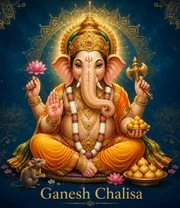
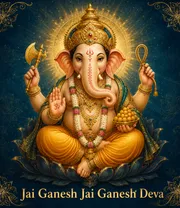
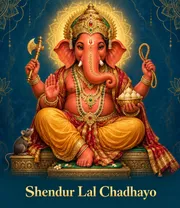
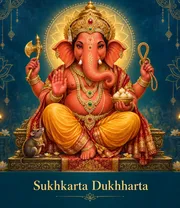
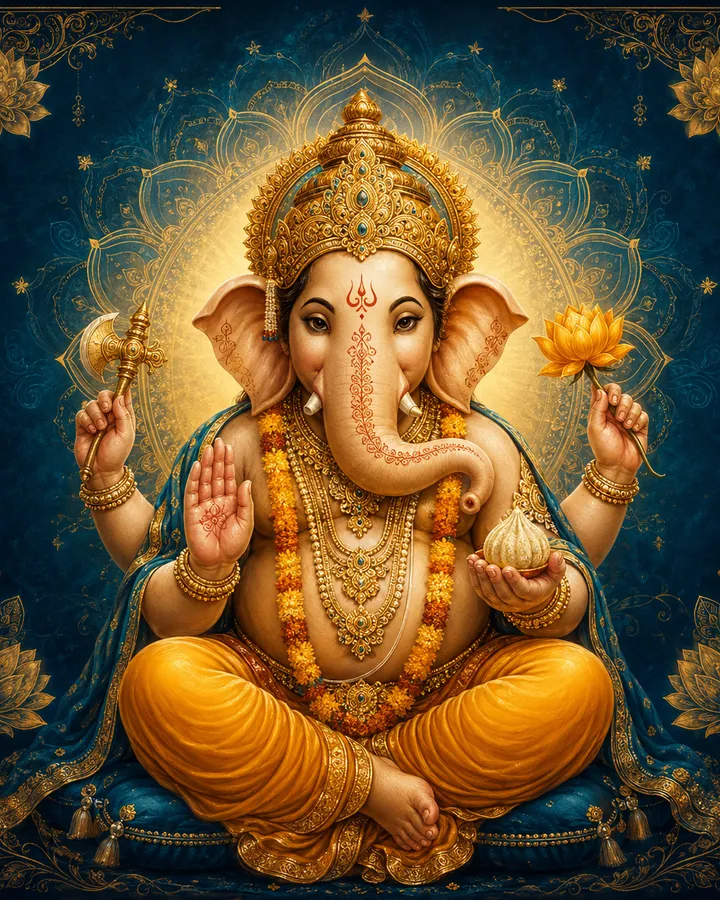
एकदंतं चतुर्हस्तं पाशमंकुशधारिणम् ॥रदं च वरदं हस्तैर्बिभ्राणं मूषकध्वजम् ॥रक्तं लंबोदरं शूर्पकर्णकं रक्तवाससम् ॥रक्तगंधानुलिप्तांगं रक्तपुष्पैः सुपूजितम् ॥भक्तानुकंपिनं देवं जगत्कारणमच्युतम् ॥आविर्भूतं च सृष्ट्यादौ प्रकृतेः पुरुषात्परम् ॥एवं ध्यायति यो नित्यं स योगी योगिनां वरः ॥९॥
एकद॒न्तं च॑तुर्ह॒स्तं॒ पा॒शम॑ङ्कुश॒ धारि॑णम् ।रदं॑ च॒ वर॑दं ह॒स्तै॒र्बि॒भ्राणं॑ मूष॒कध्व॑जम् ।रक्तं॑ लं॒बोद॑रं शू॒र्प॒क॒र्णकं॑ रक्त॒वास॑सम् ।रक्त॑ग॒न्धानु॑लिप्ता॒ङ्गं॒ र॒क्तपु॑ष्पैः सु॒पूजि॑तम् ।भक्ता॑नु॒कम्पि॑नं दे॒वं॒ ज॒गत्का॑रण॒मच्यु॑तम् ।आवि॑र्भू॒तं च॑ सृ॒ष्ट्या॒दौ॒ प्र॒कृते᳚: पुरु॒षात्प॑रम् ।एवं॑ ध्या॒यति॑ यो नि॒त्यं॒ स॒ योगी॑ योगि॒नां व॑रः ॥९ ॥
ekadaṃtaṃ caturhastaṃ pāśamaṃkuśadhāriṇam ॥radaṃ ca varadaṃ hastairbibhrāṇaṃ mūṣakadhvajam ॥raktaṃ laṃbodaraṃ śūrpakarṇakaṃ raktavāsasam ॥raktagaṃdhānuliptāṃgaṃ raktapuṣpaiḥ supūjitam ॥bhaktānukaṃpinaṃ devaṃ jagatkāraṇamacyutam ॥āvirbhūtaṃ ca sṛṣṭyādau prakṛteḥ puruṣātparam ॥evaṃ dhyāyati yo nityaṃ sa yogī yogināṃ varaḥ ॥9॥
One-tusked and four-handed, bearing noose and goad, holding in his hands a tusk and the gesture of granting boons, with the mouse on his banner; red, large-bellied, with ears like winnowing baskets, clothed in red; his limbs smeared with red sandal paste, worshipped with red flowers; the god compassionate to devotees, the cause of the world, the imperishable; who appeared at the beginning of creation, beyond prakriti and purusha. The one who meditates on him thus, constantly, is a yogi — the best among yogis.
- 10 · Ashta Nama Ganapati
नमो व्रातपतये ।नमो गणपतये ।नमः प्रमथपतये ।नमस्तेऽस्तु लंबोदरायैकदंताय ।विघ्ननाशिने शिवसुताय ।श्रीवरदमूर्तये नमो नमः ॥१०॥
नमो व्रातपतये ।नमो गणपतये ।नमः प्रमथपतये ।नमस्तेऽस्तु लंबोदरायैकदन्ताय विघ्ननाशिने शिवसुताय वरदमूर्तये॒ नम॑: ॥१० ॥
namo vrātapataye ।namo gaṇapataye ।namaḥ pramathapataye ।namaste'stu laṃbodarāyaikadaṃtāya ।vighnanāśine śivasutāya ।śrīvaradamūrtaye namo namaḥ ॥10॥
Salutations to the lord of hosts. Salutations to the lord of the ganas. Salutations to the lord of the pramathas. Salutations to you, the large-bellied, the one-tusked, the destroyer of obstacles, the son of Shiva, the auspicious embodiment of boon-giving — salutations again and again.
- 11 · Phalashruti
एतदथर्वशीर्षं योऽधीते ॥स ब्रह्मभूयाय कल्पते ॥स सर्वतः सुखमेधते ॥स सर्व विघ्नैर्नबाध्यते ॥स पंचमहापापात्प्रमुच्यते ॥सायमधीयानो दिवसकृतं पापं नाशयति ॥प्रातरधीयानो रात्रिकृतं पापं नाशयति ॥सायंप्रातः प्रयुंजानो अपापो भवति ॥सर्वत्राधीयानोऽपविघ्नो भवति ॥धर्मार्थकाममोक्षं च विंदति ॥इदमथर्वशीर्षमशिष्याय न देयम् ॥यो यदि मोहाद्दास्यति स पापीयान् भवति सहस्रावर्तनात् यं यं काममधीते तं तमनेन साधयेत् ॥११॥
एतदथर्वशीर्षं॑ योऽधी॒ते ।स ब्रह्मभूया॑य क॒ल्पते ।स सर्वविघ्नै᳚र्न बा॒ध्यते ।स सर्वत्र सुख॑मेध॒ते ।स पञ्चमहापापा᳚त् प्रमु॒च्यते ।सा॒यम॑धीया॒नो॒ दिवसकृतं पापं॑ नाश॒यति ।प्रा॒तर॑धीया॒नो॒ रात्रिकृतं पापं॑ नाश॒यति ।सायं प्रातः प्र॑युञ्जा॒नो॒ पापोऽपा॑पो भ॒वति ।सर्वत्राधीयानोऽपवि॑घ्नो भ॒वति ।धर्मार्थकाममोक्षं॑ च वि॒न्दति ।इदमथर्वशीर्षमशिष्याय॑ न दे॒यम् ।यो यदि मो॑हाद्दा॒स्यति ।स पापी॑यान् भ॒वति ।सहस्रावर्तनाद्यं यं काम॑मधी॒ते ।तं तमने॑न सा॒धयेत् ॥११ ॥
etadatharvaśīrṣaṃ yo'dhīte ॥sa brahmabhūyāya kalpate ॥sa sarvataḥ sukhamedhate ॥sa sarva vighnairnabādhyate ॥sa paṃcamahāpāpātpramucyate ॥sāyamadhīyāno divasakṛtaṃ pāpaṃ nāśayati ॥prātaradhīyāno rātrikṛtaṃ pāpaṃ nāśayati ॥sāyaṃprātaḥ prayuṃjāno apāpo bhavati ॥sarvatrādhīyāno'pavighno bhavati ॥dharmārthakāmamokṣaṃ ca viṃdati ॥idamatharvaśīrṣamaśiṣyāya na deyam ॥yo yadi mohāddāsyati sa pāpīyān bhavati sahasrāvartanāt yaṃ yaṃ kāmamadhīte taṃ tamanena sādhayet ॥11॥
Whoever studies this Atharvashirsha becomes fit for union with Brahman. He thrives in happiness on every side. He is not obstructed by any obstacle. He is freed from the five great sins. Reciting it in the evening destroys the wrong done by day; reciting it at dawn destroys the wrong done by night. Reciting it at both dawn and dusk, one becomes free of wrongdoing. Reciting it everywhere, one becomes free of obstacles. And one attains dharma, artha, kama and moksha. This Atharvashirsha is not to be given to one who is not a student; whoever gives it out of delusion becomes the worse for it. By a thousand repetitions, whatever is desired through it may be accomplished.
- 12
अनेन गणपतिमभिषिंचति स वाग्मी भवति ॥चतुर्थ्यामनश्नन् जपति स विद्यावान् भवति ।स यशोवान् भवति ॥इत्यथर्वणवाक्यम् ॥ब्रह्माद्यावरणं विद्यात् न बिभेति कदाचनेति ॥१२॥
अनेन गणपतिम॑भिषि॒ञ्चति ।स वा॑ग्मी भ॒वति ।चतुर्थ्यामन॑श्नन् ज॒पति स विद्या॑वान् भ॒वति ।इत्यथर्व॑ण वा॒क्यम् ।ब्रह्माद्या॒वर॑णं वि॒द्यान्न बिभेति कदा॑चने॒ति ॥१२ ॥
anena gaṇapatimabhiṣiṃcati sa vāgmī bhavati ॥caturthyāmanaśnan japati sa vidyāvān bhavati ।sa yaśovān bhavati ॥ityatharvaṇavākyam ॥brahmādyāvaraṇaṃ vidyāt na bibheti kadācaneti ॥12॥
Whoever anoints Ganapati with this becomes eloquent. Whoever recites it on the fourth day while fasting becomes learned, and becomes renowned. So says the Atharvana text. One who knows this is shielded even by Brahma and the rest, and is never afraid.
- 13
यो दूर्वांकुरैर्यजति स वैश्रवणोपमो भवति ॥यो लाजैर्यजति स यशोवान् भवति ॥स मेधावान् भवति ॥यो मोदकसहस्रेण यजति स वाञ्छितफलमवाप्नोति ॥यः साज्यसमिद्भिर्यजति स सर्वं लभते स सर्वं लभते ॥१३॥
यो दूर्वाङ्कु॑रैर्य॒जति स वैश्रवणोप॑मो भ॒वति ।यो ला॑जैर्य॒जति स यशो॑वान् भ॒वति ।स मेधा॑वान् भ॒वति ।यो मोदकसहस्रे॑ण य॒जति स वाञ्छित फलम॑वाप्नो॒ति ।यः साज्य समि॑द्भिर्य॒जति स सर्वं लभते स स॑र्वं ल॒भते ॥१३ ॥
yo dūrvāṃkurairyajati sa vaiśravaṇopamo bhavati ॥yo lājairyajati sa yaśovān bhavati ॥sa medhāvān bhavati ॥yo modakasahasreṇa yajati sa vāñchitaphalamavāpnoti ॥yaḥ sājyasamidbhiryajati sa sarvaṃ labhate sa sarvaṃ labhate ॥13॥
Whoever worships with durva shoots becomes the equal of Vaishravana. Whoever worships with parched grain becomes renowned, and becomes wise. Whoever worships with a thousand modakas obtains the fruit desired. Whoever worships with kindling soaked in ghee obtains everything — obtains everything.
- 14
अष्टौ ब्राह्मणान् सम्यग्ग्राहयित्वा सूर्यवर्चस्वी भवति ॥सूर्यग्रहे महानद्यां प्रतिमासंनिधौ वा जप्त्वा सिद्धमंत्रो भवति ॥महाविघ्नात्प्रमुच्यते ॥महादोषात्प्रमुच्यते ॥महापापात् प्रमुच्यते ॥स सर्वविद्भवति स सर्वविद्भवति ॥य एवं वेद इत्युपनिषत् ॥१४॥
अष्टौ ब्राह्मणान् सम्यग् ग्रा॑हयि॒त्वा सूर्यवर्च॑स्वी भ॒वति ।सूर्यग्रहे म॑हान॒द्यां प्रतिमा सन्निधौ वा ज॒प्त्वा सिद्धम॑न्त्रो भ॒वति ।महाविघ्ना᳚त् प्रमु॒च्यते ।महादोषा᳚त् प्रमु॒च्यते ।महाप्रत्यवाया᳚त् प्रमु॒च्यते ।स सर्वविद्भवति स सर्व॑विद्भ॒वति ।य ए॑वं वे॒द ।इत्यु॑प॒निष॑त् ॥१४ ॥
aṣṭau brāhmaṇān samyaggrāhayitvā sūryavarcasvī bhavati ॥sūryagrahe mahānadyāṃ pratimāsaṃnidhau vā japtvā siddhamaṃtro bhavati ॥mahāvighnātpramucyate ॥mahādoṣātpramucyate ॥mahāpāpāt pramucyate ॥sa sarvavidbhavati sa sarvavidbhavati ॥ya evaṃ veda ityupaniṣat ॥14॥
Having had eight brahmins receive it properly, one becomes radiant as the sun. Reciting it during a solar eclipse, at a great river, or in the presence of an image, one's mantra becomes accomplished. One is released from great obstacles. One is released from great faults. One is released from great wrongdoing. Such a one becomes all-knowing — becomes all-knowing. Whoever knows it thus: so reads the Upanishad.
- Shanti Mantra
ॐ सहनाववतु ॥सहनौभुनक्तु ॥सह वीर्यं करवावहै ॥तेजस्विनावधीतमस्तु मा विद्विषावहै ॥ॐ भद्रं कर्णेभिः शृणुयाम देवा ।भद्रं पश्येमाक्षभिर्यजत्राः ॥स्थिरैरंगैस्तुष्टुवांसस्तनूभिः ।व्यशेम देवहितं यदायुः ॥ॐ स्वस्ति न इन्द्रो वृद्धश्रवाः ।स्वस्ति नः पूषा विश्ववेदाः ॥स्वस्तिनस्तार्क्ष्यो अरिष्टनेमिः ।स्वस्ति नो बृहस्पतिर्दधातु ॥ॐ शांतिः ।शांतिः ॥शांतिः ॥।
ओं शान्ति॒: शान्ति॒: शान्ति॑: ॥ओं भ॒द्रं कर्णे॑भिः शृणु॒याम॑ देवाः ।भ॒द्रं प॑श्येमा॒क्षभि॒र्यज॑त्राः ।स्थि॒रैरङ्गै᳚स्तुष्टु॒वाग्ं स॑स्त॒नूभि॑: ।व्यशे॑म दे॒वहि॑तं॒ यदायु॑: ।स्व॒स्ति न॒ इन्द्रो॑ वृ॒द्धश्र॑वाः ।स्व॒स्ति न॑: पू॒षा वि॒श्ववे॑दाः ।स्व॒स्ति न॒स्तार्क्ष्यो॒ अरि॑ष्टनेमिः ।स्व॒स्ति नो॒ बृह॒स्पति॑र्दधातु ॥ओं शान्ति॒: शान्ति॒: शान्ति॑: ॥
oṃ sahanāvavatu ॥sahanaubhunaktu ॥saha vīryaṃ karavāvahai ॥tejasvināvadhītamastu mā vidviṣāvahai ॥oṃ bhadraṃ karṇebhiḥ śṛṇuyāma devā ।bhadraṃ paśyemākṣabhiryajatrāḥ ॥sthirairaṃgaistuṣṭuvāṃsastanūbhiḥ ।vyaśema devahitaṃ yadāyuḥ ॥oṃ svasti na indro vṛddhaśravāḥ ।svasti naḥ pūṣā viśvavedāḥ ॥svastinastārkṣyo ariṣṭanemiḥ ।svasti no bṛhaspatirdadhātu ॥oṃ śāntiḥ ।śāntiḥ ॥śāntiḥ ॥
Om. May that protect us both. May it nourish us both. May we work together with vigour. May what we study be illuminating. May we not quarrel with one another. Om. May we hear what is auspicious with our ears, O gods; may we see what is auspicious with our eyes, O worshipful ones. May we, with steady limbs and bodies, praising you, obtain the span of life allotted by the gods. Om. May Indra of great renown bless us; may Pusha, knower of all, bless us; may Tarkshya of unhindered course bless us; may Brihaspati grant us well-being. Om, peace, peace, peace.
Overview
The Ganapati Atharvashirsha is a short Sanskrit text of the Ganapatya tradition — the stream of devotion that holds Ganesh not as one deity among many but as Brahman itself, the ground of everything. It is the text behind the line people quote most often about Ganesh: tvameva sarvaṃ khalvidaṃ brahmāsi, “you alone are all this, truly Brahman.”
It belongs to the Atharva Veda tradition by attribution rather than by inclusion in the Vedic corpus proper, and is generally placed among the later minor Upanishads. Scholarship reads it as a comparatively late composition; devotional tradition receives it as Vedic. This page does not assert a date.
Fourteen numbered sections run from an address to Ganapati, through an identification of him with the elements, the three gunas and the trinity, into the construction of the seed-mantra Om Gaṃ Ganapataye Namah letter by letter, the Ganesh Gayatri, a dhyana verse describing the form to be visualised, eight names, and a closing phalashruti on the fruits of recitation.
How it is recited
In Maharashtra especially, the Atharvashirsha is the household text of Ganesh Chaturthi — recited morning and evening through the ten days, often by the whole family together, and again on every Sankashti Chaturthi through the year. A common sankalpa is ekavimshati, twenty-one repetitions in one sitting, and the text’s own §11 names a thousand repetitions as the measure for a wish undertaken through it.
It is recited as one continuous piece rather than verse by verse, which is why the numbered sections here are given whole rather than split into padas.
On the text printed here
This page prints the plain, unaccented recension, which is the one most household reciters will recognise from a Ganesh Chaturthi pothi, and the one that matches how every other text on this site is set.
A second recension exists and is widely used: it carries Vedic accents (svaras) and differs in about ten readings — the opening tanmāmavatu lines are absent from it, §11 reverses two clauses and reads pāpo’pāpo where this text reads apāpo, §12 drops sa yaśovān bhavati, and §14 reads mahāpratyavāyāt where this text reads mahāpāpāt. Neither is a mistake. They are different lines of transmission, and a reciter taught one should keep reciting it.
You can read it here. The Plain / With accents switch above the text swaps to that second recension in full, marks and all, taken from a printed edition. The transliteration and meaning stay those of the plain text, because they are what was verified against both sources — where a reading diverges, the list above is the difference.
Both recensions here were checked against two independently transcribed sources before publishing — for the plain text, a volunteer-encoded edition checked against seven printed translations; for the accented one, a printed parayana grantham. The standard that applies to every text on this site is described in the editorial policy.
Frequently asked questions
How many verses does Ganapati Atharvashirsha have?
Who is Ganapati Atharvashirsha dedicated to?
When is Ganapati Atharvashirsha typically recited?
What language is Ganapati Atharvashirsha composed in?
What tradition is Ganapati Atharvashirsha associated with?
Is an English translation of Ganapati Atharvashirsha available?
Is there a Roman transliteration of Ganapati Atharvashirsha?
Sourcing
Checked against independent sources before publishing — see our sourcing and editorial policy. Spotted an error? Report an issue .