Overview
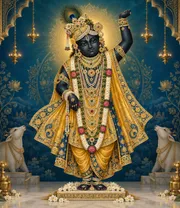
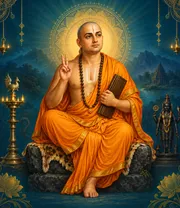
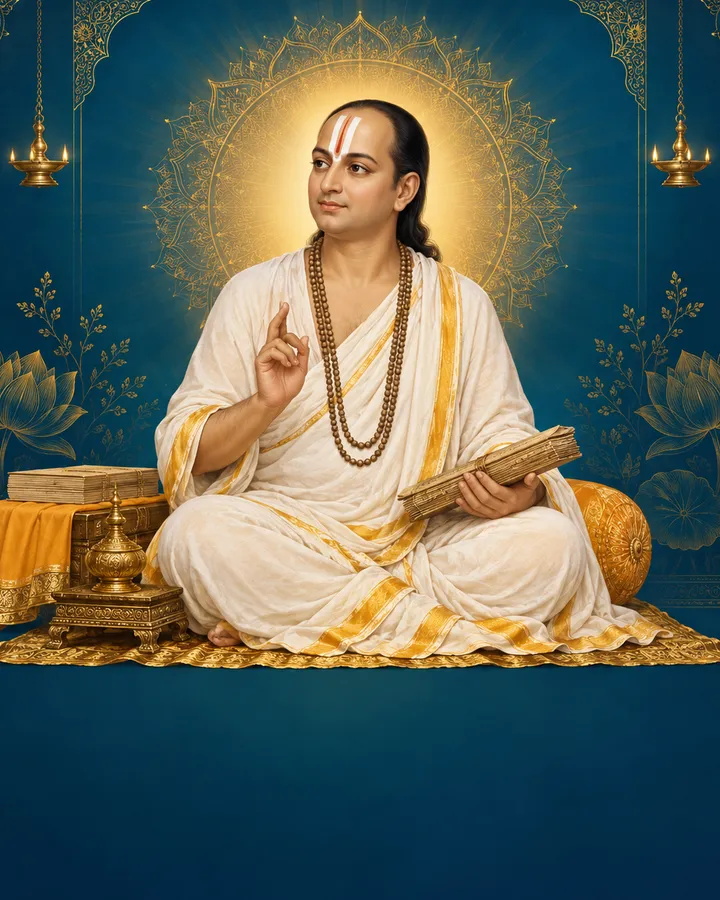
Vallabhacharya was the founder of Shuddhadvaita, “pure non-dualism,” and of Pushtimarg, “the path of grace,” a Vaishnava tradition of devotion to Krishna centered above all on the worship of Shrinathji at Nathdwara, Rajasthan. His birth year is genuinely uncertain — the traditional lunar-calendar date converts to at least three different Gregorian years across sources, and none of them is treated here as the settled one.
Life
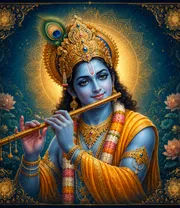
Traditional accounts place his birth, to a Telugu Brahmin family, at Champaranya in present-day Chhattisgarh. He is traditionally affiliated with the older Rudra Sampradaya, said to trace back to the teacher Vishnuswami, but no named human guru who personally initiated him is well attested. Within his own tradition, his authority instead rests on a direct revelation: in 1494, at Gokul, Krishna is held to have appeared to him and personally bestowed the initiation rite still used to bring new followers into Pushtimarg today — a distinctive claim of divine, rather than human, transmission among the founders of the major Vedanta schools.
His death is dated to 1530 (a minority of sources give 1531), at Varanasi. Devotional tradition holds that he entered the Ganga and disappeared in a column of light — the tradition’s own account of his passing, not an independently verified event, and no fixed shrine marks his death the way it does for some other Vedanta founders.
Shuddhadvaita
Vallabhacharya’s philosophical system departs from Adi Shankaracharya’s Advaita on a specific point: where Advaita holds the everyday world to be maya, an illusory or provisional appearance to be seen through on the way to realizing Brahman, Vallabhacharya taught that the world is itself a real, non-illusory manifestation of Brahman — nothing about it is false or needs to be negated. This is the reasoning behind the name Shuddhadvaita, “pure” non-dualism: non-dualism without an accompanying illusion doctrine.
Pushtimarg after Vallabhacharya
Leadership of Pushtimarg passed to Vallabhacharya’s son, Vitthalnathji, who is credited with formally institutionalizing the elaborate worship of Shrinathji at Nathdwara in the form it takes today — engaging priests, and shaping the temple’s ritual schedule and seasonal decoration into their present structure. Vitthalnathji went on to divide the tradition’s principal Krishna images among his seven sons, each founding a hereditary seat, or gaddi — the origin of the Goswami leadership structure, quite different from the monastic-succession model of Adi Shankaracharya’s four mathas or Madhvacharya’s Ashta Mathas, that continues to govern Pushtimarg institutions today.
In his own words
- Anubhashya — his commentary on the Brahma Sutras, providing Shuddhadvaita’s formal philosophical grounding.
- Subodhini — his commentary on the Bhagavata Purana, centered on devotional experience.
- Shodash Granth — sixteen shorter treatises setting out Shuddhadvaita theology and practice.
Worth knowing
- His birth year has three competing Gregorian conversions (1473, 1478, 1479) from the same traditional lunar-calendar date, and this page does not resolve the dispute.
- Tradition holds he received his authority to initiate disciples directly from Krishna in a vision at Gokul in 1494, rather than from a human guru — a distinctive feature among the founders of the major Vedanta schools, most of whom trace their authority through a named teacher.
- His son Vitthalnathji, not Vallabhacharya himself, is credited with institutionalizing the elaborate worship of Shrinathji at Nathdwara in the form it takes today.
- Vitthalnathji divided the tradition's principal Krishna images among his seven sons, creating a hereditary Goswami leadership structure — distinct from the monastic-succession models of Adi Shankaracharya's mathas or Madhvacharya's Ashta Mathas — that still governs Pushtimarg institutions today.
- His Shuddhadvaita, "pure non-dualism," holds that the everyday world is a real, non-illusory manifestation of Brahman rather than maya, an illusion to be seen through — the point on which his system most directly departs from Adi Shankaracharya's Advaita.