Overview
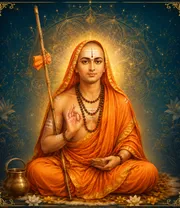
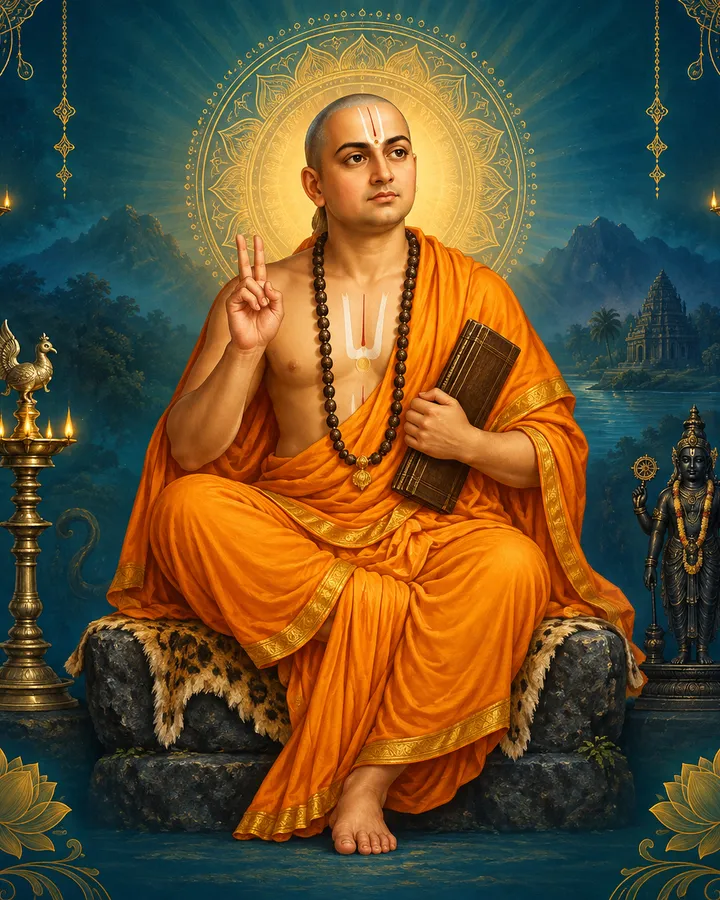
Madhvacharya was the founder of Dvaita Vedanta, “dualism,” the Vedanta school most sharply opposed to Adi Shankaracharya’s non-dualist Advaita. Where Advaita holds the individual self and ultimate reality to be one and the same, Madhvacharya taught that Krishna, worshipped by him as Vishnu-Narayana, and the individual soul are eternally, irreducibly distinct — a position his tradition regards as unqualified dualism. Scholars are genuinely split between two full chronologies for his life, 1238–1317 and 1199–1278 CE, both giving a lifespan of 79 years — a dispute this page leaves open rather than settles.
Life
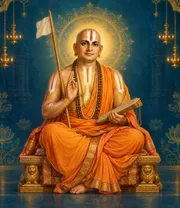
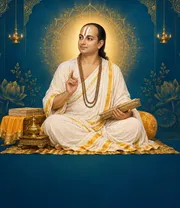
Traditional accounts place his birth, under the name Vasudeva, at Pajaka near Udupi in present-day Karnataka. As a teenager he took monastic vows under Achyutapreksha, an Advaita Vedanta teacher at Udupi, who gave him the name Madhva — though in his own later writing he never acknowledges Achyutapreksha as his guru, having broken decisively from Advaita philosophy. Within his own tradition, his teaching authority is understood to come not from an ordinary human lineage but directly from Vedavyasa, traditionally regarded as the compiler of the Vedas. Hagiographic accounts of his life, found in texts such as the Madhva Vijaya, contain material this page treats as devotional legend rather than history — stories of turning tamarind seeds to gold or crossing the Ganga dry-shod among them.
Tradition holds that Madhvacharya did not die in the ordinary sense. While teaching the Aitareya Upanishad at the Anantheshwara Temple in Udupi, he is said to have departed to Badarikashrama to rejoin Vedavyasa — an event commemorated annually as Madhva Navami, and presented here as the tradition’s own account of his passing rather than a historically verified death.
Dvaita Vedanta
Madhvacharya’s philosophy rests on what is often called a “five-fold difference” (pancha-bheda): between God and the individual soul, between God and matter, between one soul and another, between soul and matter, and between one portion of matter and another. Liberation, in his system, comes through God’s grace rather than through knowledge alone — a further point of contrast with Shankaracharya’s emphasis on direct knowledge (jnana) of the self’s identity with Brahman. Within his own tradition, he is regarded as the third avatar of Vayu, the wind god, following Hanuman and Bhima — a devotional understanding this page attributes to that tradition rather than asserting independently.
The Udupi Krishna Matha
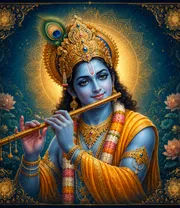
Madhvacharya founded the Krishna temple at Udupi, traditionally in 1285, built around an image of Krishna that tradition holds he brought from Dwarka. The temple remains the seat of the eight Ashta Mathas surrounding it, which continue to rotate management of the temple’s worship in a system called Paryaya. Disciple lineages descending from him later produced three further prominent mathas — Uttaradi, Vyasaraja, and Raghavendra — all still active today, together forming an ongoing institutional presence considerably larger than his own lifetime alone.
In his own words
- Anuvyakhyana — his philosophical masterwork, a poetic supplement to his Brahma Sutra commentary.
- Madhva-bhashya — his primary commentary on the Brahma Sutras.
- Gita Bhashya and Gita Tatparya — two commentaries on the Bhagavad Gita.
- Commentaries on ten principal Upanishads and on the first forty hymns of the Rigveda.
Worth knowing
- Scholars are genuinely split between two full chronologies for his life — 1238–1317 and 1199–1278 CE, both giving a 79-year lifespan — and this page does not pick one as settled.
- Within his own tradition, Madhvacharya is held to be the third avatar of Vayu, the wind god, following Hanuman and Bhima — a devotional claim attributed to that tradition, not a historical fact this page asserts independently.
- He founded the Krishna temple at Udupi using an image tradition holds was brought from Dwarka; it remains the seat of the surrounding eight Ashta Mathas, which still rotate management of the temple today.
- His Dvaita philosophy rests on a "five-fold difference" (pancha-bheda) distinguishing God, individual souls, and matter, and holds that liberation depends on God's grace rather than knowledge alone — the position most sharply opposed to Adi Shankaracharya's non-dualism among the major Vedanta schools.
- Hagiographic tradition surrounding him contains clearly legendary material — turning tamarind seeds to gold, crossing a river dry-shod among the stories told — presented within this page, where mentioned at all, as devotional legend rather than history.